 Ferndale Exterior
 Sandy Point's Waterfront Location Puts Extra Demands on Siding
Sandy Point sits right up against the Strait of Georgia, and that waterfront position is exactly what makes it a beautiful place to live — and exactly what makes siding wear out faster there than it does a few miles inland in Ferndale proper. Salt-laden air moves off the water and settles on everything, including exterior walls. Combine that with wind-driven rain that hits siding at an angle instead of falling straight down, and you get a building envelope that's working harder than a typical Whatcom County home, year after year.
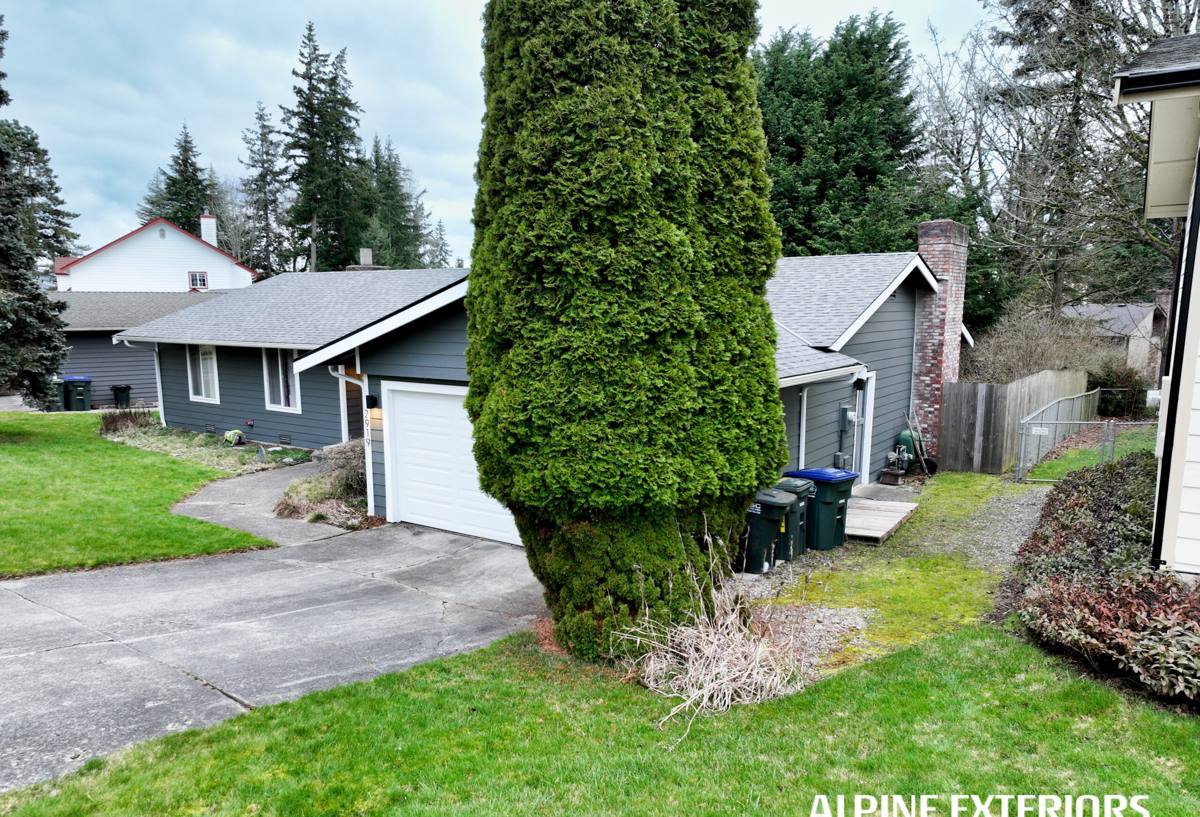
Add in the tree cover that shades a lot of lots in and around Sandy Point, and you get a third factor: moss and algae. Shaded, damp siding that doesn't get much direct sun to dry out is a moss magnet, and moss holds moisture against the wall surface far longer than open, sunny siding does. None of this means Sandy Point is a bad place to own a home — it means the siding has to be chosen and installed with those specific conditions in mind, not just installed the way it would be on a dry, sun-exposed lot elsewhere in the county.
What "Correct" Siding Replacement Actually Involves
A siding replacement that looks fine on installation day but fails early is usually a case of skipped steps, not a bad product. In a salt-air, high-moisture setting like Sandy Point, the steps that get skipped on cheap jobs are exactly the ones that matter most.
Moisture Management Comes First
Before a single piece of new siding goes up, the wall needs a proper weather-resistant barrier, correctly lapped so water sheds downward and outward rather than getting trapped behind the cladding. Flashing at windows, doors, and any wall penetration has to be detailed so wind-driven rain can't work its way behind the siding — a real risk on a lot that catches weather straight off the water. We also check for rot or soft sheathing during tear-off, since the old siding is often the only thing that was hiding a problem underneath.
Fastening for Coastal Wind Exposure
Fastener spacing and type matter more on an exposed waterfront lot than on a sheltered inland one. Under-fastened siding, or siding fastened with the wrong hardware, is more likely to work loose over years of wind loading and thermal movement. We follow the manufacturer's fastening schedule for the exposure category the home actually sits in, not a generic default.
Ventilation Behind the Cladding
A rainscreen gap or proper ventilation behind the siding lets any moisture that does get past the outer layer dry out instead of sitting against the sheathing. That drying capacity is what keeps a damp, shaded Sandy Point wall from turning into a long-term rot problem.
Why We Install Only James Hardie Fiber Cement
We standardized on James Hardie fiber cement siding and don't install vinyl, LP SmartSide, Cemplank, Allura, primed spruce, or cedar. That's not a marketing position — it's a product decision made with homes like the ones at Sandy Point in mind.
Fiber cement is non-combustible, which matters in Washington's wildfire-conscious insurance environment, and it doesn't rely on a wood substrate that can swell, delaminate, or rot when it absorbs moisture the way engineered wood siding can. Hardie's ColorPlus factory finish is baked on and warranted separately from the substrate, which means a house exposed to salt air and heavy rain isn't depending on a field-applied paint job to hold up. Hardie also builds regional engineering into its HZ product lines — different formulations for different climate zones — which is a level of climate-specific engineering that most other siding materials don't offer.
We're not going to tell you competing products are junk; plenty of them perform fine in the right setting. Vinyl is inexpensive and low-maintenance in mild climates but can crack in cold snaps and fade unevenly under UV exposure. Engineered wood products like LP SmartSide use resin-treated strand board that performs well when installation and caulking are kept up perfectly, but they're more sensitive to sustained moisture exposure than fiber cement. Primed spruce and cedar are traditional and attractive, but both are organic wood products that need ongoing paint or stain maintenance to keep water out — maintenance that's harder to stay ahead of on a salt-air, moss-prone lot. For a waterfront property near Ferndale, we think fiber cement's moisture tolerance and low ongoing maintenance make it the more sensible long-term choice, which is why it's the only product we put on homes.
Comparing Siding Options for a Salt-Air, High-Moisture Lot
| Factor | James Hardie Fiber Cement | Vinyl | Engineered Wood (LP SmartSide) | Cedar / Primed Spruce |
|---|---|---|---|---|
| Moisture tolerance | High — cement-based, doesn't swell or rot | High but can warp with heat | Moderate — depends on sealed edges and caulking | Low to moderate — needs consistent maintenance |
| Salt air / coastal durability | Strong, climate-engineered HZ lines available | Can chalk and fade near salt air | Sensitive to prolonged moisture exposure | Requires frequent refinishing near water |
| Fire rating | Non-combustible | Combustible | Combustible | Combustible |
| Finish durability | Factory-baked ColorPlus finish, separately warranted | Color molded in, can fade | Field-applied or factory finish varies | Field-applied paint/stain, wears fastest |
| Typical maintenance | Low — occasional wash | Low | Moderate — caulk and paint upkeep | High — recoat every few years |
Our Process for Sandy Point Projects
We work in Sandy Point regularly, so the process is dialed in for the site conditions that come with a waterfront, tree-shaded property.
- Walk-through and moisture check. We look at the current siding, trim, and any visible signs of moss, staining, or soft spots before quoting anything.
- Tear-off and sheathing inspection. Old siding comes off in sections so we can check the sheathing and framing underneath for hidden moisture damage before it's covered back up.
- Weather barrier and flashing detail. We install and lap the weather-resistant barrier and flash every window, door, and penetration to shed wind-driven rain.
- Rainscreen or ventilation gap. Depending on the wall assembly, we build in a drainage/ventilation gap so any incidental moisture can dry.
- James Hardie installation to spec. Fastening schedule, clearances, and caulking follow Hardie's published installation requirements for the home's exposure.
- Final walk-through. We review the finished work with you and point out any maintenance items worth watching for the first year.
Signs a Sandy Point Home Needs Siding Replacement Now
- Moss or algae staining that comes back within weeks of cleaning it off
- Soft or spongy spots when you press on the siding, especially near the bottom courses
- Visible cracking, warping, or separation at seams and corners
- Paint that's peeling or bubbling rather than just fading
- Musty smell or visible staining on interior walls that back up to exterior siding
- Siding that's original to an older cabin-style home never upgraded for year-round, full-exposure living
Why a Crew That Already Works Sandy Point Matters
Sandy Point isn't a typical subdivision — it's a tight-knit waterfront community with its own access patterns, and homes there often see different exposure conditions from one lot to the next depending on tree cover and how directly a wall faces the water. A crew that's already worked in the area knows to expect that variation and plans the job accordingly instead of treating every wall the same way. Familiarity with the community also means less friction getting equipment and materials staged efficiently on lots that can be tighter or less straightforward to access than a standard inland street.
Just as important, a crew with repeat experience in Sandy Point has seen how James Hardie siding actually performs there over time — which details matter most for that specific salt-air, high-moss environment, and where corners get cut on lower-quality installs. That's knowledge you don't get from a crew doing its first job on the water.
What Affects the Cost of a Sandy Point Siding Replacement
| Cost Factor | Why It Matters |
|---|---|
| Extent of hidden moisture damage | Rotted sheathing found during tear-off adds repair work before new siding can go on |
| Home size and wall complexity | More corners, gables, and trim details mean more labor and material cutting |
| Siding profile and finish selection | Hardie offers several plank widths, textures, and ColorPlus finishes at different price points |
| Access and site conditions | Tighter lots or limited staging space near the water can affect labor time |
| Trim, fascia, and flashing scope | Full replacement often includes trim and flashing upgrades, not siding panels alone |
We give every Sandy Point homeowner an honest, itemized quote after seeing the actual condition of the walls — broad estimates without a real inspection tend to miss the moisture and substrate issues that drive most cost variation on coastal homes.
Ready to Talk About Your Sandy Point Home?
If your siding is showing moss, staining, soft spots, or you're just planning ahead for a waterfront property that takes more weather than most, we're happy to take a look. Reach out for a free, no-pressure estimate — we'll walk the exterior with you, point out what we see, and explain exactly what a correct James Hardie installation would involve for your home.