 Ferndale Exterior
 Windows Built for the Sudden Valley Climate
Homes in and around Sudden Valley deal with a specific combination of weather that most window installers never have to think about: salt-laden air drifting in off the water, long stretches of driving rain, and a moss season that can run from late fall clear into spring. None of that is dramatic on its own, but stacked together year after year, it's exactly the kind of slow, steady exposure that finds every weak point in a window — a soft spot in the frame, a gap in the flashing, a seal that was never quite right to begin with.
Custom windows aren't just about picking a style you like. In this part of Whatcom County, the right window is one that's been sized, flashed, and sealed for the specific wall it's going into, with materials chosen to hold up against moisture and salt exposure rather than just look good on install day. That's the standard we hold ourselves to on every Sudden Valley job.
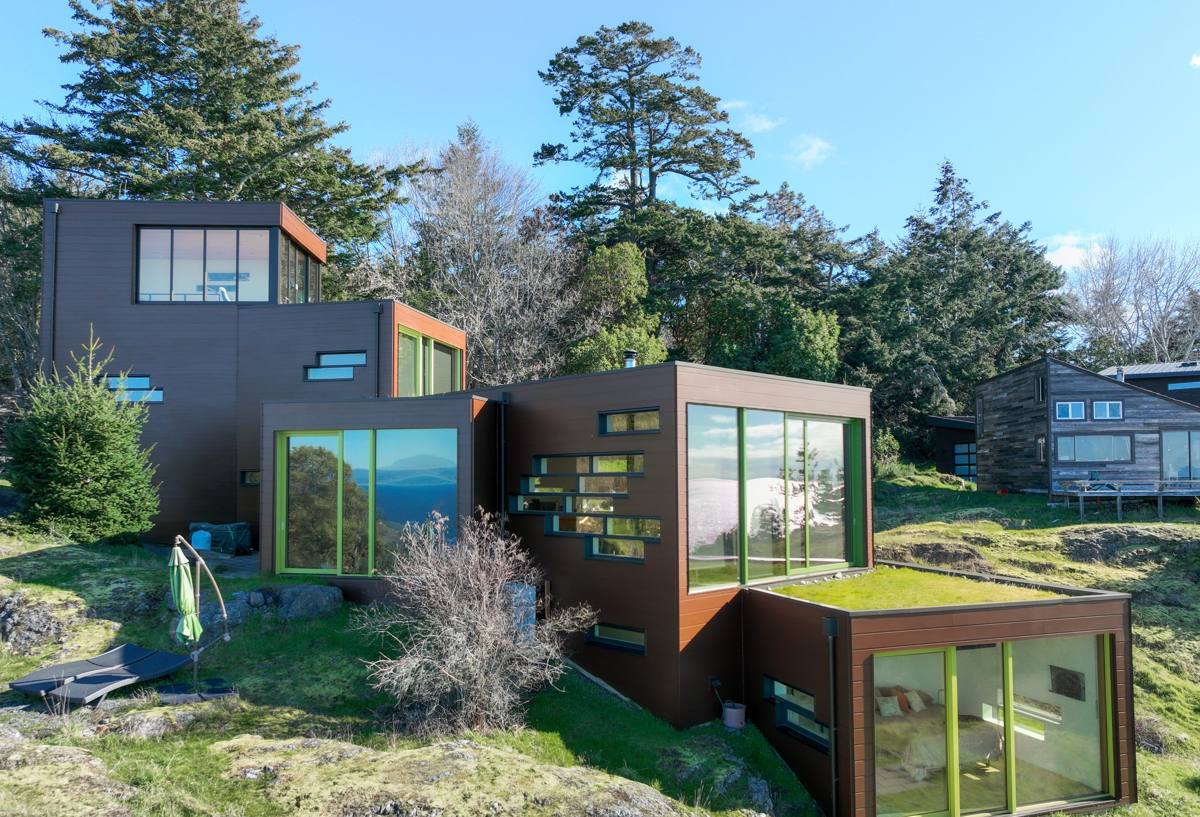
What "Custom" Actually Means Here
A lot of homeowners hear "custom windows" and assume it just means a bigger price tag. In practice, custom means the window is built to fit your actual rough opening and your actual wall assembly — not a standard size that gets shimmed, packed, and caulked into submission. That distinction matters more in a wet climate than almost anywhere else, because a poorly fitted window doesn't fail immediately. It fails slowly, from the inside, as moisture works its way into gaps that were never properly sealed.
Where Custom Sizing Pays Off
- Older Sudden Valley homes with settled or slightly out-of-square openings, where a stock window would need aggressive shimming to fit
- Additions or remodels where the rough opening doesn't match a standard manufacturer size
- Replacing multiple windows on one wall where sightlines and reveal depth need to match
- Homes with deeper wall assemblies or added exterior insulation, where standard frame depth doesn't sit flush
Why Salt Air and Rain Change the Equation
Salt air is corrosive to certain metals and hardware over time, and it doesn't take a beachfront lot to feel its effects — moisture carried on coastal wind reaches homes well inland from the water. Combined with the volume of rain Whatcom County sees over a typical year, window components that would hold up fine in a dry climate can start showing problems within a handful of seasons here.
This is why we're particular about hardware finish, weatherstripping material, and frame composition on every custom order. It's also why flashing detail matters as much as the window unit itself — a premium window installed with sloppy flashing will leak just as reliably as a cheap one.
The Moss Factor
Moss doesn't grow on the glass, but it absolutely grows in the places moisture likes to sit — sill horns, exterior trim, the top of a window head where runoff collects. Left unaddressed, that moss holds moisture against wood trim and finish longer than it would otherwise sit, accelerating rot and finish failure around the window opening. Part of doing this job right is designing trim and sill details that shed water instead of collecting it, so moss doesn't get a foothold in the first place.
Frame Material Comparison for This Climate
There's no single "best" window material — each has trade-offs, and the right call depends on the home, the budget, and how much maintenance you're willing to take on. Here's how the common options actually perform under Whatcom County's wet, salt-tinged conditions.
| Material | Moisture Resistance | Maintenance | Typical Trade-Off |
|---|---|---|---|
| Vinyl | Very good — won't rot or corrode | Low | Limited color/finish options; can flex on very large openings |
| Fiberglass | Excellent — dimensionally stable in wet-dry cycles | Low to moderate | Higher upfront cost than vinyl |
| Wood (clad exterior) | Good on the exterior face; interior wood needs protection from condensation | Higher — finish and seals need periodic attention | Best look for period-style homes; more upkeep over time |
| Aluminum | Poor without thermal breaks; prone to condensation and corrosion near salt air | Moderate | We don't recommend it for this climate except in specific commercial applications |
For most Sudden Valley homes, we steer people toward vinyl or fiberglass for straightforward replacements, and clad-wood when the architecture calls for a true wood interior look. We're upfront when a material choice is going to create more maintenance burden down the road — that's a conversation we'd rather have before the order goes in, not after.
Our Installation Process
The window unit itself is maybe half the job. The other half — the part that actually determines whether the window performs for the next twenty-plus years — is the installation detail. Here's how we approach it.
1. On-Site Measurement and Assessment
We measure every opening individually rather than assuming uniformity across a wall or a home. At the same time, we check the condition of the existing sill, framing, and any visible sheathing for signs of past moisture intrusion — because if there's already a problem behind the old window, replacing the glass without addressing it just seals the problem back in.
2. Flashing and Weather Barrier Detail
This is the step that separates a window that lasts from one that doesn't. Proper flashing directs water down and out and away from the framing — sill pan first, then side flashing, then head flashing integrated with the existing weather-resistive barrier in the correct shingle-lap order. Skipping or rushing this step is the single most common cause of window-related water damage we see in older installs.
3. Setting the Window
The unit gets shimmed plumb, level, and square — not just eyeballed into an opening that's slightly out of true. Fasteners go in per the manufacturer's schedule, not "enough to hold it."
4. Sealing and Insulating
Low-expansion foam or backer rod and sealant around the perimeter, matched to the gap size — too little leaves air and moisture paths, too much can bow the frame. Exterior caulking uses a sealant rated for the material and for sustained wet exposure, not a general-purpose caulk that'll fail in a couple of seasons.
5. Trim, Sill, and Final Water Management
Exterior trim and sills are finished to shed water rather than trap it, which is a big part of keeping moss and mildew from taking hold around the opening in the first place.
Signs Your Current Windows Are Past Their Point
- Fogging or moisture between the panes of a double- or triple-glazed unit — a sign the seal has failed
- Soft or discolored wood trim around the frame, especially at the bottom corners
- Difficulty opening, closing, or latching that's gotten worse over the past year or two
- Visible daylight or a noticeable draft around the frame when it's closed
- Moss or persistent green growth building up on the sill or head trim
- A noticeable jump in heating costs without another clear explanation
Any one of these on its own isn't necessarily an emergency. Several of them together, especially on a home that hasn't had window work done in fifteen or twenty years, are worth a look before another wet season passes.
Cost Factors Worth Understanding
We're not going to quote numbers on a page — every home and every opening is different, and a real number requires a real look at your windows. But it's worth understanding what actually drives cost on a custom window job, so you're not blindsided later.
| Factor | Why It Matters |
|---|---|
| Frame material | Vinyl, fiberglass, and clad-wood carry different material and labor costs |
| Opening condition | Rot repair or reframing behind an old window adds labor before the new one ever goes in |
| Size and configuration | Large picture windows, bays, or multi-unit combinations cost more than a standard single unit |
| Glass package | Upgraded glazing for energy performance or sound reduction adds to the unit price |
| Number of openings | Whole-house replacement typically brings a better per-window rate than one-off jobs |
| Access and site conditions | Second-story or hard-to-access openings can add labor time |
Why Local Experience with Sudden Valley Homes Matters
Whatcom County's building stock spans a wide range of eras and construction styles, and a crew that regularly works in this specific area gets a feel for what tends to show up behind the trim before the first pry bar comes out. That's not something you get from a general contractor who does one window job a year — it comes from repetition in this specific climate, on this specific kind of housing stock.
We also know that a rushed job in this climate almost always costs more later, in the form of callback repairs for leaks and rot. Doing the flashing and sealing correctly the first time costs a little more in labor time up front and saves a lot of grief — for you and for us — over the life of the window.
Get an Honest Look at Your Windows
If you're weighing whether it's time to replace windows on a Sudden Valley home, we're happy to come take a look, explain what we see, and give you a straightforward estimate — no pressure, no upsell script. Use the form below to get started.