 Ferndale Exterior
 Roofing in Sudden Valley: What the Local Conditions Demand
Sudden Valley sits in a part of Whatcom County where the roof over your head does real work year-round. The marine air off the Salish Sea carries salt that slowly attacks exposed metal fasteners and flashing. Wind-driven rain during fall and winter storms doesn't just fall straight down — it gets pushed sideways under poorly lapped shingles and around weak flashing details. And for homes tucked among trees, which describes a lot of lots in this area, shade and moisture combine into a moss season that can run most of the year if a roof isn't built to shed it.
None of that means a roof here has to be complicated or expensive to get right. It means the installation details that get skipped on a lot of jobs — proper underlayment coverage, correctly lapped flashing, real attic ventilation — are the details that actually matter in this climate. A new roof installed correctly in Sudden Valley should hold up to decades of wet Whatcom County winters without needing a repair call every year.
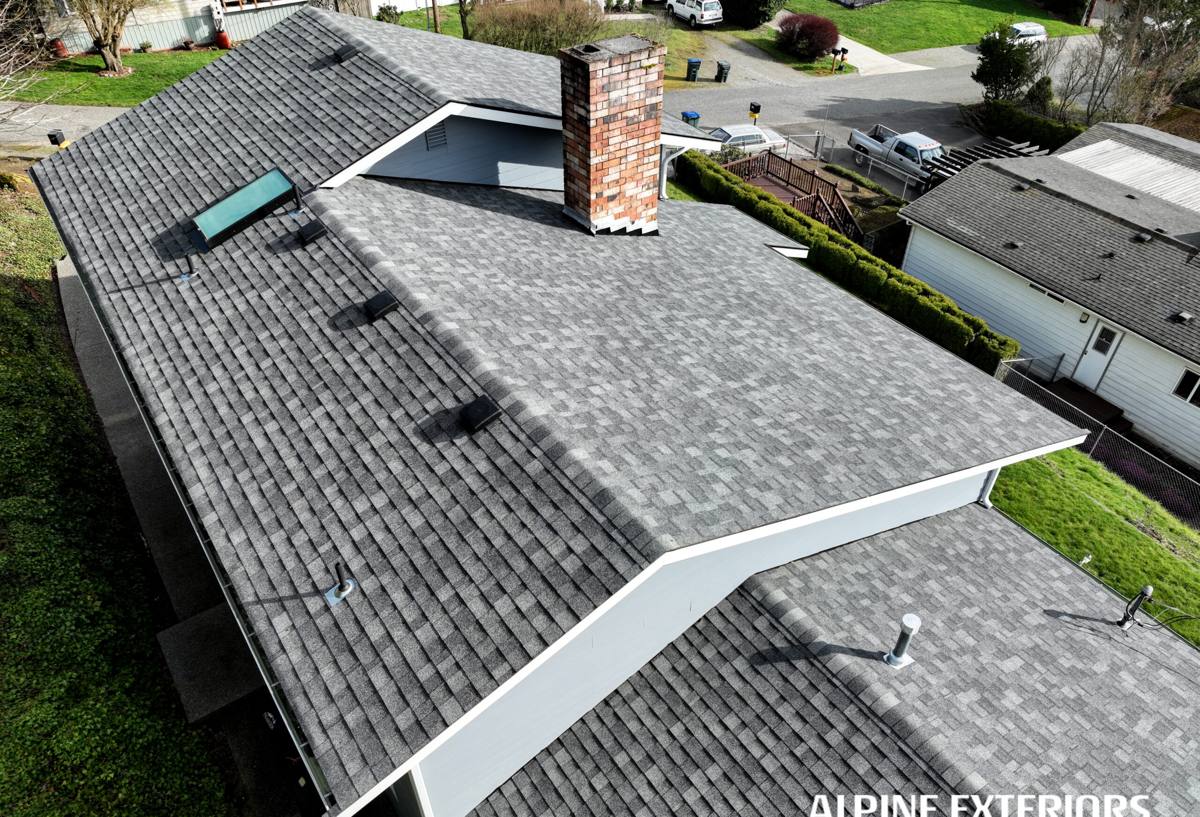
Signs Your Sudden Valley Home Needs a New Roof
Roofs in this climate rarely fail all at once. They show warning signs first, usually starting in the shaded, north-facing sections of the roof where moss gets a foothold earliest. Here's what we look for, and what you can check from the ground or from your attic:
- Shingles that look cupped, curling at the edges, or missing granules (you'll see grit collecting in gutters)
- Thick moss or dark algae streaking across large sections of the roof, not just isolated patches
- Soft spots, sagging, or a roofline that doesn't look straight when viewed from the street
- Daylight visible through the roof deck when you look up from the attic
- Water stains on ceilings or in the attic, especially near valleys, chimneys, or skylights
- The roof is 20+ years old and has never been fully replaced, only patched
- More than one layer of shingles already on the roof (common on older homes, and it limits how a new roof can be installed)
- Rising heating bills with no other explanation — often a sign of failing attic ventilation or insulation exposed by roof leaks
Any one of these on its own might just need a repair. Several together usually mean the roofing system as a whole has reached the end of its useful life and patch repairs are just delaying a bigger problem.
What a Correctly Installed Roof Includes
A new roof is more than shingles nailed to plywood. In a climate that sees this much sustained rain and shade-driven moisture, the layers underneath the visible surface are what actually determine whether the roof lasts. A correct installation includes:
Deck Inspection and Repair
Once the old roofing is stripped, the plywood or OSB deck underneath gets inspected board by board. Any wood that's soft, delaminated, or water-stained gets replaced before anything new goes down — installing new roofing over a compromised deck just hides the problem for a few more years.
Underlayment
A synthetic underlayment goes down across the full deck as the primary water barrier beneath the shingles. In valleys, around chimneys, skylights, and along the eaves — the areas most exposed to driving rain and ice damming — we add a self-adhering ice-and-water membrane for a second layer of protection where leaks are most likely to start.
Flashing
Flashing at every roof penetration — chimneys, vents, skylights, sidewalls, valleys — is what actually stops water from getting behind the shingle field. Reused or poorly lapped flashing is one of the most common causes of "mystery leaks" on homes in this region, and it's a detail that's easy to shortcut on a fast job.
Ventilation
Balanced intake at the soffits and exhaust at the ridge keeps the attic cooler in summer and dryer in winter, which protects the underside of the deck and helps prevent condensation-driven rot. Ventilation is also one of the most commonly overlooked components on older roofs in this area, and upgrading it during a full replacement is far easier than retrofitting it later.
Fastening and Wind Resistance
Shingles are nailed according to manufacturer specs for wind exposure rather than minimum code — a meaningful difference on lots that catch open wind off the water or sit at the top of a slope.
Choosing a Roofing Material for This Climate
There's no single "right" material for every home — it depends on your budget, roof pitch, tree cover, and how long you plan to stay in the house. Here's how the common options compare for a wooded, wet-climate property like the ones common in Sudden Valley:
| Material | Typical Lifespan | Moss/Algae Resistance | Wind & Rain Performance | Relative Cost |
|---|---|---|---|---|
| Architectural asphalt shingle (standard) | 20–30 years | Moderate — benefits from algae-resistant granules | Good when properly fastened and flashed | $ |
| Architectural asphalt shingle (algae-resistant, copper/zinc granules) | 25–30 years | Strong — granules actively slow algae/moss regrowth | Good | $$ |
| Standing seam metal | 40–50+ years | Very strong — smooth surface sheds moisture, little for moss to grip | Excellent in wind and heavy rain | $$$ |
| Synthetic/composite shingle | 30–50 years | Strong, product-dependent | Good to excellent | $$–$$$ |
On heavily shaded, tree-covered lots, we typically steer homeowners toward algae-resistant shingles or metal, simply because standard shingles in deep shade will grow moss faster no matter how well they're installed. It's not that standard shingles are a bad product — it's that shade and moisture load are working against them from day one, so the upgrade pays for itself in reduced maintenance.
Our New Roof Installation Process, Step by Step
- On-site inspection and measurement. We walk the roof, check the deck condition where accessible, look at attic ventilation, and measure for an accurate material estimate.
- Material and scope walkthrough. We go over shingle or metal options, ventilation upgrades, and any deck repair that's likely needed, with a written estimate and honest ranges — not a guess we correct later.
- Permitting. Whatcom County requires permits for roof replacement in most cases; we handle the paperwork so you don't have to track it down.
- Tear-off and disposal. Old roofing is stripped down to the deck and hauled off-site, not left piled in the yard.
- Deck repair. Any damaged sheathing is replaced before underlayment goes down.
- Underlayment, flashing, and ventilation install. This is the stage that determines how the roof performs in year 10, not just year one.
- Roofing material installation. Shingles or metal panels go on to manufacturer wind-rating specs, not the bare minimum.
- Cleanup and magnetic nail sweep. The site is cleared of debris and swept for stray fasteners before we call it finished.
- Final walkthrough. We go over the finished roof with you and explain warranty coverage before wrapping up.
Cost Factors for a New Roof in Sudden Valley
Every roof is priced on its own specifics, but the variables that move the number most are fairly consistent. Rather than quote a flat price, here's what actually drives cost up or down:
| Factor | Why It Matters |
|---|---|
| Roof size and pitch | Steeper roofs take longer to work safely and use more material per square foot |
| Material choice | Standard asphalt vs. algae-resistant shingle vs. metal changes both material and labor cost |
| Number of layers to remove | Tear-off of multiple old layers adds labor and disposal cost |
| Deck condition | Rotted or soft sheathing found during tear-off requires repair before install can continue |
| Roof complexity | Valleys, dormers, skylights, and chimneys all add flashing detail and labor time |
| Access | Tree cover, tight driveways, and steep lots common in this area can affect staging and cleanup time |
We won't know your real numbers until we've seen the roof, but we'll always explain what's driving the estimate rather than handing you a total with no context.
Ventilation, Moss Prevention, and Long-Term Care
A new roof isn't maintenance-free, especially under tree cover. A few habits extend the life of the investment considerably:
- Keep gutters clear of needles and leaf debris so water isn't backing up under the roof edge
- Trim overhanging branches back from the roofline to reduce shade and debris buildup
- Have moss or algae growth treated before it thickens — a light growth is easy to manage, a thick mat holds moisture against the shingle and shortens its life
- Confirm attic ventilation stays unblocked by insulation, especially if attic storage or upgrades happen later
- Schedule a roof check every couple of years, particularly after major windstorms
None of this is heavy maintenance, but skipping it is the fastest way to shorten a roof's lifespan in a climate this wet and shaded.
Why Work With a Crew That Already Serves Sudden Valley
Roofing crews unfamiliar with this area sometimes underestimate how much tree cover, sloped lots, and sustained moisture change the job. A crew that already works in Sudden Valley knows to plan for tighter access on wooded properties, to protect landscaping during tear-off and material staging, and to schedule around the wetter months rather than fight them. That local familiarity also means fewer surprises mid-job — access issues, drainage quirks, and typical deck conditions for homes of a given age in this area are things we've already seen, not things we're guessing at on your roof for the first time.
It also matters for accountability. A crew that plans to keep working in this community has every reason to do the job right the first time and to stand behind it afterward, rather than move on to the next city over.
Permits, Timeline, and What to Expect During the Job
Most full roof replacements in Whatcom County require a permit, and inspections may be required at points during the job depending on scope. We handle that process as part of the job rather than leaving it to the homeowner. Timeline depends heavily on weather — we plan installs around dry windows whenever possible, since wet-weather roofing on a wooded lot is slower and riskier than it needs to be. A straightforward single-layer tear-off and replacement on an average-size home typically takes a few days once weather cooperates; more complex rooflines or deck repair can extend that.
If you're weighing whether it's time for a new roof, or just want a straight answer about what your current one needs, we're happy to take a look. Reach out for a free, no-pressure estimate using the form below.