 Ferndale Exterior
 Siding Repair in a Different Kind of Neighborhood
Sudden Valley isn't like a typical in-town subdivision. Homes sit under mature evergreen canopy, many with lake-facing exposure and long stretches of shade that never fully dry out between storms. That combination of heavy tree cover, persistent dampness, and Whatcom County's long wet season puts a different kind of stress on exterior siding than what we see on open, sun-exposed lots closer to town. Repairing siding here isn't just about patching a hole; it's about understanding why that hole, crack, or soft spot happened in the first place.
Ferndale Exterior Co is based in Ferndale and repairs siding throughout Whatcom County, and Sudden Valley is one of the areas where we see a clear pattern: damage caused less by one big storm and more by years of slow moisture intrusion, shaded moss growth, and material that was never built to handle sustained dampness.
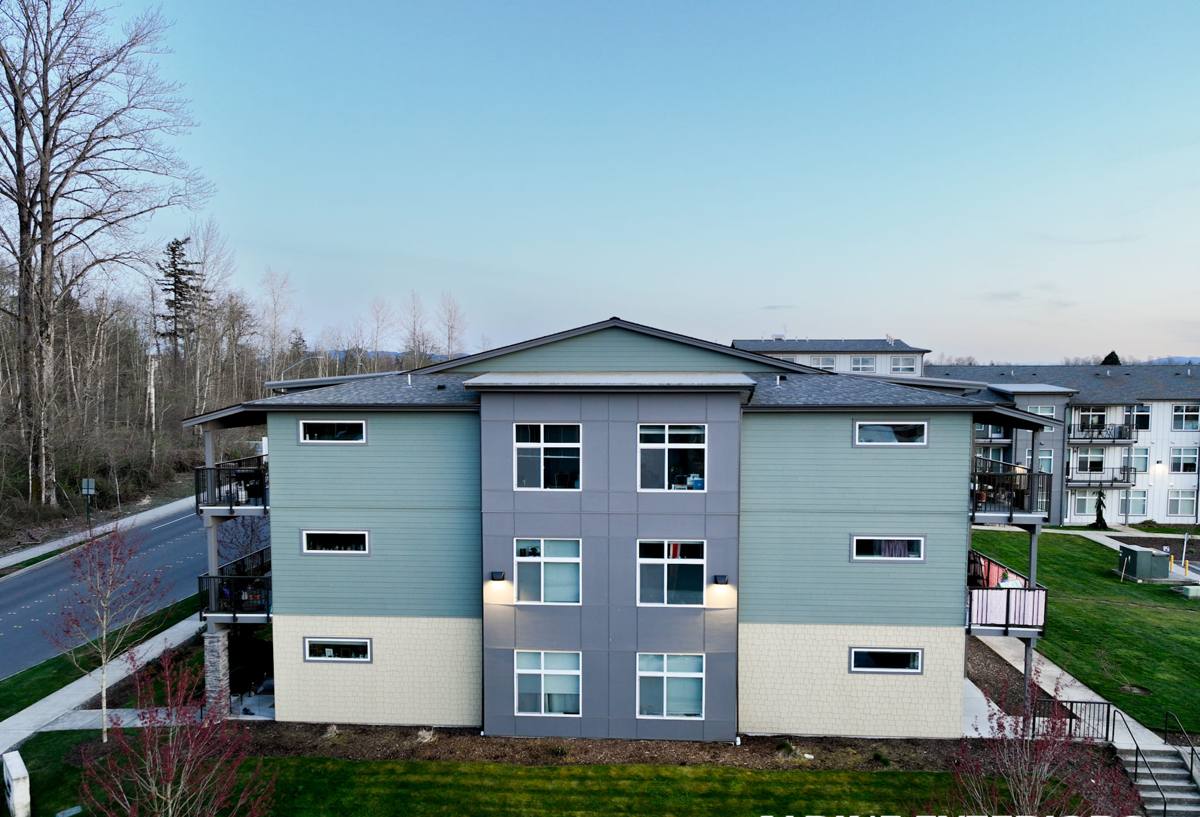
What's Actually Damaging Siding in Sudden Valley
Moss, Algae, and Shade
Tree-covered lots hold moisture longer than open ones. Morning dew and rain don't evaporate off shaded siding the way they do on a sun-exposed wall, and that extra drying time is exactly what moss and algae need to take hold. Left alone, moss doesn't just look bad, its root structure holds water directly against the siding surface, and on materials that aren't dimensionally stable, that constant dampness is what starts rot, delamination, or paint failure underneath.
Driving Rain and Wind-Driven Moisture
Whatcom County's weather isn't gentle drizzle year-round. Sudden Valley and the surrounding hills catch driving rain that gets pushed sideways into wall assemblies, especially around window trim, corner boards, and anywhere siding laps or seams weren't detailed correctly. Over time, wind-driven rain finds every gap in flashing, caulking, or panel overlap that a builder or a previous repair crew left slightly short.
Salt Air's Reach
Even set back from the coast, homes throughout this part of Whatcom County are exposed to salt-laden air moving in off the water. That airborne salt accelerates corrosion on fasteners, trim flashing, and any exposed metal components tied into the siding system, a slow process, but one that shows up as rust streaking and loosened fasteners well before most homeowners expect it.
Signs Your Sudden Valley Home Needs Siding Repair
Most siding problems don't announce themselves. They show up as small cosmetic issues years before they become structural ones. Walk your home's exterior, especially the shaded, tree-covered sides, and look for:
- Soft or spongy spots when you press on the siding, especially near the bottom courses
- Persistent moss or dark streaking that comes back within weeks of cleaning
- Visible cracking, buckling, or warping panels
- Paint that's peeling, bubbling, or chalking heavily in one area but not others
- Gaps opening up at seams, corners, or around window and door trim
- A musty smell or visible staining on interior walls that back up to exterior siding
- Rust streaks below nail heads or trim fasteners
Any one of these can be isolated and minor. Several together, especially concentrated on the shaded or lake-facing side of the house, usually point to a moisture problem that's been developing for a while.
Between Repairs: Reducing Moss and Moisture Buildup
A repair fixes existing damage, but Sudden Valley's tree cover means moss and dampness will keep pushing back unless a few maintenance habits become part of routine home care. None of this replaces a professional inspection, but it slows how fast the next problem develops.
- Trim back branches and brush that keep siding in constant shade or that touch the wall directly
- Clean gutters at least twice a year so water isn't overflowing onto siding below
- Rinse visible moss and algae with a garden hose and a soft brush rather than a high-pressure washer, which can force water behind panels and seams
- Check caulking at trim, corners, and penetrations annually, since gaps here are often where moisture gets in first
- Watch for standing water or poor drainage near the foundation, which keeps the lower courses of siding wetter longer
These habits buy time between professional repairs, but they don't fix a compromised moisture barrier or failing flashing. If moss keeps returning to the same spot no matter how often it's cleaned, that's usually a sign the underlying cause needs a proper look, not just another cleaning.
What a Correct Repair Actually Involves
Diagnosing the Cause, Not Just the Symptom
Replacing a damaged section of siding without figuring out why it failed is how the same repair ends up needed again in a few years. Before we touch a panel, we check what's behind it: is the moisture barrier intact, is flashing directing water out and away from the wall, is there a drainage or ventilation gap issue, or is the damage isolated to a single impact or installation defect? That diagnosis determines whether the fix is a straightforward panel swap or something that needs to go deeper into the wall assembly.
Matching Existing Material Correctly
A repair that doesn't match stands out against the rest of the wall: different profile, different reveal, different finish sheen, and it shows immediately, especially once the new section weathers differently than the old. On Hardie fiber cement, matching means the right plank width, the closest available ColorPlus finish match, and installation that follows the same fastening and clearance details as the original run.
Addressing the Underlying Moisture Path
If moss and shade are the ongoing issue, a repair that ignores drainage and airflow is a temporary fix. Depending on the situation, that can mean correcting flashing at trim and penetrations, restoring proper clearance between siding and grade, decking, or roof lines, or confirming the water-resistive barrier behind the panel is doing its job before new siding goes back up.
Repair or Replace: How We Make That Call
Not every damaged section needs a full re-side, and not every homeowner needs to hear replace it all from a contractor with an incentive to sell a bigger job. Here's generally how the decision breaks down:
| Situation | Repair Usually Makes Sense | Replacement Usually Makes Sense |
|---|---|---|
| Damage extent | Isolated to one or two sections or elevations | Widespread across multiple walls |
| Underlying material | Fiber cement or otherwise sound original siding | Failing wood, engineered wood, or already-delaminating panels |
| Moisture barrier condition | Intact, just needs flashing correction | Compromised across large areas |
| Age of existing siding | Well within expected service life | Nearing or past its practical lifespan |
| Color and profile match | Close or exact match available | Discontinued profile with no reasonable match |
We'll walk you through which column your situation falls into and explain the reasoning, not just hand you a number. Cost is part of that conversation too, though the honest answer is that it depends on scope. A single-section repair is mostly a matter of labor and matching material, while a repair that turns into replacing a full wall or elevation starts approaching the cost and disruption of a broader project. We'll always tell you which situation you're in before work begins, not after.
Why We Repair With James Hardie Fiber Cement, and Nothing Else
Ferndale Exterior Co installs and repairs exclusively with James Hardie fiber cement siding. We don't work with vinyl, LP SmartSide, Cemplank, Allura, or primed wood products, and that standard applies to repairs just as much as full installations. When we patch a section of siding, we want that patch to perform identically to the rest of the wall for decades, not just look right on install day.
Fiber cement doesn't absorb moisture the way engineered wood products can, and it won't rot, delaminate, or feed moss growth the way wood-based siding does when it stays damp under tree cover. Hardie's HZ5 product line is engineered for climates like ours: freeze-thaw cycling, sustained moisture exposure, and the kind of year-round dampness Sudden Valley's tree-covered lots hold onto. The factory-applied ColorPlus finish resists the fading and chalking that repainted or field-finished materials struggle with, which matters when you're trying to match a repair section to older original siding. And because it's non-combustible, a repaired section carries the same fire-resistance characteristics as the rest of the home, not a downgrade patched in for convenience. Hardie's warranty coverage is also a factor: repairs installed to spec keep that coverage intact, where patching in an off-brand product can create a gap in what's actually covered if a problem shows up later.
We won't repair a Hardie wall with a different product just because it's faster or cheaper to source. If the section needs Hardie to match and perform correctly, that's what goes up.
Our Repair Process
- On-site inspection of the damaged area and the surrounding wall assembly, including a check of flashing, trim, and moisture barrier condition where accessible
- Honest assessment of repair versus replacement, explained in plain terms with photos of what we found
- Sourcing matching Hardie plank profile and ColorPlus finish, or planning a repaint approach if an exact match isn't available
- Removing only the affected material, correcting any underlying moisture or flashing issue before new siding goes back up
- Installing to Hardie's fastening, clearance, and flashing specifications, the same standard we hold for full installs
- A final walkthrough so you can see exactly what was done and why
Why Local Experience in Sudden Valley Matters
Sudden Valley's lots come with their own logistics: tree-lined and often steeply graded driveways, homes set back from the road, and access that isn't always straightforward for a crew showing up for the first time. A crew that already works this community knows what to expect before the truck is unloaded, which means less wasted time on-site and fewer surprises mid-repair.
Local experience also means recognizing the pattern faster. A crew that's repaired shaded, tree-covered homes around this part of Whatcom County knows to check the north-facing wall first, knows what moss regrowth after a supposed fix usually means, and knows which flashing details tend to get missed on homes sided years ago under older standards. That's the kind of judgment that comes from doing this work in this specific area, not from a general siding repair checklist.
If you're seeing moss, soft spots, or recurring damage on your Sudden Valley home's siding, we're happy to take a look and give you a straight answer about what's actually going on, with no pressure and no inflated scope. Reach out for a free estimate using the form below.