 Ferndale Exterior
 Windows Built for Whatcom County's Wet Winters
Sumas sits in a part of Whatcom County that sees a lot of weather move through — long stretches of low pressure off the water, driving rain that comes in sideways more often than straight down, and a moss and mildew season that can stretch from October well into spring. Windows take the brunt of that. They're the thinnest part of your exterior envelope, the most common source of a slow leak, and usually the first thing to show its age when the caulking dries out or the frame starts to swell.
Ferndale Exterior Co installs windows for homeowners across this part of the county, and we treat every Sumas job the same way we'd treat a job on our own street: right flashing detail, right sealant, right fit, no shortcuts that show up as a stain on the drywall two winters from now.
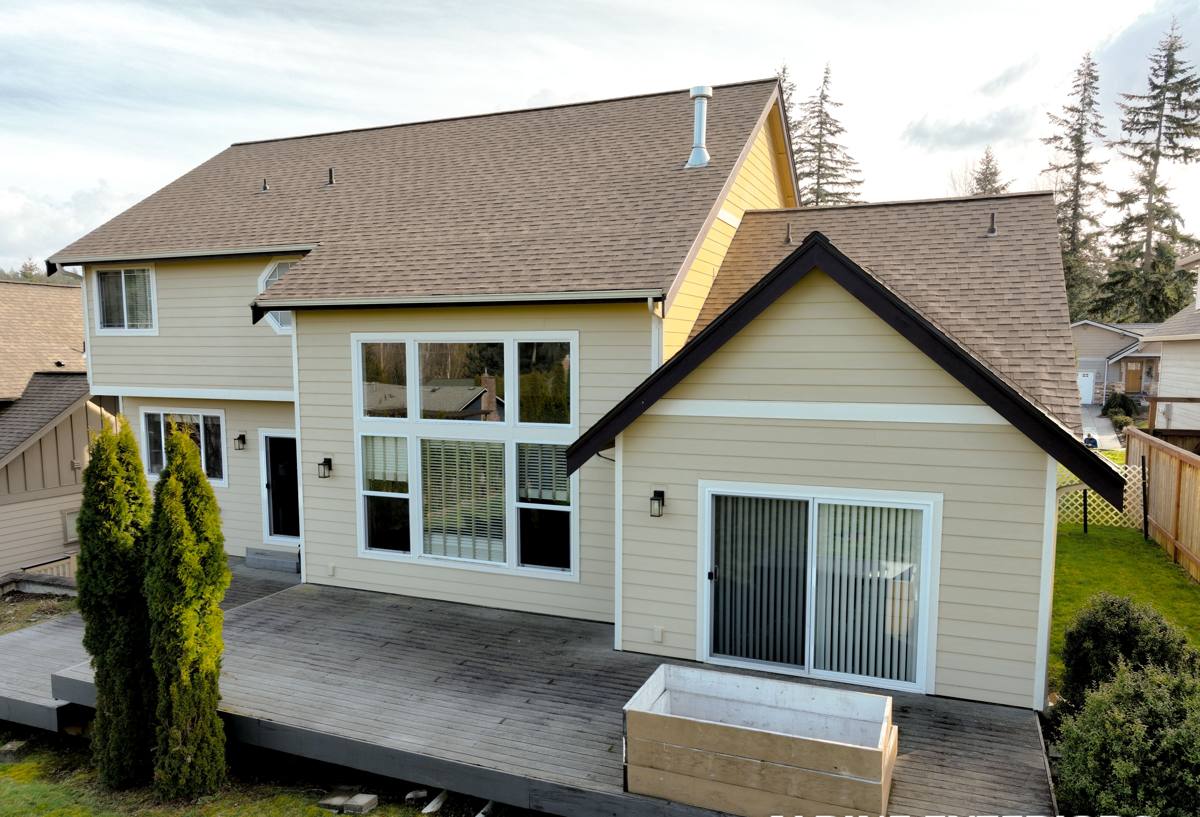
What Sumas Homes Need From a Window Installation
Most of the housing stock in and around Sumas falls into two camps — older homes with original wood-frame windows that have been repainted and re-caulked more times than anyone can count, and newer builds with vinyl or aluminum units that were installed fast during a build-out and never really detailed for long-term water management. Both situations create the same underlying risk: water finding a path behind the window trim instead of running off the face of it.
The local factors that actually matter
- Driving rain exposure — walls facing the prevailing weather take rain at an angle, which pushes water into gaps that a straight-down rain would never reach.
- Moss and organic buildup — moss holds moisture against trim and sills long after the rain stops, which accelerates wood rot and keeps vinyl frames damp enough to breed mildew in the corners.
- Temperature swings — Whatcom County gets enough cold snaps to matter. Poorly sealed or single-pane windows lose heat fast and condensate on the inside, which is its own slow damage problem.
- Wind-driven moisture at gable ends and upper stories — these areas often get skipped or under-flashed during original construction because they're harder to reach.
Signs Your Windows Are Past Their Prime
You don't need to wait for an obvious leak to know a window needs attention. The early signs are usually smaller and easy to write off as normal wear:
- Wood trim or sills that feel soft, spongy, or show dark staining
- Persistent condensation between panes (a sign the seal on a double-pane unit has failed)
- Drafts you can feel with a hand near the frame on a windy day
- Paint or caulking that's cracked, peeling, or pulling away from the frame
- Difficulty opening, closing, or locking the sash — often a sign the frame has shifted or swollen
- Visible daylight at the corners of the frame from outside
Any one of these on its own might just mean a repair. Several at once, especially on a window over ten or fifteen years old, usually means it's time to talk replacement.
What a Correct Window Installation Actually Involves
Window installation looks simple from the outside — pull the old one, drop in the new one, caulk the edges. Done that way, it fails. A correct installation is really about water management, and most of the work that matters happens before the window is ever set in the opening.
The details that separate a good install from a callback
- Removing and inspecting the opening — checking the sheathing and framing underneath the old window for rot or soft spots before anything new goes in. A new window over a rotten sill just hides the problem.
- Flashing the opening properly — sill pan flashing, side flashing, and head flashing installed in the right shingle-lap order so water is always directed outward and down, never trapped behind the siding.
- Housewrap integration — tying the window's flashing back into the existing weather-resistive barrier so the whole system sheds water as one continuous plane, not a patchwork.
- Shimming and squaring — a window that isn't plumb and square will bind, won't seal evenly, and puts stress on the frame that shortens its life.
- Insulating the gap correctly — low-expansion foam or backer rod and sealant around the perimeter, not stuffed fiberglass that leaves air gaps.
- Exterior trim and sealant — a sealant bead that's sized and placed correctly, with weep points left open so any incidental water that does get behind the trim can drain back out instead of sitting there.
Skip any one of these steps and the window itself can be a great product and still fail early. This is where most callback leaks actually come from — not a bad window, but a rushed opening.
Our Installation Process, Step by Step
- On-site assessment — we look at each window opening individually, not just the house as a whole. Sun exposure, wind exposure, and existing damage all vary window to window.
- Measurement and product selection — accurate measurements matter more than people think; a window that's slightly undersized for its opening creates gaps that are hard to seal correctly later.
- Removal and opening prep — old window out, opening inspected, any rot or damage addressed before we move forward.
- Flashing and weather barrier tie-in — done to a consistent standard on every job, not just the ones that are easy to reach.
- Installation, leveling, and insulation — set plumb, square, and level, then insulated around the perimeter.
- Exterior finish and sealant — trim reinstalled or replaced, sealant applied with attention to drainage.
- Interior finish and walkthrough — interior trim finished, hardware checked, and every window opened and closed with you before we call it done.
Window Material Comparison
| Material | Typical Lifespan | Maintenance | Best Fit For |
|---|---|---|---|
| Vinyl | 20–30 years | Low — occasional cleaning | Most homes; good value and moisture resistance |
| Fiberglass | 30–40+ years | Low | Homes wanting a stiffer frame and better paint retention over time |
| Wood (clad exterior) | 20–30 years with upkeep | Moderate to high — exterior clad helps, but seams and sills still need attention | Homes prioritizing interior wood appearance |
| Aluminum | 20–25 years | Moderate — prone to condensation without thermal breaks | Budget-driven replacements; not our first recommendation in this climate |
In a climate with this much sustained moisture, we generally steer homeowners toward vinyl or fiberglass for their combination of low maintenance and consistent moisture resistance over decades. Wood-frame windows can still be the right call, especially for older homes where matching the existing look matters — it just means being honest upfront about the extra upkeep involved in keeping the exterior sealed and painted.
What Affects the Cost of a Window Installation
| Factor | Why It Matters |
|---|---|
| Number and size of openings | More or larger windows means more material and labor |
| Condition of the existing opening | Rot repair or reframing adds time before the new window can even go in |
| Material and glass package | Vinyl vs. fiberglass vs. wood, plus glass upgrades like low-E coatings, change unit cost |
| New construction vs. retrofit | Retrofit (insert) windows are generally faster; full-frame replacement takes longer but resets the flashing entirely |
| Trim and siding work | Matching existing exterior trim or repairing siding around the opening adds scope |
| Access and height | Second-story or hard-to-reach windows take more time and equipment |
We won't quote a price without seeing the openings in person — anyone who does is guessing. What we can say honestly: full-frame replacement costs more upfront than an insert replacement, but it's the right call when the existing frame or the flashing behind it is compromised. An insert into a sound, square frame is a reasonable and less expensive option when the opening itself is in good shape.
Why a Crew That Already Works in Sumas Matters
Window installation isn't just about the product — it's about knowing how a specific building's exposure, age, and construction type tend to fail, and building the install around that. A crew that regularly works Whatcom County homes already knows which orientations take the worst driving rain, where moss tends to build up fastest, and what original construction from different eras around here typically got wrong. That's not something you can fully substitute with a generic install checklist.
We're a Ferndale-based crew, and Sumas is well within the area we serve regularly. That means straightforward scheduling, a team that isn't learning the region on your project, and a company that's easy to reach if a question comes up after the job is done.
Keeping New Windows Performing Long-Term
- Clear moss and debris away from sills and trim before it accumulates each fall
- Check exterior caulking annually and re-seal any spots that have cracked or pulled away
- Clean weep holes on vinyl frames so water can drain instead of pooling
- Wipe down interior condensation promptly during cold snaps to protect sills and trim
- Test locks and hardware yearly — a window that's hard to latch isn't sealing fully either
None of this is complicated, but it's the difference between a window installation that performs for its full warranty period and one that starts causing problems in year six or seven.
Get a Free, No-Pressure Estimate
If your windows in Sumas are drafty, fogging between panes, or just original to a home that's due for an update, we're happy to come take a look. There's no obligation and no pressure — just a straight assessment of what your windows need and what it would take to fix it right. Use the form below to get started.