 Ferndale Exterior
 Windows in Nooksack Face a Different Set of Problems
Nooksack sits close enough to the water and far enough into the Whatcom County lowlands that homes here get a mix of weather most window manufacturers don't design for on paper: salt-laden air moving in off the coast, long stretches of driving rain that comes in sideways rather than straight down, and a wet season that can stretch from October well into April. Add in the shade and moisture that keep moss and algae active on north-facing walls and rooflines most of the year, and you've got a climate that's harder on window assemblies than the glossy brochure numbers suggest.
This isn't a scare story — it's just physics. Wood swells and shrinks with humidity swings. Aluminum and lower-grade vinyl frames can flex and gap under repeated wet-dry cycles. Weep holes clog with organic debris faster in a moss-heavy environment. And any installation that leaves even a small gap in the flashing or sealant will find that gap tested constantly, not occasionally, by wind-driven rain. A window that would last 20 problem-free years in a drier inland climate can start showing seal failure, frame rot, or air leakage in half that time here if it wasn't installed with this specific weather pattern in mind.
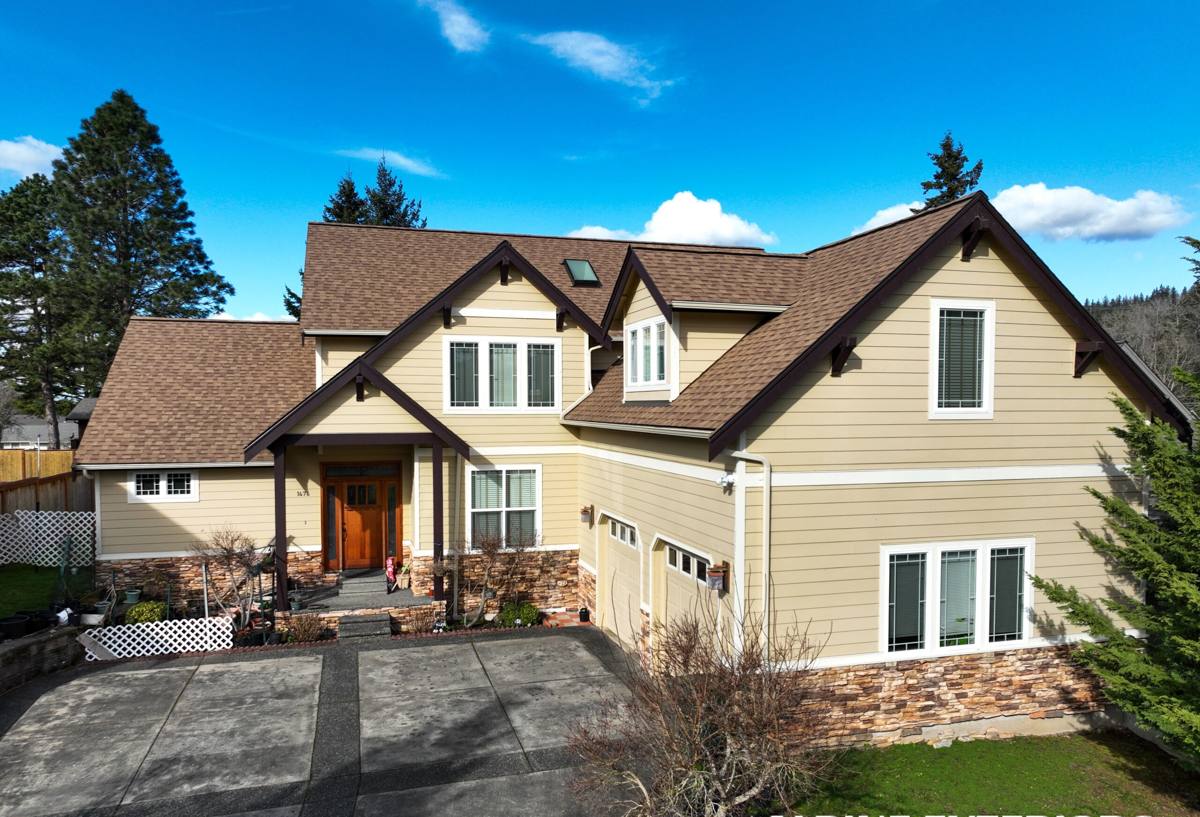
What Driving Rain and Salt Air Actually Do to a Window Over Time
Driving rain
Wind-driven rain doesn't just fall on a window — it gets pushed up and under trim, siding, and flashing that would keep out a vertical rainstorm just fine. Over years, this is what causes hidden rot behind the frame, staining on interior sills, and the soft, spongy wood you sometimes find when replacing an old window and pulling back the casing.
Salt air
Coastal-influenced air carries fine salt particles that accelerate corrosion on hardware — hinges, locks, balance systems, and screws. It's also harder on certain finishes and low-grade metal components, which is one reason we pay attention to hardware quality and finish, not just the glass and frame, when we spec a window for this area.
Moss and organic buildup
Moss doesn't grow on the glass, but it thrives in the shaded, damp channels around a window — sills, weep holes, and trim joints. Left unmanaged, it holds moisture against wood and caulk longer than it would otherwise sit, which shortens the life of both.
What a Correct Window Installation Involves
A window is only as good as the opening it's set into and the flashing detail around it. Most of the window failures we get called out to look at in this area aren't glass or frame defects — they're installation shortcuts. A correct job includes:
- Removing the old window and inspecting the rough opening and sill for hidden rot or water damage before anything new goes in
- Repairing or rebuilding any damaged framing — never installing a new window over a compromised opening
- Installing house wrap and flashing tape in the correct shingle-lap order so water is directed out and down, never trapped behind the window
- Sloping the sill pan so any water that does get in has somewhere to go besides your wall cavity
- Setting the window plumb, level, and square, then securing it per the manufacturer's fastening schedule — not just where it's convenient
- Sealing and insulating the gap around the frame with the right materials (not just a bead of caulk on the exterior trim)
- Finishing interior and exterior trim so the assembly sheds water and looks right from both sides
Skip any one of these steps and the window can look fine for a year or two while a slow leak works behind the scenes. This is the part of the job that matters more than which brand of window you choose.
Choosing the Right Window for This Climate
There's no single "best" window for every home, but some materials and configurations hold up better than others under Whatcom County's rain and humidity patterns. Here's how the common options compare for this specific environment:
| Frame Type | Moisture Resistance | Maintenance | Typical Trade-Off |
|---|---|---|---|
| Vinyl (quality grade) | Good — won't rot, resists swelling | Low | Fewer color/finish options than wood or fiberglass |
| Fiberglass | Very good — dimensionally stable in wet-dry cycles | Low | Higher upfront cost |
| Wood (clad exterior) | Good if properly detailed and maintained | Moderate to high | Interior warmth and appearance, but exterior wood needs upkeep |
| Aluminum | Fair — prone to corrosion near salt air unless specifically treated | Moderate | Slim sightlines, but our least-preferred option for this coastal-influenced area |
We also pay close attention to glazing. Dual-pane, low-E glass is the practical baseline here — it manages condensation better in a humid climate and cuts down on the heat loss that matters through a long, damp winter. For homes exposed to wind and driving rain on one particular side, we'll sometimes recommend a higher-performance seal or an upgraded weatherstripping package on just that elevation rather than the whole house, which keeps the upgrade cost reasonable and targeted.
Our Installation Process
We approach every Nooksack-area job the same deliberate way, because cutting a corner on prep work is how a window that looks perfect on install day turns into a leak two winters later.
- On-site assessment — we look at each opening individually, not just the house as a whole. Sun exposure, wind direction, roofline runoff, and existing moisture damage all factor into the plan.
- Measurement and product selection — accurate measurements and a frame/glazing choice matched to that specific wall's exposure.
- Removal and opening inspection — old window out, framing checked and repaired as needed before anything new is set.
- Flashing and sill pan installation — the step that actually determines whether the window stays dry for the next few decades.
- Window set and fastening — plumb, level, square, fastened to spec.
- Sealing and insulation — interior and exterior, using materials suited to our humidity levels.
- Trim and finish — clean lines inside and out, detailed so water sheds away from the assembly.
- Final walkthrough — we operate every window with you before we call the job done.
Signs Your Nooksack-Area Windows Need Attention
Not every window needs full replacement — sometimes a repair, reseal, or hardware fix solves the problem. Here's a quick self-check:
- Fogging or moisture between panes (a sign the seal has failed)
- Soft or discolored wood/trim around the frame, inside or out
- Drafts you can feel near the frame even when the window is latched
- Windows that are difficult to open, close, or lock
- Visible gaps, cracked caulk, or peeling paint at the frame-to-wall joint
- A musty smell or visible mold near the sill, especially after a stretch of rain
If you're seeing more than one or two of these, it's worth having someone look at the whole opening — not just the glass — before deciding between repair and replacement.
What Affects the Cost of a Window Installation
| Factor | Why It Matters |
|---|---|
| Frame material and glazing package | Vinyl, fiberglass, and clad-wood options carry different material costs and long-term maintenance needs |
| Condition of the existing opening | Hidden rot or framing repair adds labor before the new window ever goes in |
| Window size and configuration | Larger units, custom shapes, or multi-window bays cost more than standard single units |
| Number of windows and access | Whole-house projects have per-unit efficiencies that single replacements don't |
| Flashing and exterior finish work | Proper weatherproofing detail takes real time — it's not an optional add-on in this climate |
We don't quote a job over the phone with a flat per-window number, because the condition behind the old window is often the biggest cost variable — and we won't know that until we open it up. What we can promise is a written estimate that spells out exactly what's included, with no surprise charges for the flashing and prep work that actually keeps your walls dry.
Why Hiring a Crew That Already Works in Nooksack Matters
Window installation isn't a one-size-fits-all trade. A crew that mostly works drier inland climates may not think twice about flashing detail that's non-negotiable out here. Working regularly in Ferndale and the surrounding Whatcom County communities means we already know which elevations on a typical local home take the worst of the wind-driven rain, how moss buildup tends to accumulate around sills and trim in this area, and which frame and hardware choices actually hold up rather than just perform well on paper. That local pattern-recognition is the difference between an installation that looks good on day one and one that's still watertight ten winters from now.
If you're weighing a window replacement or just want a second opinion on windows that aren't performing the way they should, we're happy to take a look. Request a free, no-pressure estimate using the form below and we'll walk your home's specific exposure with you before recommending anything.