 Ferndale Exterior
 Sandy Point Is a Different Window Job Than Most of Ferndale
Sandy Point sits right up against the water, and that changes what a window installation needs to hold up against. A window that performs fine a few miles inland in Ferndale can start showing corrosion, seal failure, or moisture staining years earlier out here simply because of what's blowing off the Strait. Salt-laden air, near-constant onshore wind, and driving rain that hits window walls almost horizontally instead of straight down all put more stress on the frame, the flashing, and every seam around the opening.
We're not talking about exotic problems. It's the ordinary stuff — corrosion on hardware and fasteners, degraded seals, water finding its way behind trim — happening faster and more often than it would in a more sheltered part of Whatcom County. A correct installation in Sandy Point accounts for that from the start instead of treating it as a standard job.
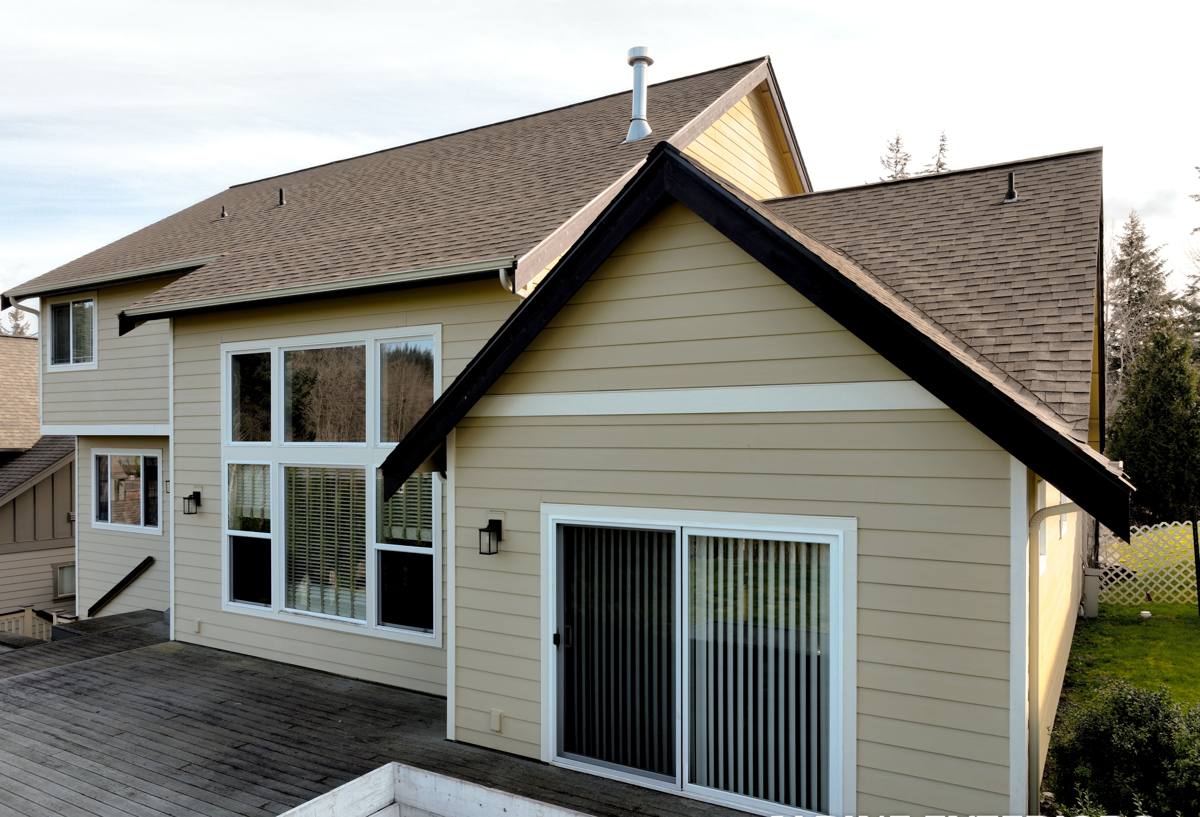
What Salt Air and Coastal Weather Actually Do to Windows
It helps to understand the specific mechanisms at work, because they point directly to what a good installation should do differently.
Salt Air and Corrosion
Airborne salt is corrosive to bare metal. Aluminum hardware, uncoated fasteners, and some window frame components can pit and corrode well before their expected lifespan when they're sitting a short distance from saltwater. This shows up first as sticking locks, stiff cranks on operable windows, and streaking around hardware — small signs that the metal underneath is breaking down.
Wind-Driven Rain
Rain that's pushed sideways by onshore wind behaves differently than rain falling straight down. It gets forced into gaps, laps, and seams that would stay dry in calmer conditions. That's why flashing detail and sealant work matter more here than the window unit itself — most leaks trace back to how the opening was prepared and sealed, not a defect in the window.
Moss Season and Moisture Retention
Whatcom County's long wet season keeps north-facing and shaded elevations damp for months at a time. Moss and algae growth on siding and trim around window openings holds moisture against the wall longer than it would otherwise sit there. Over years, that moisture cycle is what rots wood trim and sheathing around an aging window — often quietly, until the interior sill or drywall finally shows it.
Choosing a Frame Material That Matches Sandy Point's Exposure
There's no single "best" window material for every home, but some hold up to salt air and coastal moisture better than others with less upkeep. We walk homeowners through the real trade-offs rather than pushing one product line.
| Frame Material | Salt Air Performance | Maintenance | Typical Trade-Off |
|---|---|---|---|
| Vinyl | Does not corrode; handles salt exposure well | Low — occasional cleaning | Less rigid at very large sizes; color choices are more limited |
| Fiberglass | Excellent — very stable, resists corrosion and warping | Low | Higher upfront cost than vinyl |
| Aluminum | Prone to pitting and corrosion near saltwater without upgraded coatings | Higher — hardware and finish need monitoring | Strong and slim sightlines, but our standard is to steer coastal clients away from bare or standard-finish aluminum |
| Wood-clad | Good if cladding is intact; exposed wood suffers in this climate | Highest — cladding seams and end grain need periodic checks | Attractive interior look, but more sensitive to installation quality here |
We're not saying aluminum or wood-clad windows are bad products — they're used successfully all over the country. Our position is simply that in a direct-salt-exposure setting like Sandy Point, vinyl and fiberglass frames give homeowners more years of trouble-free performance for less maintenance, and that's what we recommend as our default here.
What a Correct Installation Actually Involves
The window unit itself is maybe a third of what determines whether it performs well for the next twenty years. The rest is in the details of how it goes into the wall.
Removal and Opening Inspection
Once the old window is out, we check the rough opening — sheathing, framing, and any existing flashing — for rot or moisture damage before anything new goes in. In a coastal setting, this step catches problems that a surface-level look at the old window would never reveal.
Flashing and Water Management
This is the single most important step for wind-driven rain resistance. A proper sill pan directs any water that gets past the window to the outside instead of into the wall cavity, and flashing tape integrates with the weather-resistive barrier so water sheds down and out at every layer, not just at the surface caulk line.
Setting, Shimming, and Fastening
The window has to sit level, square, and plumb, with shims placed to support the frame without distorting it. In coastal conditions we use corrosion-resistant fasteners rather than standard hardware, since this is one of the cheapest details to get right and one of the most consequential to get wrong.
Sealing and Insulating
Low-expansion foam or backer rod and sealant fill the gap between frame and rough opening — enough to insulate and reduce air movement without bowing the frame. Exterior sealant beads at the trim and flange are chosen for flexibility and adhesion in a wet, salt-exposed environment, not just whatever caulk is on the truck.
Trim and Finish
Exterior trim gets back-primed or capped where wood is used, and joints are sealed before paint or caulk goes on — sealing over bare, unprimed wood is one of the more common shortcuts that leads to early trim rot in this climate.
Glass Packages and Weatherstripping Worth Considering
For a home facing open water and wind, a few glass and hardware choices are worth discussing beyond the base package:
- Dual or triple-pane glass with an appropriate low-E coating for comfort and condensation control in a cold, damp climate
- Impact or heavier-duty glass options where wind-borne debris is a realistic concern on an exposed lot
- Multi-point locking hardware with corrosion-resistant plating, which seals tighter against driving rain than single-point locks
- Compression-style weatherstripping that holds up better to repeated wind pressure than basic foam strips
None of these are mandatory upgrades for every home — they're worth weighing against your specific exposure, budget, and how long you plan to stay in the house.
Our Process, Start to Finish
We keep the process straightforward and try not to leave homeowners guessing at any stage:
- On-site assessment of existing windows, openings, and any visible moisture or corrosion issues
- Honest walkthrough of material and glass options based on your home's specific exposure
- Written estimate with no pressure to decide on the spot
- Careful removal and inspection of each opening before the new window goes in
- Proper flashing, sealing, and fastening as described above — this is where we spend the extra time coastal jobs need
- Interior and exterior finish work, cleanup, and a final walkthrough with you
We work one opening at a time so your home isn't sitting exposed to Whatcom County weather any longer than necessary, and we don't leave a job mid-installation overnight if it can be avoided.
Signs a Sandy Point Home May Need New Windows
Coastal wear doesn't always announce itself with an obvious leak. Watch for:
- Sticking, stiff, or hard-to-lock hardware, especially on windows facing the water
- Visible pitting, chalky residue, or corrosion streaks on metal frames or hardware
- Fogging or moisture between panes, indicating a failed seal
- Soft or discolored trim and sill wood, particularly on north-facing or shaded walls
- Persistent moss or algae buildup directly around a window opening
- Noticeable drafts or cold spots near the frame during windy weather
- Difficulty opening or closing a window that used to move freely
Any one of these on its own isn't necessarily urgent, but a few together are usually a sign the window and its surrounding flashing are past their useful life.
What Affects the Cost of a Window Installation Here
We'd rather explain the real cost drivers than quote a flat number that doesn't apply to your house. Broadly, projects run from a modest per-window cost for a single standard-size vinyl replacement up into a much larger range for full-house jobs with upgraded glass or larger openings — the factors below are what actually move that number.
| Factor | Why It Matters |
|---|---|
| Frame material | Vinyl is typically the most affordable; fiberglass and wood-clad cost more upfront |
| Window size and count | Larger openings and whole-house projects have different labor and material needs per unit |
| Glass package | Triple-pane, impact-rated, or specialty coatings add cost over a standard dual-pane unit |
| Condition of the rough opening | Rot or moisture damage found during removal adds repair work before the new window can go in |
| Accessibility | Second-story or hard-to-reach openings take more time and equipment |
| Trim and finish scope | Full trim replacement or repainting adds to the base installation cost |
We give a firm, itemized estimate after seeing the actual openings — not a ballpark over the phone — because the condition behind the old window matters as much as the window itself.
Why a Crew That Already Works Sandy Point Matters
A contractor who mostly works inland jobs can still install a window competently, but they may not default to the flashing details, fastener choices, and sealant products that hold up to direct salt exposure — because most of their jobs don't need them. A crew that regularly works Sandy Point and similar Whatcom County waterfront areas treats those details as standard practice, not an upgrade.
There's also a practical side to being local: we're familiar with the permitting expectations in Whatcom County, we can get back out to a job site quickly if a question comes up after installation, and we're not learning the neighborhood's weather patterns for the first time on your project. For a home that takes this much weather, that local familiarity shows up in how the job holds up five and ten years down the road, not just on install day.
If you're weighing new windows for a Sandy Point home — whether it's one problem window or a full-house replacement — we're happy to take a look and give you a straight answer about what your home actually needs. Reach out for a free, no-pressure estimate using the form below.