 Ferndale Exterior
 Why Composite Decking in Bellingham Needs to Match the Climate, Not Just the Budget
Composite decking is popular around Bellingham for good reason — it holds its look longer than wood and asks a lot less of you year to year. But "composite decking" isn't one product, and not every composite board is built to handle what this part of Whatcom County actually throws at an outdoor deck. Bellingham's mix of marine air off Bellingham Bay, wind-driven rain, and a moss season that can run most of the year on shaded lots is a specific kind of punishment. A board that performs fine in a dry, inland climate can fade, stain, or develop soft spots at the fasteners years earlier out here if it wasn't chosen and installed with that in mind.
We build decks for homes in and around Bellingham regularly, and this page covers what actually matters for a composite deck in this specific climate — not a generic national guide, but what we've learned building here.
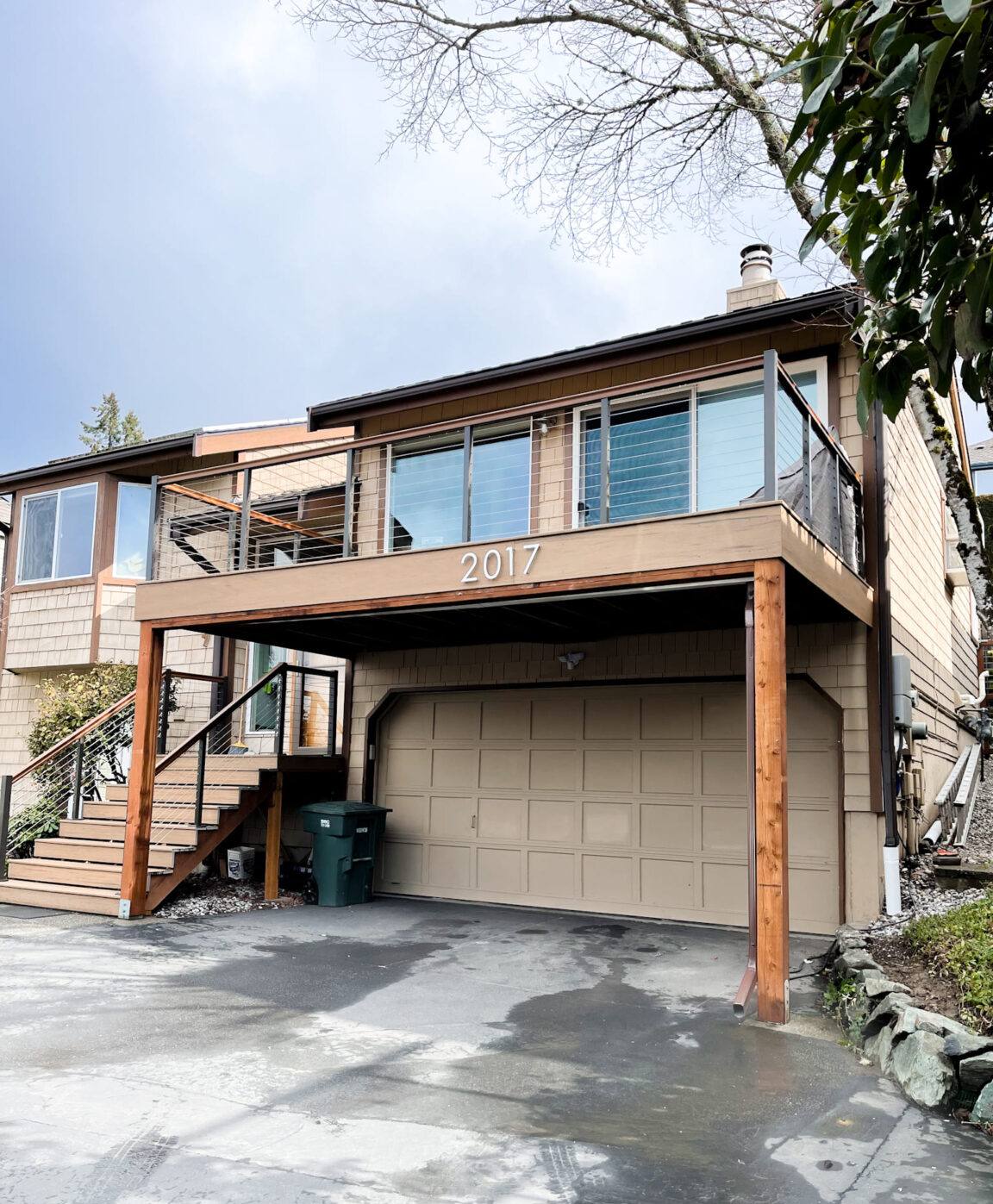
What This Corner of Whatcom County Does to a Deck
Salt Air Off Bellingham Bay
Homes closer to Bellingham Bay and the Salish Sea pick up a steady dose of salt-laden air, and it doesn't take a waterfront lot to feel it — that marine air moves inland on the wind. Salt accelerates corrosion in exposed metal: fasteners, brackets, railing hardware. A fastener that's slowly corroding loses holding strength well before it looks obviously bad, and on a deck, the fasteners are doing structural work, not just cosmetic work. That's part of why fastener grade isn't a place to save money on a build out here.
Driving, Wind-Pushed Rain
Rain in this part of Washington rarely falls straight down. Wind pushes it sideways, into board gaps, under railing posts, and against the ledger where a deck ties into the house. That matters more for the structure underneath a composite deck than for the boards themselves — composite doesn't rot, but the framing beneath it can if water gets driven into places it shouldn't collect and isn't given a way to drain and dry out.
A Moss Season That Barely Takes a Break
Bellingham's shaded, tree-lined lots and long wet stretches make for near-constant moss and algae pressure on any horizontal surface that doesn't get much sun or airflow. On a deck, that shows up as a slick, green film on boards in shady corners and buildup in the gaps between them if those gaps aren't kept clear. It's manageable, but it's a maintenance reality specific to this climate that a lot of manufacturer literature written for drier states doesn't really address.
What "Composite Decking" Actually Covers
Capped vs. Uncapped Composite
Capped composite boards have a plastic shell wrapped around a wood-plastic composite core. That cap layer is what actually resists moisture absorption, staining, and UV fade — the core underneath is protected, not exposed. Uncapped composite is the older style of the product: the wood-plastic blend is exposed on all sides, so it can absorb moisture and is more prone to mold, mildew, and surface wear over time. In a climate this wet, that difference shows up faster than it would somewhere drier, which is why we standardize on capped composite for decks in the Bellingham area.
Where PVC Decking Fits In
Some manufacturers also make fully cellular PVC decking, which contains no wood fiber at all. PVC resists moisture completely and some product lines are less prone to mold and mildew buildup in shaded, damp spots than composite, but it can flex more under heavy point loads and generally costs more up front. We'll talk through whether capped composite or PVC is the better fit for a given deck based on how shaded the site is, budget, and how the space gets used — it depends on the lot, not a blanket answer.
What a Correct Composite Deck Build Involves Here
The decking boards get most of the attention, but the substructure and fastening details are what actually determine whether a deck holds up through a Whatcom County winter. A build done right for this climate includes:
- Pressure-treated framing rated for ground contact and moisture, sized and spaced to the specific composite product's span rating
- Corrosion-resistant fasteners throughout — standard-grade hardware corrodes faster in salt-tinged marine air
- Hidden fastener systems on the deck surface where the product allows, which reduce exposed metal and leave fewer gaps for moss and debris to collect in
- Correct board gapping for expansion, contraction, and drainage — composite moves with temperature differently than wood, and gapping has to account for that
- Proper ledger board flashing where the deck attaches to the house, since this connection point is one of the most common places wind-driven rain causes hidden damage
- Ventilation and drainage beneath the deck so moisture doesn't sit against the framing on shaded, slow-to-dry sites
- Railing and post attachment sized to hold up under regional wind exposure, especially on elevated decks
- Layout and orientation, where the site allows it, that gives shaded areas of the deck at least some airflow and sun to slow moss growth
Skip any one of these and the deck usually still looks fine on install day. The problems show up two, five, or ten years in — a soft spot in the framing, a loosening railing post, or fasteners that have corroded enough to stain the boards around them.
Composite Decking vs. Other Materials
Here's how composite stacks up against the other decking materials homeowners in this area typically weigh it against:
| Material | Moisture & Salt-Air Resistance | Moss & Algae Resistance | Maintenance | Typical Lifespan |
|---|---|---|---|---|
| Capped composite | Strong — cap layer resists moisture and staining | Good; needs periodic washing in shaded spots | Occasional washing; no sealing or staining | Long-term, backed by manufacturer warranty |
| Cellular PVC | Excellent — no wood fiber to absorb moisture | Good to very good depending on the line | Occasional washing; no sealing or staining | Long-term, generally at a higher upfront cost |
| Uncapped composite | Moderate — absorbs some moisture over time | Weaker; more prone to mold and surface growth | Periodic cleaning to manage mold and staining | Shorter than capped products in this climate |
| Pressure-treated wood | Weak against sustained wet exposure and salt air | Weak; moss and algae take hold quickly if untreated | Regular sealing or staining required | Shortest, with the most ongoing upkeep |
| Cedar | Naturally rot-resistant but still absorbs moisture | Weak in shaded, damp spots without upkeep | Periodic oiling or staining to prevent graying | Moderate if maintained; degrades faster if neglected |
What Drives the Cost of a Composite Deck
Composite decking costs more upfront than pressure-treated wood and less than most PVC systems, but the real spread in project cost usually comes from these factors:
| Factor | How It Affects the Price |
|---|---|
| Board tier and brand | Entry-level capped composite and premium composite lines can differ substantially per square foot |
| Deck size and layout | Simple rectangular layouts cost less per square foot than decks with multiple levels, angles, or cutouts |
| Substructure condition | An existing deck with sound framing can sometimes be resurfaced; failing framing means a full rebuild |
| Railing style and material | Composite or metal railing systems cost more than basic wood rail but need far less upkeep |
| Site access and tear-off | Removing an old deck and hauling material off a tight or sloped lot adds labor time |
| Permitting and structural requirements | Elevated decks, guardrail height, and footing requirements vary by jurisdiction and site conditions |
We'll walk a site and give a real number based on these factors rather than a rough per-square-foot estimate that doesn't account for what your specific deck actually needs.
What Composite Decking Still Asks of You
Composite is low-maintenance compared to wood, not maintenance-free — especially in a climate that grows moss on nearly anything that sits still. A little routine care keeps a Bellingham-area deck looking like new for years:
- Rinse or wash the surface periodically, especially shaded sections, to keep moss and algae from getting a foothold
- Keep the gaps between boards clear of needles, leaves, and debris so water and air can move through as designed
- Check railing posts and hardware once a year for early signs of corrosion or loosening
- Trim back plants or landscaping that shade the deck edge or block airflow underneath it
- Address any substructure issues — soft framing, standing water underneath — right away, since that's structural, not cosmetic
Why It Matters That We Already Work in Bellingham
A crew that mostly builds decks elsewhere in Whatcom County can still install composite decking competently, but Bellingham's mix of marine exposure, shaded lots, and heavy moss pressure has details that don't come up everywhere. We're based in Ferndale and already build and repair decks in and around Bellingham on a regular basis, which means we're not guessing at fastener grade, drainage detailing, or how a given composite line actually holds up here over years rather than months. That familiarity also means a straight answer about what your deck genuinely needs versus what's just an upsell.
Get a Straight Answer About Your Deck
Whether you're replacing a tired wood deck, building new, or just want an honest read on what a composite deck would take on your Bellingham-area property, we're happy to walk the site and lay out the options plainly. Reach out below for a free, no-pressure estimate.