 Ferndale Exterior
 Birch Bay Roofs Work Harder Than Most
Birch Bay sits right on the water, and that changes what a roof has to deal with year after year. Homes a mile inland in Ferndale get a break from the wind and salt that Birch Bay properties face daily. If you're planning a new roof out here, the install needs to account for three things working against it at once: salt-laden air moving in off the water, wind-driven rain that gets pushed sideways into laps and flashing that would stay dry elsewhere, and a moss season that runs longer than almost anywhere else in Whatcom County thanks to the shade, humidity, and mild temperatures near the shoreline.
None of that means Birch Bay needs an exotic roofing system. It means the ordinary parts of the job — underlayment choice, fastener material, flashing detail, ventilation — have to be done right, because there's less room for error before a shortcut turns into a leak or a five-year problem instead of a twenty-year roof.
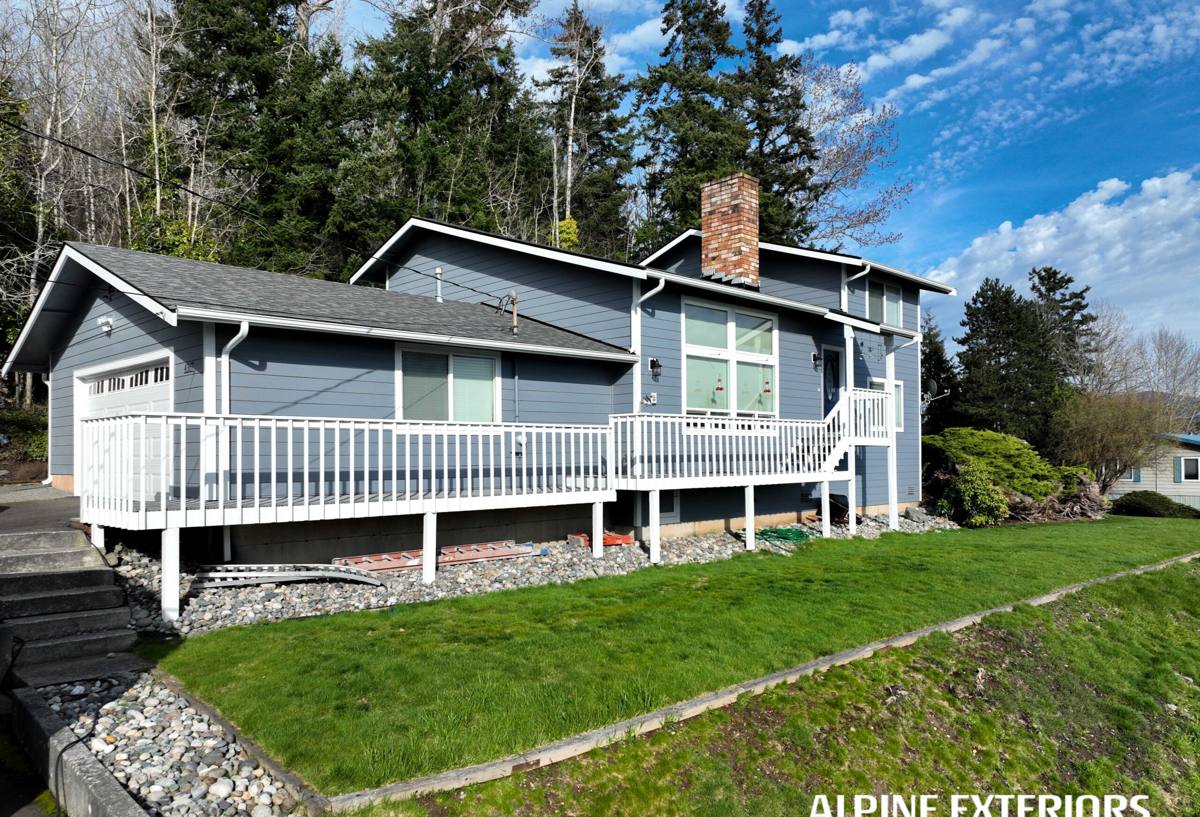
What Salt Air and Driving Rain Actually Do to a Roof
Salt Air and Metal Components
Salt in the air accelerates corrosion on anything metal — nails, staples, flashing, vent caps, even the metal drip edge along your eaves. A roof installed with standard fasteners in Birch Bay can start showing rust streaks and loosening nail heads years before the same roof would inland. This is a fastener and flashing spec issue, not a shingle issue, and it's one of the most overlooked details in a coastal roof install.
Wind-Driven Rain
Rain that comes in sideways off the water finds its way under laps, around vents, and into valleys that would shed water fine in a calmer setting. A correct install compensates with wider underlayment overlaps, properly lapped and sealed flashing, and attention to every penetration — not just the field of the roof, which is usually the easiest part to get right.
Roofing Material Options for a Birch Bay Home
There's no single "right" material for every Birch Bay roof — it depends on your home's exposure, roof pitch, and budget. Here's how the common options actually compare when salt air and moss are part of the equation.
| Material | Typical Lifespan | Wind & Rain Performance | Moss Resistance | Relative Cost |
|---|---|---|---|---|
| Architectural asphalt shingle | 25–30 years | Good with proper nailing pattern and high wind-rated product | Moderate — benefits from zinc/copper strips | $ |
| Standing seam metal | 40–50+ years | Excellent — sheds wind-driven rain well, few seams to fail | Good — sheds moss naturally on most pitches | $$$ |
| Synthetic/composite shingle | 30–50 years | Very good — engineered for wind and moisture resistance | Good, varies by manufacturer | $$ |
| 3-tab asphalt shingle | 15–20 years | Fair — lower wind rating, more seams exposed | Moderate | $ |
We'll walk through which of these actually fits your roof's pitch, sun exposure, and how much wind and salt your specific side of Birch Bay takes — a south-facing bluff lot and a sheltered inland lot a half-mile away can call for different answers.
Our New Roof Installation Process
A new roof isn't just laying down new material over what's there. Here's what a correct tear-off and install looks like for a Birch Bay home:
- Full tear-off — old roofing and underlayment removed down to the deck, not layered over.
- Deck inspection and repair — soft, rotted, or water-stained sheathing is replaced before anything new goes down. This is where hidden moisture damage from years of coastal exposure usually shows up.
- Ice and water shield at vulnerable areas — eaves, valleys, and around penetrations get self-adhering membrane, not just standard felt, because these are the spots wind-driven rain targets first.
- Synthetic underlayment across the field — more tear-resistant and water-resistant than old-style felt, and it holds up better to the wind exposure common near the water.
- Corrosion-resistant flashing and fasteners — matched to the salt exposure of the specific home, not a one-size-fits-all spec.
- Material installation — shingles, metal, or composite installed to manufacturer spec and wind-rating requirements, with attention to nailing pattern and exposure since these are what actually determine wind performance, not just the product label.
- Ventilation check and correction — intake and exhaust balanced so the attic can actually dry out between wet stretches.
- Site cleanup and magnetic sweep — nails and debris cleared from the yard and driveway.
Ventilation Matters More Near the Water
An under-ventilated attic traps moisture, and moisture trapped under a roof deck is what causes early failure from the inside out — long before the shingles themselves would have worn out. In a humid, moss-prone area like Birch Bay, we treat balanced intake and exhaust ventilation as part of the roof system, not an optional add-on. That usually means confirming soffit vents are actually open and unobstructed (they're often painted or insulated over on older homes) and pairing them with adequate ridge or roof vents so air actually moves instead of just sitting in the attic.
Why This Gets Skipped
Ventilation correction takes more time than just re-roofing over the existing setup, so it's one of the first things a rushed job leaves alone. It's also one of the cheapest things to get right while the roof is already open, and one of the most expensive things to fix later.
Flashing and Fasteners: The Details That Determine Whether a Coastal Roof Lasts
Most roof leaks don't start in the field of the roof — they start at a flashing detail: chimneys, skylights, sidewall step flashing, valleys, and vent boots. In a salt-air environment, the fastener and flashing material itself matters as much as the installation technique.
- Hot-dip galvanized or stainless fasteners instead of standard electro-galvanized, which corrodes faster near salt air
- Properly lapped step and counter-flashing at chimneys and sidewalls, sealed rather than just caulked over
- Wide valley flashing to handle higher water volume during driving rain
- Vent boots rated for UV and moisture exposure, since cracked rubber boots are one of the most common slow leaks we find
- Drip edge that actually directs water into the gutter instead of behind the fascia
Moss: The Slow, Quiet Roof Killer
Moss doesn't just look bad — it holds moisture against the roof surface, lifts shingle edges over time, and works its way into fastener holes and laps. Birch Bay's tree cover, shade, and damp air make it close to a year-round condition on north-facing slopes rather than a seasonal nuisance.
A new roof install is the right time to build in moss resistance from the start:
- Zinc or copper strips near the ridge, which release trace metal that inhibits moss growth as rain washes over the roof
- Keeping overhanging branches trimmed back so shaded, damp sections get more light and airflow
- Choosing a shingle or material line with built-in algae/moss resistance where it fits the home and budget
- Annual gentle roof cleaning rather than pressure washing, which can strip granules and shorten shingle life
Why Hire a Crew That Already Works in Birch Bay
Roofing crews that mostly work inland don't run into salt air corrosion or coastal wind exposure often enough to build it into their default spec. A crew that regularly works Birch Bay already knows which fastener grade holds up on a bluff-facing roof, which streets tend to get hit hardest by wind off the water, and which older homes in the area were built with ventilation setups that need correcting during a re-roof rather than just covering over.
That local pattern recognition also matters for logistics — coastal lots often have tighter access, septic systems to route around, or landscaping that needs protecting during tear-off — the kind of on-the-ground planning that only comes from having worked the area before, not from a general contractor showing up for the first time.
Questions Worth Asking Before You Sign a Roofing Contract
- Is this a full tear-off, or will anything be installed over the existing roof?
- What fastener and flashing material is specified for this job, and why?
- Will the deck be inspected and any repairs itemized before work starts, not discovered as a surprise mid-job?
- What's the plan for attic ventilation — is it being checked and corrected, or left as-is?
- Is the manufacturer warranty tied to a certified installer, and does that apply here?
- What's the cleanup and nail-sweep process when the job wraps?
Straight answers to these questions tell you more about the quality of a roofing job than any brochure will.
Get a Straightforward Look at Your Roof
If you're weighing a new roof for a Birch Bay property, we're glad to come take a look, tell you honestly what condition your current roof and deck are in, and walk through material options that make sense for your home's exposure and budget — no pressure, no upsell. Use the form below to request a free estimate.