 Ferndale Exterior
 Why Birch Bay Homes Wear Out Siding Faster Than Inland Ferndale
Birch Bay sits right on the water, and that changes what siding has to survive. A home a few miles inland in Ferndale deals with plenty of Pacific Northwest rain, but a home in Birch Bay deals with rain plus salt-laden air coming off the bay, plus wind that drives moisture sideways into walls instead of letting it run off a roofline. Add in the deep shade and low winter sun angle common on wooded coastal lots, and you get a near-permanent damp season that feeds moss, algae, and mildew on anything that holds moisture at the surface.
None of this is exotic or unusual for the area — it's just the normal operating environment for a Whatcom County waterfront community. But it means siding decisions that work fine in a drier, more sheltered part of the county can fail early in Birch Bay. This page is about what a siding replacement needs to get right specifically for homes in this stretch of coastline, and why we install one product system rather than offering a menu of options.
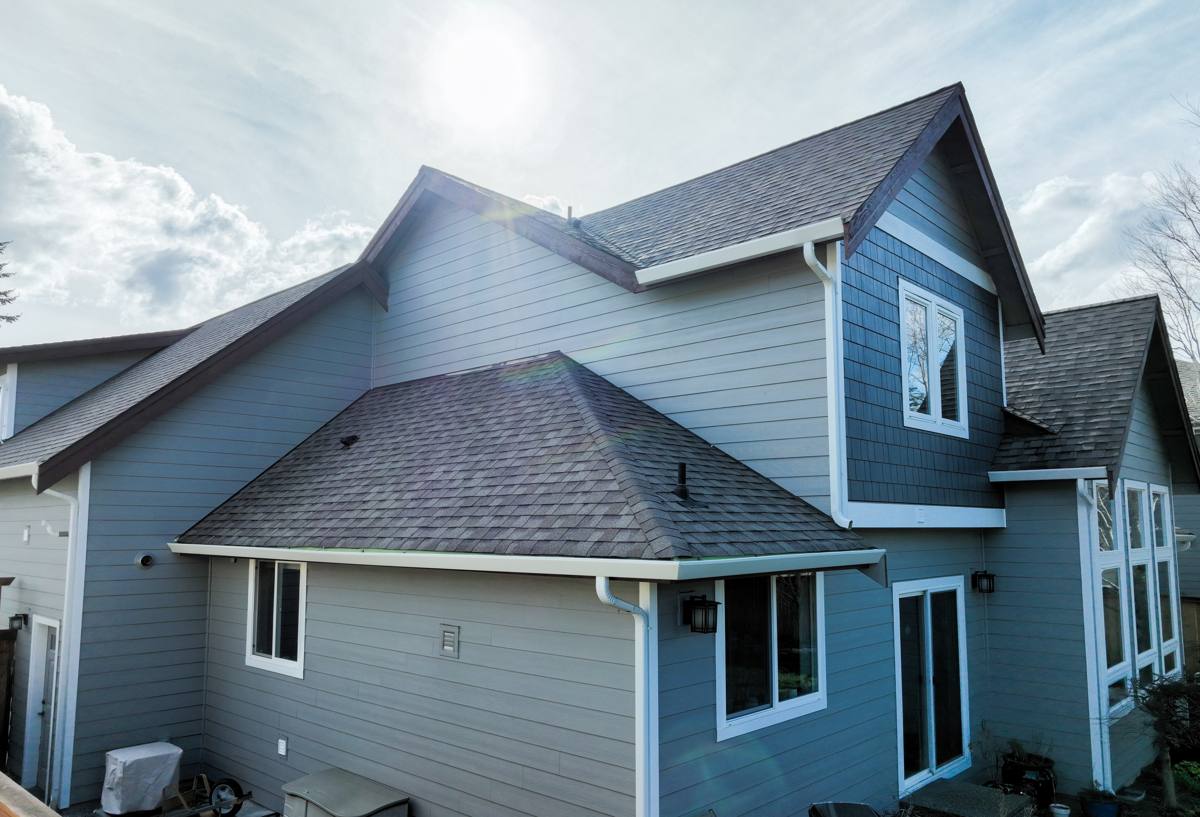
What Salt Air and Coastal Exposure Actually Do to Siding
Corrosion and fastener failure
Airborne salt accelerates corrosion on exposed metal — nail heads, staples, trim flashing, and hardware. When fasteners corrode faster than the siding around them, you get streaking, loosening panels, and eventually water finding its way behind the cladding through a compromised fastener point. This is a slow process, which is exactly why it gets missed: the siding can look fine for years while the fastening behind it quietly degrades.
Why this rules out some common materials
Vinyl siding expands and contracts more than fiber cement with temperature swings, and in a salt-air, high-wind coastal setting, that movement stresses the fastening and seams over time, making panels more prone to rattling, warping, or blowing loose in a storm. Untreated or minimally treated wood products — including primed spruce and cedar — absorb moisture at cut edges and fastener penetrations, and in a damp coastal microclimate that moisture doesn't get a long enough dry window between rain events to fully evaporate. That's the core reason we don't install those products on Birch Bay homes: it's not that they fail immediately, it's that this specific climate shortens their service life and raises the maintenance burden faster than most homeowners expect going in.
The Moss Season Problem
Whatcom County's wet season runs long, and Birch Bay's tree cover and marine air keep humidity high even between rain events. Moss and algae need three things to take hold on siding: moisture, shade, and a surface they can grip. Wood-based sidings and some engineered wood products give moss an organic surface to colonize, and once established, moss holds moisture directly against the substrate — which is the opposite of what you want from a wall assembly. Cleaning it off helps cosmetically but doesn't undo the moisture cycling that already happened underneath.
Fiber cement doesn't feed moss growth the way organic-based sidings can, and it doesn't wick moisture into its core the way wood substrates do. Moss can still land on any exterior surface in this climate — nothing is moss-proof — but the material itself isn't part of the problem, and factory-applied finishes make it easier to knock spores loose during a routine wash instead of them anchoring into the surface texture.
Why We Install James Hardie Fiber Cement — And Only That
We standardized on James Hardie products for every job we do, including Birch Bay, for reasons specific to this climate:
- Non-combustible core: fiber cement doesn't feed a fire the way wood-based sidings can, which matters for insurance conversations and peace of mind alike.
- Engineered for moisture cycling: Hardie's HZ5 product line is formulated for climates with prolonged damp seasons and freeze-thaw swings — which describes Whatcom County's coastal belt well.
- ColorPlus factory finish: the color is baked on in a controlled factory process rather than field-applied, which gives more even coverage and better resistance to fading and moisture intrusion at the finish layer than job-site painting.
- Dimensional stability: fiber cement moves far less with temperature and humidity swings than vinyl or wood, which means fewer stressed seams and fasteners over time in a windy, wet setting.
- A real transferable warranty: backed by the manufacturer and tied to certified installation, not just the installer's word.
We're not going to tell you every other product on the market is worthless — vinyl and engineered wood sidings have real advantages in the right setting, mainly upfront cost. But we don't think a lower first-day price is worth the trade-offs in a place where salt air, wind-driven rain, and a long moss season stack against a product's weak points every single year it's on the wall. That's a professional judgment call we're willing to stand behind, and it's why we don't offer those alternatives even when asked.
What a Correct Siding Replacement Actually Involves
Replacing siding is not just swapping old panels for new ones. Done right, especially on a coastal lot, it's a full wall-assembly job:
- Full tear-off, not overlay. Installing new siding over old hides whatever moisture damage is already there and traps it against the new material.
- Sheathing inspection. Every wall gets checked for soft spots, rot, or prior water intrusion once the old siding is off — this is often the first real look anyone's had at the wall in years.
- Weather-resistive barrier. A correctly lapped and sealed WRB is the actual first line of defense against wind-driven rain; siding is the second line, not the only line.
- Rainscreen or drainage gap where appropriate. Giving water a path to drain and the wall a chance to dry matters more in a high-humidity coastal setting than in a drier inland location.
- Flashing at every penetration. Windows, doors, hose bibs, vents, and any other wall penetration are where most real leaks originate — not the field of the siding itself.
- Correct fastening per manufacturer spec. Fastener type, placement, and depth affect both the warranty and how the assembly holds up to salt air over time.
- Sealed joints and trim. Butt joints, corners, and trim transitions get sealed to manufacturer spec, not just caulked wherever it looks unfinished.
Skipping or rushing any one of these steps is how a siding job looks fine at completion and then shows problems in year three or four — usually right around the areas most exposed to weather.
Our Process for a Birch Bay Siding Replacement
We walk every job the same way, adjusted for what a specific coastal lot needs:
- On-site assessment: we look at wall orientation relative to prevailing wind and salt exposure, existing moisture damage, tree cover and shade patterns, and drainage around the foundation.
- Written scope and estimate: what's being torn off, what the wall assembly will include, which Hardie profile and ColorPlus color, and a clear cost breakdown.
- Tear-off and inspection: old siding comes off, sheathing gets inspected, and we flag anything unexpected before covering it back up.
- Wall prep: WRB, flashing, and drainage details installed to spec before a single piece of siding goes up.
- Hardie installation: installed per manufacturer fastening and clearance requirements, which is also what keeps the product warranty valid.
- Final walkthrough: trim, caulking, and touch-up checked against the original scope before we call it done.
Cost Factors for a Birch Bay Project
Every home is different, so we won't quote a number without seeing the site, but these are the factors that typically move the price:
| Factor | Why It Affects Cost |
|---|---|
| Extent of hidden moisture damage | Rotted sheathing or framing found during tear-off has to be repaired before new siding goes on |
| Wall height and access | Multi-story walls, steep grades, or limited equipment access add labor time |
| Siding profile chosen | Lap, panel, and shingle-style Hardie products have different material and labor costs |
| Trim and detail work | Corner boards, window trim, and architectural detail add labor beyond flat wall footage |
| Existing drainage conditions | Sites needing added rainscreen or drainage correction take more prep time |
| House size and wall complexity | More corners, dormers, and roof intersections mean more flashing and cutting |
A Checklist Before You Hire Anyone for Siding Work in Birch Bay
- Do they do a full tear-off, or will they overlay existing siding?
- Will they inspect and document sheathing condition before covering it?
- Do they install a weather-resistive barrier and proper flashing at every penetration, or just the siding itself?
- Are they a certified installer for the specific siding product they're proposing?
- Is the warranty tied to correct installation, and will they put that in writing?
- Do they have experience specifically with coastal or high-wind exposure sites, not just inland installs?
- Is the estimate itemized, or just a single lump number with no scope detail?
Why Local Coastal Experience Matters
A crew that mostly works drier, more sheltered parts of Whatcom County can still do competent general siding work — but they may not default to the drainage details, fastening choices, and flashing attention that a salt-air, high-wind site actually needs unless they're used to building for it. We work Ferndale and the surrounding coastline regularly, including Birch Bay, so accounting for wind direction, salt exposure, and prolonged damp seasons isn't a special add-on for us — it's just how we build every wall assembly out here.
That local familiarity also shows up in smaller ways: knowing which lots hold moisture longer because of tree cover, which orientations take the worst of winter storms off the water, and what kind of wear is normal on a 10- or 15-year-old coastal install versus what signals a problem needing attention now.
Get a Straight Answer on Your Birch Bay Siding
If your siding is showing moss buildup that keeps coming back, soft spots, or visible wear that seems faster than it should be for its age, it's worth having someone look at the wall assembly, not just the surface. We offer free, no-pressure estimates for Birch Bay homeowners — use the form below and we'll take a look and give you a straight answer on what your home actually needs.