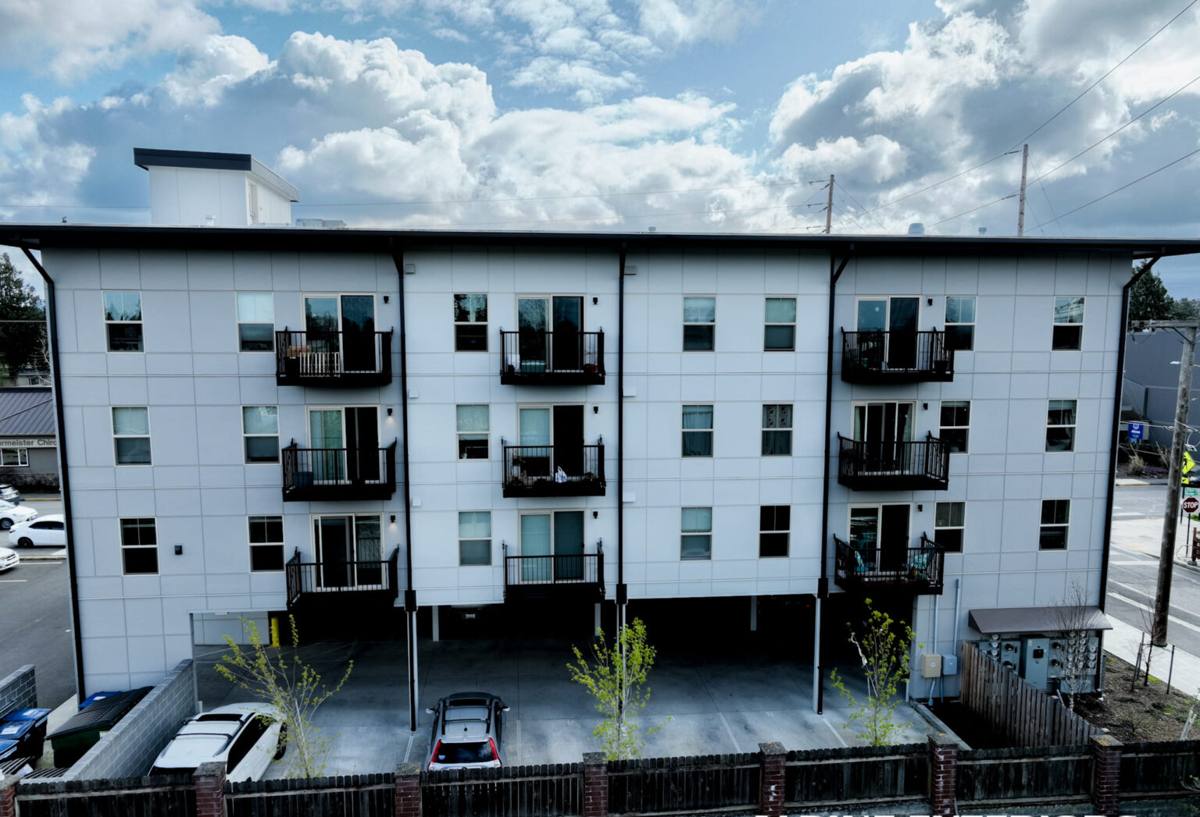
 Ferndale Exterior
 Building New in Point Roberts: What the Windows Have to Handle
Point Roberts sits on its own peninsula at the southern tip of Boundary Bay, cut off from the rest of Whatcom County by water and by the border itself. Any new home going up out there is exposed on multiple sides to open water, which means the windows aren't just letting in light and view — they're the first line of defense against a climate that's harder on building materials than most inland Ferndale lots ever see. Getting new-construction windows right here isn't about picking a pretty style from a catalog. It's about understanding what salt air, wind-driven rain, and a long wet moss season do to glazing, frames, and the rough openings around them, and building the installation to outlast all three.
New construction gives you one real advantage over a remodel: you get to do it right the first time, before drywall, siding, and trim lock in mistakes. That's the opportunity — and also the reason it's worth hiring a crew that has actually worked this specific stretch of coastline before.
The Climate Factor: Salt Air, Driving Rain, and Moss Season
Salt Air and Corrosion
Homes close to Boundary Bay and the Strait of Georgia sit in a marine air envelope that carries fine salt spray well inland from the shoreline. Over years, that salt attacks unprotected metal — hinges, cranks, screws, cladding fasteners — and it accelerates the breakdown of lower-grade finishes on aluminum and vinyl. It doesn't happen overnight, but it's a steady, cumulative process, and it's one of the main reasons hardware and cladding choice matters more here than on a similar new build twenty miles inland in Ferndale.
Driving Rain
Wind off the water doesn't just bring rain straight down — it pushes it sideways, into every seam, joint, and reveal in a window assembly. A window that's watertight in a light straight-down shower can still leak under wind-driven rain if the flashing details weren't built for lateral pressure. New construction lets us build those details correctly from the sheathing out, rather than patching around what's already there.
Moss and Prolonged Dampness
Whatcom County's wet season runs long, and shaded or north-facing elevations in Point Roberts can stay damp for weeks at a stretch. Moss and algae take hold anywhere moisture sits — on sills, in corner joints, in any recess that doesn't shed water and dry out. Left unaddressed, that trapped moisture works into wood trim and sheathing over time, which is a maintenance and rot issue, not just a cosmetic one.
What "Correct" Looks Like on a New-Construction Install
New-construction windows use a nailing flange that gets integrated directly into the wall's water-resistive barrier (WRB) before siding goes on — a very different job from a pocket-style replacement window dropped into an existing frame. Because the whole wall assembly is open, this is where the real weatherproofing work happens, and it's also where corners get cut on jobs that don't hold up.
- Sill pan flashing under every opening, sloped to shed any water that gets past the glass to the outside, not into the wall cavity
- Proper flashing shingle-lap sequence — sill, then jambs, then head — so water is always directed down and out, never trapped behind a layer above it
- Full WRB integration, with house wrap or weather barrier lapped correctly over the flange, not just taped on top as an afterthought
- Backer rod and quality sealant at the interior and exterior joints, sized and installed for the reveal, not just caulked over gaps
- Shimming and squaring the unit plumb, level, and true before fastening, so the sash operates correctly and the seal isn't stressed out of shape
- Fastener selection rated for coastal exposure, so hardware doesn't become the weak point five years down the road
Skip any one of these steps and the window itself can be top quality and still fail — most window leaks in new construction trace back to flashing and sequencing errors, not the unit itself.
Choosing Materials and Glass for a Boundary Bay Exposure
There's no single "best" window brand for coastal builds — there's a best fit for the exposure, the budget, and how the home is being used. Our job is to walk through the honest trade-offs with the builder or homeowner rather than push one product line.
| Frame Material | Coastal Performance | Maintenance |
|---|---|---|
| Vinyl | Good corrosion resistance since there's no bare metal exposed to salt air; performance depends heavily on the quality of the extrusion and welded corners | Low — occasional cleaning, no painting or sealing |
| Fiberglass | Very stable dimensionally in temperature and moisture swings, strong resistance to salt exposure | Low to moderate — finish holds up well but isn't infinite |
| Aluminum-clad wood | Attractive and strong when detailed well, but any break in the cladding or seal exposes wood to sustained moisture | Higher — needs monitoring at joints and sills, especially in shaded, damp locations |
| Bare aluminum | Most exposed to salt-air corrosion over time unless it carries a marine-grade finish | Highest — finish and hardware need regular attention |
On glass, we typically recommend dual-pane low-E units with a warm-edge spacer for this area — the spacer matters as much as the glass coating, since a failing spacer is usually what causes fogging between panes years later. For west- and south-facing walls that catch more wind-driven rain, we also pay close attention to sightline depth and drainage design, not just the glass package.
Where We Draw the Line
We don't install bargain-tier vinyl units with unsealed multi-chamber frames or non-welded corners on coastal new construction. It's not that the product is worthless everywhere — it's that the seams and low-grade seals on that class of window are exactly the failure points that salt air and driving rain find first. On a new build, where the window is going in once and getting buried under siding and trim, we'd rather spec a unit that matches the exposure than save a builder a small amount up front and have a callback in a few years.
Working Within Washington's Energy and Building Code
New-construction windows in Whatcom County have to meet the Washington State Energy Code's U-factor and solar heat gain requirements for the applicable climate zone, and bedroom windows need to meet egress size and sill-height rules. On a new build these numbers get locked in at the framing and window-schedule stage, so we coordinate directly with the builder or architect early — swapping a window size or performance rating after rough opening framing is a costly change order, and it's avoidable with one conversation up front.
Why Point Roberts Logistics Actually Matter
Point Roberts is only reachable by land through Canada, and that's not a minor detail on a construction timeline — it shapes material delivery, crew scheduling, and what happens if something needs to come back for a fix. A crew that hasn't planned around border crossing logistics before can end up with delayed material, mismatched delivery windows, or a callback that takes a full day instead of an hour. We build that reality into our scheduling from the start, so a Point Roberts new-construction install runs on the same kind of predictable timeline as any job on the mainland side of Whatcom County.
Our Process for New-Construction Window Installs
- Review the window schedule and rough opening plans with the builder before framing is finalized, checking sizes against code and against real-world exposure on each elevation
- Confirm material lead times and coordinate delivery around border logistics well ahead of the framing stage
- Install flashing and WRB integration to a consistent, shingle-lapped sequence at every opening
- Set, shim, and square each unit, then fasten with corrosion-rated hardware
- Seal and finish interior and exterior joints, and document the flashing details before siding covers them
- Walk the finished openings with the builder or homeowner before final trim goes on
A Practical Checklist Before You Finalize a Window Order
- Confirm frame material and finish are rated for coastal/marine exposure, not just standard residential grade
- Verify U-factor and solar heat gain numbers meet Washington State Energy Code for this climate zone
- Check that bedroom window sizes and sill heights meet egress requirements before framing locks them in
- Ask how sill pan flashing and WRB integration will be sequenced and documented
- Confirm hardware (hinges, cranks, locks, fasteners) is corrosion-resistant, not standard-grade
- Build material delivery timing into the schedule around Point Roberts' border-crossing logistics
Why Local Experience Matters More Than It Seems
A lot of window failures on coastal new construction aren't the window's fault — they're a flashing detail, a sealant choice, or a hardware grade that wasn't matched to the exposure. That kind of judgment comes from having actually installed windows in this specific environment, watched how they hold up over a few wet seasons, and adjusted the approach accordingly. Ferndale and greater Whatcom County give us that ongoing feedback loop, and Point Roberts' exposure to salt air and driving rain is as demanding a test as this region offers.
If you're planning new construction in Point Roberts and want to talk through window selection, flashing details, or scheduling around the site's logistics, we're glad to walk through it with you. Reach out for a free, no-pressure estimate using the form below.