 Ferndale Exterior
 Why Sandy Point Roofs Wear Differently Than Inland Roofs
Sandy Point sits close enough to the water that roofs here take a different kind of beating than roofs a few miles inland in Ferndale or elsewhere in Whatcom County. Salt-laden air off the water accelerates corrosion on anything metal — nails, flashing, vent housings, and unprotected fastener heads all age faster than the manufacturer's spec sheet assumes. Add in driving, wind-pushed rain that hits roof planes at an angle instead of falling straight down, and you get water intrusion at points a standard installation might not fully seal: exposed nail heads, lapped seams, and flashing edges that face the weather instead of away from it.
Then there's moss. Whatcom County's long, mild, wet season gives moss and algae months of ideal growing conditions, and Sandy Point's tree cover and shaded north-facing slopes make it worse. Moss isn't just a cosmetic problem — it holds moisture against the roofing material, works its way under shingle tabs, and lifts edges that then let wind-driven rain underneath. A roof that would last two decades in a drier, sunnier climate can show real wear in half that time here if it wasn't built for these specific conditions.
None of this means Sandy Point homes need exotic materials or gimmicks. It means the installation details — fastener choice, underlayment coverage, flashing sequencing, and ventilation — have to be right for a coastal, wet, moss-prone site, not just built to a generic minimum.
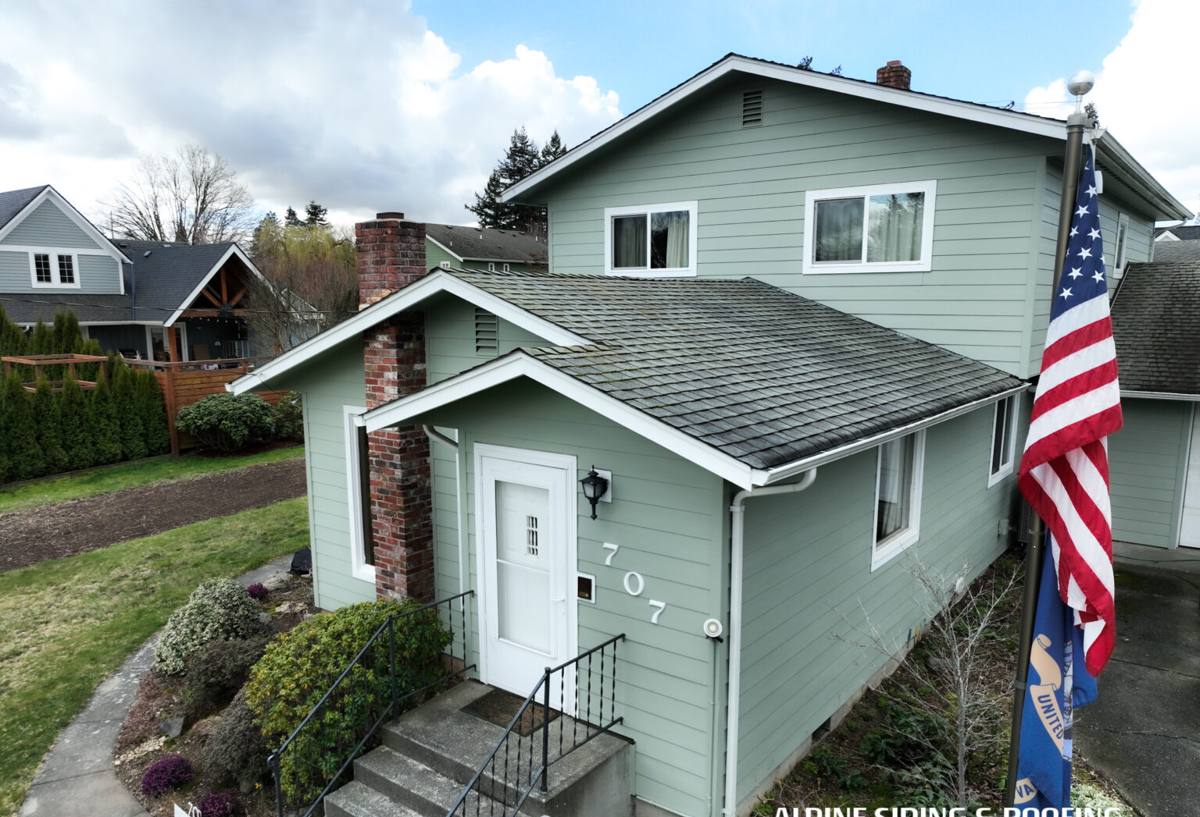
Signs It's Time for a New Roof, Not Another Repair
Repairs make sense when a roof has isolated damage and years of usable life left. Full replacement makes sense when the roofing system itself — not just one spot — is failing. Here's what tends to signal that point in a Sandy Point home:
- Granule loss heavy enough that you're finding shingle granules in gutters or at downspout outlets on a regular basis
- Shingles that are cupping, curling, or cracking across multiple roof planes, not just one patch
- Moss or algae growth that keeps returning within a season or two of cleaning, especially on shaded slopes
- Soft spots or sagging when walked on, which usually points to a compromised deck underneath
- Daylight visible through the roof deck from inside the attic, or water staining on rafters and sheathing
- Flashing around chimneys, skylights, or dormers that's rusted, lifted, or was never properly stepped in the first place
- A roof at or past 20-25 years old for asphalt products, even if it "looks okay" from the ground
- Rising energy bills paired with an attic that feels noticeably hot in summer or cold in winter, suggesting ventilation or insulation has failed alongside the roofing
If you're seeing two or more of these, it's worth having a full roof evaluated rather than chasing repairs one at a time.
What a Correct New Roof Installation Involves
A roof replacement is really several trades stacked on top of each other, and the parts you can't see after the job is done are the parts that determine whether it lasts. Here's what should happen on a properly installed roof in this area.
Tear-Off and Deck Inspection
We remove the old roofing down to the deck rather than layering over it. That's the only way to actually see the plywood or plank sheathing underneath, which is where hidden problems — soft spots, old water staining, rot around old flashing lines — actually show up. Any damaged decking gets replaced before anything new goes down. Installing new roofing over a compromised deck just hides the problem for a year or two before it resurfaces.
Underlayment and Water Protection
Underlayment is the roof's backup layer if wind-driven rain or ice ever gets past the surface material, and in a spot like Sandy Point it earns its keep more often than it would inland. We use ice-and-water shield membrane at eaves, valleys, and around penetrations — the spots most exposed to standing water and wind-pushed rain — and synthetic underlayment across the rest of the field for its durability and tear resistance compared to older felt products.
Flashing Details
Flashing around chimneys, skylights, dormers, and wall-to-roof transitions is where most roof leaks actually originate, not in the open field of shingles. Correct installation means step flashing woven with each course of roofing (not just caulked over the top), counter-flashing set into the surface it meets, and metal that's rated to hold up to salt-air exposure rather than bare or lightly coated steel that will rust prematurely this close to the water.
Fasteners and Hardware for Salt Air
This is one of the details that separates a roof built for Sandy Point from a roof built to a generic spec. We use corrosion-resistant fasteners and hardware — hot-dip galvanized or better — rather than standard-grade materials that will streak, rust, and eventually fail faster in salt-exposed air. It costs a little more up front and it's the kind of thing nobody notices until it wasn't done.
Ventilation
Balanced intake (soffit) and exhaust (ridge) ventilation keeps the attic space at a consistent temperature and moisture level. That protects the underside of the deck, helps shingles last their full rated lifespan instead of cooking from underneath, and — importantly in this climate — keeps the roof surface drying out evenly instead of holding damp, shaded moisture that feeds moss.
Choosing a Roofing Material for This Climate
There's no single "best" material for every home — it depends on your roof's exposure, shading, budget, and how the house looks. But some materials handle salt air and a long moss season better than others. Here's an honest comparison of the main options we install:
| Material | Moss/Algae Resistance | Salt-Air Durability | Typical Lifespan | Maintenance |
|---|---|---|---|---|
| Architectural asphalt shingle (with algae-resistant granules) | Good — resists staining, but still needs periodic cleaning on shaded slopes | Good with corrosion-resistant fasteners and flashing | 25-30 years | Low — occasional debris/moss check |
| Standard 3-tab asphalt shingle | Fair — more prone to algae staining and moss holding moisture at tab edges | Fair — shorter-rated hardware life | 15-20 years | Moderate — more frequent moss treatment |
| Standing-seam metal roofing | Excellent — sheds moisture, little surface for moss to grip | Very good with marine-grade coated panels and stainless fasteners | 40-50+ years | Low |
| Cedar shake | Poor without regular treatment — natural wood holds moisture and feeds moss/rot in a wet, shaded climate | Fair — hardware needs upgrading | 20-30 years with upkeep | High — regular cleaning and treatment required |
We're upfront with homeowners about trade-offs rather than steering everyone toward the most expensive option. If your lot is heavily shaded and you want the lowest long-term maintenance, metal earns its higher upfront cost over time. If you want a traditional look at a moderate price with good performance, an algae-resistant architectural shingle installed with the right underlayment and fastener package is a solid, proven choice for this area. Standard economy shingles and untreated cedar are the two we steer people away from on shaded, moss-prone Sandy Point lots specifically — not because the materials are bad everywhere, but because they carry more maintenance burden than most owners expect in this particular climate.
Moss: Prevention Built Into the Roof, Not Just Treatment After
Moss treatment sprays and zinc strips help, but they're maintenance items, not a substitute for a roof that's designed to dry out and shed moisture in the first place. The real prevention happens during installation: proper ventilation so the deck and shingle underside aren't staying damp, algae-resistant shingle granules where asphalt is used, correct slope and overlap so water and debris don't pool, and keeping overhanging branches trimmed back where we can flag it during the walkthrough. A roof installed with these details still needs occasional cleaning in a climate like this — nothing eliminates that entirely — but it won't need aggressive moss removal every single season the way an improperly ventilated or budget-material roof will.
Our Process, Start to Finish
- On-site inspection and estimate — we look at the existing roof, attic ventilation, deck condition where visible, and any problem areas you've noticed, then give you a written estimate with material options.
- Material selection — we walk through the trade-offs for your specific roof (shading, slope, budget) rather than pushing one product.
- Scheduling and permitting — we handle any required permitting through the appropriate local authority before work begins.
- Tear-off and deck inspection — old roofing comes off, the deck is inspected, and any damaged sheathing is replaced.
- Underlayment and flashing installation — ice-and-water membrane at vulnerable areas, synthetic underlayment across the field, and properly sequenced flashing at every penetration and transition.
- Roofing material installation — installed to manufacturer spec with corrosion-resistant fasteners throughout.
- Ventilation check and adjustment — intake and exhaust balanced for the attic space.
- Cleanup and magnetic nail sweep — job site and yard cleared of debris and stray fasteners.
- Final walkthrough — we go over the finished roof with you, point out anything worth knowing for maintenance, and answer questions before we consider the job done.
Why Hire a Crew That Already Works Sandy Point
A roofing crew that mostly works inland jobs may not think twice about fastener grade, flashing metal selection, or ventilation balance the way it needs to be thought through here — because most of their jobs don't demand it. A crew that regularly works Sandy Point and the surrounding Ferndale waterfront knows which slopes hold moss longest, which exposures take the worst of the wind-driven rain off the water, and which hardware actually holds up instead of streaking and failing early. That's not marketing — it's the difference between a roof that needs attention again in eight years and one that goes the distance it's rated for.
Local experience also means fewer surprises during the job itself: knowing how to sequence work around this area's weather windows, understanding the kind of access and staging that waterfront-adjacent lots often require, and having a realistic sense of what a Sandy Point roof actually needs versus what a generic spec sheet says.
Warranty and Caring for Your New Roof
Manufacturer warranties on roofing materials typically cover product defects, while workmanship coverage on the installation itself is separate — we'll go over both in plain terms before you sign anything, including what's covered, what's excluded, and for how long. After installation, a Sandy Point roof still benefits from a periodic look — clearing debris from valleys and gutters, checking for early moss growth on shaded areas, and a visual check after any unusually severe storm. None of that is heavy maintenance, but skipping it entirely is how small issues turn into deck damage over a few seasons.
If your roof is showing its age or you just want an honest read on where it stands, we're happy to take a look. Fill out the form below for a free, no-pressure estimate — we'll tell you what we actually see, not just what sells a new roof.