 Ferndale Exterior
 Blaine's Coastline Puts Extra Stress on Every Roof
Blaine sits right on the water, near the mouth of Semiahmoo Bay and Drayton Harbor, at the northern edge of Whatcom County. That location is part of what makes the town beautiful, and it's also why roofs here take more punishment than roofs fifteen miles inland. Wind off the Strait of Georgia hits homes with less to slow it down. Salt-laden air corrodes exposed metal faster than it does in a landlocked neighborhood. And the long, mild, wet Pacific Northwest winter keeps roofs damp for months at a stretch, which matters a lot when a storm has already compromised the surface.
When we talk about "storm damage roof repair for Blaine," we don't mean a generic patch job. We mean repairs that account for the specific combination of wind exposure, salt air, and near-constant moisture that this stretch of the county deals with every year. A repair that would hold up fine in a sheltered inland yard can fail here in a season or two if it wasn't built with these conditions in mind.
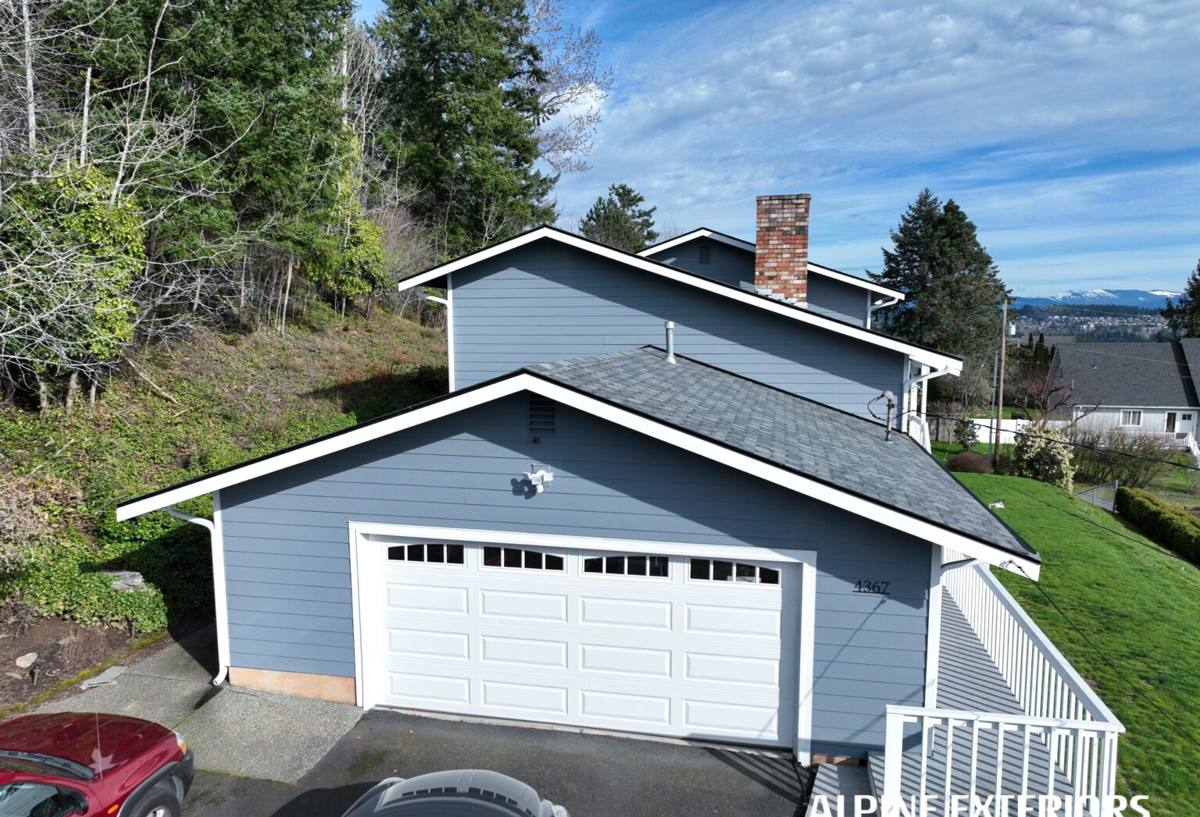
What Storm Damage Actually Looks Like Up Close
Storm damage isn't always a dramatic hole in the roof. Most of what we find after a windstorm or heavy rain event in Blaine falls into a few categories, and homeowners often don't notice the early signs from the ground.
Wind Damage
Sustained coastal wind lifts shingle edges even when nothing blows off completely. Once the seal along the tab breaks, that shingle no longer sheds water the way it's designed to, even if it looks intact from the driveway. Repeated wind events loosen more shingles each time, which is why a roof that "seemed fine" after one storm can fail badly after the next.
Water Intrusion and Flashing Failures
Flashing around chimneys, vents, skylights, and roof-to-wall transitions is usually the first thing to give way in a storm, not the field of the roof itself. Salt air accelerates corrosion on unprotected metal flashing and fasteners, so a flashing detail that would last decades elsewhere can start failing years earlier this close to the water.
Hidden Damage That Shows Up Later
Driving rain forces water sideways and upward under shingle edges and around fasteners in ways that vertical rain never does. That means some of the worst storm damage isn't visible on the surface at all — it shows up weeks later as a stain on a ceiling, or a soft spot in the decking that a roofer finds during an inspection.
What a Correct Storm Damage Repair Involves
Inspection First, Not Guesswork
A repair that only addresses the shingles a homeowner can see from the ground is not a complete repair. Before we touch anything, we walk the roof and check the decking underneath any suspect area, the flashing at every penetration, the condition of the underlayment where it's exposed, and the fastener pattern on surrounding shingles. Storm damage tends to cluster along ridges, edges, and around roof penetrations, so we check those areas specifically rather than assuming the damage is limited to the one spot that's visibly wrong.
Matching Materials the Right Way
Patching a storm-damaged section with mismatched shingles or the wrong underlayment creates a weak point that fails again, often faster than the original damage did. We match shingle profile, color line, and weight as closely as the existing roof allows, and we replace underlayment and flashing to current standards in the repaired section rather than reusing compromised material just to save a step.
Our Process, Start to Finish
- Initial call and scheduling. We ask what happened, when, and what you're seeing — leaks, missing shingles, debris on the roof or in the yard — so we can prioritize active leaks appropriately.
- On-site inspection. We assess the roof in person, including any accessible attic space, and document what we find with photos.
- Temporary protection if needed. If there's an active leak or exposed decking, we tarp or otherwise secure the area the same visit to stop further water intrusion while repairs are scheduled.
- Written scope and estimate. You get a clear description of what's damaged, what needs to be replaced versus repaired, and a price before any work starts.
- Repair work. We replace damaged decking, underlayment, flashing, and shingles as needed, matching materials and following manufacturer installation specs.
- Final walkthrough. We show you the completed work and the documentation, which you can also use for an insurance claim if you're filing one.
Materials and Fasteners for a Salt-Air Coastline
Not every material or fastener holds up the same way this close to the water. Where it's practical and matches the existing roof, we lean toward materials with better corrosion resistance for Blaine repairs specifically.
| Component | Standard Inland Choice | Better Fit Near Blaine's Coastline |
|---|---|---|
| Fasteners | Electro-galvanized nails | Hot-dip galvanized or stainless steel nails, more resistant to salt-air corrosion |
| Flashing | Mill-finish or basic painted metal | Coated or heavier-gauge metal flashing at chimneys, valleys, and wall transitions |
| Underlayment | Standard felt | Synthetic underlayment or ice-and-water shield at vulnerable areas, given the moisture load |
| Drip edge | Standard aluminum | Heavier-gauge or coated aluminum where wind-driven rain hits edges directly |
We're not saying the "standard" column is bad material — it's perfectly adequate in a lot of settings. It's simply not always the right call a few hundred yards from saltwater, where the maintenance burden and corrosion timeline are different. We'll tell you honestly when an upgrade is worth the modest added cost and when the standard option is genuinely fine for your situation.
Cost Factors for Blaine Storm Repairs
Every storm-damaged roof is different, so we won't quote a number without seeing the roof. What we can tell you is what drives the price up or down, so you know what to expect before we show up.
| Factor | Why It Matters |
|---|---|
| Extent of shingle damage | A handful of lifted or missing shingles costs far less to fix than a full slope |
| Decking condition | Rotted or soft decking under the damaged area adds material and labor beyond the surface repair |
| Flashing scope | Replacing flashing at chimneys, valleys, or skylights adds detail work that a flat shingle swap doesn't require |
| Roof pitch and access | Steeper roofs and limited access add time and safety equipment to the job |
| Material match | Discontinued or unusual shingle lines can require sourcing time or a broader repair area to blend properly |
| Insurance involvement | Claims add documentation steps but don't typically change the physical scope of the repair itself |
As a general guide, isolated flashing or shingle repairs on an accessible roof are often a modest expense, while repairs involving decking replacement or a larger damaged area cost more. We'll walk you through exactly what's driving your number before you commit to anything.
Moss, Shade, and Blaine's Long Wet Season
Whatcom County's moss season isn't a two-week nuisance — it runs for most of the fall, winter, and spring, especially on north-facing slopes and roof sections shaded by trees. Moss isn't just cosmetic. It holds moisture against the shingle surface long after the rest of the roof has dried, and it works its way under shingle edges, which lifts them the same way wind does. A storm-damaged roof with existing moss growth is more vulnerable, not less, because the moss has already been compromising the shingle seal before the storm ever hit.
When we repair storm damage on a roof with moss present, we address both — clearing growth from the repair area and checking nearby shingles for the kind of lifting moss commonly causes, so we're not sealing a new repair next to a section that's already failing quietly.
Signs Your Blaine Home Needs a Storm Damage Inspection
Most homeowners call us after a leak shows up, but by then the damage has usually been developing for a while. Watch for these signs after any significant wind or rain event:
- Shingle granules collecting in gutters or at downspout outlets
- Shingles that look curled, lifted, or out of alignment from the ground
- Missing shingles or visible bare spots on the roof
- Water stains on interior ceilings or upper walls
- Damp, musty smell in the attic
- Daylight visible through the roof deck from inside the attic
- Debris — branches, needles, granules — built up in valleys after a storm
- Flashing that looks bent, separated, or rusted around chimneys and vents
If you notice any of these, it's worth getting an inspection before the next storm rather than after.
Why Local Experience in Blaine Matters
A crew that mostly works inland jobs doesn't see coastal wind and salt-air corrosion often enough to build habits around them. We work storm damage repairs in Blaine and across Whatcom County regularly enough to know which flashing details tend to fail first on homes near the water, which roof orientations catch the worst of the wind, and which shingle lines actually hold up through a full moss season here. That familiarity shows up in small decisions — an upgraded fastener here, a heavier flashing gauge there — that don't cost much extra but meaningfully extend the life of the repair.
It also means we're not learning the local permitting and inspection expectations on your job. We know what documentation matters if you're filing an insurance claim, and we give you a clear, honest scope of work rather than either over-selling a full roof replacement or under-scoping a repair that will fail again in a year.
Get a Free, No-Pressure Estimate
If your roof took a hit in a recent storm, or you're just not sure whether what you're seeing is something to worry about, we're happy to take a look. There's no pressure and no obligation — just an honest assessment of what's going on and what it would take to fix it right. Use the form below to request your free estimate.