 Ferndale Exterior
 Why Board & Batten Fits Marietta Homes
Board and batten has become one of the most requested exterior looks for homes in and around Marietta. The style's clean vertical lines work equally well on a modern farmhouse rebuild, a garage or shop addition, or as an accent on gable ends and entries. It's a distinctive look, but it's also a siding system with its own set of installation requirements — and those requirements matter more in a marine climate than they do in drier parts of the state.
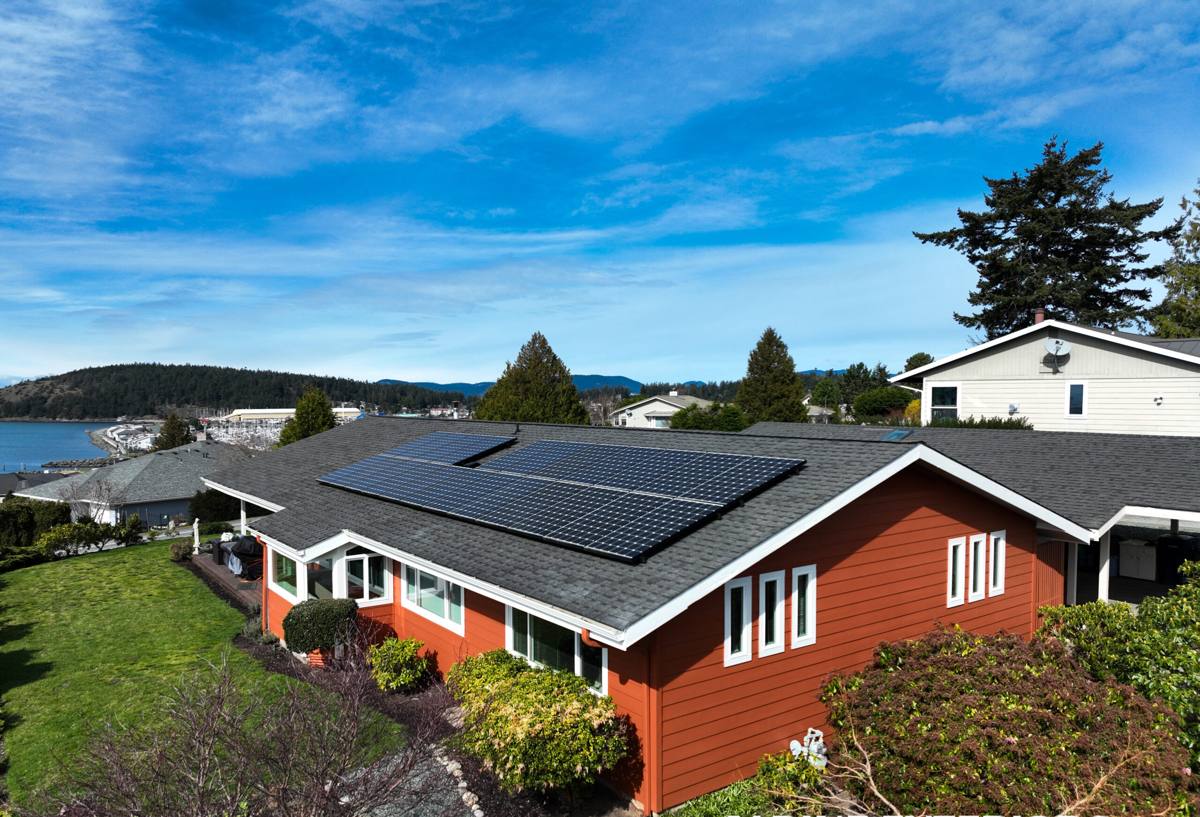
Marietta sits close enough to the water that homes here deal with a steady mix of salt-laden air, wind-driven rain, and long stretches of damp, shaded weather that keeps moss and algae active for much of the year. A board and batten installation that isn't detailed correctly for that environment will show problems — usually at the seams, the fasteners, or the bottom of the wall — well before a homeowner expects to think about siding maintenance again.
What the Marine Climate Around Marietta Does to Vertical Siding
Vertical board and batten siding manages water differently than horizontal lap siding, and that difference is exactly where a marine climate creates trouble if the install isn't right. On lap siding, gravity does a lot of the work — each course sheds water onto the one below it. On board and batten, water runs straight down the face of the boards and along the battens, which means every seam, joint, and fastener point along that vertical run is a potential entry point if it isn't sealed and flashed correctly.
Add in the specific conditions this area sees — salt air off nearby water, driving rain that comes in at an angle rather than straight down, and a moss season that can stretch from fall through spring — and you get three compounding issues:
Corrosion at Fasteners and Trim
Salt air accelerates corrosion on any fastener, flashing, or trim piece that isn't rated for coastal exposure. On board and batten, the fasteners are more exposed and more numerous per square foot than on lap siding, so using the wrong hardware shows up faster — usually as rust streaks bleeding down the face of the boards.
Wind-Driven Rain at the Seams
Rain that's being pushed sideways by wind finds its way behind boards and battens far more easily than it does on a horizontal lap profile. Without a proper drainage plane behind the siding, that moisture has nowhere to go and ends up trapped against the sheathing.
Moss and Algae on Shaded Walls
North-facing and tree-shaded walls in this area stay damp for extended periods, which is exactly the environment moss and algae need to establish. On any fiber cement siding, factory-applied finishes resist this better than site-applied paint, which is one of the reasons product choice matters as much as installation quality.
What a Correct Board & Batten Installation Actually Involves
A board and batten job that will actually hold up here isn't just boards nailed to a wall with strips covering the seams. There's a sequence that has to happen underneath the visible siding, and skipping steps in that sequence is the single biggest cause of premature failure we see on vertical siding replacements.
- A continuous weather-resistive barrier installed over the sheathing, lapped correctly at every seam
- A drainage gap (rainscreen) behind the siding so any moisture that does get past the face can drain and dry instead of sitting against the wall
- Flashing integrated at every window, door, and penetration — not caulk used as a substitute for flashing
- Corrosion-resistant, coastal-rated fasteners driven at the correct spacing and depth
- Batten placement over solid backing, not just over the gaps between panels
- Proper clearance at the bottom of the wall so siding isn't sitting against grade, concrete, or standing water
Each of those steps is invisible once the job is finished. That's exactly why they're the steps most likely to get shortcut by a crew that isn't used to detailing for this kind of weather, and why it's worth asking a contractor directly how they handle drainage and flashing before work starts.
The James Hardie Board & Batten System We Install
We install James Hardie fiber cement exclusively, and for a vertical siding look that means either HardiePanel vertical siding with Hardie battens over the seams, or a batten-and-board configuration built around Hardie's engineered panel products. Fiber cement doesn't absorb water the way wood-based products do, it won't rot, and it's non-combustible — all relevant points for a coastal, wet-weather property.
For this region specifically, we use Hardie's HZ5 product line, engineered for climates with more moisture, freeze-thaw cycling, and humidity swings than the drier HZ10 zone product. Finished with Hardie's ColorPlus factory-applied coating, the color and protective layer are baked on under controlled conditions rather than brushed or sprayed on site — which means better fade resistance and better resistance to the moss and algae growth that comes with long shaded, damp seasons.
Battens themselves are also fiber cement, not wood trim. That matters on a vertical siding system because battens sit directly in the path of running water — a wood batten in that position is one of the first things to show rot on an older board and batten installation.
Board & Batten vs. Other Siding Looks: What Changes
Homeowners sometimes ask whether the vertical board and batten look costs more than a standard lap installation, or whether it's worth the added labor. Here's an honest comparison of the factors that actually differ:
| Factor | Hardie Board & Batten | Hardie Lap Siding | Vinyl Vertical Panel |
|---|---|---|---|
| Water management | Requires rainscreen + flashing detail at every seam | Gravity-assisted shedding, fewer critical seams | Interlocking panels; seams can open with age |
| Labor complexity | Higher — more fastening points, batten alignment | Standard, well-understood layout | Fast install, less water-management detail |
| Fastener exposure | More exposed points per square foot | Fewer exposed fasteners | Minimal exposed fasteners |
| Expected lifespan (correct install) | Comparable to lap when detailed correctly | Decades with factory finish intact | Shorter; UV and impact sensitive over time |
| Appearance longevity in this climate | Strong, if factory-finished fiber cement | Strong, factory-finished fiber cement | Fades and chalks faster under coastal sun and salt |
The takeaway isn't that board and batten is a worse choice — it's that it demands more precision during installation. That added labor is where the cost difference comes from, not the material itself.
Our Process, Start to Finish
For a board and batten project in Marietta, our process looks like this:
- Assessment — we inspect the existing wall assembly, check for hidden moisture or sheathing damage, and identify drainage concerns specific to the site (shade, slope, prevailing wind direction)
- Prep and tear-off — old siding and any compromised sheathing or trim is removed and the wall is checked again before anything new goes on
- Weather barrier and rainscreen — a continuous water-resistive barrier and drainage gap are installed before a single piece of siding goes up
- Flashing — windows, doors, and penetrations get proper flashing integrated with the barrier, not caulked over afterward
- Panel and batten installation — Hardie panels and battens are installed with coastal-rated fasteners at manufacturer-specified spacing
- Trim, sealant, and touch-up — factory-matched caulk and touch-up paint at cut edges and fastener heads
- Final walkthrough — we review the finished wall with the homeowner before calling the job done
Why a Crew That Already Works Marietta and Ferndale Matters
Whatcom County's coastline creates microclimates that vary block to block — a wall facing open water takes a different beating than one tucked behind a treeline half a mile inland. A crew that already works in this area knows which walls need extra attention to drainage and fastener choice versus which get by with standard detailing, because they've seen how homes in these conditions actually age over time.
That local familiarity also extends to permitting and inspection expectations with Whatcom County, and to simply knowing what "normal" wear looks like on a ten-year-old Hardie installation here versus what's an early warning sign of a detail that was missed. A contractor with no local track record is guessing at those things; a contractor working this area regularly isn't.
Keeping Board & Batten Siding Looking Right Over Time
Even a correctly installed system benefits from basic upkeep, especially given the moss season this region sees. A simple annual routine goes a long way:
- Rinse siding gently once a year to remove salt residue and organic buildup, especially on shaded or water-facing walls
- Check caulking at trim, windows, and penetrations for cracking or gaps
- Trim back vegetation and tree limbs that keep any wall section shaded and damp longer than necessary
- Look at the base of the wall for any siding sitting too close to soil, mulch, or standing water
- Address any moss or algae growth promptly rather than letting it establish, since it holds moisture against the surface
None of this is heavy maintenance — it's the kind of once-a-year attention that keeps a correctly installed system performing the way it's supposed to for decades.
If you're considering board and batten siding for a home in Marietta, we're happy to take a look at the property, walk through what a correct installation involves for your specific wall exposures, and put together a straightforward estimate. There's no pressure and no obligation — just an honest assessment from a crew that installs this system regularly in this climate.