 Ferndale Exterior
 Siding Replacement for Cordata, Built Around Whatcom County Weather
Homes in and around Cordata sit close enough to Bellingham Bay and the open water of Whatcom County to catch salt-laden air, and close enough to the foothills to catch long stretches of driving rain off the Pacific. That combination is hard on exterior siding in ways that homeowners in drier parts of the state never have to think about. If you're planning a siding replacement for a Cordata-area home, the material and the installation both need to be chosen with that specific climate in mind — not a generic Pacific Northwest average, and not a spec sheet written for a different region.
Ferndale Exterior Co works this part of Whatcom County regularly, and this page walks through what actually matters for a siding replacement here: what the local climate does to siding over time, what a correctly done job looks like, how our process runs from first look to final walkthrough, and why the product we standardized on — James Hardie fiber cement — holds up better than the alternatives under these specific conditions.
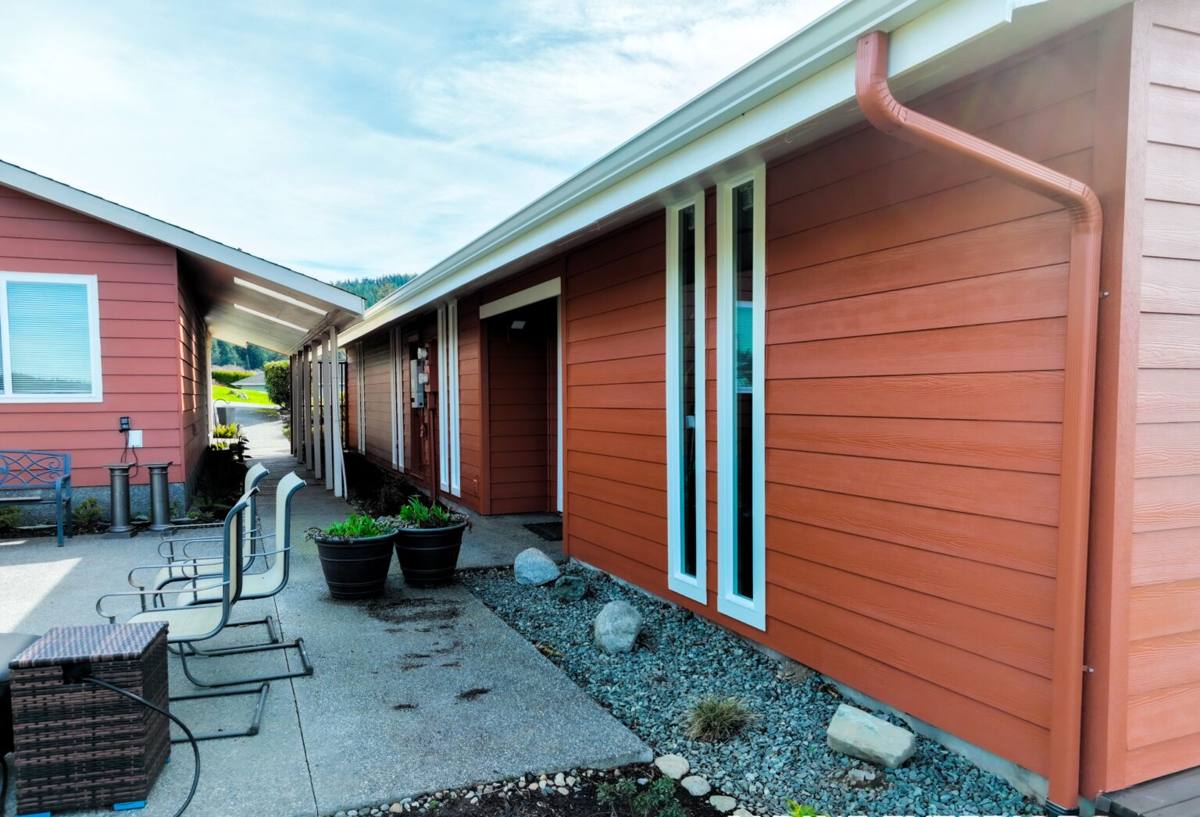
What Cordata's Climate Actually Does to Siding
Three things define the wear pattern on siding in this area, and they compound each other.
Salt Air
Proximity to Bellingham Bay means airborne salt is a constant, low-grade presence, even on homes that aren't waterfront. Salt accelerates corrosion on fasteners and metal flashing, and it degrades certain paint and coating systems faster than inland exposure would. Siding materials and finishes that aren't engineered for coastal-adjacent exposure tend to show fading, chalking, or fastener staining years ahead of schedule.
Driving Rain
Whatcom County doesn't just get a lot of rain — it gets a lot of wind-driven rain, which behaves differently against a wall than a straight vertical downpour. Wind-driven moisture gets pushed sideways and upward into laps, seams, and butt joints that would stay dry in calmer weather. Siding systems and installation details that aren't built for that kind of pressure let water track behind the cladding, where it causes rot, mold, and sheathing damage long before anything looks wrong from the curb.
Long Moss Season
Cool, damp, shaded conditions for much of the year make this excellent territory for moss and algae growth on exterior surfaces. Beyond the cosmetic issue, moss and algae hold moisture directly against the siding surface for extended periods, which shortens the service life of materials that are already vulnerable to water absorption.
Individually, any one of these is manageable. Together, over years, they're exactly the conditions that separate siding that lasts two decades from siding that needs real attention after seven or eight years.
Why We Install Only James Hardie Fiber Cement
We don't install vinyl, LP SmartSide, Cemplank, Allura, primed spruce, or cedar. That's a deliberate standard, not a limitation of what we're capable of installing. Each of those products has real strengths, but none of them holds up as consistently as James Hardie fiber cement under the specific stack of salt exposure, wind-driven rain, and sustained moisture that Cordata-area homes deal with year after year.
James Hardie's fiber cement is non-combustible, dimensionally stable in wet-dry cycling, and finished with a factory-applied ColorPlus coating designed to resist fading and hold up in demanding climates — rather than relying on a field-applied paint job that starts degrading from day one. It's also backed by a strong transferable warranty, which matters more in a climate that stresses siding harder than most.
None of that guarantees performance on its own, though. Fiber cement only delivers on that potential when it's installed correctly for the region — proper clearances, correct fastening, and flashing details that account for wind-driven rain. That's the other half of this page.
What a Correct Siding Replacement Involves
A siding replacement is a good opportunity to fix problems that are invisible once new siding goes up. Rushing past this stage is the single most common reason siding fails early — not the product itself, but what's underneath it.
Tear-Off and Inspection
Removing the old siding is when we find out what's actually going on behind it: soft or delaminated sheathing, deteriorated house wrap, undersized or misdirected flashing, and any rot around windows, doors, or penetrations. All of that needs to be addressed before new siding goes on — covering it up just resets the clock on the same problem.
Water-Resistive Barrier
A continuous, correctly lapped weather-resistive barrier is what actually keeps wind-driven rain out of the wall assembly. Seams, laps, and penetrations all need to be sequenced so water sheds downward and outward at every layer, not just at the siding surface.
Flashing at Every Transition
Windows, doors, roof-to-wall intersections, and deck ledgers are the highest-risk points for water intrusion. Flashing at these transitions has to be installed in the correct order relative to the water-resistive barrier and the siding — a detail that's easy to get wrong and expensive to fix later.
Clearances and Fastening
James Hardie siding has manufacturer-specified clearances from grade, roof lines, and decks, along with specific fastening patterns and fastener types. Skipping these specs is one of the most common ways installers void the manufacturer's warranty without the homeowner ever knowing it happened.
- Old siding and building paper fully removed, sheathing inspected and repaired where needed
- Any rot, soft framing, or pest damage addressed before re-siding begins
- Continuous water-resistive barrier installed with correct lapping and sealed penetrations
- Flashing installed at every window, door, roofline, and deck transition
- James Hardie panels or lap siding installed to manufacturer clearance and fastening specifications
- Caulking and touch-up limited to manufacturer-approved products and locations
- Final walkthrough covering finished clearances, trim details, and warranty registration
Our Process for a Cordata-Area Siding Replacement
1. On-Site Assessment
We walk the exterior with you, look at the current siding's condition, check for signs of moisture intrusion, and talk through what we expect to find once tear-off starts.
2. Scope and Product Selection
We help you choose the right James Hardie line and profile for the home — lap siding, panel siding, or a mix with trim — and put together a clear written scope so there are no surprises mid-project.
3. Tear-Off and Sheathing Repair
Old material comes off, sheathing and framing get inspected, and anything compromised gets repaired or replaced before we move forward.
4. Weather Barrier and Flashing
This is the step that determines how the home performs in wind-driven rain for the next several decades, and we don't shortcut it.
5. Hardie Installation
Siding goes on to manufacturer specification — clearances, fastening, and joint treatment done the way James Hardie's install guide actually requires, not the way that's fastest.
6. Final Walkthrough
We go over the finished work together, confirm everything meets spec, and make sure your warranty paperwork is in order.
Comparing Siding Options for Cordata Conditions
| Material | Moisture Behavior | Maintenance Burden | Typical Longevity |
|---|---|---|---|
| Vinyl | Can warp or gap in temperature swings; doesn't stop water on its own | Low, but limited repair options when damaged | Moderate; varies widely with quality and installation |
| LP SmartSide | Engineered wood core is vulnerable to sustained moisture exposure | Moderate; edge sealing and caulking need upkeep | Moderate, highly dependent on installation and upkeep |
| Cedar | Absorbs moisture; prone to cupping, splitting, and moss growth in shaded, damp areas | High; regular refinishing and moisture monitoring | Variable; shortened significantly in damp climates without upkeep |
| James Hardie Fiber Cement | Dimensionally stable; engineered for wet-dry cycling | Low; factory ColorPlus finish reduces repainting needs | Long-term, backed by a transferable manufacturer warranty |
What Drives Siding Replacement Cost
Every home is different, and we'll always give you a specific number after an on-site look — but these are the factors that most affect the cost of a siding replacement project in this area.
| Factor | Why It Matters |
|---|---|
| Home size and wall complexity | More corners, gables, and dormers mean more cutting, flashing, and labor time |
| Sheathing and framing condition | Hidden rot or moisture damage found at tear-off adds repair scope |
| Siding profile and trim details | Lap width, panel style, and trim complexity affect material and labor |
| Existing flashing and window details | Older or missing flashing often needs to be brought up to current standards |
| Site access | Landscaping, fencing, and setbacks can affect staging and labor time |
Why a Crew That Already Works in Cordata Matters
Siding installation isn't identical everywhere in Washington. A crew that mostly works drier, inland areas won't naturally build in the same margin for wind-driven rain and sustained moisture that a Whatcom County home near the water needs. A crew that already works Cordata and the surrounding Ferndale area knows the local weather pattern, knows what the tear-off usually reveals on homes of a given age in this area, and doesn't need a learning curve on site to get the flashing and clearances right the first time.
That familiarity also shows up in smaller ways — knowing which details tend to fail first on older homes here, sequencing the work around the region's rain patterns, and not treating this like a generic siding job dropped into a coastal climate.
Ready to Talk Through Your Siding Replacement?
If your Cordata-area home has siding that's showing its age — moss buildup, fading, soft spots, or visible gaps at seams and trim — we're happy to take a look and give you a straightforward assessment. Reach out for a free, no-pressure estimate using the form below, and we'll walk the exterior with you and talk through what your home actually needs.