 Ferndale Exterior
 Window Installation Built for Cordata's Climate
Cordata sits close enough to the water and open farmland that its homes take a different kind of weather beating than houses further inland. Wind-driven rain comes in sideways off storms rolling through Whatcom County, salt-tinged air drifts in from the Strait, and a long, damp moss season keeps north-facing walls and window sills wet for months at a time. Windows here aren't just a comfort and energy feature — they're one of the first lines of defense against moisture finding its way into wall framing.
A window that's a good product but poorly installed will fail here faster than in a drier climate. Most of the window problems we find in Cordata homes aren't about the glass or the frame — they're about flashing, sealant, and water management details that were rushed or skipped during installation.
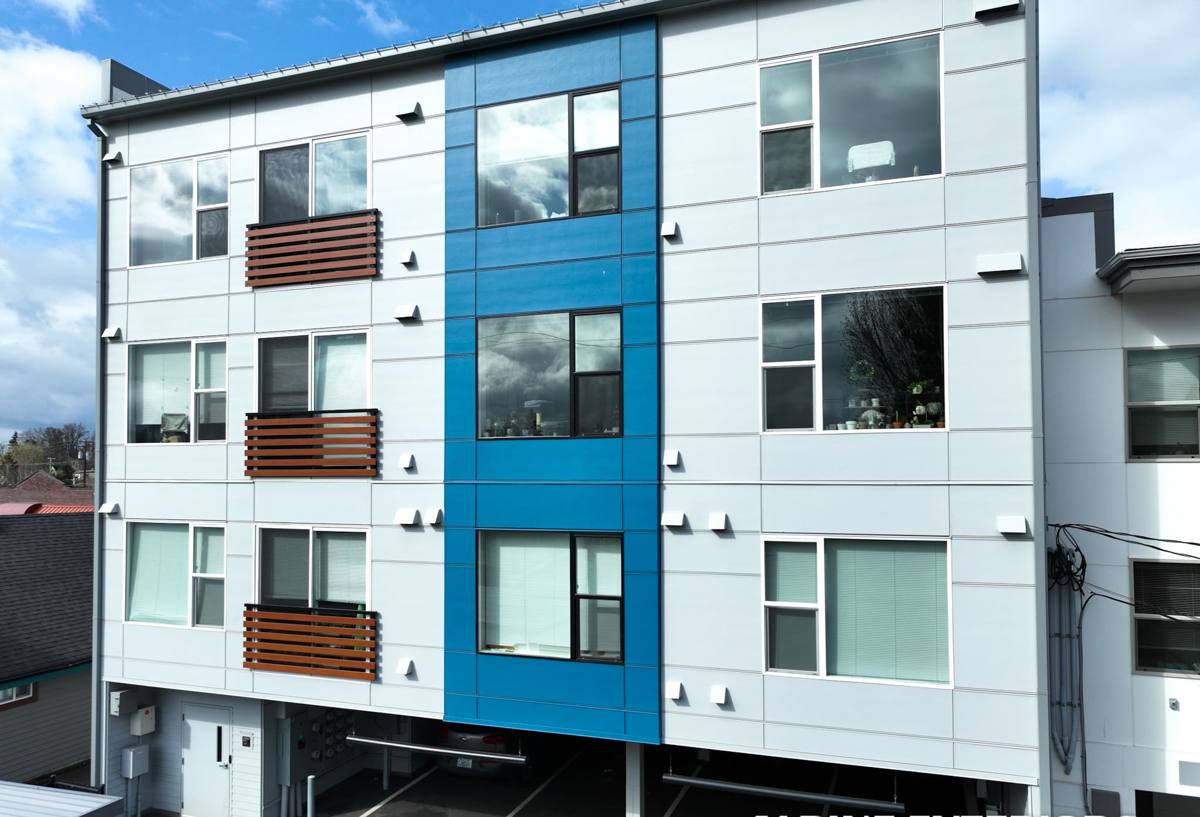
What Whatcom County Weather Does to Windows Over Time
Driving Rain
Rain that falls straight down is easy to shed. Rain that's pushed sideways by wind finds every gap, seam, and undersized flashing lap around a window opening. Over years, even small amounts of intrusion rot sill framing and sheathing before it ever shows up as a stain on an interior wall.
Salt Air
Proximity to Bellingham Bay and the Strait of Georgia means the air carries a fine salt content that accelerates corrosion on hardware, screws, and lower-grade aluminum components. Cheaper fasteners and unprotected metal flashing corrode noticeably faster in this environment than they would fifty miles inland.
Moss and Sustained Moisture
Ferndale's long wet season means moss and algae get a real foothold on shaded sills, tracks, and trim — especially on north- and west-facing elevations that don't get much direct sun to dry out between rain events. Moss holds moisture against wood and vinyl surfaces far longer than open air would, which is exactly the condition that breaks down caulk lines and finish coatings.
Temperature Swings
Whatcom County isn't extreme, but the swing between cold, damp winter nights and warm summer afternoons still puts real stress on seals and frame materials over a 20-30 year window lifespan. Materials and installation methods that don't account for expansion and contraction eventually show it as sticking sashes or failing seals.
Signs a Cordata Home May Need New Windows
- Visible fogging or a hazy film between panes of double-pane glass — a sign the seal has failed
- Soft or discolored wood trim, sill, or framing around the window opening
- Persistent moss or dark staining on the sill or lower frame that keeps returning after cleaning
- Windows that are difficult to open, close, or lock, especially after damp weather
- Noticeable drafts or cold spots near the window even with it fully closed
- Condensation forming on the interior glass regularly during colder months
- Rising heating bills without any other clear explanation
- Visible gaps, cracked caulk, or daylight around the exterior trim
Any one of these on its own isn't necessarily an emergency, but a home with several of them is usually telling you the windows — or the flashing behind them — are past their working life.
What a Correct Window Installation Actually Involves
The window unit itself is only part of the job. In a climate like this, the installation details around the window matter as much as the product being installed.
Proper Water Management
A correctly installed window uses a sloped sill pan so any water that does get past the exterior seal drains back out rather than pooling against the sheathing. Flashing tape and building paper are integrated in the right shingle-lap order — each layer overlapping the one below it — so water is always directed outward and down, never trapped behind the window.
Air Sealing and Insulation
The gap between the window frame and the rough opening needs to be sealed and insulated correctly — not stuffed with excess spray foam, which can bow frames and cause operational problems, and not left with gaps that create drafts and condensation points.
Exterior Trim and Caulking
Exterior caulk joints are a maintenance item, not a permanent seal — they're the last line of defense, not the primary water barrier. We use quality sealants rated for our climate and install trim so water sheds away from joints instead of collecting in them.
Level, Plumb, and Square
A window that's out of square binds, doesn't lock properly, and stresses the seals prematurely. Getting this right the first time is basic craftsmanship, but it's also one of the most commonly rushed steps on a busy job site.
Choosing the Right Window for a Cordata Home
There's no single "best" window material — the right choice depends on the home's exposure, budget, and how much upkeep the homeowner wants to take on.
| Frame Material | Performance in This Climate | Maintenance | Typical Fit |
|---|---|---|---|
| Vinyl | Good moisture resistance, no corrosion risk, solid energy performance | Low — occasional cleaning | Most homes; strong value for the price |
| Fiberglass | Excellent stability through temperature swings, holds paint well | Low to moderate | Homes wanting a wood look with less upkeep |
| Wood / Wood-Clad | Attractive but more sensitive to sustained moisture and moss exposure | Higher — needs regular finish maintenance | Homes prioritizing a traditional look, with realistic upkeep plans |
| Aluminum | Prone to corrosion near salt air unless properly coated | Moderate | Limited use; we're selective about where we recommend it here |
For most Cordata homes, we lean toward vinyl or fiberglass because they hold up well against the combination of driving rain, salt air, and moss exposure without demanding constant maintenance. Where a homeowner wants a wood-frame look, we'll discuss the honest maintenance commitment involved before recommending it — it's a real trade-off, not a downside we try to hide.
Our Window Installation Process
- On-site assessment — We inspect the existing window openings, framing condition, and any signs of past water intrusion before quoting anything.
- Product selection — We walk through frame material, glass package, and style options suited to the home's exposure and the homeowner's budget.
- Removal and opening inspection — Old windows come out carefully so we can check the sheathing and framing underneath for hidden rot before it's covered back up.
- Sill pan and flashing installation — Proper water management goes in before the new window ever gets set.
- Window setting and fastening — Set level, plumb, and square, then secured per manufacturer specifications.
- Insulation and air sealing — The gap around the frame is filled correctly, not over-packed.
- Exterior trim and sealant — Finished with climate-appropriate sealant and trim work that sheds water.
- Final walkthrough — Every window operates, locks, and seals correctly before we call the job done.
What Affects the Cost of a Window Installation
| Factor | Why It Matters |
|---|---|
| Frame material | Vinyl is typically the most budget-friendly; fiberglass and wood-clad cost more upfront |
| Glass package | Double vs. triple pane, and low-E or gas-fill options, affect both cost and energy performance |
| Number of openings | Whole-home replacements typically bring a better per-window cost than one-off jobs |
| Condition behind the old window | Hidden rot or framing damage found during removal adds repair scope |
| Access and window size | Second-story, oversized, or hard-to-access windows take more labor time |
We give straightforward, itemized estimates so homeowners can see exactly what they're paying for — there's no reason window pricing needs to be a mystery.
Why a Crew That Already Works in Cordata Matters
Window installation isn't a one-size-fits-all trade. A crew that's worked homes throughout Ferndale and greater Whatcom County already knows how local wind exposure, moss growth patterns, and driving rain tend to affect window openings in this area — and installs accordingly, rather than treating every job like it's in a dry inland climate. That means the right flashing approach, the right sealant choice, and no shortcuts on the water management details that matter most here.
It also means we're not disappearing after the install. We're a local company working in this community, which is the kind of accountability that matters when it comes to a product meant to perform for decades.
After Installation: Keeping Windows Performing
New windows still need basic seasonal attention in this climate. Rinse sills and tracks periodically to keep moss and organic buildup from taking hold, especially on shaded elevations. Check exterior caulk lines once a year and have any cracked sections resealed before wet season sets in. Keep an eye on drainage weep holes at the base of the frame to make sure they stay clear — they're a small detail that does a lot of the water management work.
If you're noticing drafts, fogged glass, sticking sashes, or moss buildup around your windows, we're happy to take a look and give you an honest assessment — no pressure, no obligation. Fill out the form below for a free estimate on window installation for your Cordata home.