 Ferndale Exterior
 Building a Deck That Can Actually Handle Birch Bay
Birch Bay sits close enough to the water that a deck here lives a different life than one built ten miles inland in Ferndale or Lynden. Salt-laden air moves in off the bay, wind-driven rain finds its way into joints that would stay dry elsewhere, and the shaded, damp stretches of many Birch Bay lots grow moss on almost any horizontal surface left untreated. None of that means a deck can't last for decades out here — it just means the material choices, the fastener choices, and the framing details matter more than they would on a typical inland build. A deck designed without those conditions in mind tends to show problems early: soft spots in decking, rust streaks around fasteners, and a slick, mossy surface for a good chunk of the year.
This page is about what we've learned building and repairing decks in this specific stretch of Whatcom County, and how we approach a custom deck project for a Birch Bay home from first conversation to final walkthrough.
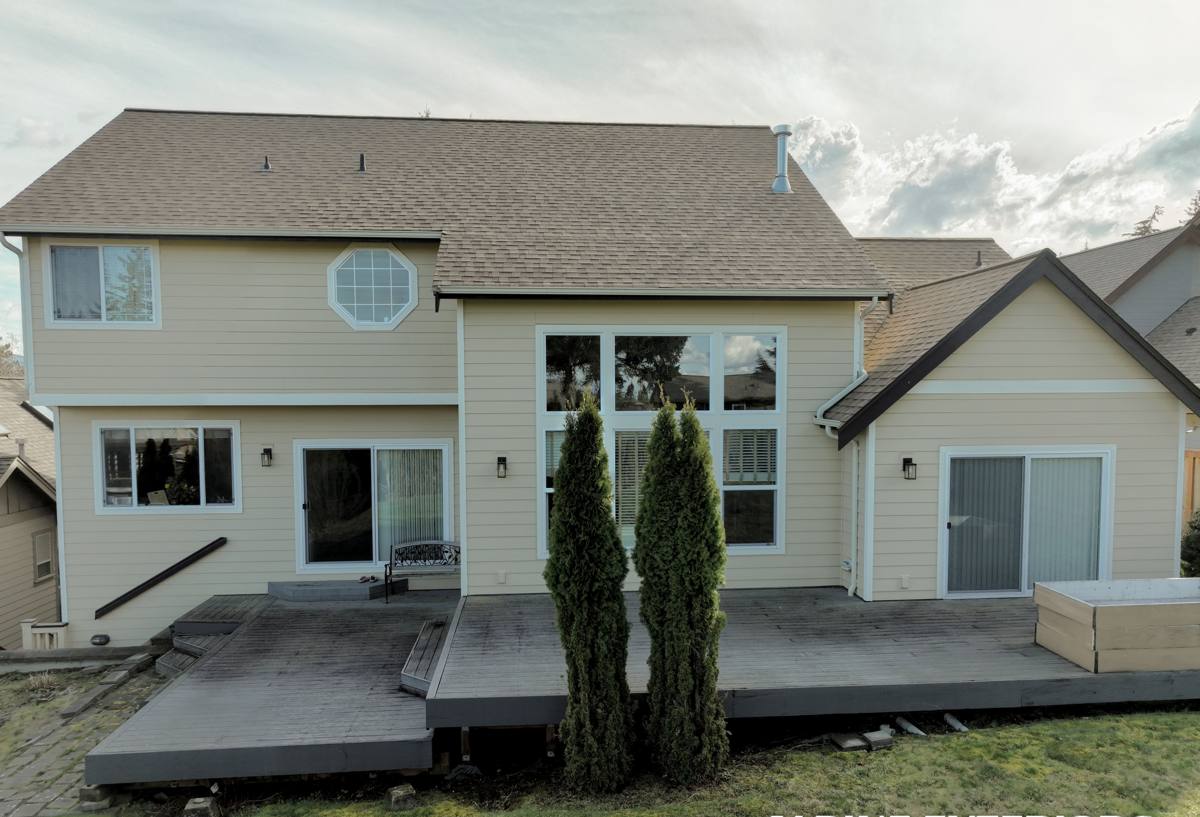
What Salt Air, Rain, and Moss Actually Do to a Deck
Salt Air and Corrosion
Airborne salt doesn't need direct ocean spray to cause trouble — it travels on wind and settles as a fine film on any exposed metal. Over time it accelerates corrosion on fasteners, hardware, and hidden connectors far faster than the same hardware would corrode a few miles inland. Once a fastener starts rusting, it weakens, can stain the surrounding wood or composite, and eventually needs replacement — often before the decking itself is due for anything.
Driving Rain
Storms coming off the water don't fall straight down; they come in sideways. That means rain gets pushed into gaps around ledger boards, under railing posts, and into any seam that wasn't properly flashed or sealed. Standing water in these hidden spots is where rot actually starts — not on the visible decking surface, which usually dries out fine, but in the framing underneath and behind it.
Moss and Shade
A long, wet moss season is normal for this part of Washington, and Birch Bay's tree cover and marine humidity make it worse in spots. Moss holds moisture against the decking surface, keeps it from drying between rains, and turns walking surfaces slippery. Left alone, it also feeds algae growth that stains lighter-colored materials.
What Birch Bay Homes Need From a Custom Deck
Every property is different, but most Birch Bay deck projects we look at share a few common needs:
- Decking and railing materials chosen for moisture and salt exposure, not just looks
- Framing details that shed water instead of trapping it against the house
- Corrosion-resistant fasteners and connectors throughout — not just at visible points
- A layout that accounts for wind exposure, especially on more open or elevated lots
- Enough airflow underneath the deck to let it dry out between storms
- A surface that stays reasonably safe underfoot once moss season sets in
Homes closer to the water tend to need more aggressive material and hardware upgrades than homes set back and shaded by trees, but almost no Birch Bay lot is fully exempt from these considerations.
Choosing the Right Decking Material
There's no single "best" decking material for every Birch Bay home — it depends on budget, how much maintenance you want to take on, and how exposed the deck is. Here's how the common options stack up under local conditions:
| Material | Salt Air / Moisture Resistance | Moss & Algae Resistance | Maintenance | Notes |
|---|---|---|---|---|
| Cedar | Good, naturally rot-resistant | Fair — needs regular cleaning | Periodic sealing/staining | Classic look; performance depends on upkeep |
| Pressure-treated fir/pine | Fair with proper sealing | Fair — needs regular cleaning | Regular sealing required | Budget-friendly; most sensitive to neglect |
| Capped composite | Very good | Good — smoother surface sheds moss buildup | Low — occasional washing | Higher upfront cost, less long-term upkeep |
| Tropical hardwood (e.g., ipe) | Excellent, naturally dense | Good with occasional cleaning | Periodic oiling to maintain color | Premium cost; very durable structurally |
| PVC decking | Excellent, non-porous | Very good | Low | No wood fibers to feed moss/algae |
We'll walk through these trade-offs with you honestly rather than pushing a single product — a homeowner planning to sell in a few years has different priorities than one settling in for the long haul.
Framing, Flashing, and Hardware: Where Decks Actually Fail
The Ledger Connection
Where a deck attaches to the house is the single most common failure point on any deck, and it's even less forgiving in a driving-rain climate. Proper flashing that directs water away from the house band and ledger board is not optional here — without it, water works its way behind the ledger and rots the framing from the inside where you can't see it until it's already a problem.
Fasteners and Connectors
We use corrosion-resistant fasteners and structural connectors rated for exterior and coastal-adjacent exposure throughout the frame — hangers, screws, and structural screws included, not just the visible hardware. Mixing metals (for example, an incompatible fastener in a treated-lumber connector) can cause galvanic corrosion that eats through hardware from the inside, so matching fastener and connector materials correctly matters as much as the rating on the box.
Footings and Elevation
Footings need to be sized and set to local frost and soil conditions, and posts need enough clearance from grade to avoid sitting in standing water after a heavy rain event. On lower or poorly-draining lots, that sometimes means adjusting the deck height or adding drainage work most homeowners wouldn't think to ask about.
Design Choices That Hold Up to Wind and Weather
Beyond materials, a handful of design decisions make a real difference for Birch Bay properties:
- Board spacing and orientation — proper gapping lets water drain through instead of pooling on the surface
- Railing style — solid panel railings look great but catch more wind load and moss buildup than baluster-style railings on exposed lots
- Stair and landing placement — kept clear of runoff paths off the roof or upper deck level
- Under-deck airflow — skirting, if used, needs venting so the framing can dry out between storms
Our Process for a Birch Bay Deck Project
1. On-Site Consultation
We start at your property, looking at sun and wind exposure, drainage, soil conditions, and how the deck will connect to the house. This is also where we talk through your priorities — low maintenance versus classic wood look, budget range, and how the space will actually be used.
2. Design and Material Selection
We put together a layout and material plan suited to the specific exposure of your lot, walking through the trade-offs in the table above so you're choosing with full information, not just a sample board.
3. Permitting
Most new decks and many substantial deck replacements in Whatcom County require a building permit, particularly once you're above a certain height or attaching new structure to the house. We handle that process rather than leaving it on your plate.
4. Construction
Framing first, with attention to flashing, fastener selection, and footing depth — then decking, railings, and stairs. We don't cut corners on the parts that end up hidden once the decking goes down, because those are exactly the parts that cause problems five or ten years out.
5. Final Walkthrough
We walk the finished deck with you, cover basic care for whatever material you chose, and make sure everything meets both code and our own standards before we call the job done.
Living With Moss Season: Realistic Maintenance
No deck in this climate is fully maintenance-free, but the right build minimizes the work. A simple seasonal routine keeps most Birch Bay decks in good shape:
- Sweep debris and standing leaves off the deck regularly, especially in fall
- Rinse or lightly scrub moss and algae buildup before it gets a foothold — early fall and early spring are the key windows
- Check fastener heads and railing connections yearly for early rust staining
- Re-seal or re-stain wood decking on the schedule appropriate to that product — don't wait until it's visibly failing
- Keep gutters and downspouts clear so roof runoff isn't dumping directly onto the deck
- Confirm under-deck vents or skirting gaps aren't blocked by landscaping or debris
Permits and Whatcom County Considerations
Deck projects in unincorporated Whatcom County, including Birch Bay, generally go through the county's permitting process rather than a city office, and requirements can shift depending on elevation, proximity to critical areas, or shoreline setback rules for lots closer to the water. We check what applies to your specific parcel as part of the design phase, so you're not caught off guard partway through construction.
Why Hire a Crew That Already Works in Birch Bay
A deck built by a crew without local experience can look fine on installation day and still be undersized on flashing, fastener corrosion resistance, or drainage detail for what this stretch of coastline actually puts a structure through. We build and repair decks across Ferndale and the surrounding Whatcom County communities, and we've seen firsthand which shortcuts show up as problems two or three years later around Birch Bay specifically — not as a sales pitch, but because we're often the ones called back to fix them. That experience shapes the material and hardware choices we recommend before a single post goes in the ground.
If you're planning a new deck or replacing one that's showing its age, we're happy to come take a look and put together a straightforward plan. Reach out for a free, no-pressure estimate using the form below.