 Ferndale Exterior
 Building a Deck That Can Handle Marietta's Waterfront Climate
Marietta sits low and close to the water on the edge of Ferndale, and that location shapes everything about how a deck should be built here. Homes in this stretch of Whatcom County deal with more airborne salt, more standing moisture, and a longer moss season than properties further inland. A deck that would hold up fine in a drier part of the state can start showing problems within a couple of seasons if it's built the same way out here. We build decks specifically for this environment, not a generic version of a deck that happens to be located in Marietta.
That doesn't mean the job is exotic or the materials are unusual. It means paying close attention to the details that matter most in a marine climate: drainage, fastener choice, ventilation under the deck, and how the structure attaches to the house. Get those right and a deck will hold up for decades. Skip them and you're looking at soft boards, corroded hardware, and rot at the ledger board well before the deck should need replacing.
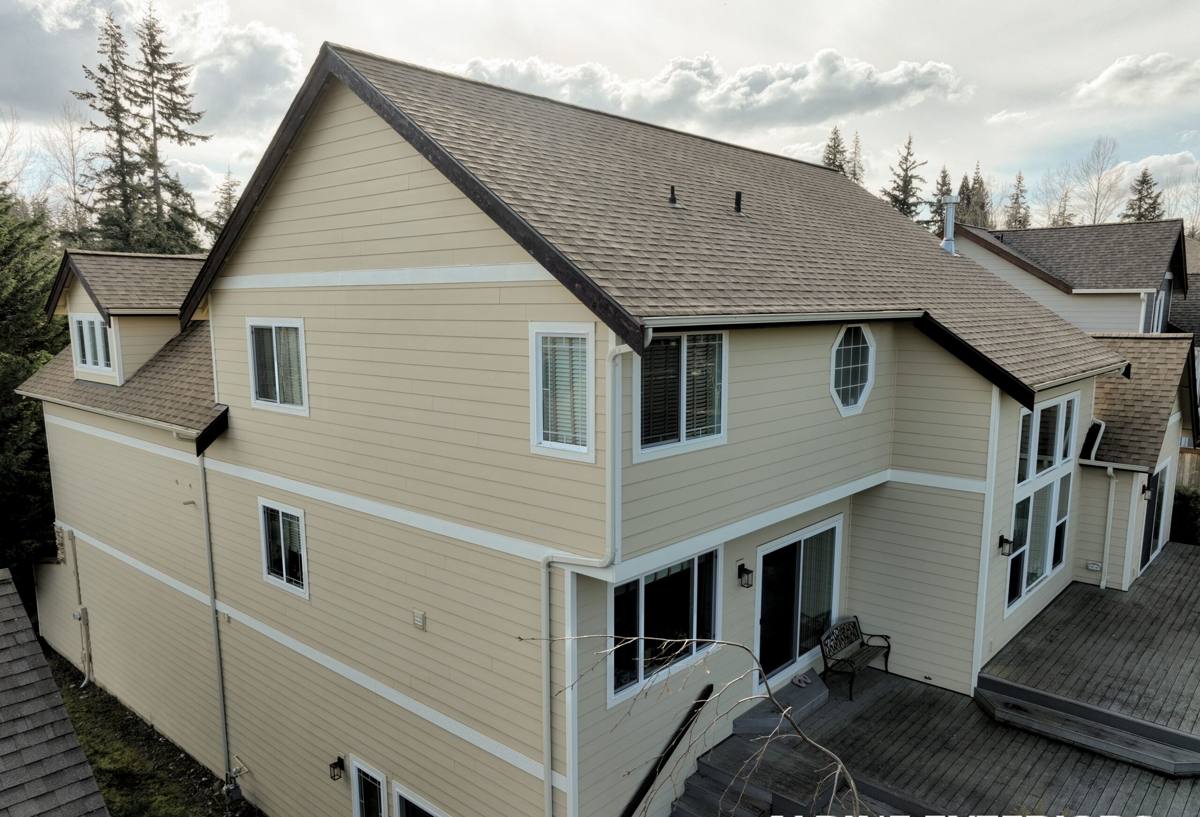
What Marine Air and Moss Season Do to an Improperly Built Deck
Salt air is corrosive to metal fasteners and connectors, especially the lower-grade hardware sometimes used to keep costs down. Once a fastener starts to corrode, it loses holding strength long before it looks obviously bad, which is part of why deck hardware failures can catch homeowners off guard. Combine that with the driving rain typical of this part of Whatcom County — often blowing sideways rather than falling straight down — and you get water intrusion at joints, flashing, and fastener holes that a fair-weather build in a drier region would never have to account for.
Then there's moss. The long, wet stretch from fall through spring gives moss and algae plenty of time to establish on any horizontal wood surface that doesn't drain and dry quickly. Moss holds moisture against the board surface, which accelerates rot in real wood decking and can leave composite decking looking dingy and slick underfoot. A deck built without proper slope, gapping, and airflow underneath will grow moss faster than one built with those details in mind, regardless of what decking material sits on top.
Framing and Substructure: Where Most Deck Failures Start
The decking boards are what you see, but the framing underneath is what determines whether a deck lasts. In our experience, the substructure is where corners get cut and where problems eventually surface — usually as soft spots, bounce, or a ledger board that's pulling away from the house.
Footings and Ledger Attachment
Footings need to be sized and set below the frost line for the soil conditions common around Ferndale, with concrete piers that won't heave or shift over time. Where a deck attaches to the house, the ledger board connection is one of the most important — and most commonly mishandled — parts of the whole structure. Proper flashing behind and over the ledger keeps water from tracking into the house's rim joist, which is a slow, hidden kind of damage that's expensive to fix once it's found.
Fasteners and Hardware
In a salt-air environment, we use fasteners and structural connectors rated for corrosion resistance — hot-dip galvanized or stainless, matched to the pressure-treated lumber they're driven into (some treated lumber chemicals corrode standard galvanized hardware faster than people expect). It costs a little more up front than using whatever hardware is on the shelf, but it's the difference between joist hangers that are solid in fifteen years and ones that are rusted through in five.
Choosing Decking Material for a Salt-Air Environment
There's no single "best" decking material — the right choice depends on budget, maintenance tolerance, and how close the deck sits to open water and wind. Here's how the common options hold up under Marietta's conditions specifically:
| Material | How it handles salt air & moisture | Maintenance | General cost range |
|---|---|---|---|
| Pressure-treated wood | Good if properly sealed and fastened; needs consistent upkeep to resist moss and checking | Annual cleaning, periodic sealing/staining | Lowest upfront cost |
| Cedar | Naturally moisture- and insect-resistant, but still needs sealing in this climate; softens faster if neglected | Regular cleaning, sealing every 1-2 years | Mid-range |
| Capped composite | Excellent resistance to moisture and salt air; won't rot or splinter | Periodic washing to keep the cap surface from getting slick with algae | Higher upfront, low long-term maintenance |
| PVC decking | Fully synthetic, essentially immune to moisture and salt corrosion | Occasional washing | Highest upfront cost |
Brands like Trex and TimberTech are common capped-composite choices we work with, and both perform well in this climate when installed with the ventilation and fastening spacing the manufacturer specifies. We don't push homeowners toward the most expensive option — a well-built, well-maintained pressure-treated deck can serve a Marietta home for many years. The honest trade-off is time: composite and PVC cost more to install but ask less of you afterward, while wood costs less up front and asks for more regular attention to keep moss and moisture from getting ahead of it.
Our Deck Building Process
Every deck starts with an on-site assessment, not a generic quote. We walk the property, look at drainage patterns, sun and wind exposure, and how close the build site sits to standing water or low ground — all of which affect how we frame and detail the deck.
- Site assessment and design — we look at grading, existing drainage, and how the deck will tie into the house before drawing up a plan.
- Permitting — we handle the paperwork with the local jurisdiction so the deck is built to current code, not just to what "looks right."
- Footings and framing — proper depth footings, corrosion-resistant hardware, and correctly flashed ledger attachment.
- Decking installation — boards installed with the gapping and fastening pattern appropriate to the material and this climate.
- Final walkthrough — we go over the finished deck with you, including what maintenance it will need and when.
Permits and Code Considerations in Whatcom County
Most decks attached to a house, and many freestanding decks above a certain height, require a building permit in Whatcom County and within Ferndale's jurisdiction. Requirements can depend on the deck's height above grade, its size, and whether it's attached to the structure. We pull the necessary permits and build to the applicable code rather than treating that as optional — an unpermitted deck can become a real problem at resale, and proper permitting also means the footing depth, railing height, and structural spans are checked by someone besides us.
Keeping a Marietta Deck Looking Good Year After Year
Whatever material you choose, a little seasonal attention goes a long way in this climate. Most of it is simple, and a lot of it comes down to not letting moss and moisture get a head start.
- Sweep leaves and debris off the deck surface regularly, especially in fall — trapped organic matter holds moisture and feeds moss.
- Rinse or wash the deck surface a couple of times a year to knock down algae and grime before it gets established.
- Check that gaps between boards stay clear so water can drain through rather than pooling.
- Inspect railings, stairs, and ledger flashing once a year for loose fasteners or early signs of corrosion.
- For wood decking, plan on resealing or restaining on the schedule appropriate to the product — don't wait until the finish has visibly failed.
- Trim back overhanging vegetation that shades the deck and keeps it damp longer than it needs to be.
Why a Local Ferndale Crew Matters for Marietta Homes
A crew that mostly builds decks in drier, inland areas doesn't always think about ledger flashing, hardware corrosion resistance, or drainage the same way a crew that works this waterfront stretch of Whatcom County does — because they don't have to, most of the time. Building in and around Marietta and Ferndale day in and day out means we've seen what actually fails here versus what's fine, and we build accordingly. That local knowledge shows up in small decisions — fastener grade, board spacing, footing depth — that don't cost much more at the time but save a lot of grief a few years down the road.
If you're planning a new deck or replacing one that hasn't held up, we're happy to come take a look and talk through honest options for your property. Fill out the form below for a free, no-pressure estimate.