 Ferndale Exterior
 Building a Deck for a Sudden Valley Lot
Sudden Valley homes tend to sit on wooded, tree-covered lots with a lot of shade and not much direct sun hitting the ground or a deck surface for long stretches of the day. That's a great feature for a shady summer afternoon, but it's a tough environment for lumber, fasteners, and footings. A deck built the same way you'd build one on an open, sunny lot in a different part of Whatcom County often struggles here — it just doesn't dry out the same way, and problems that would take a decade to show up elsewhere can show up in three or four years.
We're based in Ferndale and build decks throughout this part of Whatcom County, including the wooded, sloped, and lake-adjacent lots that are common around Sudden Valley. This page covers what we've learned building and repairing decks in exactly these conditions, and what a deck built correctly for this specific kind of property actually involves.
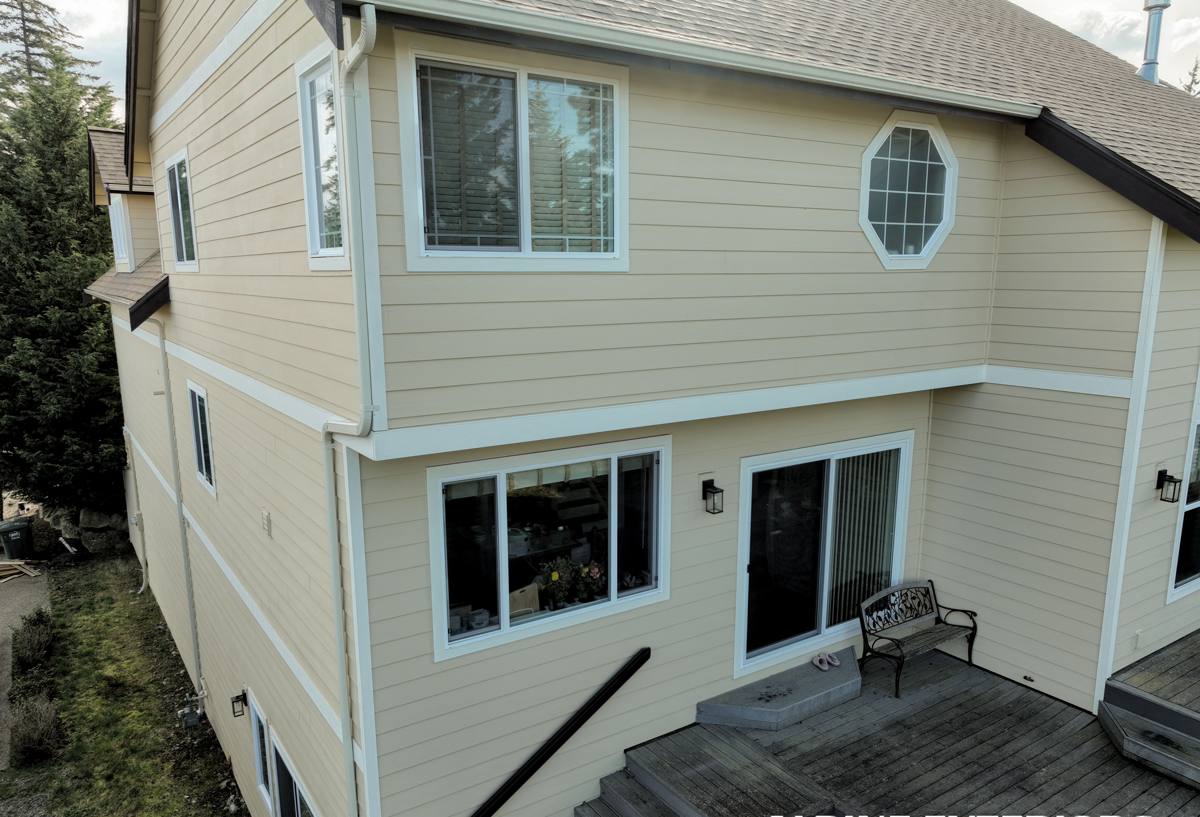
What Whatcom County Weather Does to a Deck Over Time
Our part of Washington gets a specific combination of conditions that's harder on outdoor structures than people expect: driving, wind-pushed rain instead of gentle vertical rain, long stretches of overcast damp weather, and a moss and algae season that can run most of the year on shaded surfaces. None of that is unique to Sudden Valley, but tree-covered, low-sun lots like the ones common there feel it more than open lots do.
Driving Rain and Wind-Driven Moisture
When rain comes in sideways instead of straight down, it gets pushed under railings, into ledger board connections, and into any gap where the deck meets the house. A deck that isn't flashed and sealed correctly at that ledger connection is one of the most common sources of hidden rot we find — the surface boards can look fine while the framing underneath is failing.
Moss, Algae, and Shaded Wood
Shaded decking that doesn't get direct sun stays damp longer after every rain, and damp wood grows moss and algae. Beyond looking bad, moss holds moisture against the board surface and makes decking slick and genuinely dangerous underfoot, especially on stairs. Material choice and gap spacing between boards both make a real difference in how bad this gets.
Salt Air and Metal Fasteners
Whatcom County sits close enough to the Salish Sea that the damp, salt-tinged air that moves through the region affects more than just waterfront properties — it accelerates corrosion on ordinary fasteners, brackets, and hardware over the life of a deck. Using the wrong grade of screw or joist hanger is a slow failure that's invisible until it isn't.
Picking Decking Material for a Shaded, Damp Lot
There's no single "best" decking material — there's a best material for your budget, your maintenance appetite, and your specific lot. On a shaded, damp Sudden Valley-type lot, moisture and moss resistance matter more than they would on an open, sunny property.
| Material | How it handles shade & moisture | Maintenance | Typical lifespan |
|---|---|---|---|
| Pressure-treated lumber | Good if properly sealed; moss-prone in deep shade without upkeep | Annual cleaning, re-seal every 1-3 years | 15-25 years with upkeep |
| Cedar | Naturally moisture and insect resistant, but softer and can stay damp longer in full shade | Cleaning plus stain/seal every 1-2 years | 15-20 years with upkeep |
| Composite decking | Doesn't absorb water or rot, but can still grow surface moss/mildew in constant shade if never cleaned | Periodic washing, no sealing required | 25-30+ years, manufacturer-dependent warranty |
We don't push one material on every job. Composite costs more up front and eliminates rot risk, which matters on a deeply shaded lot, but it still needs occasional washing to keep moss from taking hold on the surface texture. Wood costs less initially but only performs as well as the maintenance schedule behind it. We'll walk your specific lot, tell you honestly how much sun and shade it gets through the year, and let that drive the recommendation instead of a standard pitch.
Framing and Footings: What Actually Holds the Deck Up
The decking boards are the part everyone sees, but the framing underneath is what determines whether the deck is safe and how long it lasts. This is also where we see the most corner-cutting on decks that weren't built by a full crew.
Footings Sized for Your Site
Footings need to be sized and set to local code depth requirements, not guessed at. On sloped or tree-root-heavy lots — common around wooded Sudden Valley properties — footing placement sometimes has to shift from a standard layout to avoid roots or uneven grade, which is exactly the kind of adjustment that gets skipped when a deck is rushed.
Ledger Flashing
The ledger board connects the deck to the house, and it's the single most common failure point we find on older decks in this climate. Correct flashing — metal flashing plus a waterproof membrane behind it, not just caulk — keeps driving rain from working its way into the house rim joist over the years.
Fasteners and Hardware
Given the corrosion pressure from our regional air and moisture, we use fasteners and joist hangers rated for the decking material and treated lumber being used — not whatever's cheapest. Mismatched metals between hardware and treated lumber accelerate corrosion; this is a detail that's invisible on move-in day and expensive to ignore.
Railings, Stairs, and Permits
Any deck built above a certain height off grade needs a compliant guardrail, and most jurisdictions in Washington follow versions of the same baseline requirements: guardrails around 36 inches high for residential decks, baluster spacing that won't allow a small child to pass through, and graspable stair handrails on any run with enough steps to require one. Exact requirements and permit thresholds are set by the local building department, and we pull permits and build to whatever the current adopted code requires rather than assuming last year's numbers still apply.
If your property in the Sudden Valley area falls under a homeowners' association or community design guidelines in addition to county permitting, that's worth checking before design begins — some communities have their own review process for exterior structures on top of standard permitting. We're glad to help you figure out what applies to your specific address.
How We Build a Deck, Start to Finish
- Site visit — we look at sun/shade exposure, slope, drainage, and how the deck will tie into the house
- Design and material discussion — honest tradeoffs on wood versus composite for your specific lot and budget
- Permit drawings and submission — handled by us, not left to you
- Footings and framing — sized to code and adjusted for site conditions like slope or root systems
- Ledger flashing and waterproofing — done before a single deck board goes down
- Decking, railings, and stairs installed to spec
- Final walkthrough — we check the whole structure with you before calling it done
Deck Maintenance for This Climate
A well-built deck still needs seasonal attention in a climate with this much rain and shade. Here's the realistic minimum for a deck in a wooded, damp setting like Sudden Valley:
- Sweep leaves, needles, and debris off the deck surface regularly, especially in fall
- Clear debris out of gaps between boards so water can drain instead of pooling
- Treat or clean visible moss and algae before it spreads, rather than waiting until it's thick
- Re-seal or re-stain wood decking on the schedule appropriate to the product — don't skip years
- Check railings, stair connections, and visible hardware once a year for looseness or rust
- Keep gutters and downspouts near the deck clear so roof runoff isn't dumping onto or under it
None of this is complicated, but skipping it is exactly how a well-built deck ends up needing early repairs in a climate that doesn't forgive neglect the way a drier region would.
Why a Ferndale Crew That Works Sudden Valley Matters
We're not a national outfit that shows up once and leaves. We're based in Ferndale, we build and repair decks throughout Whatcom County, and we've worked enough wooded, shaded, lake-area lots like the ones around Sudden Valley to know what actually fails first here and why. That means we're not learning your site's drainage patterns and shade exposure for the first time on your job — we've seen the pattern before on the property down the road.
It also means if something needs a warranty check or a follow-up years down the line, we're a short drive away, not a call center. For a deck that's going to sit outside through years of Whatcom County winters, that local accountability is worth as much as the materials themselves.
If you're planning a new deck or replacing one that's showing its age, we're happy to come take a look at your specific lot and give you a straightforward, no-pressure estimate — no obligation, just an honest read on what your property needs. The form below is the easiest way to get that started.