 Ferndale Exterior
 Deck Repair for Lummi Island's Marine Climate
A deck on Lummi Island lives a harder life than a deck fifty miles inland. The island sits right in Hale Passage, surrounded by salt water, wrapped in tree cover, and hit with driving rain off the Strait for much of the year. Add in a moss season that can run from fall through spring in Whatcom County's wet, mild winters, and you've got a structure that's constantly fighting moisture, salt exposure, and organic growth. Most deck problems out here aren't the result of bad luck or bad framing to begin with — they're the slow, predictable outcome of coastal weather working on wood, fasteners, and connections year after year. Deck repair on Lummi Island isn't just patching boards. It's understanding how salt air corrodes hardware, how standing moisture rots framing from the inside out, and how moss holds water against a surface long enough to do real damage.
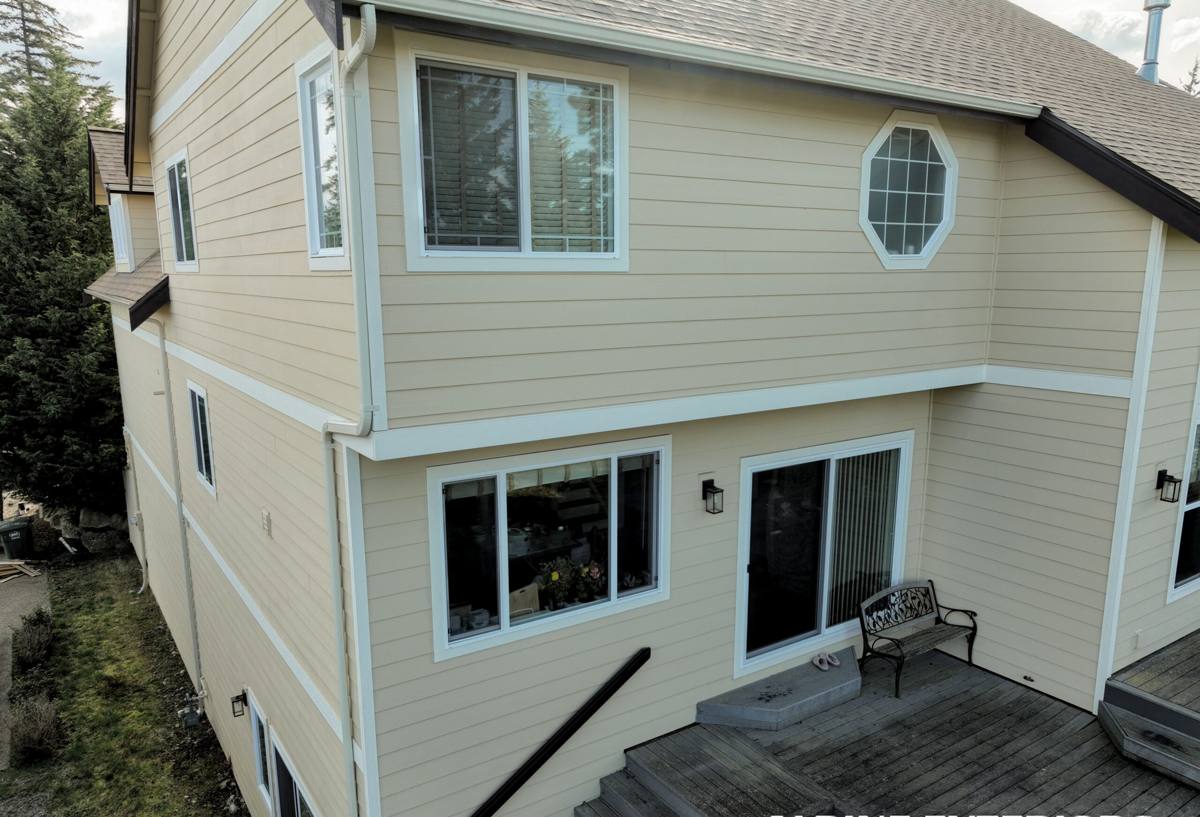
Signs Your Lummi Island Deck Needs Repair
Some deck problems are obvious. Others hide until they've become expensive. Here's what we tell homeowners to watch for, especially on decks that see salt air and heavy shade:
- Soft, spongy, or bouncy spots when you walk across the deck
- Boards that have cupped, split, or pulled away from joists
- Rust streaks or corrosion around screws, nails, or joist hardware
- Green or black staining that keeps coming back after cleaning
- Gaps or movement where the deck meets the house (ledger board area)
- Railings or posts that wiggle, lean, or feel less solid than they used to
- Stairs with uneven treads or visible wear at the nosing
- Water pooling instead of draining off the surface after rain
Any one of these on its own might be minor. Several at once, or anything involving the ledger board or structural posts, usually means it's time for an inspection rather than a wait-and-see approach.
What Salt Air and Moss Season Actually Do to a Deck
Fasteners and Hardware
Salt air accelerates corrosion on anything metal — screws, nails, joist hangers, bolts, and structural connectors. On an inland deck, a fastener might last decades. Near the water on Lummi Island, the wrong grade of hardware can start rusting within a few years, and a corroded fastener doesn't just look bad — it loses holding strength. This is one of the most common repair calls we get on the island: decking that looks fine on top but has hardware underneath that's failed.
Ledger Board and Structural Framing
The ledger board — where the deck attaches to the house — is the single most important structural connection on most decks, and it's also the part most exposed to trapped moisture if flashing was installed poorly or has worn out. Combine that with a wet climate and tree canopy that keeps things damp longer after a storm, and you get slow rot that isn't visible from the surface. We check the ledger board and the framing beneath the decking on every repair visit, not just the boards people can see.
Decking Surface and Moss Growth
Moss doesn't just look bad. It holds moisture directly against wood or composite decking, keeps the surface from drying between rains, and creates a slick, slip-prone walking surface. Left alone through a full Whatcom County winter, moss and the moisture it traps can accelerate rot in wood decking and cause premature wear in the grooves and fastener channels of composite boards. Shaded areas of the deck — under overhangs, near trees, or on the north side of the house — are usually the worst offenders.
Common Repairs We Handle on Lummi Island
Structural Repairs
This covers anything load-bearing: sistering or replacing rotted joists, resecuring or rebuilding a failing ledger board connection, replacing corroded joist hangers and structural fasteners, and shoring up posts or footings that have shifted or weakened. These repairs aren't cosmetic — they're about making sure the deck is actually safe to stand on.
Surface and Board Repairs
Individual board replacement, fixing cupped or split decking, re-fastening loose boards, and addressing moss or staining that's gone past a surface clean. Sometimes a handful of boards need replacing while the rest of the deck is sound — we don't push a full rebuild when a targeted repair will do the job.
Railing and Stair Repairs
Loose posts, wobbly railings, and worn stair treads are safety issues as much as they are cosmetic ones. We rebuild connections to current structural standards rather than just tightening what's there, since a railing that's already failing once usually fails again if it's not properly resecured.
Repair vs. Replace: How We Decide
Homeowners often assume any deck problem means a full replacement. That's not usually true, and we'd rather give you an honest assessment than sell a bigger job than you need. The decision generally comes down to three questions: How much of the structural framing is actually compromised versus just the surface boards? Is the damage isolated to one area (often the shadiest, wettest part of the deck) or spread evenly across the whole structure? And is the deck's age and overall condition such that repairing now just delays a replacement you'll need in a few years anyway? We walk through all three with you before recommending a direction, and we'll tell you plainly if a repair is a reasonable near-term fix or if it's a stopgap.
Material Considerations for Repairs
What we use to repair a section of deck should match — or reasonably complement — what's already there, while accounting for the fact that it needs to survive the same salt air and moss exposure as the original structure. Here's how the common options compare for repair work specifically:
| Material | Salt Air / Moisture Behavior | Maintenance Needs | Best Use in Repairs |
|---|---|---|---|
| Cedar | Naturally decay-resistant but still needs sealing; can still rot if finish fails | Periodic cleaning and re-sealing to hold up against coastal moisture | Matching existing cedar decks where appearance matters |
| Pressure-treated lumber | Good rot resistance when properly maintained; hardware must be rated for treated wood | Occasional cleaning and sealing; watch for moss buildup in shaded spots | Structural framing repairs (joists, ledger, posts) on most decks |
| Composite decking | Resists rot but can still trap moisture at fastener points and in shaded, poorly ventilated areas | Low maintenance surface-wise, but requires periodic cleaning to prevent moss/algae staining | Full-board replacement sections on composite decks; not a drop-in match for wood |
One note on hardware: regardless of decking material, we use fasteners and structural connectors rated for coastal and treated-lumber exposure. Standard interior-grade hardware corrodes fast this close to salt water, and using the wrong fastener is one of the quickest ways to turn a good repair into a callback.
Our Deck Repair Process
- Inspection: We check the full structure — framing, ledger connection, posts, and surface — not just the area you called about, since salt air damage often shows up in more than one spot.
- Honest assessment: We explain what we found, what's structural versus cosmetic, and what your realistic options are, including a straightforward repair-versus-replace conversation if it applies.
- Written estimate: Clear scope and pricing before any work starts, so there are no surprises once we're on site.
- Repair work: Structural issues are addressed first — framing, hardware, and connections — before surface and cosmetic repairs.
- Final check: We walk the deck with you when the work is done to confirm it's solid, safe, and matches what we agreed on.
Why a Crew That Already Works Lummi Island Matters
Lummi Island is reached by ferry, which means a repair project here isn't the same logistics as a job on the mainland. Materials, tools, and crew scheduling all have to work around ferry crossings, and a contractor who hasn't planned for that can turn a simple repair into a drawn-out timeline. Because we regularly work Ferndale and the surrounding Whatcom County coastline, including island properties, we plan our material orders and crew scheduling around the realities of getting to and from the island — instead of figuring it out after the job has already started. We also know what island homes tend to deal with structurally: the combination of salt exposure, shade from mature trees, and heavy winter moisture that's a little different from what we see on a typical mainland property in Ferndale. That local pattern recognition means we're not guessing at what's causing a soft spot or a corroded connection — we've usually seen the same issue on a nearby property before.
Getting a Deck Repair Estimate
If your deck has soft spots, corroded hardware, persistent moss, or just doesn't feel as solid as it used to, it's worth having someone take a real look before it gets worse. We offer free, no-pressure estimates for deck repair on Lummi Island — we'll tell you honestly what needs fixing, what can wait, and what your options are. Fill out the form below to get started.