 Ferndale Exterior
 James Hardie Siding for the Fairhaven Area, Installed by a Crew That Already Works Ferndale
If you own a home in the Fairhaven area near Ferndale, you already know the exterior takes a beating that homes twenty miles inland don't see in quite the same way. Salt-tinged air drifts in off the water, rain gets pushed sideways into wall assemblies more often than it falls straight down, and a moss season that can run most of the year settles into anything shaded or north-facing. That combination is exactly why we install James Hardie fiber cement siding, and only James Hardie, on every job we take in this part of Whatcom County. This page is specifically about what a correct Hardie installation looks like for a Fairhaven-area home, not a general overview of siding — if you're deciding between products or trying to figure out whether your current siding is actually failing, this is about the one product we trust here and how we put it on right.
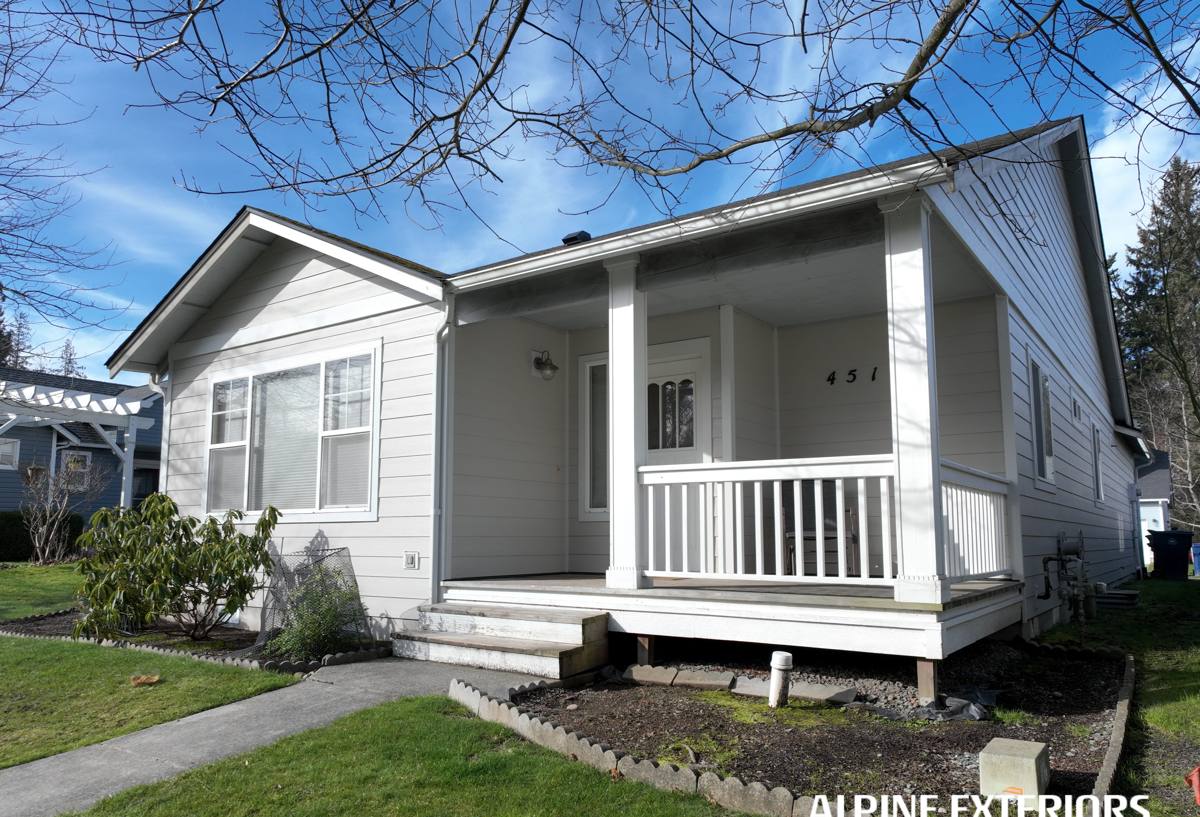
What the Local Climate Actually Does to a Wall
Salt-Tinged Marine Air
Homes in and around Fairhaven get a steady, low-grade dose of salt-laden air most of the year, not just during storms. That kind of exposure works slowly on fasteners, flashing, and lower-grade finishes. It rarely announces itself. It shows up years later as rust bleed around nail heads, caulk that's degraded ahead of schedule, or a finish that's chalked and faded well before it should have.
Wind-Driven Rain
Proximity to open water means rain here rarely falls straight down. Wind pushes it sideways into lap joints, trim seams, and any penetration in the wall, which is a very different load than a simple annual rainfall total suggests. A siding system built and tested for a calmer, drier region can still take on water in this area specifically because of how wind interacts with the terrain and open exposure near the water.
A Long Moss and Mildew Season
Mild temperatures, consistent dampness, and mature tree cover common on Fairhaven-area lots add up to extended moss and mildew growth, especially on shaded or north-facing walls. Porous or moisture-retentive siding becomes a growth surface over time, and it usually starts in the spots homeowners check least: behind shrubs, under eaves, along the side of the house that never really dries out between rain events.
Why James Hardie Is the Only Siding We Put on These Homes
We don't carry a lineup of brands and let price sort out the decision for the homeowner. We install James Hardie fiber cement, full stop, because of what we've consistently found on tear-offs and repair calls in exactly this kind of marine climate.
- Non-combustible core: fiber cement doesn't feed a fire the way wood-based siding products can, which matters for household safety and can matter for insurance considerations too.
- Factory-applied ColorPlus finish: the color coat cures under controlled factory conditions instead of being brushed on at the jobsite, which gives it real resistance to fading, chalking, and moisture intrusion over time.
- Climate-engineered HZ5 formulation: built for regions with heavy sustained moisture and freeze-thaw cycling, which is a closer match to this stretch of coastal Whatcom County than a generic national spec.
- Dimensional stability: fiber cement doesn't swell, cup, or warp the way engineered wood products can after repeated wet-season moisture cycles.
- Strong transferable warranty: Hardie backs its products with one of the more substantial warranty structures in the industry, provided the installation follows spec.
We don't install LP SmartSide, vinyl siding, Cemplank, Allura, primed spruce, or cedar. Those are legitimate products and plenty of contractors install them competently. We made a professional call that in a climate this consistently wet and salt-exposed, standing behind one system we understand completely serves a Fairhaven-area homeowner better than offering a cheaper option that quietly shifts maintenance risk onto them a few years down the road. Engineered wood is more sensitive to moisture at cut edges and fastener penetrations than fiber cement. Vinyl can warp under sun exposure and trap moisture behind the panel if house wrap and flashing weren't installed with real care. Cedar and primed spruce need ongoing painting or sealing to keep water out, and in a climate that stays wet this much of the year, that maintenance schedule tends to slip.
Choosing the Right Hardie Product Line
James Hardie isn't a single product, it's a system, and picking the right profile matters as much as picking the brand.
- HardiePlank lap siding: the most common choice for homes in this area; horizontal reveal sheds wind-driven rain cleanly when lapped and fastened correctly.
- HardiePanel vertical siding: often used as an accent on gables or a more modern-style home; needs careful joint treatment since vertical seams see more direct water exposure.
- HardieShingle: a good fit for homes going for a traditional coastal look, though the extra seams mean flashing detail matters even more.
What a Correct Installation Involves
Material choice is only part of the job. A James Hardie installation that actually performs the way it's engineered to requires correct fastening patterns, proper clearance from grade and roofline, joints that are lapped and sealed correctly, and house wrap and flashing that function as one integrated water-management system rather than separate steps done in isolation. A rushed or corner-cut install is one of the most common reasons a good product ends up with a poor reputation on paper, and it's why we treat installation detail with the same seriousness as the material itself.
Our Process on a Fairhaven-Area Job
- Walk the property and assess existing siding, trim, flashing, and any signs of moisture already tracking into the wall assembly.
- Decide, honestly, whether the job is a tear-off or whether an overlay is genuinely appropriate for the substrate underneath.
- Confirm product line, texture, and color, and plan trim and flashing details specific to that home's exposure.
- Install house wrap, flashing, and siding as one connected water-management system, not as separate trades working past each other.
- Final walkthrough with the homeowner before we consider the job done, not just a drive-by inspection.
Repair vs. Full Replacement
Not every siding issue on a Fairhaven-area home means a full tear-off. Isolated impact damage, a section that's failed around a window, or trim that's worked loose can often be repaired and matched into existing Hardie siding without redoing the whole house. But when moisture has been tracking behind the wall assembly for a while, or the existing siding is an older material that's simply reached the end of its service life, a patch job usually just delays a bigger project. We'll give you a straight answer about which situation you're actually in.
Siding Cost Factors for Fairhaven-Area Homes
| Factor | What It Affects | Why It Matters Here |
|---|---|---|
| Home age and wall complexity | Total material and labor | Older housing stock in this area often has more trim detail and roof intersections where wind-driven rain can work its way in |
| Tear-off vs. overlay | Labor scope and substrate access | Tear-off exposes hidden moisture damage that's common under decades-old siding this close to the water |
| Substrate condition | Repair costs before new siding goes on | Years of trapped moisture behind failing siding can rot sheathing and framing before it's ever visible from outside |
| Product line and texture | Material cost and appearance | HardiePlank, HardiePanel, and HardieShingle carry different material and labor costs depending on trim detail |
| Trim and color selection | Material cost and finish longevity | ColorPlus factory finishes outlast field-applied paint against salt air and UV exposure |
Real numbers depend on the specific house, which is why we walk the property in person before quoting instead of pricing off square footage alone.
Signs a Fairhaven-Area Home Needs Siding Attention
- Moss or dark staining that returns quickly after cleaning, especially on shaded or north-facing walls
- Soft or spongy siding, particularly near the base of the wall or around window and door trim
- Peeling, bubbling, or chalking paint on siding boards or trim
- Cracked, chipped, or missing siding sections after wind events
- Visible gaps at seams, corners, or trim joints where water can track in
- Rust staining around fasteners or flashing, a common early sign of marine air exposure
- Rising heating bills that may point to a wall assembly that's no longer sealing properly
Why a Crew That Already Works This Area Matters
A crew that regularly works the Fairhaven area near Ferndale sees how salt air, wind-driven rain, and moss actually behave on real houses over a full year, not just how a product performs on a spec sheet. That translates into practical decisions on install day: where extra flashing attention pays off, which wall orientations stay damp longest, and which details are worth the extra time so you're not dealing with a callback two winters later. A crew showing up from outside the area for a single job doesn't have that same local track record to draw on, and it tends to show in the small details that determine whether siding lasts twenty years or needs attention in five.
If your Fairhaven-area home needs new James Hardie siding, a repair, or just an honest second opinion on what's actually going on behind an aging wall, we're glad to take a look. Reach out using the form below to schedule a free, no-pressure estimate.