 Ferndale Exterior
 Roofing in Fairhaven: What the Climate Actually Demands
Homes in and around Fairhaven sit close enough to the water that salt-laden air is a daily fact of life, not an occasional nuisance. Add Whatcom County's long wet season, driving rain that comes in sideways off the Strait during winter storms, and a moss season that can run eight months or more under shaded, north-facing roof slopes, and you have one of the tougher environments in the Pacific Northwest for a roof to hold up in. A roof that would last two decades in a drier inland climate can wear out faster here if it wasn't built with this specific combination of stressors in mind.
That's the lens we use on every Fairhaven roof replacement: not "what roof looks good," but "what roof will actually survive salt exposure, sustained moisture, and moss pressure without turning into a maintenance headache for the next fifteen years."
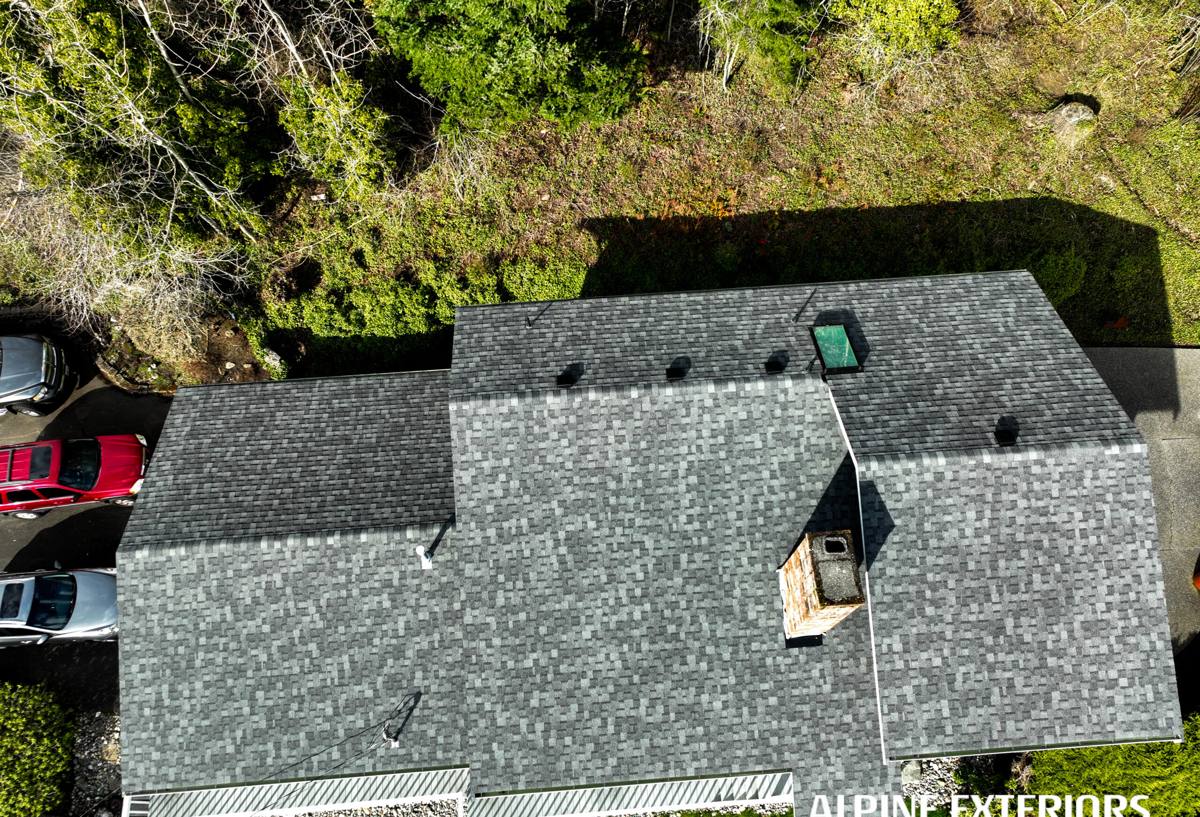
Signs a Fairhaven Roof Needs Replacement, Not Another Patch
Roof repair has its place, but patching a roof that's structurally past its service life just delays a bigger, more expensive failure. In our experience working Ferndale and the surrounding Whatcom County area, these are the signs that point toward full replacement rather than another round of spot fixes:
- Granule loss heavy enough that you're finding grit in gutters and downspouts every season, not just after a big storm
- Moss that keeps returning within months of cleaning, especially on shaded north and east-facing slopes common near Fairhaven's tree cover
- Curling, cupping, or cracked shingles/shakes across multiple slopes rather than one isolated area
- Soft spots or sagging in the roof deck when walked, which usually means water has already reached the sheathing
- Repeated leaks in different locations each winter, rather than one recurring, fixable spot
- Flashing that's rusted, lifted, or was never properly step-flashed at walls and chimneys to begin with
If a roof is showing two or more of these at once, patching becomes a short-term fix on a system that's already failing underneath.
What a Correct Roof Replacement Involves Here
It Starts Below the Surface
The shingle or shake layer gets all the attention, but in a climate with this much sustained moisture, what's underneath matters just as much. A correct tear-off exposes the deck so we can check for rot, soft sheathing, or prior water damage that a re-roof over old material would simply bury. Any compromised decking gets replaced before anything new goes down — skipping this step is one of the most common shortcuts that leads to premature failure.
Underlayment and Ice/Water Protection
Given the amount of driving rain Fairhaven sees, we install a synthetic underlayment rated for high moisture exposure across the full roof, with self-adhering ice-and-water membrane at the vulnerable points: eaves, valleys, and any roof-to-wall transitions where wind-driven rain tends to find its way in.
Flashing Done Right
Flashing failure is behind more roof leaks than shingle failure. Chimneys, skylights, vent pipes, and wall intersections all get new, properly step-flashed and counter-flashed metal — not caulk-and-hope repairs layered over old flashing.
Ventilation That Matches the Climate
A roof deck that can't breathe traps moisture, which accelerates rot and gives moss and algae exactly the damp environment they need to establish. We balance intake (soffit) and exhaust (ridge or box vents) so the attic space actually moves air, which is one of the most overlooked factors in how long a roof lasts near the water.
Material Options for Salt Air and Moss Pressure
There's no single "correct" roofing material for Fairhaven — it depends on your home's style, your budget, and how much long-term maintenance you're willing to take on. Here's how the common options actually perform under local conditions:
| Material | Salt Air Behavior | Moss Resistance | Typical Lifespan Here |
|---|---|---|---|
| Architectural asphalt shingle | Good with proper metal flashing; avoid unrated fasteners | Moderate — algae-resistant granules help but shaded slopes still need periodic cleaning | 20-25 years |
| Cedar shake | Traditional regional look; needs treatment to resist salt-driven weathering | Low without diligent upkeep — moss takes hold quickly in shade | 20-30 years with maintenance |
| Standing seam metal | Excellent when properly coated/fastened; sheds salt spray and debris | High — smooth, steep-pitch surface gives moss little to grip | 40-50+ years |
| Composite/synthetic shake or slate | Very good — doesn't absorb moisture like natural wood | Good, though shaded areas still benefit from cleaning | 30-50 years |
We're upfront when a material isn't a good fit for a given roof. Untreated cedar on a heavily shaded, low-slope section, for example, is going to demand more moss upkeep than most owners want to sign up for — that's a maintenance trade-off worth discussing before installation, not a defect discovered after the fact. Fastener and flashing metal choice matters too: in salt air, mismatched or lower-grade metals corrode faster and can stain the roof below them, so we match hardware to the environment rather than defaulting to whatever's cheapest.
Our Replacement Process, Start to Finish
- On-site inspection — we walk the roof and attic, check the deck condition, ventilation, and flashing points, and take photos to document what we find
- Written scope and estimate — a clear breakdown of materials, labor, and any deck repair contingencies, so there are no surprise change orders mid-project
- Permitting — we handle the permit application with the local jurisdiction so the work is inspected and documented properly
- Tear-off and deck inspection — old roofing comes off, the deck is inspected in daylight, and any rotted sheathing is replaced before moving forward
- Underlayment, flashing, and ventilation installation — the moisture-management layer that determines how the roof performs in year ten, not just year one
- Roofing material installation — installed to manufacturer specification, since warranty coverage depends on it
- Final walkthrough and cleanup — magnetic sweep for nails, gutter check, and a final inspection with the homeowner before we call it done
Why a Crew That Already Works Fairhaven Matters
Roofing crews unfamiliar with a coastal Whatcom County microclimate tend to build to a generic spec — the kind that works fine in a drier region but underperforms here. A crew that regularly works Fairhaven and the greater Ferndale area already knows which slopes hold moss longest, which flashing details fail first under driving rain, and which fastener and metal grades actually hold up against salt air over time. That local pattern recognition shows up in fewer callbacks and a roof that's built for the conditions it will actually face, not conditions on a spec sheet written somewhere else.
It also matters for permitting and inspection — knowing the local building department's expectations and scheduling rhythms keeps a project moving instead of stalling on avoidable paperwork delays.
What Roof Replacement Typically Costs — And What Moves the Number
Every roof is different, and we'll always give you a specific number after an on-site look rather than a rough guess over the phone. That said, these are the main factors that move a Fairhaven roof replacement up or down in price:
| Factor | Why It Affects Cost |
|---|---|
| Roof size and pitch | Steeper roofs take longer and require more safety setup |
| Number of layers to remove | Multiple existing layers add tear-off time and disposal cost |
| Deck condition | Rotted sheathing found during tear-off adds material and labor |
| Material choice | Asphalt, metal, and composite/cedar span a wide cost range |
| Flashing and penetrations | Chimneys, skylights, and multiple valleys add detail work |
| Ventilation upgrades | Adding intake/exhaust vents where none existed adds scope |
Broadly, a straightforward asphalt shingle replacement on an average home sits at the lower end of the range, while metal roofing or extensive deck repair pushes toward the higher end. We break every cost down in the written estimate so you know exactly what you're paying for and why.
After the Install: Keeping a Fairhaven Roof Performing
A well-built roof still benefits from basic upkeep in this climate. A short annual checklist goes a long way:
- Clear gutters and downspouts before the fall rains hit, so water isn't backing up under the roof edge
- Have shaded, moss-prone slopes checked and gently cleaned before moss gets thick enough to hold moisture against the surface
- Trim back overhanging branches to cut down on shade and debris buildup
- Do a visual check after major windstorms for lifted shingles or displaced flashing
- Schedule a professional inspection every few years, even without visible problems, to catch small issues early
None of this replaces a properly built roof — but it protects the investment once it's in place.
If your Fairhaven-area roof is showing its age or you're just not sure whether repair or replacement makes sense, we're happy to take a look. The estimate is free, there's no pressure, and you'll get a straight answer about what your roof actually needs — use the form below to get started.