 Ferndale Exterior
 Storm Damage Roof Repair Built for Fairhaven's Weather
Fairhaven sits close enough to the water that roofs here deal with a different mix of punishment than homes further inland in Whatcom County. Salt-laden air off the bay accelerates corrosion on fasteners and flashing. Driving rain off winter storms finds every weak seam. And a moss season that can stretch from October through April keeps organic growth working against your shingles nearly year-round. When a storm hits — high wind, heavy rain, or a falling branch — the damage often isn't limited to the obvious spot. That's the mindset we bring to every storm repair call in this neighborhood: look past the visible damage to what the storm actually did to the roof system underneath it.
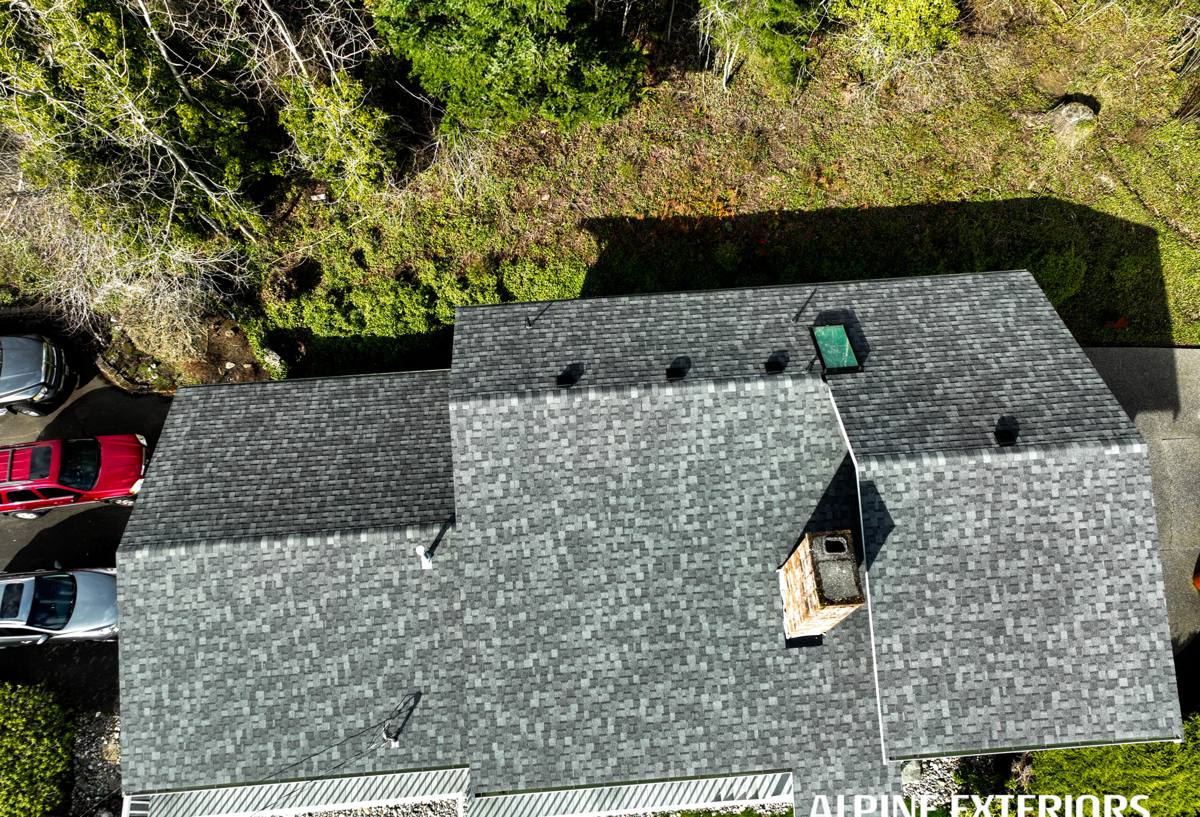
What Fairhaven Homes Typically Need After a Storm
Most storm-related roof calls in this area fall into a handful of categories. Recognizing which one you're dealing with helps set expectations before a crew ever gets on the roof.
Wind Damage
Gusts off the water can lift shingle tabs, crease ridge caps, or peel back an entire section of roofing if the wind gets under an edge. Sometimes the shingles look intact from the ground but the seal strip underneath has broken, which means the next rain gets in even though nothing appears missing.
Wind-Driven Rain Intrusion
Fairhaven's exposure means rain doesn't always fall straight down — it gets pushed sideways into vents, chimney flashing, and skylight curbs. This is one of the more common sources of interior leaks after a storm, and it's often mistaken for a roof-material problem when the real issue is flashing or sealant that's failed at a penetration point.
Impact Damage
Falling limbs, blown debris, or hail in a harder storm can crack shingles, dent metal flashing, or puncture underlayment. Impact damage is usually localized but needs a close look, since a cracked shingle that isn't replaced becomes a moss and moisture trap within a season.
Moss-Weakened Roofing Exposed by Storms
A roof that's been carrying a moss load all winter is already compromised before a storm ever arrives. Moss holds moisture against the shingle surface, lifts tabs, and works its way under flashing edges. When wind or rain hits a roof in that condition, damage that would have been minor on a clean roof becomes a real leak.
Our Storm Damage Assessment Process
We don't just patch what's visible from the ground. A proper storm assessment covers the whole roof system, because storm damage is rarely contained to one spot.
- Ground-level and roof-surface inspection — checking shingle condition, granule loss, lifted tabs, and obvious impact points.
- Flashing and penetration check — chimneys, vents, skylights, and valleys, since these are the most common failure points in wind-driven rain events.
- Attic and interior check where accessible — looking for water staining, damp insulation, or daylight showing through the decking.
- Moss and debris assessment — identifying growth or organic buildup that made the roof more vulnerable, so it doesn't cause a repeat problem.
- Photo documentation — useful both for your own records and if you're filing an insurance claim.
What a Correct Storm Repair Actually Involves
A quick patch can stop a leak for a season. A correct repair addresses why the damage happened and makes sure the fix holds up to the next storm, not just this one.
Matching Materials, Not Just Covering the Spot
Replacement shingles and flashing need to match the existing roof's material and, where possible, its age and exposure — a repair that doesn't integrate properly with the surrounding roofing can create a new leak path right at the edge of the patch.
Flashing Gets Priority Attention
Because wind-driven rain problems usually trace back to flashing rather than the field of the roof, we treat flashing repair as its own line item, not an afterthought bundled into "shingle replacement."
Underlayment Inspection
If shingles were compromised long enough for water to reach the underlayment, that layer needs to be checked and, if damaged, replaced — not just covered back over with new shingles.
Sealing for the Next Storm, Not Just This One
Given how often this area sees repeat weather events in the same season, we don't consider a repair finished until the fastening and sealing at the repair site is built to handle another round of wind and rain, not just today's calm weather.
Storm Damage vs. Wear-and-Tear: Why the Distinction Matters
Not every roof issue that shows up after a storm was caused by the storm. Distinguishing between the two matters for insurance purposes and for setting honest expectations about scope.
| Signal | More Likely Storm Damage | More Likely Pre-Existing Wear |
|---|---|---|
| Timing | Leak or damage appeared right after a specific storm event | Slow leak or staining that's been developing for months |
| Pattern | Localized to one area, often facing the storm direction | Spread across multiple areas or low points |
| Shingle condition | Torn, creased, or missing sections with clean edges | Curling, heavy granule loss, brittle shingles |
| Moss involvement | Minimal — damage is mechanical | Heavy moss or algae staining present |
| Roof age | Can happen at any age | More common on roofs nearing the end of their service life |
Both situations get fixed properly, but the distinction affects whether an insurance claim is appropriate and whether the repair is a targeted fix or a sign that broader roof work should be planned for.
Cost Factors for Storm Damage Roof Repair
Every storm repair is different, so we avoid quoting a number before we've actually inspected the roof. What we can tell you is what drives the cost up or down.
- Extent of the damage — a single flashing repair costs far less than a multi-section shingle replacement.
- Roof accessibility — steep pitches, multiple stories, or difficult roof geometry add labor time.
- Underlying damage — if underlayment or decking was affected, that adds material and labor beyond the visible repair.
- Material matching — some shingle lines are harder to match if the existing roof is older or discontinued.
- Moss remediation — if the roof needs moss treatment or cleaning as part of the repair, that's a separate but related cost.
- Insurance involvement — claims can add time to the process but often offset out-of-pocket cost significantly.
Insurance Claims After a Storm
Storm damage is one of the more straightforward categories for a homeowner's insurance claim, but the documentation matters. We provide photo evidence, a written description of the damage, and a scope of repair that an adjuster can work from. We're not a public adjuster and we don't handle the claim itself, but a clear, honest assessment from the contractor doing the work tends to make the claims process move faster and with fewer disputes.
Why Hiring a Crew That Works in Fairhaven Regularly Matters
Storm damage repair isn't just a shingle-replacement skill — it's a local-conditions skill. A crew that regularly works this stretch of Whatcom County knows what salt exposure does to fasteners over time, how moss builds up differently on a shaded, moisture-heavy lot near the water versus a more open, sun-exposed roof further inland, and which flashing details tend to fail first under wind-driven rain in this specific area. That familiarity shows up in faster, more accurate diagnosis — we're not guessing at what's typical for this climate, we're confirming it against roofs we've already worked on nearby.
It also matters for response time. Storm damage that's left exposed, even for a few days, gives rain and moss a head start on causing secondary damage. A local crew can typically get a tarp or temporary repair in place quickly, then follow up with the permanent fix once materials are sourced.
Preventing Repeat Storm Damage
Once a storm repair is complete, a few ongoing habits reduce the odds of a repeat call:
- Keep gutters clear so wind-driven rain has somewhere to drain instead of backing up under roof edges.
- Trim back tree limbs that hang over or near the roofline before storm season.
- Address moss growth before it becomes heavy — a light moss treatment is far cheaper than repairing the damage moss-related moisture eventually causes.
- Have flashing and seals checked annually, since these fail quietly and are the most common source of storm-related leaks.
If a recent storm has left you with a leak, missing shingles, or damage you're not sure how to evaluate, we're happy to take a look. Fill out the form below for a free, no-pressure estimate — we'll give you an honest read on what's actually going on with your roof, not just what's easiest to sell.