 Ferndale Exterior
 Roofing on Lummi Island Isn't the Same Job as Roofing Inland
Lummi Island sits out in the marine weather that Whatcom County's inland neighborhoods only get a diluted version of. Homes here take on salt-laden air off the water, wind-driven rain that finds its way under poorly installed shingles, and long stretches of shade and dampness that feed moss and algae almost year-round. A roofing system that holds up fine in a dry, sheltered subdivision can fail early out here if it wasn't built with these conditions in mind from the start.
That's the difference between a roof that looks right on installation day and one that's still performing correctly in ten or fifteen years. Asphalt shingle roofing is still one of the most practical, cost-effective options for island homes — but only when the materials, fastening, flashing, and ventilation are all matched to what this specific environment does to a roof over time.
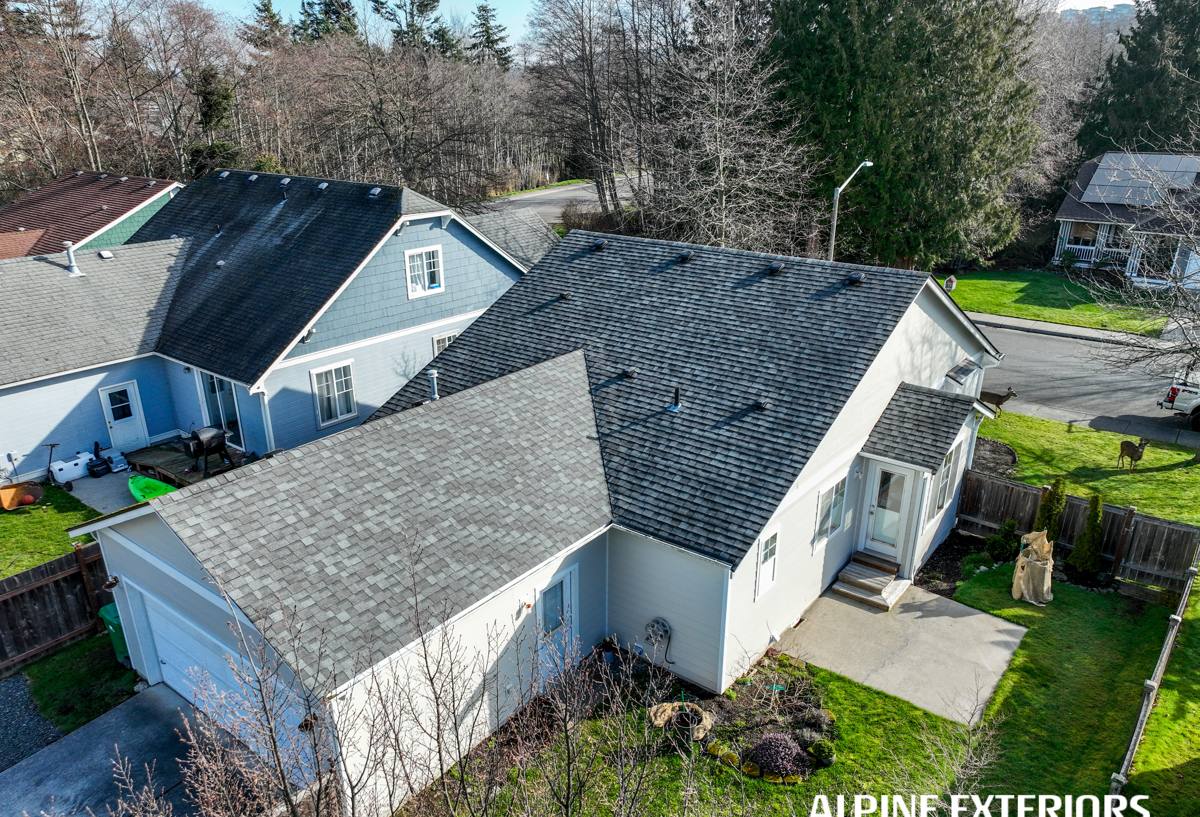
What Lummi Island's Climate Actually Does to a Roof
Salt Air
Airborne salt doesn't just affect boats and railings. It accelerates corrosion on exposed metal — flashing, drip edge, fasteners, and vent components. Once corrosion starts at a flashing seam or nail head, water finds a path in, and the damage spreads under the shingles where you can't see it.
Driving Rain
Storms off the water tend to come in sideways, not straight down. That matters because a roof designed only to shed water vertically can let wind-driven rain push up under shingle tabs, around vent boots, and through poorly lapped underlayment. Fastening pattern, shingle sealing, and flashing detail work all have to account for wind-driven moisture, not just gravity.
Moss Season
Tree cover, shade, and persistent dampness give moss and algae a long growing season on this side of Whatcom County. Left unchecked, moss lifts shingle edges, holds moisture against the roof deck, and shortens the life of even a well-installed roof. Prevention has to be designed in, not added on afterward.
What a Correctly Installed Asphalt Shingle Roof Needs Here
A roof built for Lummi Island conditions isn't a different product than what you'd install anywhere else — it's the same asphalt shingle system, installed with more attention to the details that actually matter in a coastal, shaded, wet climate.
- Full synthetic underlayment as a secondary water barrier, not just felt paper, lapped correctly against prevailing wind and rain direction
- Ice-and-water shield in valleys, around chimneys, and at eaves — the spots where wind-driven rain and standing moisture cause the most damage
- Corrosion-resistant flashing and fasteners rated for coastal exposure, since standard galvanized components can start rusting years before the shingles are due for replacement
- Balanced attic ventilation (intake at the eaves, exhaust at the ridge) to control condensation and moisture buildup under the deck, which matters more in a damp climate than a dry one
- Correct nailing pattern — enough fasteners, in the right zone of the shingle, driven flush — since under-fastened shingles are one of the leading causes of wind and rain intrusion
- Algae-resistant (AR) shingle granules to slow the growth that shade and moisture otherwise accelerate
Skip any one of these and the roof may still look fine for a season or two. The problems show up later, usually as a leak that's already caused hidden damage by the time it's visible inside the house.
Choosing the Right Shingle Tier for This Environment
Asphalt shingles come in a few performance tiers, and the right choice depends on how much wind and moss exposure your particular roof gets — not just budget. We walk through this with every homeowner rather than defaulting to one product for every job.
| Shingle Tier | Wind Resistance | Algae Resistance | Typical Lifespan | Best Fit |
|---|---|---|---|---|
| 3-Tab / Standard | Lower | Basic or none | Shorter end of the range | Budget-focused projects, outbuildings, less exposed roof faces |
| Architectural / Dimensional | Higher, better sealing | AR granules standard on most lines | Mid-to-long range | Most Lummi Island homes — the practical balance of cost and durability |
| Premium / Designer | Highest rated | Enhanced AR formulations | Longer end of the range | Homes with heavy shade, high wind exposure, or where appearance is a priority |
For most homes out here, architectural shingles are the sensible default — they seal down better against wind-driven rain and come with algae resistance built in, without paying for features a given roof doesn't need. We'll tell you honestly if your situation calls for stepping up or if standard shingles are a reasonable fit.
Our Process, Roof by Roof
- On-site inspection — we look at the existing roof, deck condition, ventilation, flashing points, and any moss or moisture damage before quoting anything
- Full tear-off — old shingles and underlayment removed down to the deck, not layered over, so we can actually see what's underneath
- Deck repair — any soft, rotted, or water-damaged sheathing gets replaced before new material goes down
- Underlayment and ice-and-water shield installed per the details above, matched to your roof's exposure
- Flashing replaced at valleys, chimneys, walls, and penetrations — reused flashing is a common shortcut we don't take
- Shingle installation with correct nailing pattern and starter course, sealed properly at eaves and rakes
- Ventilation check or upgrade to balance intake and exhaust airflow
- Cleanup and walkthrough — magnetic sweep for stray fasteners, and we go over the finished roof and warranty paperwork with you directly
What Affects the Cost of Your Roof
Every roof is different, and we'd rather explain what drives the number than hand you a generic figure that doesn't hold up once we're actually on the roof. These are the factors that move the estimate most:
| Factor | Why It Matters |
|---|---|
| Roof pitch and complexity | Steeper roofs, multiple valleys, and dormers take more time and material to do correctly |
| Number of existing layers | Tear-off of multiple old layers adds labor and disposal cost versus a single-layer roof |
| Deck condition | Rotted or soft sheathing found during tear-off needs replacement before new roofing goes on |
| Shingle tier selected | Standard, architectural, and premium shingles carry different material costs |
| Ventilation upgrades | Adding or correcting ridge and soffit ventilation is worth doing right the first time |
| Access and logistics | Island scheduling, ferry timing, and material delivery are planned into the project, not discovered mid-job |
Moss and Algae Prevention That Actually Works
Given how long the moss season runs in this part of Whatcom County, prevention matters more than chasing it after the fact. A few things genuinely help:
- Algae-resistant shingles from the start, rather than treating growth after it appears
- Keeping overhanging branches trimmed back so the roof gets more light and airflow
- Gentle, low-pressure cleaning rather than power-washing, which can strip granules and shorten shingle life
- Keeping gutters and valleys clear so water isn't sitting against the shingle edges
Zinc or copper strips near the ridge can also help suppress regrowth on shaded roof sections, and we'll tell you honestly whether your roof's exposure makes that worth doing.
Signs Your Roof Needs a Closer Look
Most roof failures on the island don't happen suddenly — they build up over a few seasons. Worth checking for:
- Granules collecting in gutters or at downspout outlets
- Shingles that are curling, cupping, or cracking
- Dark streaking or thick moss growth, especially on shaded slopes
- Rust staining running down from flashing or vent boots
- Daylight visible through the roof deck from inside the attic
- Soft or spongy spots when walking the roof (leave this to a professional)
- Ice or water staining on interior ceilings after a storm
Catching these early is almost always cheaper than waiting for an active leak.
Why It Matters That We Already Work on Lummi Island
Roofing an island home takes more planning than roofing on the mainland. Material deliveries, crew scheduling, and project timelines all have to work around ferry access, which means a contractor who hasn't planned an island job before can end up costing you time — or showing up with the wrong materials on the wrong day. A crew that's already familiar with getting equipment, dumpsters, and material loads on and off Lummi Island builds that logistics work into the schedule from day one, so it doesn't turn into delays once the tear-off has already started.
It also means we've seen firsthand what salt air, coastal wind, and shade do to roofs specifically on this island over time — not just in a textbook sense, but on homes like yours.
Warranty and Long-Term Care
Manufacturer warranties on asphalt shingles typically cover material defects, with the strongest coverage tied to using the manufacturer's full accessory system — underlayment, starter strip, and ridge cap from the same product line. Workmanship is a separate matter from material warranty, and we stand behind our installation work directly. We'll walk you through exactly what's covered, for how long, and what simple maintenance on your part (keeping gutters clear, trimming overhanging branches) helps protect that coverage.
If you're weighing a repair versus a full replacement, or just want an honest read on how much life is left in your current roof, we're happy to take a look. Fill out the form below for a free, no-pressure estimate on your Lummi Island home.