 Ferndale Exterior
 Building Decks for Life on Lummi Island
Lummi Island sits out in the Salish Sea, and that location shapes everything about how a deck should be built there. Homes on the island face a combination most inland Whatcom County properties never deal with at the same intensity: salt-laden air off the water, wind-driven rain that gets pushed sideways into structures, and a shaded, damp season that keeps moss and algae growing on outdoor surfaces for months at a time. A deck built with mainland assumptions — standard fasteners, ordinary flashing details, decking chosen mostly for looks — tends to show its age fast out here. A deck built for the island holds up.
We build and repair decks around Ferndale and the surrounding Whatcom County waterfront, and Lummi Island is part of that regular work. This page walks through what actually matters when you're putting a custom deck on an island property: the materials, the structural details, the maintenance realities, and what to look for in a contractor who understands the site conditions before the first post hole is dug.
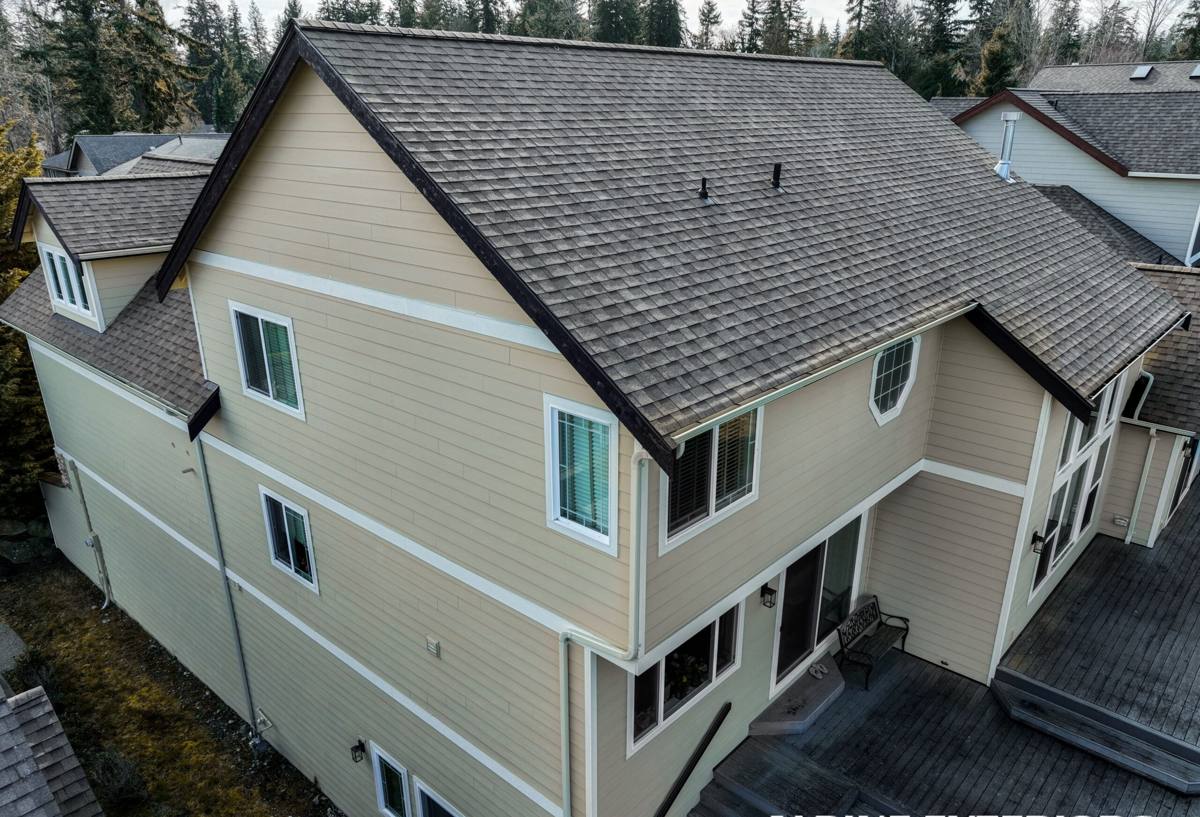
What Salt Air, Rain, and Moss Actually Do to a Deck
Salt Air
Airborne salt doesn't need direct ocean spray to cause damage — on an island, it's simply in the air most of the year. It accelerates corrosion on any exposed metal: fasteners, joist hangers, railing hardware, and structural connectors. Once corrosion starts on a fastener head, it weakens the grip long before it's visible from the surface, and a handful of failed screws in the wrong spot can turn into a soft or loose deck board.
Driving Rain
Wind off open water doesn't let rain fall straight down — it drives it sideways into ledger boards, under flashing, and into any gap in the framing that wasn't sealed correctly. On a typical inland deck, a minor flashing shortcut might go unnoticed for years. On an exposed island site, the same shortcut usually shows up as rot at the house connection within a few seasons.
Moss Season
Whatcom County's long wet stretch, combined with the tree cover and shade common on many island lots, keeps deck surfaces damp for extended periods. That's ideal growing conditions for moss and algae, which are more than a cosmetic problem — they hold moisture against the decking material and create a genuinely slick, slip-prone surface, especially on stairs and any north-facing section of the deck.
Choosing the Right Decking Material
There's no single "best" decking product for every island home — it depends on your budget, how much upkeep you want to do, and how exposed the site is to sun, wind, and salt spray. Here's how the common options actually perform under those conditions:
| Material | Salt Air / Moisture Performance | Moss & Algae Resistance | Maintenance | Typical Lifespan (Island Exposure) |
|---|---|---|---|---|
| Pressure-treated wood | Good if properly sealed and re-coated regularly | Low — porous surface holds moisture and organic growth | High — annual cleaning and periodic sealing | 10–15 years with consistent upkeep |
| Cedar | Naturally decay-resistant but still needs sealing near the water | Moderate — better than pressure-treated but still needs cleaning | Moderate-High — regular sealing to keep its look and protection | 15–20 years with maintenance |
| Capped composite | Excellent — doesn't absorb moisture or salt | High — smooth cap sheds moisture, resists staining | Low — periodic washing, no sealing or staining | 25+ years, manufacturer-backed |
| PVC decking | Excellent — fully synthetic, no wood fiber to degrade | High — least hospitable surface for growth | Low — occasional washing | 25–30+ years |
For most island homes, especially those with direct water exposure or heavy shade, we steer clients toward capped composite or PVC decking. It isn't about wood being a bad product — cedar and pressure-treated lumber can perform well for decades when they're sealed and maintained on schedule. It's about being honest that most homeowners don't want to re-seal a deck every year, and a synthetic surface removes that burden while resisting the moisture and salt exposure that wears wood down fastest out here.
The Structural Details That Actually Matter
Fasteners and Hardware
Every fastener, joist hanger, and structural connector on an island deck should be rated for coastal or marine exposure — stainless steel or heavy hot-dip galvanized hardware, not the standard-grade coated fasteners that are fine on a sheltered inland deck. This is one of the cheapest details to get right when a deck is being built, and one of the most expensive to fix after the fact.
Ledger Flashing
The ledger board — where the deck attaches to the house — is the single most common failure point on any deck, and driving rain makes it worse on exposed sites. Correct flashing means a continuous water-shedding path: house wrap integration, proper flashing layers, and a gap or drainage plane behind the ledger so water that does get in has somewhere to go besides your framing.
Footings and Wind
Open, elevated, or waterfront lots see more sustained wind than sheltered inland sites. Footing depth and post connections need to account for uplift and lateral load, not just vertical weight. This is a code and engineering question as much as a materials one, and it's part of why permitted, inspected work matters more here than on a low-exposure backyard deck.
Fastening Pattern for Composite and PVC
Synthetic decking expands and contracts with temperature more than wood, and coastal temperature swings between sun and cool marine air can be more pronounced. Proper gapping and a fastening system matched to the specific product's spec sheet prevents buckling and squeaking down the road.
Getting Materials and Crews to the Island
Lummi Island is only reachable by ferry, and that changes how deck projects get planned and scheduled compared to a mainland job. Material deliveries, crew transport, and equipment all have to work around ferry capacity and timing, which means a contractor who hasn't worked the island before will often underestimate how long a project takes or how far in advance materials need to be ordered and staged.
A crew that regularly works Lummi Island already has that logistics figured out — how much material to bring per trip, how to sequence the work so the crew isn't making unnecessary round trips, and how to keep a project on schedule despite the added transportation step. That experience translates directly into fewer delays and a smoother project for you.
How We Approach a Lummi Island Deck Project
- Site visit and assessment. We look at sun and wind exposure, water proximity, existing structure (if it's a replacement), and any access or delivery considerations specific to your property.
- Design and material selection. We talk through decking material, railing style, and layout based on your budget and how much maintenance you actually want to take on long-term.
- Permitting. Deck projects in Whatcom County typically require a permit, and waterfront or shoreline-adjacent lots can carry additional review depending on setback and shoreline regulations. We handle that process rather than leaving you to sort it out.
- Structural build. Footings, framing, ledger flashing, and hardware are all specified for coastal exposure from the start — not upgraded only if you ask.
- Decking, railing, and finish work. Installed to the manufacturer's coastal-exposure specifications where applicable.
- Final walkthrough. We go over the finished deck with you, including what maintenance it does and doesn't need going forward.
Signs an Existing Deck Is Losing the Fight
If you already have a deck on your Lummi Island property, it's worth checking for these before assuming a simple board replacement will solve the problem:
- Rust staining around fastener heads or streaking down deck boards
- Soft, spongy, or discolored decking near the house ledger connection
- Persistent moss or dark green/black staining that returns quickly after cleaning
- Railing posts that feel loose or flex more than they used to
- Visible gaps or separation where the deck meets the house siding
- Fasteners that are corroded, stripped, or backing out on their own
Any of these can point to a deeper structural or moisture issue rather than a cosmetic one, and on an island site those problems tend to progress faster than they would on a sheltered inland deck.
Maintaining Your Deck Once It's Built
Even a deck built with the right materials and details benefits from a bit of seasonal attention, especially given Whatcom County's long wet stretch:
- Sweep debris and standing moisture off the deck surface regularly, especially in shaded areas
- Clean moss and algae buildup before it stains or gets slick underfoot — sooner rather than later in fall and winter
- Check railing connections and fastener heads once a year for early signs of corrosion or loosening
- Keep gutters and downspouts near the deck clear so runoff isn't draining directly onto it
- For wood decking, stay on schedule with sealing rather than waiting until it visibly needs it
Why Hiring a Crew That Already Works Lummi Island Matters
A deck built by a contractor unfamiliar with island conditions can still look good on the day it's finished. The difference shows up two, three, five years later — in whether the hardware is still tight, whether the ledger connection is still dry, and whether the surface still sheds moss instead of holding it. Building for salt air, driving rain, and a long moss season isn't an upgrade tier — it's the baseline for doing the job right out here, and it's the standard we build to on every deck project on the island.
If you're planning a new custom deck, replacing an aging one, or just want an honest read on what your current deck needs, we're happy to take a look. Reach out for a free, no-pressure estimate using the form below.