 Ferndale Exterior
 Why Metal Roofing Makes Sense Near Lummi Nation
Homes on and around Lummi Nation sit close to the water, which means they take a different kind of weather than a house ten miles inland in Ferndale. Wind comes off Bellingham Bay and the Strait of Georgia with real force, rain arrives sideways more often than straight down, and the air itself carries salt that settles on every exposed surface. A roof out here isn't just shedding rain — it's fighting corrosion, wind uplift, and near-constant dampness at the same time. Metal roofing handles that combination better than most other materials, but only when it's specified and installed with this exact environment in mind.
We've worked on homes throughout this part of Whatcom County long enough to know that a roofing system that performs fine in a drier, more sheltered part of the county can fail early out here. This page covers what actually matters for a metal roof on a Lummi Nation home — the climate factors, the installation details, and the honest cost and maintenance picture.
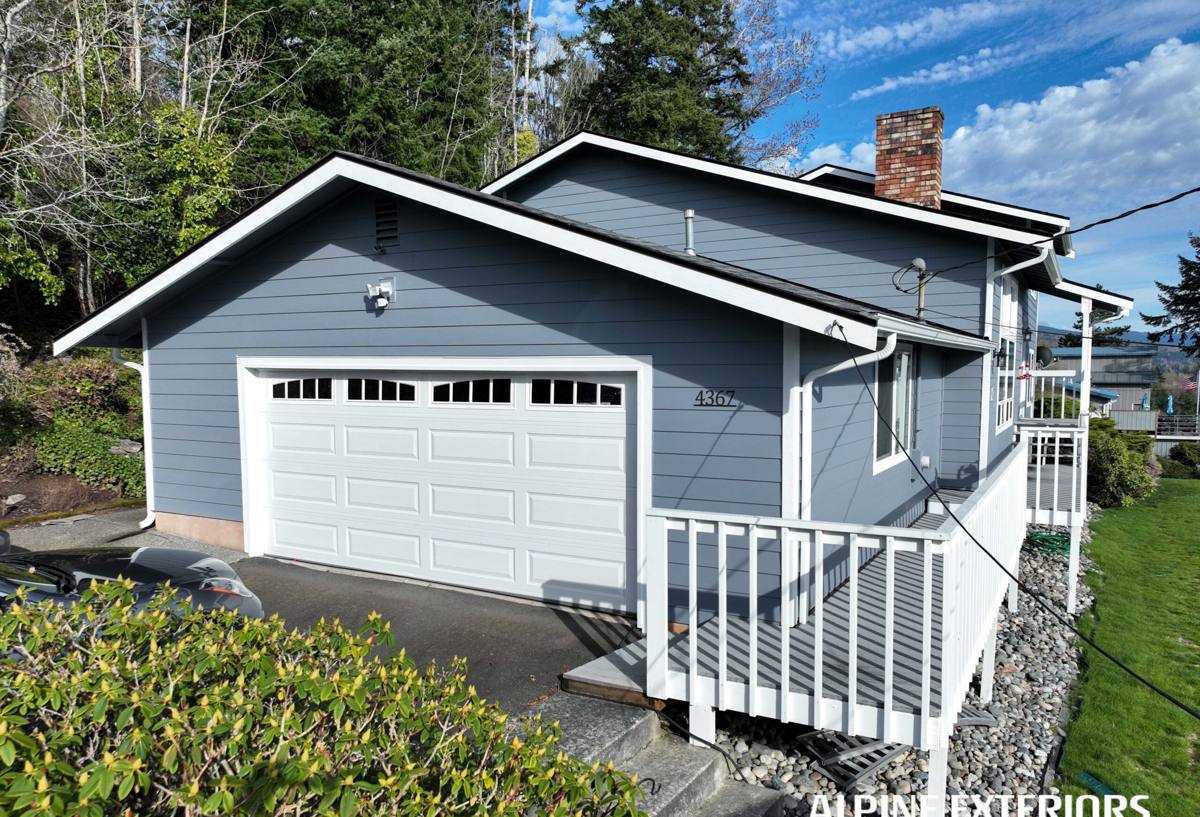
What the Local Climate Actually Does to a Roof
Salt Air and Corrosion
Salt in the air isn't just a coastal cliché — it's an electrolyte that speeds up corrosion on any exposed metal, including fasteners, flashing, and cut panel edges. Over years, homes closer to the shoreline see faster breakdown of unprotected or poorly coated metal than homes set back from the water. This doesn't mean metal roofing is a bad choice near the water — it's actually one of the more corrosion-resistant options available — but it does mean the specific coating, fastener material, and panel finish need to be chosen for a marine-influenced environment, not a generic inland spec.
Driving Rain and Wind-Driven Water
Storms coming off open water tend to push rain sideways under normal roof edges, gaps, and lap joints that would never see water in a calmer setting. This is the single biggest reason we see leaks trace back to flashing details rather than the roofing material itself. A roof here needs generous overlaps, properly sealed penetrations, and underlayment that can handle water intrusion at the seams, not just at the surface.
Moss, Shade, and Standing Moisture
Whatcom County's long wet season, combined with the tree cover common on many Lummi Nation and Ferndale-area lots, creates ideal conditions for moss and algae growth on north-facing slopes and shaded valleys. Moss holds moisture against roofing material for weeks at a time, and on the wrong substrate that moisture retention leads to rot, granule loss, or trapped water under panels. Metal sheds moss more effectively than shingles because it doesn't give roots anything to grip, but it's not moss-proof, and debris buildup in valleys and around penetrations still needs attention.
Picking the Right Metal Roofing System
Standing Seam vs. Exposed-Fastener Panels
Standing seam panels use concealed clips and interlocking seams with no exposed screws on the roof field, which matters a great deal in a salt-air, high-wind environment — there are simply fewer penetration points for water and corrosion to work on. Exposed-fastener panels cost less up front and can still perform well, but every screw is a maintenance item; the rubber washers under those screws age faster in coastal UV and salt exposure and eventually need replacement or re-torquing. For homes directly exposed to weather off the water, we generally recommend standing seam. For more sheltered lots further from the shoreline, a quality exposed-fastener system can be a reasonable, more budget-friendly choice.
Coatings and Finish Quality
The coating matters as much as the base metal. Look for a factory-applied paint system rated for coastal exposure, with a warranty that specifically addresses chalking, fading, and film integrity — not just a general "lifetime" claim with no detail behind it. Galvalume and properly coated steel both perform well here; the difference between a roof that looks good in year fifteen and one that's chalky and streaked comes down to coating quality and how the panels were handled and cut on-site, not just the base material.
What a Correct Installation Actually Involves
Underlayment and Ice/Water Protection
A synthetic, high-temp underlayment is the baseline for this climate — it holds up better than older felt products under the heat a metal roof can generate and it resists the moisture this area sees for much of the year. Self-adhering ice-and-water membrane belongs at eaves, valleys, and around every penetration, since those are the spots where wind-driven rain and moss-related moisture cause the most trouble.
Flashing and Penetrations
Every plumbing vent, chimney, skylight, and wall transition is a place water can get in if the flashing detail is rushed. Correct work here means custom-bent flashing sized to the actual roof profile, proper step flashing at wall intersections, and sealant used as a backup, not a substitute for good metal work. This is the part of a metal roof job that separates a crew that knows coastal Whatcom County from one that's used to drier, calmer conditions.
Fastening and Panel Layout
Panel layout should account for prevailing wind direction and roof exposure, with seams and laps oriented to shed wind-driven rain rather than catch it. Fasteners need to be matched to the panel material to avoid galvanic corrosion — mixing incompatible metals is a slow, quiet way to cause staining and eventual failure at every screw location.
Ventilation
A metal roof still needs a properly vented attic or roof assembly underneath it. Good airflow keeps moisture from condensing on the underside of the panels and keeps the wood deck below dry through the wet months, which matters even more on homes with heavy tree cover and persistent shade.
What Drives the Cost of a Metal Roof Here
Every roof is different, but these are the factors that most often move the price up or down on a Lummi Nation or Ferndale-area home:
| Cost Factor | Why It Matters Here | Effect on Price |
|---|---|---|
| Panel type | Standing seam costs more than exposed-fastener but needs less long-term maintenance in salt air | Moderate to significant increase |
| Roof complexity | Valleys, dormers, and multiple penetrations all need custom flashing work | Increases labor cost |
| Tear-off vs. overlay | Full tear-off lets us check the deck for hidden moisture or rot common under shaded, moss-prone roofs | Adds cost but avoids covering problems |
| Coating and gauge | Heavier gauge and marine-grade coatings resist wind and salt exposure longer | Higher material cost, longer service life |
| Access and pitch | Steeper pitches and limited site access near the water slow down safe staging | Increases labor time |
We won't quote a number without seeing the roof — anyone who does is guessing. What we can tell you honestly is that metal roofing costs more up front than asphalt shingles but typically outlasts it by decades, which matters a lot on a coastal property where re-roofing is disruptive and not something you want to repeat every fifteen to twenty years.
Our Process, Start to Finish
We keep the process straightforward because homeowners deserve to know what's happening on their roof and why.
- On-site inspection of the existing roof, deck condition, ventilation, and any moss or moisture damage already present
- A written estimate that spells out panel type, underlayment, flashing scope, and a realistic timeline — no vague line items
- Tear-off (when needed) with a deck inspection before any new material goes down
- Underlayment, flashing, and panel installation following the sequence and detailing this climate requires
- Final walkthrough with you before we consider the job done, and cleanup of the site including magnetic sweep for stray fasteners
Living With a Metal Roof Through Moss Season
Metal roofing is genuinely lower-maintenance than most alternatives, but "lower-maintenance" isn't "no maintenance," especially with the tree cover and long wet stretch common in this part of Whatcom County. A short annual routine goes a long way:
- Clear needles, leaves, and debris from valleys and around penetrations before the fall rains set in
- Check gutters and downspouts for blockages that can back water up under roof edges
- Look for early moss growth on shaded north-facing slopes and remove it gently — never with a pressure washer, which can drive water under seams
- Watch for streaking or staining near fasteners or flashing, which can be an early sign of a coating or corrosion issue worth a closer look
- Trim overhanging branches that keep sections of the roof shaded and damp longer than the rest
None of this requires a specialist visit every year — most of it is a homeowner with a ladder and twenty minutes on a dry day. But skipping it entirely for years at a time is how a well-installed roof develops problems it was never designed to have.
Why a Crew That Already Works Lummi Nation Matters
A lot of roofing crews are comfortable with standard suburban conditions and less comfortable with the specific combination of salt exposure, wind, and moss pressure that comes with working this close to the water. That shows up in small decisions — which fastener metal gets used, how flashing is detailed at a wall transition, whether the underlayment choice actually matches the exposure — that don't show up as problems on day one but do show up five or ten years later. Working regularly in this part of Ferndale and the surrounding Whatcom County shoreline means we're not guessing at what this climate does to a roof; we've seen it firsthand and we build accordingly.
If you're weighing a metal roof for a home in or near Lummi Nation, we're glad to take a look and give you a straight answer about what your roof actually needs — no pressure, no upsell. Use the form below to request a free estimate and we'll go from there.