 Ferndale Exterior
 What "Custom" Actually Means for a Lynden Window Job
Most window showrooms sell to a catalog of standard sizes. A "custom" window is any unit that has to be built to fit an opening that doesn't match those standard dimensions — or that has to match an architectural detail a stock window can't replicate. In Lynden, that covers a lot of ground: older farmhouses with hand-framed openings, additions built onto original structures at slightly different measurements, converted outbuildings, and homes where a previous owner already swapped in a non-standard size decades ago. Custom doesn't automatically mean expensive or exotic — it just means the window has to be measured, ordered, and installed to fit what's actually there, not what a spec sheet assumes is there.
The practical difference shows up in three places: measurement (there's no room for "close enough"), lead time (custom units are built to order, not pulled off a shelf), and installation (field-fit windows demand more careful flashing and shimming than a plug-and-play stock replacement).
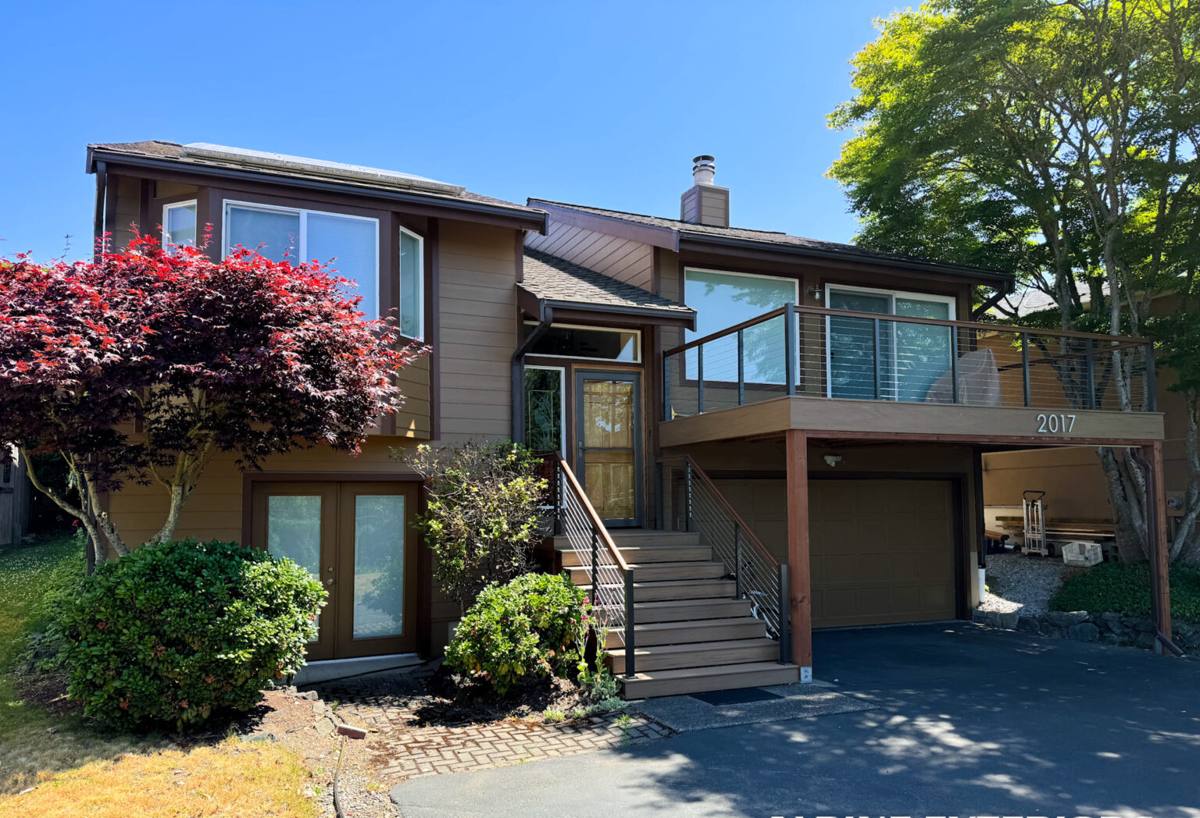
How Whatcom County Weather Tests a Window Opening
Lynden sits a bit inland compared to Ferndale and the water side of the county, so it doesn't take the direct salt-laden wind that hits homes closer to the bay. But the broader climate pattern that defines this part of Whatcom County still applies here: long stretches of wind-driven rain, humid air that lingers for months, and a moss and mildew season that can run from fall well into spring. Any exterior hardware exposed to that salt-influenced coastal air — even a few miles inland — tends to corrode faster than manufacturer spec sheets from drier climates suggest, which matters when you're choosing fasteners and hardware finishes.
For windows specifically, the real risk isn't the glass or the frame — it's the opening around it. Driving rain finds any gap in flashing or sealant and pushes water sideways and upward, not just straight down. A custom-fit window, because it's field-fabricated rather than factory-sealed as a complete unit, only performs as well as the flashing and sill work done during installation. Get that wrong and the first heavy rain season will tell you, usually by way of a soft spot in the sill or staining on interior trim.
Moss Season and Wood Trim
Extended damp periods are also what feeds moss and mildew growth on exterior wood trim and window sills. It's mostly a cosmetic and maintenance issue on siding, but on window trim it's a warning sign worth paying attention to — sustained moisture sitting against wood trim or a sill is exactly the condition that leads to rot if the underlying flashing isn't doing its job.
Situations That Commonly Call for Custom Windows in Lynden
A few patterns show up repeatedly in this area:
- Older farmhouses and rural homes with openings framed before standardized window sizing was common
- Additions or converted spaces — mudrooms, shops, bonus rooms — built onto an existing structure at slightly different dimensions
- Bay, bow, or angled openings that don't match a rectangular stock size
- Homes with a previous non-standard replacement that now needs to be matched or upgraded
- Egress requirements — a bedroom window that needs to meet current code minimums for size and opening, which can force a custom dimension even in an otherwise standard-sized wall
None of these are unusual or a sign something's wrong with the house. They're just common realities of the area's older and more varied housing stock, and they're exactly why a straight swap-in replacement isn't always an option.
What a Correct Custom Window Installation Actually Involves
The window itself — vinyl, fiberglass, wood-clad — gets most of the attention, but the installation sequence is what determines whether it performs for twenty years or leaks in year three. A correct job includes:
- Precise field measurement of the opening, accounting for out-of-square framing, which is common in older homes
- Inspection of the existing framing and sheathing once the old window is out — this is when hidden rot or water damage gets found, and it needs to be addressed before the new unit goes in, not covered over
- A sloped sill pan so any water that gets past the window has somewhere to drain, rather than sitting against the sill
- Proper flashing sequence — sill, jambs, then head flashing, layered so each piece sheds water onto the one below it, shingle-style
- Correct air-sealing and insulation around the frame — not just caulk at the trim, but low-expansion foam or backer rod in the gap between frame and rough opening
- Exterior trim and finish work that matches the home and seals the transition between the new window and existing siding
Skipping or rushing any one of these steps is the single biggest cause of window "failures" that actually have nothing to do with the window itself.
Frame Material Options
For custom sizing, frame material affects both what's achievable and how the window holds up in a wet, temperature-swinging climate. Here's how the common options compare:
| Material | Custom-fit flexibility | Maintenance | Notes for this climate |
|---|---|---|---|
| Vinyl | Good, within manufacturer limits | Low — no painting or sealing | Reliable value option; very large custom sizes can have more flex than fiberglass |
| Fiberglass | Excellent — handles large or unusual sizes well | Low | More dimensionally stable across temperature swings; higher upfront cost |
| Wood-clad | Excellent — often used to match historic profiles | Moderate — cladding protects exterior, but interior wood and any exposed joints need attention | Best for matching older architectural detail; more installation-sensitive around moisture |
We don't push one material as "the" answer — the right call depends on the opening, the home's style, and the budget. What we do insist on, regardless of material, is correct flashing and sealing at install, since that matters more to long-term performance than the frame material itself.
What Drives the Cost of a Custom Window Job
| Factor | Why it matters |
|---|---|
| Size and shape of the opening | Non-rectangular or oversized openings require more fabrication and labor |
| Frame material | Vinyl, fiberglass, and wood-clad carry different material costs |
| Glass package | Low-E coatings, argon fill, and tempered glass (required near floors, doors, and wet areas by code) add cost |
| Condition of the existing opening | Rot or framing repair found during removal adds time and material before the new window can go in |
| Number of windows | Doing several openings in one visit typically costs less per window than one-offs |
| Access and site conditions | Second-story, tight, or hard-to-reach openings take more time and equipment |
We give a firm, itemized number after seeing the actual opening — not a phone estimate — because with custom work, the details above can shift the price more than they would on a stock replacement.
Our Process
For a Lynden custom window project, the sequence generally looks like this:
- On-site consultation — we measure the actual opening, look at the existing trim and siding, and talk through what you're trying to solve (energy efficiency, a leak, egress code, matching a style)
- Product selection — frame material, glass package, and style options based on the home and your budget
- Ordering and lead time — custom units are built to order, so we set expectations upfront on timing rather than promising stock-window turnaround
- Removal and inspection — old window comes out, framing and sheathing get checked for hidden moisture damage before anything new goes in
- Installation — sill pan, flashing sequence, air-sealing, and setting the new window plumb, level, and square in the opening
- Trim, finish, and cleanup — exterior trim tied back into the siding, interior finish work completed, site cleaned up
- Walkthrough — we go over operation, any warranty paperwork, and answer questions before we consider the job done
Checklist: Signs Your Lynden Home Needs Custom Windows, Not Stock
- The opening isn't a standard rectangular size or has an angled, arched, or bay shape
- A previous replacement already used a non-standard size you need to match
- The home was built or modified before standardized window sizing was common in the area
- A bedroom window needs to meet current egress code and the existing opening is undersized
- You're seeing soft trim, staining, or drafts around a window that suggest the opening itself has shifted or been damaged
- You want to change the window style (adding a larger opening, converting to a bay, etc.) rather than just replacing what's there
Why a Crew That Already Works Lynden Matters
Custom window work punishes guesswork. A crew that regularly works in Lynden and the surrounding Ferndale area has already seen the framing quirks common in this area's older homes, knows how to sequence flashing for a wet climate rather than a dry one, and understands the local permitting process well enough to flag when a job needs a permit before work starts rather than after. Being local also means we're available for a warranty callback or a follow-up question without a long drive — which matters more for a field-built custom window than it does for an off-the-shelf unit, since custom work has more variables that can need a second look.
If you're weighing a custom window project for a Lynden home — whether it's one awkward opening or a full house of aging windows — we're happy to come take a look, measure the actual opening, and give you a straight, no-pressure estimate using the form below.