 Ferndale Exterior
 Siding That Has to Work in Lynden's Climate
Lynden sits inland from the coast, but "inland" in Whatcom County still means long, wet winters, saturated ground for months at a time, and enough shade and humidity in older neighborhoods to grow moss on anything that holds moisture. Add the driving rain that comes through this part of Washington off the Nooksack lowlands and the Strait, and you have a climate that is unforgiving of siding that was installed carelessly or built from the wrong material in the first place. Homes here don't fail because of one big storm. They fail slowly, from years of water finding a way in through a bad seam, a caulked-over gap, or a product that swells and softens every time it gets wet.
We install siding on homes throughout Ferndale and the surrounding Whatcom County communities, including Lynden, and the failure patterns we see are consistent. It's almost never the siding panel itself that fails first — it's the installation details around it: flashing, butt joints, ground clearance, and how the material handles repeated wet-dry cycling over a Pacific Northwest year. That's the lens we bring to every Lynden project.
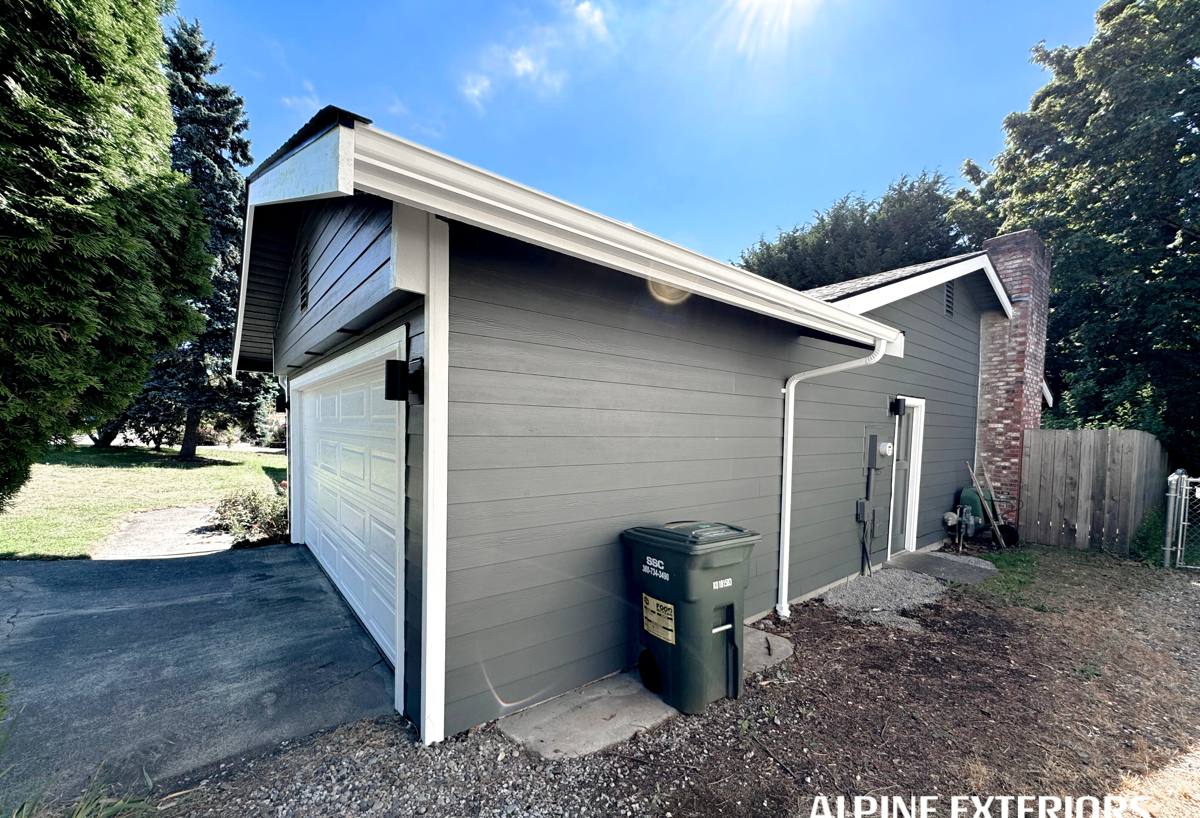
Why We Only Install James Hardie Fiber Cement
Ferndale Exterior Co installs one siding system: James Hardie fiber cement. We don't offer LP SmartSide, vinyl, Cemplank, Allura, primed spruce, or cedar as alternatives, and that's a deliberate standard, not a sales pitch. Each of those products has legitimate strengths, but each also carries a trade-off that shows up specifically in a climate like ours — moisture-sensitive engineered wood, seams and expansion gaps that widen in cold snaps, or a finish that needs the homeowner to stay on top of maintenance every couple of years.
Fiber cement is cement, sand, and cellulose fiber pressed and cured into a rigid board. It doesn't absorb water the way wood-based products can, it won't feed insects, and it's non-combustible — a real consideration given the wildfire smoke seasons the whole region has seen in recent summers. James Hardie's HZ5 product line is engineered for the freeze-thaw and moisture cycling typical of Northern climates, which fits Whatcom County's winters better than a general-purpose product line does.
What ColorPlus Finish Changes About Maintenance
Standard fiber cement ships primed and needs field painting. James Hardie's ColorPlus technology bakes a color finish onto the board at the factory, cured in a way that resists fading and chipping far better than a job-site paint job applied in variable weather. For a Lynden home dealing with months of damp, low-light winters, that factory finish means fewer repaint cycles and a board that isn't relying on a coat of exterior paint as its only line of defense against moisture.
What Correct Siding Installation Actually Involves
The material is only half the job. We've reworked failed siding jobs on homes where the product itself was fine but the installation let water in behind it. A correct Hardie installation in this climate includes:
- A drainable water-resistive barrier behind the siding, not just building paper stapled flat against the sheathing
- Proper head flashing above every window and door opening, integrated with the barrier rather than caulked on afterward
- Kick-out flashing at roof-to-wall intersections so runoff is diverted away from the wall plane instead of running down behind the siding
- Correct fastener placement and spacing per Hardie's published installation instructions — over-driven or under-driven nails are one of the most common causes of early cracking
- Minimum ground clearance and proper clearance at decks, patios, and grade so the bottom course isn't sitting in standing moisture
- Butt joints and seams sealed or flashed correctly, since this is where the majority of water intrusion problems start
None of this is unique to Lynden, but it matters more here than it would in a dry climate, because a mistake doesn't get a chance to dry out between rain events for months at a time.
Our Process, Start to Finish
1. On-Site Assessment
We walk the exterior with you, looking at the current siding condition, trim, window flashing, and any moss or moisture staining that points to a drainage issue rather than just a cosmetic one. Moss growth on a north-facing wall or under eaves is common in Whatcom County and isn't automatically a red flag — but moss combined with soft siding or dark staining usually means water has been getting behind the surface.
2. Tear-Off and Sheathing Check
Once old siding comes off, we inspect the sheathing underneath. This is the point where hidden rot or long-term moisture damage becomes visible, and it's better to find and fix it now than to install new siding over a compromised wall.
3. Water-Resistive Barrier and Flashing
We install a drainable barrier and flash every penetration — windows, doors, vents, and roof-to-wall transitions — before a single piece of Hardie board goes up. This step is what separates a siding job that lasts decades from one that needs attention again in five or six years.
4. Hardie Panel or Lap Installation
Panels or lap siding go up per James Hardie's fastening and clearance specifications, with attention to butt joint placement and consistent reveal lines.
5. Trim, Caulking, and Final Walkthrough
Trim is installed, joints are sealed where specified, and we walk the finished exterior with you before calling the job complete.
Comparing Siding Materials for a Lynden Home
| Material | Moisture Behavior in Wet Climates | Maintenance | Fire Resistance |
|---|---|---|---|
| James Hardie Fiber Cement | Does not absorb water like wood-based products; engineered HZ lines for Northern climates | Low — ColorPlus finish resists fading and chipping for years | Non-combustible |
| Vinyl | Doesn't rot, but can warp, crack in cold, and gaps allow water behind panels | Low, but repairs are visible and color can't be renewed | Combustible, can melt near heat sources |
| LP SmartSide / Engineered Wood | Wood-based core is sensitive to sustained moisture exposure if seams or cuts aren't sealed | Moderate — relies on intact factory coating and careful field sealing | Combustible |
| Cedar | Natural material, absorbs and releases moisture; performance depends heavily on upkeep | High — refinishing, sealing, and moss/mildew treatment on a recurring schedule | Combustible |
Why a Crew That Already Works Lynden Matters
Siding installation is detail work, and the details that matter change with the climate you're building for. A crew that installs mostly in drier regions may not think twice about ground clearance or kick-out flashing because those shortcuts don't get exposed the same way. In Whatcom County, they do — usually within a couple of wet seasons. Working regularly in Ferndale, Lynden, and the surrounding communities means we see how houses in this specific climate age, where moss actually takes hold, and which details on a wall plane are worth the extra time.
It also means practical things for you as a homeowner: a crew that knows local permitting expectations, isn't guessing at typical wall assemblies for homes built in this area's common construction eras, and can give you a realistic timeline that accounts for our rain patterns rather than a generic estimate written for a drier market.
Signs Your Lynden Home May Need New Siding
- Soft or spongy spots when you press on the siding, especially near the bottom courses or under windows
- Visible warping, bubbling, or separation at seams and joints
- Persistent moss or dark staining that returns shortly after cleaning
- Paint that's peeling or blistering repeatedly in the same spots year after year
- Rising energy bills that coincide with visible gaps or drafts at the wall line
- Siding that's original to a home built more than 20–25 years ago, nearing the end of its practical service life
What a Siding Project Typically Involves for Planning Purposes
Every home is different, and the honest answer to "what will this cost" depends on square footage, the condition of the sheathing underneath, trim complexity, and how much of the existing siding needs to come off versus be worked around. Rather than quote a number that won't hold up once we see your walls, we walk the home with you, explain what we find, and give you a written estimate based on the actual scope — not a rough guess.
If you're weighing a siding project for a Lynden home this year, we're glad to come take a look, tell you honestly what condition your current siding is in, and explain what a correct James Hardie installation would involve for your specific house. There's no pressure and no obligation — just a straight assessment from a crew that works this climate every day. Use the form below to request a free estimate.