 Ferndale Exterior
 Window Replacement Built for Lynden's Whatcom County Climate
Homes in and around Lynden deal with a specific combination of weather that most window manufacturers never test for in their glossy brochures: salt-laden air drifting in off the Sound, long stretches of driving rain that comes in sideways more often than straight down, and a moss and mildew season that can stretch from October through May in a wet year. None of that is exotic weather. It's just Whatcom County. But it's exactly the kind of exposure that separates a window installation that lasts fifteen years from one that starts failing in five.
Window replacement isn't just a product swap. The window unit itself is maybe half the job. The other half is how it gets flashed, sealed, and integrated into the wall around it so that wind-driven rain and humid air can't work their way behind the trim. We've watched enough poorly-flashed replacement jobs fail from the inside out to know that the install matters as much as the glass.
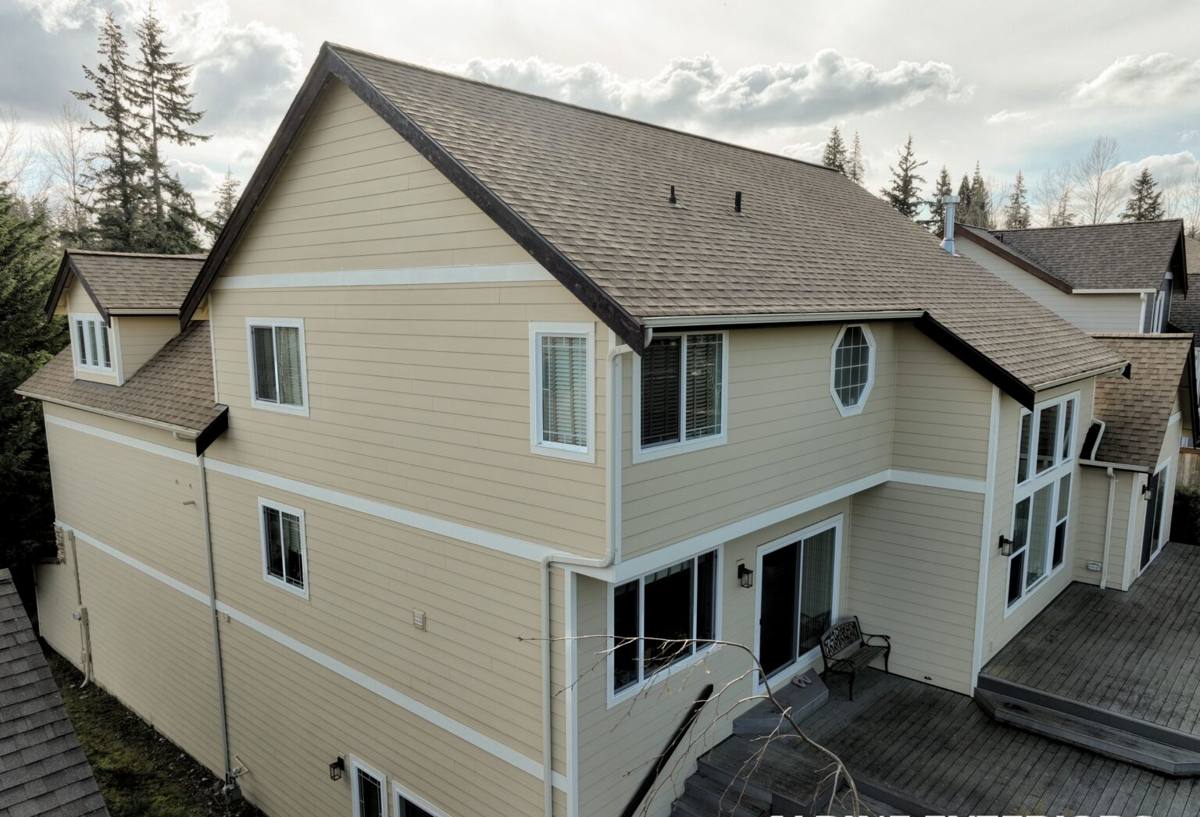
Signs Your Lynden-Area Home Needs New Windows
Windows rarely fail all at once. They send warning signs for months or years before a homeowner notices a real problem. In this climate, the signs tend to show up as moisture symptoms before they show up as obvious breakage.
- Fogging or a permanent haze between the panes — the seal on the insulated glass unit has failed and moist air is trapped inside
- Soft or discolored wood on the interior sill or exterior trim, especially on walls that take the brunt of storms
- Visible moss or dark streaking building up on the sill or the siding just below the window
- Windows that are hard to open, don't latch flush, or have started sagging in the frame
- A noticeable draft near the frame even when the window is fully closed and locked
- Condensation forming on the interior glass regularly during cold, wet stretches
- Rising heating bills without any other obvious explanation
Any one of these on its own might just mean a tune-up. Two or three together, especially moisture-related ones, usually mean the window and its surrounding flashing have reached the end of their useful life.
What a Correct Window Replacement Job Actually Involves
It Starts With the Opening, Not the Window
Before any new unit goes in, the old window comes out and the rough opening gets inspected. This is the step that gets skipped on rushed jobs and it's the one that causes the most callbacks. If there's rot in the sill plate or king studs, or if the old flashing was installed backward (a common shortcut that lets water run behind the building paper instead of over it), that has to get corrected before a new window ever touches the opening. Installing a brand-new window into a compromised opening just delays the same failure by a few years.
Flashing and Water Management
In a climate with this much wind-driven rain, flashing sequence is not optional detail work — it's the difference between a dry wall cavity and a slow, hidden leak. Correctly done, every layer overlaps the one below it like shingles, so water always has a path downward and outward, never a way to get trapped behind the trim. Sill pans, properly lapped house wrap, and sealant used only where it belongs (not as a substitute for correct flashing) all matter here.
Air Sealing and Insulation
The gap between the window frame and the rough opening gets sealed with a low-expansion foam or backer rod and sealant, not packed solid with standard spray foam, which can bow the frame and cause the sash to bind. This step is what actually stops the drafts homeowners notice years later.
Choosing the Right Window for This Climate
There's no single "best" window material — there are trade-offs, and the right call depends on the home, its exposure, and the homeowner's priorities around maintenance and budget.
| Frame Material | How It Handles Salt Air & Rain | Maintenance | Typical Lifespan |
|---|---|---|---|
| Vinyl | Won't corrode or rot; performs well in coastal-adjacent air | Low — occasional cleaning | 20-30 years |
| Fiberglass | Very stable in temperature swings and moisture; strong against warping | Low | 30+ years |
| Wood-clad | Attractive, but exposed wood or damaged cladding is vulnerable to our wet season | Higher — needs monitoring at joints and sills | 20-30 years with upkeep |
| Aluminum | Prone to condensation and slower to insulate against cold; can pit in salt-exposed air over time | Moderate | 15-25 years |
For most homes in this area, we lean toward vinyl or fiberglass frames for the simple reason that they don't give moisture and salt air a foothold. Wood-clad windows can still be the right call for a homeowner who wants that look and is willing to stay on top of caulking and touch-up, but we'll tell you honestly if a given product or install detail is going to create more upkeep than it's worth for your situation.
Glass Packages Worth Knowing About
Double-pane, gas-filled (usually argon) glass with a low-E coating is the standard baseline for this region — it handles both our damp cold winters and the heat gain from summer sun without the cost premium of triple-pane. Triple-pane is available and does perform better in extreme cold, but for most Whatcom County homes it's a diminishing-returns upgrade rather than a necessity. We'll walk through the actual difference for your specific windows rather than upselling by default.
Our Process, Start to Finish
- On-site estimate. We look at your existing windows, the condition of the openings, and how each wall of the house is exposed to weather before quoting anything.
- Honest scope. If we find rot, old improper flashing, or other issues behind the trim, we tell you before work starts, not after we've already opened things up and you're stuck deciding under pressure.
- Removal and inspection. Old units come out carefully, and we check the rough opening framing and sheathing for damage.
- Repair as needed. Any rot or compromised framing gets addressed before a new window goes in — not covered over.
- Correct flashing and installation. New units are set plumb, level, and square, then flashed and sealed in the proper shingle-lap sequence.
- Interior and exterior finish work. Trim, caulking, and insulation gaps are completed to match the surrounding wall.
- Final walkthrough. We check operation, sealing, and appearance with you before we call the job done.
What Drives Cost
Every quote is different because every house is different, but the honest cost drivers are consistent. Broad ranges only — your on-site estimate will reflect your actual home.
| Factor | Why It Matters |
|---|---|
| Number and size of windows | More units and larger openings mean more material and labor |
| Condition of the existing opening | Rot or old improper flashing adds repair time before installation can start |
| Frame material chosen | Vinyl, fiberglass, and wood-clad carry different material costs |
| Glass package | Standard low-E double-pane vs. upgraded coatings or triple-pane |
| Access and stories | Second-story or hard-to-reach windows take more time and equipment |
| Trim and finish work | Matching existing interior/exterior trim profiles can add labor |
Small single-window replacements on an easy-access ground floor with no hidden damage tend to sit at the low end of any contractor's range. Whole-house replacements with rot repair, upgraded glass, or difficult access sit at the higher end. We'd rather give you a real number after seeing the house than a low estimate over the phone that grows once we open the wall.
Permits, Codes, and Egress
Window replacement in Washington often requires a permit, particularly when the new opening size changes or when the window serves as an egress point for a bedroom. Egress windows have minimum size and sill-height requirements that exist for a real safety reason — they need to be large enough for someone to exit through in an emergency and for firefighters to get in. When we quote a replacement, we check whether the existing opening already meets code or whether the swap is a chance to correct it. We handle the permit process as part of the job rather than leaving you to sort it out.
Why Local Experience in This Area Matters
A crew that already works in and around Lynden and greater Whatcom County has seen how houses in this area actually age — where moisture tends to collect on a given wall orientation, how much moss buildup is normal versus a sign of a bigger drainage problem, and which older construction details (common in homes built before current flashing standards) need extra attention during a replacement. That's not something you can fully substitute with a product catalog or a general install manual. It comes from doing the work here, on homes with the same exposure yours has.
It also means we're not guessing at what "normal" wear looks like for this region. Salt air corrosion on hardware, the particular way driving rain hits west- and south-facing walls, and the length of our wet season all shape how we sequence a job and what we flag as a priority versus something that can wait.
After Installation: Keeping New Windows Performing
New windows are close to maintenance-free for the first several years, but a little attention keeps them that way longer in this climate.
- Rinse accumulated salt residue and grime off exterior glass and frames a couple of times a year
- Check and clear weep holes at the base of the frame so water can drain out instead of pooling
- Keep an eye on caulking at the trim joints and touch up any cracking before it lets water behind the seal
- Clear moss or debris that collects on sills or nearby trim promptly rather than letting it sit wet against the wood
- Operate locks and hardware periodically through the winter so they don't seize from disuse
If you're not sure whether your current windows are worth repairing or replacing, or you just want a straight answer on what a correct job would involve for your specific house, we're glad to come take a look. The estimate is free, there's no pressure attached to it, and you'll get a clear answer either way — use the form below to get started.