 Ferndale Exterior
 Marietta Sits Right Where Bellingham Bay Meets the Weather
Marietta homes catch a specific combination of punishment that inland Whatcom County properties don't deal with in the same way. Being close to the water means salt-laden air moving through the neighborhood on a regular basis, on top of the driving rain that comes off Bellingham Bay during fall and winter storms. Add in a moss season that can stretch for most of the year in this climate, and you've got siding that's under constant low-grade attack from three directions at once: salt, water, and organic growth.
None of this is unusual for the area — it's just the reality of building this close to the water in the Pacific Northwest. But it does mean that siding installed in Marietta needs to be treated differently than siding going up on a dry, sheltered lot ten miles inland. The product choice matters, and so does the way it's installed.
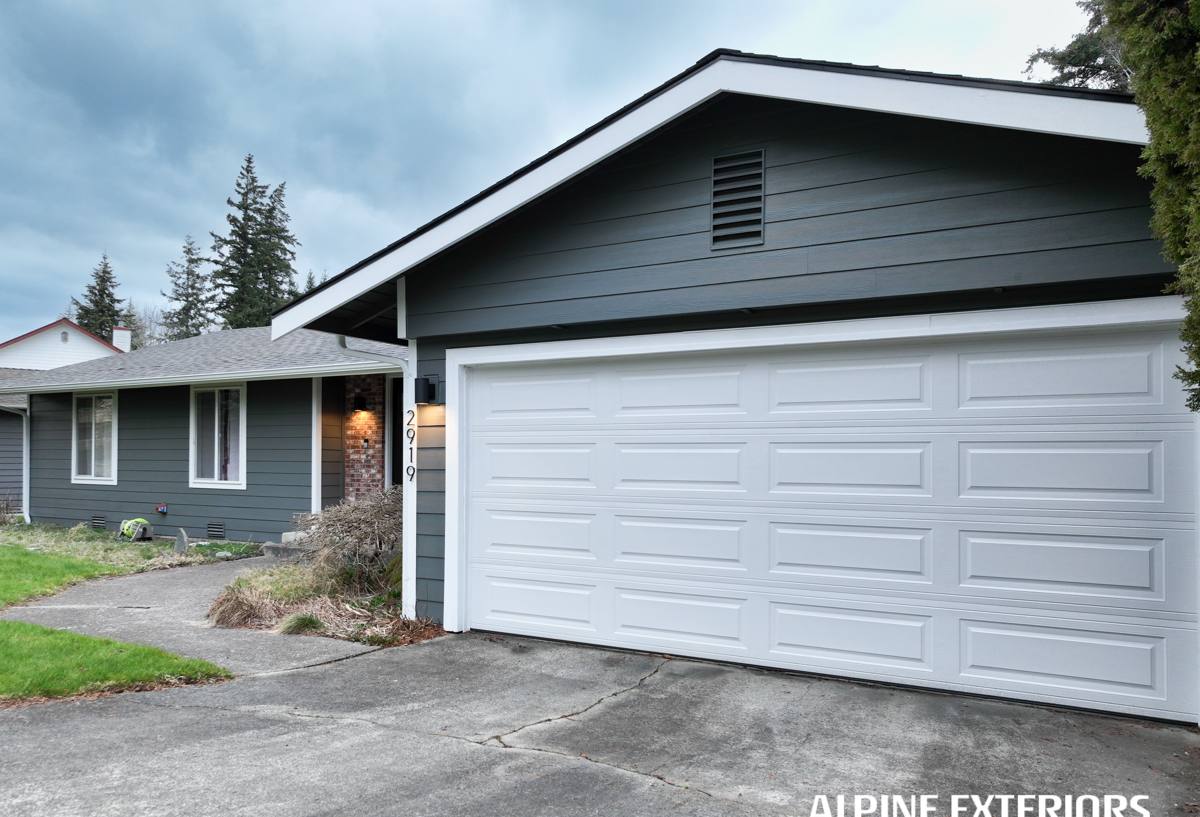
What Salt Air and Moisture Actually Do to Siding
Salt air accelerates corrosion on fasteners, trim flashing, and any exposed metal components. Over years, that corrosion can loosen fastening points or stain siding faces even when the siding material itself is holding up fine. Combined with near-constant moisture from rain and the region's persistent overcast, damp conditions, you get an environment where:
- Wood-based products swell, check, and eventually rot at butt joints and cut ends if they aren't sealed correctly
- Moss and algae get a foothold on any surface that stays damp for extended stretches, especially north-facing walls and areas shaded by trees
- Caulk and paint film break down faster than manufacturer estimates suggest, especially on lower-quality or improperly primed products
- Fastener corrosion can telegraph through as rust streaking on lighter-colored siding
This is exactly the kind of exposure that separates siding products that merely look fine in a showroom from siding that actually holds up on a Marietta lot for 30-plus years.
Why We Install James Hardie Fiber Cement and Nothing Else
We don't install vinyl, LP SmartSide, Cemplank, Allura, primed spruce, or cedar. That's not a marketing position — it's a standard we hold because of what we see happen to those products in exactly this kind of coastal, wet climate over the long run. Fiber cement is inherently non-combustible and dimensionally stable, meaning it doesn't expand and contract with moisture the way wood-based products do, and it doesn't soften or warp when it stays wet for days at a time.
James Hardie's ColorPlus finish is baked on at the factory under controlled conditions, which gives it better adhesion and UV resistance than field-applied paint. That matters in an area where a fresh paint job doesn't always get the dry curing window it needs. Hardie also engineers specific product lines (their HZ5 designation) for climates with heavy moisture exposure, which is a meaningfully different specification than a general-purpose product sold nationwide.
The company's warranty on their siding is also structured to be transferable to a new owner, which matters if a Marietta home sells within the warranty period — a real consideration in a market where houses do change hands.
What This Means in Practice
Choosing Hardie isn't about brand loyalty. It's that the alternatives each carry a specific trade-off we're not willing to install and stand behind in this climate: vinyl can warp and fade and doesn't hold paint if a homeowner wants a color change later; LP SmartSide is a wood-strand product that depends heavily on sealed edges and diligent maintenance to resist moisture intrusion; cedar and primed spruce require ongoing refinishing that most homeowners underestimate the cost and frequency of. Fiber cement, installed correctly, removes most of that maintenance burden.
What Correct Installation Actually Involves
The product is only half the equation. A huge share of the siding failures we get called out to inspect in coastal Whatcom County neighborhoods trace back to installation shortcuts, not the material itself. A correct James Hardie installation on a Marietta home includes:
- A drainable rainscreen gap or approved water-resistive barrier system behind the siding, so any moisture that does get past the surface has somewhere to go
- Correct flashing at every window, door, and roof-to-wall intersection — the single most common point of failure we find on older installs
- Factory-cut and factory-primed edges wherever possible, with field cuts sealed per Hardie's specification
- Proper fastener spacing and type, using corrosion-resistant fasteners appropriate for near-coastal exposure
- Correct clearance from grade, decks, and roof lines so the bottom edge of the siding isn't sitting in standing water or splash-back
Skipping any one of these doesn't usually cause a visible problem in year one. It shows up in year five or ten, as trapped moisture, rot at penetrations, or paint failure — exactly the kind of damage that's expensive to fix because it's hidden behind the finished wall.
Our Process for a Marietta Job
1. On-Site Assessment
We walk the property, check the existing siding and sheathing condition, and look specifically at the sides of the house most exposed to weather off the bay. We also check for existing moisture damage before we quote anything, since that changes the scope of the job.
2. Tear-Off and Sheathing Check
Once the old siding is off, we inspect the sheathing underneath. This is the point where hidden rot or water damage from years of a failing weather barrier gets found — and it needs to be addressed before new siding goes up, not covered over.
3. Weather Barrier and Rainscreen
We install the water-resistive barrier and drainage plane correctly, with attention to how water will actually move down and off the wall given the house's specific exposure to prevailing wind and rain direction.
4. Hardie Installation
Siding goes up to Hardie's fastening and clearance specifications, with flashing integrated at every penetration as we go — not patched in afterward.
5. Final Walkthrough
We walk the finished job with the homeowner, checking caulking lines, trim details, and answering questions about care going forward.
Siding Options Compared for Coastal Exposure
| Factor | James Hardie Fiber Cement | Vinyl | Wood-Based Products (LP, Cedar) |
|---|---|---|---|
| Moisture tolerance | High — dimensionally stable, engineered HZ5 line for wet climates | Moderate — can warp with heat/cold cycling | Lower — depends on sealed edges and upkeep |
| Salt air / coastal durability | Strong, factory finish resists fading and chalking | Can fade and become brittle over time | Prone to graying, checking, and finish breakdown |
| Moss and algae resistance | Good — hard surface resists organic growth better than wood substrates | Moderate | Lower — porous surface gives moss more to grip |
| Fire resistance | Non-combustible | Combustible | Combustible |
| Ongoing maintenance | Low — factory finish, occasional wash | Low, but limited repair/color options | Higher — periodic refinishing needed |
| Warranty | Strong, transferable manufacturer warranty | Varies by manufacturer | Varies, often shorter on finish |
Signs Your Marietta Home's Siding May Already Be Struggling
If you're not sure whether your current siding is holding up, a few warning signs are worth checking for before winter storm season sets in:
- Persistent moss or dark streaking on north- or shade-facing walls that comes back soon after cleaning
- Soft spots or slight give when you press on siding near the bottom courses or around window trim
- Visible cracking, bubbling paint, or chalky residue that rubs off on your hand
- Rust staining running down from fasteners or metal trim
- Gaps opening up at butt joints or corner trim
Any of these are worth a look before they turn into sheathing damage, which is a bigger and more expensive repair than the siding itself.
Why a Crew That Already Works This Neighborhood Matters
Siding installation isn't one-size-fits-all across Whatcom County. A crew that's already worked in Marietta knows which sides of a house typically take the worst of the wind and rain off the bay, understands the local permitting expectations, and has already seen how moss establishes itself on homes in this specific setting. That familiarity shows up in small decisions during installation — where to add extra flashing attention, how to sequence the job around the area's rain patterns, and what clearance details matter most given how close many Marietta lots sit to the water. It's the difference between a crew installing siding from a general manual and one installing siding for this specific stretch of coastline.
Get a Free, No-Pressure Estimate
If your Marietta home's siding is showing its age, or you're planning ahead of a remodel, we're happy to take a look and give you an honest read on condition and options. There's no obligation — just a straightforward assessment from a crew that already knows this neighborhood's weather. Fill out the form below to get started.