 Ferndale Exterior
 Asphalt Shingle Roofing Built for Nooksack's Weather
Homes in and around Nooksack sit in a stretch of Whatcom County that gets hit from more than one direction. You've got salt-tinged air drifting in off Bellingham Bay, driving rain that comes sideways more often than straight down, and a wet season that stretches long enough to give moss and algae months to establish themselves on a north-facing slope. An asphalt shingle roof that's installed correctly can handle all of that for two decades or more. One that's installed with shortcuts starts showing problems in five to seven years — curling edges, granule loss, dark streaking, and soft spots around the flashing. The difference almost never comes down to the shingle brand. It comes down to what's underneath the shingles and how the details were handled.
This page is about one thing: asphalt shingle roofing for homes in the Nooksack area, done the way this climate actually requires.
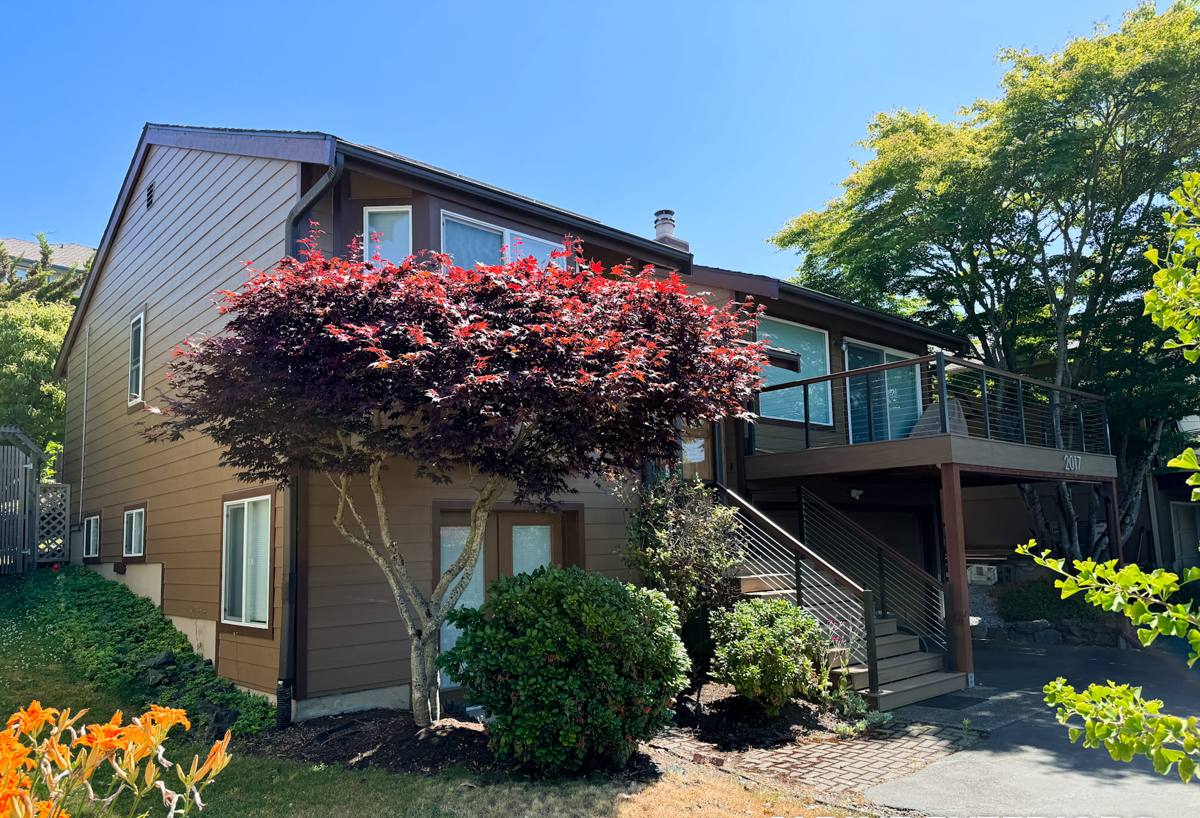
What Nooksack's Climate Actually Does to a Roof
It's worth being specific about the stressors, because they each demand a different response from the roofing system, not just a tougher shingle.
Moisture Load and Driving Rain
Whatcom County doesn't just get a lot of rain — it gets wind-driven rain that pushes up under shingle tabs and around flashing points that would stay dry in a calmer climate. A roof here needs underlayment and flashing details sized for that reality, not the bare minimum a code inspector will pass.
Salt Air and Metal Fatigue
Proximity to the bay means airborne salt reaches roofing metal — flashing, vent caps, nail heads — faster than it would inland. Lower-grade or uncoated metal components corrode years before the shingles above them are due for replacement, which is why fastener and flashing quality matters as much as shingle quality.
The Long Moss Season
Shaded, north-facing roof planes here can stay damp for months at a stretch. Moss doesn't just look bad — its root structure lifts shingle edges and holds water against the roof deck, which is how a moss problem turns into a rot problem if it's ignored for a couple of seasons.
What a Correctly Installed Roof Looks Like Here
A shingle roof is a system, not a single product. In this climate, every layer of that system earns its place.
- Ice-and-water shield at eaves, valleys, and any low-slope transition — the areas where wind-driven rain and ice dams are most likely to force water backward under the shingles.
- Synthetic underlayment across the full deck, not felt paper alone, for a more consistent water barrier under sustained rain.
- Balanced ventilation — intake at the eaves and exhaust at the ridge — so moisture from inside the attic doesn't condense against the underside of the deck during our cool, damp stretches.
- Corrosion-resistant flashing at every roof-to-wall transition, chimney, skylight, and valley, sized and lapped correctly rather than caulked as a substitute for proper metal work.
- Algae-resistant (AR) shingles on north-facing and shaded slopes where moss and algae growth are most persistent.
Skip any one of these and the roof will still look fine on installation day. The failures show up two, five, or ten years later — which is exactly why cutting corners on a reroof is so easy to get away with in the short term.
Signs a Nooksack Roof Needs Attention
Most asphalt shingle roofs fail gradually, and homeowners often don't notice until there's a stain on a ceiling. Watch for these earlier signs instead:
- Granules collecting in gutters or at downspout outlets — a sign shingles are wearing thin
- Shingle edges that look lifted, cupped, or curled, especially on south- or west-facing slopes
- Dark streaking or a green-black tint on shaded roof planes — early algae and moss growth
- Visible moss buildup, particularly where two roof planes meet or along the north side
- Soft or spongy spots when walked (a professional check, not a DIY one)
- Daylight visible through the attic decking, or damp insulation after a heavy rain
- Flashing that looks rusted, separated, or gapped around chimneys and vents
Any one of these on its own isn't an emergency. Several together, or moss combined with soft decking, usually means the roof is past routine maintenance and into replacement territory.
Our Asphalt Shingle Roofing Process
Inspection and Honest Estimate
We start on the roof, not from a satellite photo. We check the deck condition, flashing, ventilation, and how the current roof has actually performed against Whatcom County weather — then we tell you plainly whether you need a full reroof, targeted repairs, or just a maintenance visit. We're not going to sell a full tear-off to a roof that has a few good years left.
Tear-Off and Deck Inspection
Full tear-off to bare decking, not a layover. Layering new shingles over old ones traps moisture and voids most manufacturer warranties — it's a shortcut we don't take. Any soft or water-damaged decking gets replaced before anything new goes down, because underlayment and shingles installed over compromised plywood will fail regardless of how well the top layer is installed.
Underlayment, Flashing, and Ventilation
This is where a roof's real lifespan in this climate gets decided. Ice-and-water membrane at the vulnerable zones, synthetic underlayment across the field, new corrosion-resistant flashing at every penetration and transition, and a ventilation path that balances intake and exhaust.
Shingle Installation
Nail placement, exposure, and sealant activation all matter more in high-wind, high-rain conditions than they do in a mild climate — an under-driven or over-driven nail is a leak point waiting to happen. We install to the manufacturer's specification for wind exposure, not just the standard nailing pattern, given how exposed some Nooksack-area lots are to open wind.
Cleanup and Final Walkthrough
Magnetic sweep for stray nails, full site cleanup, and a walkthrough where we show you the finished ventilation, flashing, and any areas worth watching going forward.
Choosing the Right Shingle for This Climate
Shingle lines vary mainly in thickness, wind rating, algae resistance, and warranty structure. Here's how the common categories compare for a Whatcom County roof:
| Shingle Type | Typical Wind Rating | Best Fit | Trade-Off |
|---|---|---|---|
| 3-Tab | Lower | Budget-conscious reroofs, secondary structures | Shorter lifespan, less wind resistance for exposed lots |
| Architectural / Dimensional | Moderate to High | Most Nooksack-area homes | Higher upfront cost, but better wind and weather performance |
| Impact-Rated | High | Homes wanting maximum durability, possible insurance credit | Higher material cost |
| Algae-Resistant (AR) Coating | Varies by base shingle | Shaded or north-facing roof planes | Slightly higher cost, pays off in reduced moss/algae staining |
For most homes in this area, an architectural shingle with an AR coating on shaded slopes is the practical middle ground — meaningfully better wind and moisture performance than 3-tab, without paying for impact-rated specs a typical roof doesn't need.
What Drives the Cost of a Nooksack Reroof
Every estimate is specific to the house, but the same handful of factors move the price on nearly every job:
| Factor | Why It Matters |
|---|---|
| Roof size and number of planes | More material, more seams, more flashing points |
| Pitch and access | Steeper or harder-to-access roofs take longer and require more safety setup |
| Deck condition | Rotted or soft plywood found during tear-off adds replacement cost |
| Shingle class chosen | 3-tab, architectural, and impact-rated carry different material costs |
| Number of penetrations | Chimneys, skylights, and vents each need individual flashing work |
| Ventilation upgrades | Adding proper intake/exhaust venting where none existed adds labor and material |
We'd rather walk your roof and give you real numbers than quote a range that means nothing once we're up there.
Maintenance That Actually Extends Roof Life Here
A well-installed roof still needs upkeep in a climate this wet. The maintenance that matters most in Whatcom County isn't complicated, but it does need to happen on a schedule:
- Clear gutters and downspouts before the fall rains build up, so water isn't backing up under the eaves
- Remove moss gently — scraping or pressure-washing damages granules and shortens shingle life
- Trim back overhanging branches to reduce shade, debris, and the moisture that moss needs to establish
- Have flashing and sealant points checked every few years, especially around chimneys and skylights
- Address small leaks and soft spots immediately — in this climate, a small problem left alone becomes a deck replacement
Why It Matters to Hire a Crew That Already Works in Nooksack
A roofing crew that mostly works drier inland climates will often under-spec ventilation, skip ice-and-water membrane where it's not strictly required by code, or use standard-grade flashing that wasn't chosen with salt air in mind. None of that shows up as a problem on installation day. It shows up as a callback two or three winters later.
Working this specific stretch of Whatcom County regularly means knowing which roof orientations in the Nooksack area hold moss longest, which detailing decisions actually hold up against driving rain off the bay, and where a slightly better material choice on install day saves a homeowner a repair bill down the line. That's the kind of judgment that only comes from doing this work locally, on this kind of weather, over and over.
If your roof is showing wear, growing moss it shouldn't, or you're just planning ahead, we're happy to take a look and give you a straightforward, no-pressure estimate. Use the form below to get started.