 Ferndale Exterior
 A Different Kind of Roof Wear in Point Roberts
Point Roberts sits on its own peninsula, with water on three sides and only one land route in — a border crossing through Canada. That geography matters for a roof. Wind off the water carries salt onto every exposed surface, rain comes in sideways more often than it falls straight down, and shaded, damp lots hang onto moisture long after the rest of Whatcom County has dried out. A roof here is doing more work, more often, than the same roof would be doing a few miles inland in Ferndale.
None of that is exotic. It's the same marine climate that shapes roofing decisions all along this stretch of coast. But it does mean the margin for cutting corners is smaller. Fasteners that would hold up fine in a dry inland attic can start corroding within a few seasons here. Underlayment and flashing details that are "good enough" elsewhere aren't good enough when wind-driven rain is testing every lap and seam.
What Salt Air and Driving Rain Actually Do
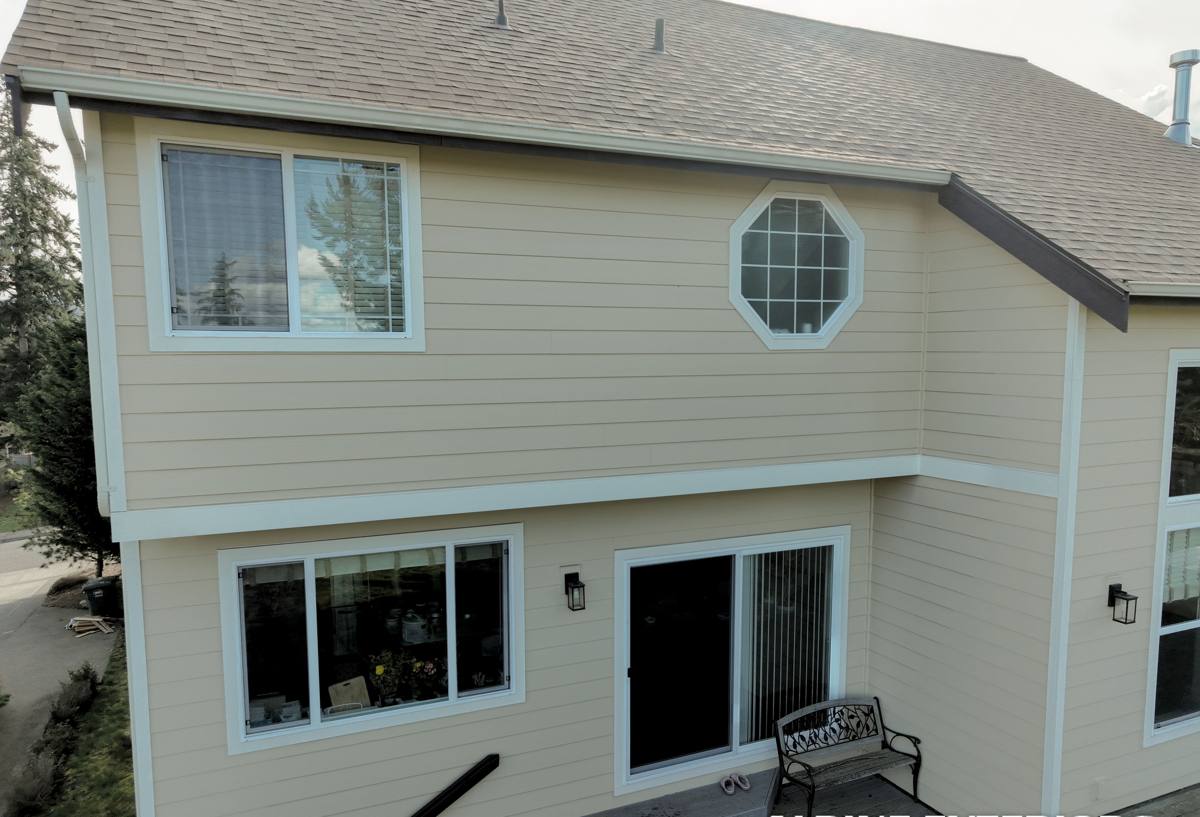
Salt air is corrosive to unprotected or mismatched metal — fasteners, flashing, and panel edges are where it shows up first, usually as rust streaks or pitting well before the roof itself is failing. Driving rain is a different problem: instead of running straight down and off, it gets pushed sideways and upward under laps, around vents, and along valleys. A roof that's fine in a normal rainstorm can still leak in a wind-driven one if the details underneath aren't built for it.
Add a long moss season — cool, damp, and shaded conditions that stretch across much of the year in this part of Washington — and you get a third factor: organic growth that holds moisture against the roof surface and works into any gap it can find. On older asphalt roofs this often shows up as granule loss and soft spots. On a poorly installed metal roof it can show up as trapped moisture at fastener penetrations or under debris that collects in low-slope areas.
Why This Adds Up to More Than "Just Weather"
Individually, salt, rain, and moss are manageable. Together, over years, on a roof that wasn't detailed for coastal conditions, they compound. Corrosion opens a path for water. Water feeds moss. Moss holds more water. That's the pattern we're trying to head off from the start, not patch later.
Why Metal Roofing Fits Point Roberts Homes
Metal roofing isn't automatically better in every climate, but it lines up well with what this specific coastline throws at a roof. A properly installed metal roof has no granules to shed, sheds water and wind-driven rain more effectively than most other roofing surfaces when panels and laps are done right, and offers a smoother surface that moss has a harder time gripping compared to shingle roofing.
The word "properly" is doing a lot of work in that sentence. Metal roofing rewards correct installation and punishes shortcuts more visibly than some other materials — a fastener that backs out or a panel that wasn't lapped correctly against prevailing wind direction becomes an obvious problem here faster than it would in a calmer inland climate. That's exactly why we treat every Point Roberts metal roof as a coastal installation, not a standard one with a different material on top.
Panel Coating Matters as Much as Panel Material
The steel or aluminum underneath a metal roof panel is only part of the story — the factory finish is what actually faces the salt air. Higher-grade PVDF (often sold under names like Kynar) finishes hold their color and resist chalking and corrosion longer than basic painted finishes, which matters more here than on a roof twenty miles inland. We talk through finish options honestly, including the tradeoff between upfront cost and how the finish is likely to hold up over the years exposed to marine air.
What a Correct Job Involves Here
A metal roof is a system, not just a layer of panels. In a marine climate like Point Roberts, every layer of that system needs to be chosen with salt and wind-driven rain in mind:
- Underlayment: a synthetic underlayment rated for the full roof, with self-adhered ice-and-water membrane at eaves, valleys, and any low-slope transitions where wind-driven rain is most likely to intrude.
- Fasteners: corrosion-resistant fasteners matched to the panel metal — mixing incompatible metals causes galvanic corrosion that can eat through a fastener from the inside out, quietly, long before it's visible from the ground.
- Flashing: custom-formed flashing at every penetration, valley, and wall intersection, sealed and lapped in the correct direction for the wind patterns this coastline actually sees.
- Ventilation: balanced intake and exhaust ventilation to keep condensation from forming on the underside of the panels, which is a bigger risk in a consistently damp, cool marine climate.
- Panel seams: laps and seams run and sealed to shed sideways-driven rain, not just water running straight downhill.
Comparing Metal Roofing Options for This Climate
Not every metal roofing profile performs the same way against salt air and driving rain. Here's how the common options compare for a Point Roberts home:
| Panel Type | Wind-Driven Rain Performance | Salt Air Durability | General Maintenance |
|---|---|---|---|
| Standing seam (concealed fasteners) | Strongest — no exposed fastener heads for water to find | Very good, especially with quality coatings | Low; periodic debris clearing |
| Exposed-fastener panel | Good if installed and re-torqued correctly; more failure points | Fasteners need monitoring over time | Moderate; fastener checks recommended |
| Metal shingle / stone-coated steel | Good on steeper slopes; more seams than standing seam | Good with proper coating | Moderate; more surface texture for debris to catch |
Standing seam tends to be our default recommendation for the most exposed, water-facing sides of a Point Roberts home, since it has no exposed fastener heads for salt and rain to work on over time. Exposed-fastener panels can still be the right, more budget-conscious choice for less exposed roof planes, as long as the fastener spec and installation are done correctly and checked periodically.
Moss and Marine Growth: What Actually Helps
Metal sheds moss more easily than shingles because it doesn't give growth as much to grip, but "sheds more easily" isn't the same as "never grows moss." Shaded valleys, low-slope sections, and areas near overhanging trees can still collect debris and hold moisture long enough for growth to start, especially through a Pacific Northwest moss season that runs longer than most homeowners expect.
A few things genuinely help on a metal roof in this climate:
- Zinc or copper strips near the ridge, which release trace amounts of metal ions that discourage moss growth as rain washes over the panels below.
- Keeping overhanging branches trimmed back so less organic debris lands on the roof in the first place.
- Clearing valleys, gutters, and low-slope transitions before the wet season builds up, rather than after growth has already started.
- Avoiding pressure washing directly on panel seams and coatings, which can damage the finish that's protecting the metal underneath.
Seasonal Maintenance Checklist
A well-installed metal roof in this climate needs less maintenance than most alternatives, but "less" isn't "none." A short seasonal walk-through catches most problems while they're still cheap to fix:
- Check valleys and low-slope areas for accumulated needles, leaves, or moss growth.
- Look at exposed fasteners (if applicable) for early rust staining or loosening.
- Inspect flashing around chimneys, vents, and wall intersections for gaps or lifted edges.
- Clear gutters and downspouts so water has a clean path off the roof.
- Trim back branches that overhang the roofline before the wet season sets in.
Our Process for Point Roberts Jobs
Working in Point Roberts isn't the same logistically as working in Ferndale proper. The land route in crosses the Canadian border, which means material deliveries, crew scheduling, and equipment transport all have to account for that crossing — passports or enhanced ID, customs timing, and a bit less flexibility if a job needs an extra trip for a forgotten part. Weather windows on the water side of the peninsula can also shift faster than inland forecasts suggest.
We plan around that from the estimate stage, not after the job has started. That means staging materials so the crew isn't making repeat crossings mid-project, sequencing the tear-off and dry-in around the actual weather pattern for that stretch of coast, and building in the review Whatcom County requires for roofing permits in the area before work begins.
Why It Matters That We Already Work Here
A contractor who hasn't worked in Point Roberts before is learning the border-crossing logistics, the wind exposure on that peninsula, and the county's permitting expectations on your job — at your expense, in delays if nothing else. A crew that already does this route routinely isn't guessing at how long material transport takes or which roof planes take the worst of the wind-driven rain off the water.
That local familiarity doesn't replace correct installation — the underlayment, flashing, and fastener details still have to be right regardless of who's doing the work. But it does mean fewer surprises, more realistic scheduling, and a crew that's seen how roofs in this specific spot actually age, rather than assuming a standard Whatcom County installation approach will hold up the same way on an exposed coastal lot.
Getting a Straight Answer for Your Roof
Every home on this peninsula sits a little differently — how exposed it is to wind off the water, how much shade and moisture it holds onto, what shape the current roof is in. We'd rather look at your specific roof than guess from general climate patterns alone. If you'd like an honest read on what your roof actually needs, the form below gets you a free, no-pressure estimate from a crew that already knows this area.