 Ferndale Exterior
 Roofing on a Marine Peninsula: Why Point Roberts Is Different
Point Roberts sits out on its own peninsula, separated from the rest of Whatcom County by water and, practically speaking, by the international border itself. That location puts homes here in near-constant contact with salt-laden air off Boundary Bay and the Strait of Georgia, plus whatever wind and rain the Pacific storm track decides to send through. It's a different set of conditions than what a roof faces a few miles inland, and it calls for a different level of attention during a replacement.
We've done roofing work across Ferndale and the surrounding county long enough to know that a roof spec'd for a typical inland Whatcom County lot doesn't always hold up the same way out here. Salt air, driving rain, and a long moss season each attack a roof differently, and a correct replacement accounts for all three at once — not just the one that's most visible.
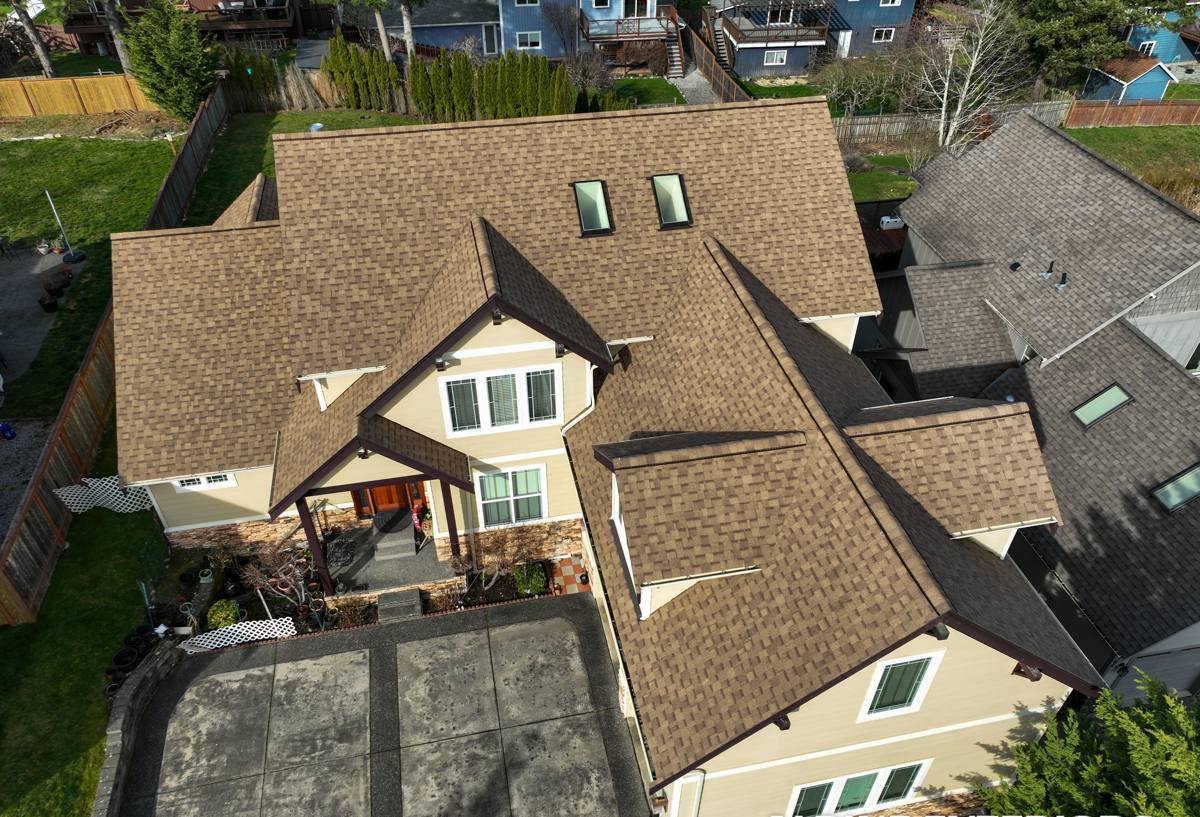
How Salt Air, Rain, and Moss Actually Wear Down a Roof
It helps to understand the mechanics of what's damaging the roof, because it changes what "correct" looks like for the replacement.
Salt Air
Airborne salt accelerates corrosion on anything metal — fasteners, flashing, drip edge, vents. Lower-grade metal components that would last decades inland can start showing rust and pitting years earlier out here. This is one of the biggest reasons material and fastener selection matters more on a Point Roberts job than on a typical inland replacement.
Driving Rain
Wind-driven rain off the water doesn't just fall straight down — it gets pushed sideways and sometimes upward, working its way under shingle edges, around vent boots, and into any flashing detail that isn't tight. A roof that would shed a calmer rain just fine can still leak in these conditions if the underlayment coverage and flashing laps aren't built for wind-driven moisture.
Moss
The mild, wet marine climate here is close to ideal for moss growth, especially on shaded, north-facing, or tree-covered sections of roof. Moss isn't just cosmetic — it holds moisture directly against the shingle surface, works its way under tabs, and gradually lifts and separates shingles from the deck. Left alone, it shortens the life of an otherwise sound roof by years.
Signs a Point Roberts Roof Needs Replacement, Not Another Repair
Not every issue means a full tear-off, but there's a point where patching stops making sense. In this climate, that point tends to arrive a bit earlier than it would on a more sheltered, inland roof.
- Heavy granule loss showing bare, shiny patches on asphalt shingles
- Shingles that are curling, cupping, or cracking at the edges
- Moss growing under shingle tabs, not just sitting on the surface
- Soft, spongy spots when walking the roof — a sign of deck damage underneath
- Repeated leaks in the same area even after past repairs
- Rusted, lifting, or separating flashing around chimneys, walls, and vents
- A roof already carrying two layers of shingles from prior re-roofs
- An asphalt roof approaching or past the 20–25 year mark in this climate
If you're seeing two or more of these at once, it's usually a sign the roof system as a whole is wearing out, not just one isolated spot.
What a Correct Roof Replacement Actually Involves
A roof replacement done right is a system, not just a layer of new shingles. In a climate like this one, a few pieces matter more than they would elsewhere:
- Full tear-off to the deck — so the deck can actually be inspected and repaired, not covered up
- Deck repair or replacement of any soft, rotted, or water-damaged sheathing found underneath
- Self-adhered ice-and-water membrane at eaves, valleys, and around penetrations, where wind-driven rain is most likely to find a way in
- Full synthetic underlayment coverage across the whole roof, not just felt in the field — synthetic sheds wind-driven moisture better and holds up longer during install in wet weather
- Corrosion-resistant flashing and fasteners sized and rated for coastal exposure, not standard-grade hardware
- Balanced intake and exhaust ventilation so moisture from inside the attic isn't adding to what the roof is already fighting from outside
- A fastening pattern matched to local wind exposure, especially on more open or waterfront-facing sections of roof
Skip any one of these and the new roof inherits a weak point that this particular climate will find eventually.
Choosing Materials for Salt Air and Moss Exposure
There's no single "correct" material for every home — it depends on budget, roof pitch, exposure, and how much shade the lot gets. Here's how the common options actually perform under these specific conditions:
| Material | Salt Air / Corrosion | Moss Resistance | Wind-Driven Rain | Typical Lifespan Here |
|---|---|---|---|---|
| Architectural asphalt shingle | Good, with corrosion-resistant flashing and fasteners | Moderate — benefits from algae/moss-resistant granules | Good, when underlayment and laps are done correctly | 20–25 years |
| Standing seam metal | Very good with a quality coated finish and marine-grade fasteners | Very good — smooth surface sheds moss more easily | Excellent — few seams for water to work into | 40+ years |
| Synthetic/composite shake | Good — doesn't rust or rot like natural wood | Good, better than untreated cedar | Good, install quality dependent | 30–40 years |
We're generally cautious about untreated cedar shake in this specific environment. It can look great, but the combination of constant moisture, shade, and slower drying time on many Point Roberts lots means it needs more frequent maintenance to avoid moss and rot issues than most homeowners want to take on. If you love the look, a synthetic composite shake gets you close without that maintenance burden.
Our Roof Replacement Process
- On-site inspection. We walk the roof and attic, check the deck, flashing, ventilation, and any problem areas, and give you a straightforward written estimate.
- Material selection. We go over options based on your roof's pitch, exposure, and budget — no upselling toward whatever's most profitable for us.
- Permitting. Most full roof replacements in Whatcom County, including Point Roberts, require a building permit. We handle that as part of the job.
- Scheduling around weather. Given how much rain this area sees, we plan install windows carefully so the deck isn't left exposed longer than necessary.
- Tear-off and deck repair. Old roofing comes off, the deck gets inspected, and any damaged sheathing is replaced before anything new goes down.
- Installation. Underlayment, flashing, ventilation, and roofing material go on in that order, following manufacturer specs for wind and moisture exposure.
- Cleanup and walkthrough. We clear debris and nails from the property and walk the finished roof with you.
- Warranty documentation. You get manufacturer and workmanship warranty paperwork for your records.
Why a Crew That Already Works Point Roberts Matters
Point Roberts is unusual to work in for reasons that have nothing to do with roofing skill: it's only reachable by driving through Canada or by boat. That changes how a job needs to be planned. Crews, materials, dump trailers, and equipment all have to make that crossing, and a contractor who hasn't done it before tends to either avoid the area, underestimate the logistics, or pad schedules and pricing to cover the uncertainty.
A crew that already works out here plans loads and border timing in advance, avoids unnecessary repeat trips, and isn't guessing about how long the job will actually take. That translates directly into fewer delays and a more predictable schedule for you. It also means we're familiar with how exposure varies lot to lot here — a waterfront home facing Boundary Bay takes a different kind of weathering than a shaded, tree-covered lot set back from the water, and the roof spec should reflect that difference.
Maintenance That Protects Your New Roof
A correctly installed roof still benefits from some basic upkeep, especially in this climate. A little attention goes a long way toward getting the full lifespan out of the materials:
- Keep gutters and valleys clear of needles, leaves, and debris so water can actually drain
- Trim back overhanging branches to cut down on shade, debris, and moss-friendly conditions
- Have moss treated before it takes hold, rather than after it's already under the shingles
- Walk or inspect the roof after major storms for lifted shingles or flashing
- Address small leaks or flashing issues right away — they don't get better on their own out here
Get a Straight Answer on Your Roof
If your roof is showing its age, or you just want an honest read on how much life it has left, we're happy to take a look. We'll walk the roof, tell you what we actually see, and put together a clear, no-pressure estimate — use the form below to get started.