 Ferndale Exterior
 Sudden Valley Homes Face a Tougher Siding Job Than Most
If you own a home in Sudden Valley, you already know your siding works harder than siding on a house twenty miles inland. Between the salt-laden air moving in off the water, the driving rain that Whatcom County sees for months at a stretch, and a moss season that seems to start earlier and last longer every year, exterior cladding here takes a beating that manufacturers in drier climates never design for. We install fiber cement siding across the Ferndale area, and the work we do in Sudden Valley specifically has to account for all three of those stressors at once — not just one of them.
This page is about that one job: putting correct, properly detailed James Hardie fiber cement siding on a Sudden Valley home. Not a general overview of siding options, not a sales pitch — a straight explanation of what this climate demands, what a correct installation actually involves, and why the crew doing the work matters as much as the material itself.
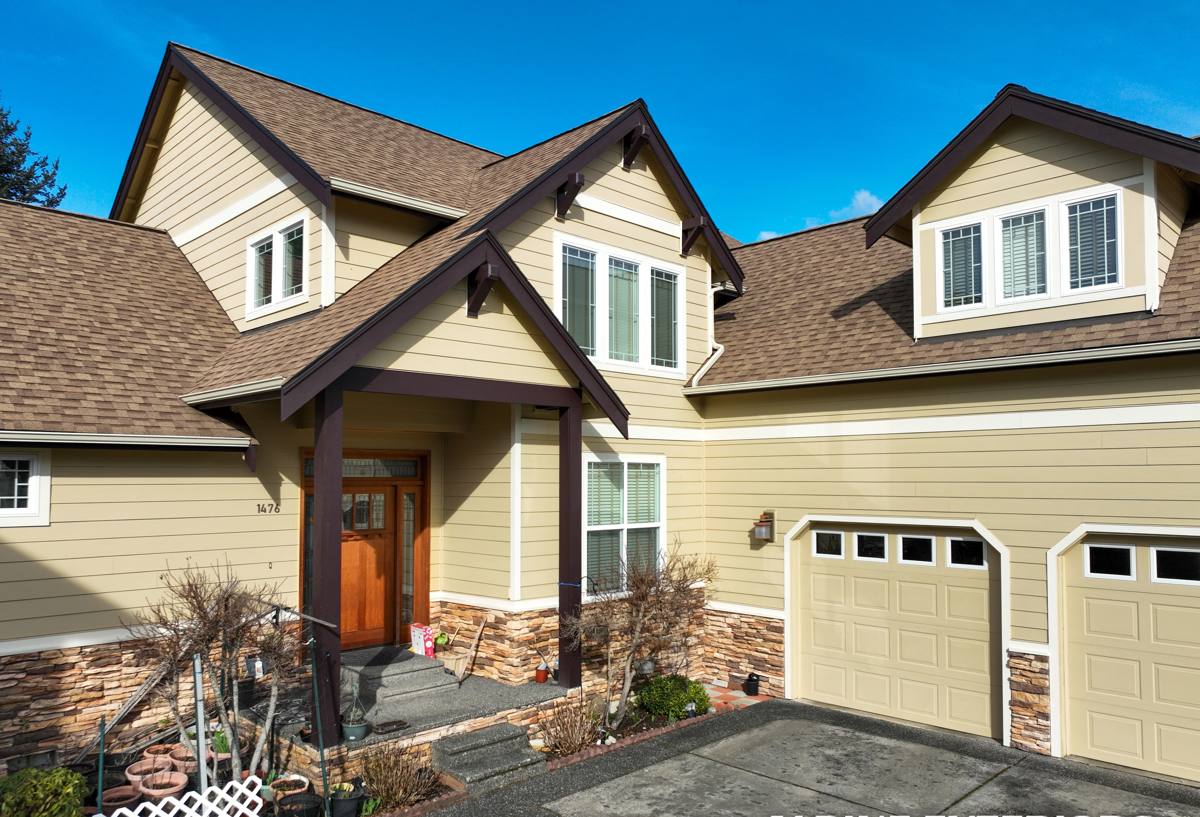
What Whatcom County Weather Actually Does to Siding
Wind-Driven Rain Finds Every Gap
Rain that falls straight down is easy to shed. Rain that comes in sideways during a winter storm is a different problem — it gets pushed up under laps, into unsealed seams, and behind trim that isn't flashed correctly. Over years, that pattern of intrusion is what causes rot in sheathing and framing long before anyone notices a problem from the curb. Siding that looks fine from the street can be hiding real damage underneath if it was installed without proper water management.
Moss and Algae Take Hold Fast
Shaded, north-facing walls and anything close to tree cover stay damp for days after a storm passes. That constant moisture is exactly what moss and algae need to establish themselves, and once they're growing on a wall surface, they hold even more moisture against it — a cycle that accelerates deterioration on materials that aren't built to resist it. Wood-based sidings are especially vulnerable here because the organic material itself is a food source.
Salt Air Corrodes Fasteners and Trim
Homes closer to Bellingham Bay and the Strait of Georgia deal with airborne salt that settles on exterior surfaces and accelerates corrosion of anything metal — fasteners, flashing, trim screws. A siding system is only as good as the hardware holding it up, so the fastener spec and flashing materials matter just as much as the panel or plank itself in a salt-exposed environment.
Why We Install Only James Hardie Fiber Cement
We made a deliberate decision to install James Hardie fiber cement exclusively and not offer vinyl, LP SmartSide, or other fiber cement brands. That's not marketing — it's a standard we hold because of what this climate does to a house over time.
Fiber cement is non-combustible, which matters given Washington's increasingly serious wildfire seasons. It doesn't feed moss and algae growth the way wood-based products can, and it holds its shape and finish through repeated wet-dry cycles far better than materials that expand, contract, or absorb moisture at the fiber level. James Hardie specifically engineers regional product lines — their HZ5 formulation is built for the wetter, more humid climates found in the Pacific Northwest, which is a real difference from a generic all-climate product. The factory-applied ColorPlus finish is baked on under controlled conditions, which gives it far more consistent adhesion and fade resistance than a finish applied on-site after installation, and it comes with a real, transferable warranty backing both the substrate and the finish. When we stand behind a siding job in Sudden Valley, we want to be standing behind a product built for exactly these conditions — not one we have to caveat.
What a Correct Fiber Cement Siding Installation Involves
Fiber cement siding is only as good as the installation behind it. The material can be excellent and still fail early if the details underneath are wrong. Here's what we treat as non-negotiable on every job.
Weather-Resistive Barrier and Flashing First
Before a single piece of siding goes up, the wall needs a continuous weather-resistive barrier, properly lapped and sealed, with flashing integrated at every window, door, and horizontal transition. This is the layer that actually keeps water out of the wall assembly — the siding is the second line of defense, not the first.
Fastening, Clearances, and Ground Contact
James Hardie specifies fastener type, spacing, and placement, and those specs exist for a reason — get them wrong and you undermine the wind and water performance of the whole wall. Equally important is keeping siding clear of grade, roof lines, decks, and patios by the manufacturer's minimum clearances, so water has somewhere to go instead of wicking up into the bottom edge of the material.
Caulking and Trim Details That Actually Last
Butt joints, trim intersections, and penetrations need the right sealant, applied correctly, or they become the first failure point in a wet climate like this one. We follow James Hardie's caulking and joint-treatment guidance rather than shortcuts that look fine on installation day but open up within a year or two of freeze-thaw and wet-dry cycling.
Choosing the Right Hardie Product for a Sudden Valley Home
James Hardie makes several distinct product profiles, and the right choice depends on your home's style and exposure, not just personal preference.
| Product | Look | Best suited for |
|---|---|---|
| HardiePlank Lap Siding | Traditional horizontal lap, smooth or cedar-textured | Most Sudden Valley homes — classic and versatile profile |
| HardieShingle Siding | Staggered or straight-edge shingle look | Accent gables, dormers, or a full cottage-style exterior |
| HardiePanel Vertical Siding | Clean vertical panels with battens | Modern facades or as an accent alongside lap siding |
| HardieTrim Boards | Corner boards, fascia, window and door trim | Finishing every home for a consistent, sealed look |
For homes with heavier tree cover or north-facing walls prone to moss, we'll often talk through color choice too — darker ColorPlus finishes can make early moss growth less visually obvious, but the finish itself resists staining regardless of shade. The bigger factor is always correct installation and clearances, not color.
Our Process, Start to Finish
- On-site inspection of your current siding, sheathing condition, and any moisture or rot already present
- A written estimate that spells out product line, scope, and what's included — no vague allowances
- Tear-off of existing siding and inspection of sheathing, with any rotted material repaired before anything new goes up
- Installation of weather-resistive barrier and flashing at every penetration and transition
- Fiber cement installation to James Hardie fastening and clearance specifications
- Caulking, trim, and final detail work
- A walk-through with you before we consider the job finished
What Affects the Cost of a Sudden Valley Siding Project
Every home is different, so we don't quote sight unseen — but these are the factors that actually move the number on a fiber cement project in this area.
| Factor | Why it matters |
|---|---|
| Home size and wall complexity | More square footage and more corners, gables, and trim lines mean more material and labor |
| Existing siding removal | Tear-off and disposal of old material adds time, especially with multiple layers |
| Sheathing or moisture damage | Rot found once old siding comes off has to be repaired before new siding goes on — this is common on homes with a history of water intrusion |
| Product line and profile mix | Combining lap, shingle accents, and trim boards costs more than a single straightforward profile |
| Access and site conditions | Steep lots, limited access, or heavy landscaping near the house can affect labor time |
We walk every factor through with you at the estimate so there are no surprises once work starts.
A Homeowner's Maintenance Checklist
Fiber cement is low-maintenance compared to wood, but "low" isn't "none" — especially in this climate. A few habits go a long way toward protecting your investment.
- Rinse siding down at least once a year, paying extra attention to shaded and north-facing walls where moss takes hold first
- Trim back trees and shrubs so air can circulate and walls can dry between storms
- Inspect caulking at trim joints and penetrations annually, and have any cracked or missing sealant redone promptly
- Keep gutters and downspouts clear so water isn't overflowing directly onto siding below
- Watch for any soft spots, staining, or bubbling paint, which can signal moisture getting behind the siding
- Avoid pressure washing at close range or high pressure, which can force water behind laps and joints
Why Local Experience in Sudden Valley Matters
A siding crew that mostly works dry, low-moisture climates and occasionally takes a Whatcom County job doesn't have the same instinct for where problems actually show up here. We work this area regularly, which means we already know to check the usual trouble spots — the shaded wall behind mature trees, the low corner near grade that never quite dries out, the fastener corrosion that shows up faster this close to salt air. That familiarity shows up in the small decisions made on-site, not just the big ones on the estimate sheet, and it's a big part of why a correctly installed Hardie system on a Sudden Valley home should perform for decades rather than years.
If you're weighing a siding replacement or repair for your Sudden Valley home, we're happy to come take a look and walk you through what we see, with no pressure to commit. Request a free estimate through the form below and we'll get you scheduled.