 Ferndale Exterior
 Roof Repair in Sudden Valley: A Different Kind of Wear
Across Ferndale and the rest of Whatcom County, roofs deal with a fairly consistent set of stresses: salt-tinged marine air off the water, driving rain that gets pushed sideways and up under shingle edges by wind, and a moss season that runs long through the mild, wet winters here. Sudden Valley sees all of that, but it also adds its own layer on top. Wrapped in dense second-growth forest along the south shore of Lake Whatcom, homes here sit under heavier tree canopy than almost anywhere else in the area, and that shade keeps roof surfaces damp far longer after every storm than a roof out in the open would stay. When a repair is needed here, it has to account for that compounding effect, not just the general regional climate.
We repair roofs throughout Sudden Valley regularly, and the patterns we see are shaped directly by this environment — moss that returns fast on shaded slopes, flashing that takes on more water than it was ever detailed to handle, and decking that stays wet long enough to soften before anyone notices a stain on the ceiling. Good repair work here starts with understanding why a roof failed in this particular setting, not just patching the spot where water showed up inside.
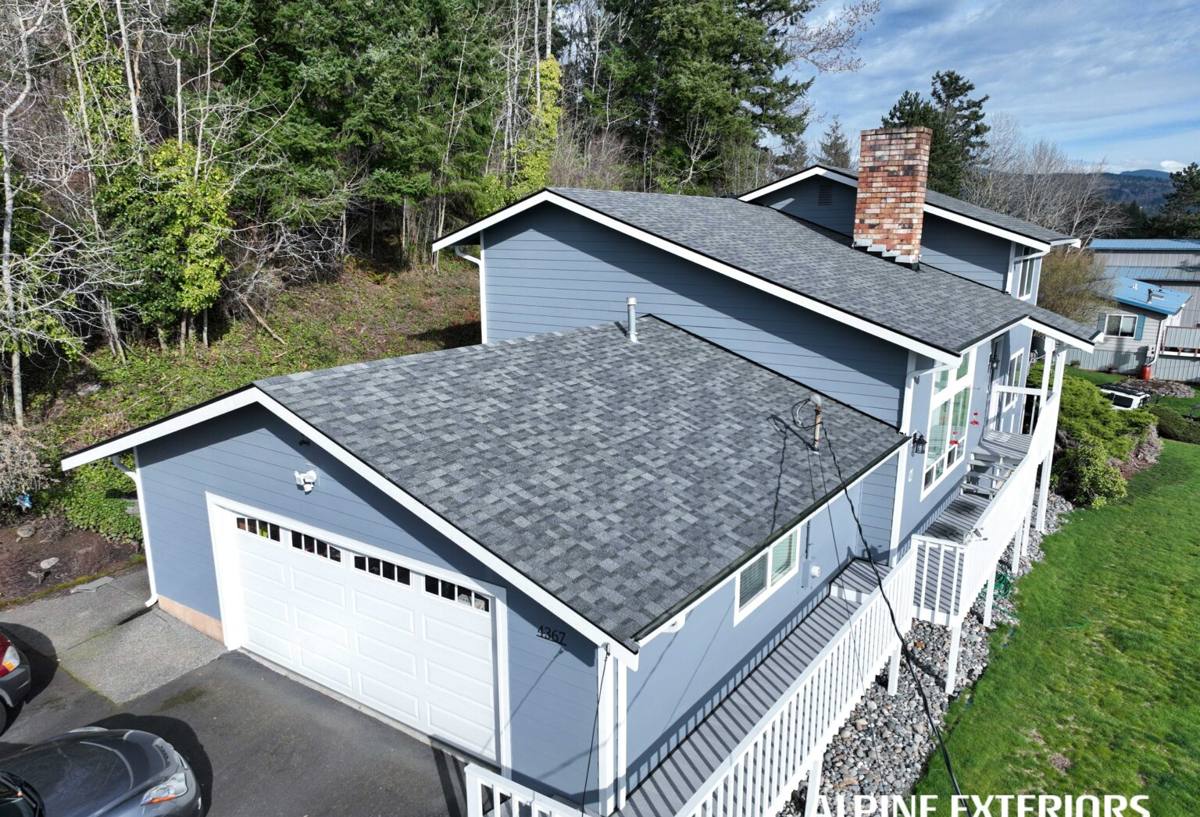
What Makes Sudden Valley Roofs Age Differently
Heavy Tree Canopy and Slow Drying
Most Sudden Valley lots sit under significant tree cover, and many roofs have at least one slope that gets very little direct sun for most of the year. A roof that never fully dries between rains behaves differently than one that gets regular sun exposure — granule loss, moss establishment, and slow leaks at aging flashing all show up sooner on a shaded slope than they would on the same roof in an open, sunny location.
Lake Humidity and Uneven Exposure Across the Community
Lake Whatcom adds ambient humidity on top of Whatcom County's normal rainfall, and Sudden Valley's hilly terrain means two homes a short distance apart can face very different wind and rain exposure depending on elevation and orientation to the lake and surrounding ridgelines. A repair approach that assumes uniform exposure across every roof plane misses that variability, and it's part of why a generic patch job often doesn't hold up as long here as it should.
A Moss Season That Runs Longer Than Most of the County
Shade, humidity, and mild temperatures are the exact combination that lets moss and organic growth thrive, and Sudden Valley's canopy keeps that combination active for more of the year than most neighborhoods see. Moss doesn't just sit on the surface — it holds moisture against shingles and works into laps and fastener lines, which is one of the more common root causes behind leaks we're called out to repair here.
Signs a Sudden Valley Roof Needs Repair
- Moss buildup in valleys or on shaded slopes that returns quickly after cleaning
- Granule loss showing up in gutters, downspouts, or at the base of downspouts
- Water staining on interior ceilings or upper walls after a heavy or extended rain
- Soft, spongy spots underfoot near penetrations, valleys, or eaves
- Curling, cracked, or missing shingles, especially on shaded or debris-prone slopes
- Daylight visible through the roof deck from inside an attic space
- Debris buildup in valleys or against roof-to-wall transitions from surrounding trees
Any one of these is worth a look before the next heavy rain. Left alone, most of them get more expensive to fix, not less.
What a Correct Roof Repair Actually Involves
Finding the Real Source, Not Just the Visible Spot
Water rarely enters a roof directly above where a stain shows up inside. It travels along decking, framing, and underlayment before it finds a way through, sometimes for several feet. A repair that only addresses the ceiling stain's rough location, without tracing the path back to the actual entry point, tends to resurface within a season or two. We start every repair with an inspection that follows the water, not just the symptom.
Flashing Comes First
Most roof leaks in this climate start at flashing — around chimneys, skylights, valleys, and roof-to-wall transitions — rather than in the open field of the roof. On a Sudden Valley roof, we pay particular attention to valleys where tree debris collects and to any transition on a shaded slope that stays wet longer, since those are the spots that see the most repeat trouble. Proper repair means removing and correctly re-lapping flashing, not just running sealant over the top of a failed detail, which is a common shortcut that only buys a little time.
Matching Materials and Protecting What's Left
A good repair uses materials compatible with what's already on the roof — matching shingle profile and granule color where possible, and using an underlayment or self-adhered membrane suited to the specific spot being repaired, particularly at valleys and low-slope transitions that see standing water longer on a shaded roof. We also take care not to damage surrounding shingles during the repair itself, since a sloppy tear-out can turn a small fix into a bigger one.
Repair or Replace? How We Help You Decide
Not every roof problem in Sudden Valley calls for full replacement, and not every leak is safely handled with a patch. The honest answer depends on the roof's age, how much of the deck has been affected, and how widespread the underlying issue actually is.
| Situation | What It Usually Means | Typical Approach |
|---|---|---|
| Isolated leak at one flashing point on a roof under 12-15 years old | Localized flashing failure, deck likely still sound | Targeted repair |
| Recurring moss and leaks on the same shaded slope over multiple seasons | Chronic moisture exposure wearing down that section faster than the rest | Section repair or partial re-roof of that slope |
| Soft decking discovered in more than one area during inspection | Moisture has been working underneath for some time, not just at the surface | Deck repair plus reassessment of full roof condition |
| Roof nearing or past its expected material lifespan with widespread granule loss | General wear across the whole roof, not a single fixable point | Full replacement usually more cost-effective long term |
| Multiple past repairs in different spots within a short span | Underlying material or original installation may be failing broadly | Full inspection to compare repair cost against replacement |
We'll always tell you honestly which category a roof falls into, including when a repair is the right call even if replacement would be the bigger job for us to take on.
Our Roof Repair Process
We start with an on-site inspection of the roof, the attic where accessible, and any interior areas showing signs of water intrusion, paying close attention to how shade and tree cover have affected different slopes of that particular roof. From there, we give a clear, written explanation of what we found and what it will take to fix it, including photos of the affected areas so you're not just taking our word for it. Repair work itself typically includes removing the damaged section down to sound decking, correcting or replacing flashing rather than sealing over it, installing appropriate underlayment for that location, and matching shingles as closely as the existing roof allows. We clean up thoroughly, including clearing debris from valleys and gutters while we're already on the roof, since that's often part of what caused the problem in the first place.
Why a Crew That Already Works Sudden Valley Matters
Sudden Valley operates with its own internal road network and a homeowners association, and a contractor who works here regularly already understands the practical side of that — how to schedule access, and how quickly exposure changes from one lot to the next depending on tree cover, elevation, and orientation to the lake. That familiarity shows up in decisions that aren't obvious from the ground: which slopes need extra attention to flashing because they never see direct sun, how much debris buildup is normal for a given lot versus a sign of a larger problem, and which valleys tend to hold moisture longest through the wet months. A crew seeing a Sudden Valley roof for the first time can still do competent work, but a crew that already knows this specific stretch of Whatcom County tends to catch the details that prevent a repair from becoming a repeat call.
A Few Things Worth Asking Before Hiring for Repair Work Here
- Do you carry current Washington contractor licensing and active liability insurance?
- Will you trace the actual source of the leak, or just patch the visible spot?
- How do you handle flashing repair versus simply resealing existing flashing?
- Do you have recent experience working on shaded, tree-covered roofs specifically?
- Is the scope of work, including material and labor, spelled out in writing before you start?
Keeping a Repaired Roof in Good Shape Here
A correct repair should hold up well, but Sudden Valley's shade and tree cover mean ongoing upkeep matters more here than on a typical open lot. Keeping valleys and gutters clear of needles and leaves, especially heading into the wetter months, prevents water from backing up under shingles at exactly the points a repair just addressed. Periodic moss treatment on shaded slopes slows regrowth, and a quick visual check after any major windstorm can catch a lifted shingle or new debris pile before it turns into a repeat leak. None of this requires much time, but skipping it tends to shorten the life of even a well-done repair on a roof that sits under this much canopy.
If you're dealing with a leak, a stain on the ceiling, or a roof section that just doesn't look right, we're happy to come take a look and give you an honest read on what it needs. Reach out below for a free, no-pressure estimate.