 Ferndale Exterior
 Fiber Cement Siding Built for Bellingham's Coastal Climate
Bellingham sits close enough to the water and surrounded by enough tree cover that its homes take on a specific combination of punishment: salt-laden air drifting off Bellingham Bay, driving rain that comes in sideways during winter storms, and a moss season that can stretch from October through May. Siding here doesn't just need to look good for a season or two — it needs to hold up to years of that cycle without cupping, softening, or feeding mold. Fiber cement siding, installed correctly, is one of the few claddings that handles all three stresses at once.
We install James Hardie fiber cement exclusively, and this page walks through what that actually means for a Bellingham home specifically — not siding in general, but siding for this stretch of Whatcom County.
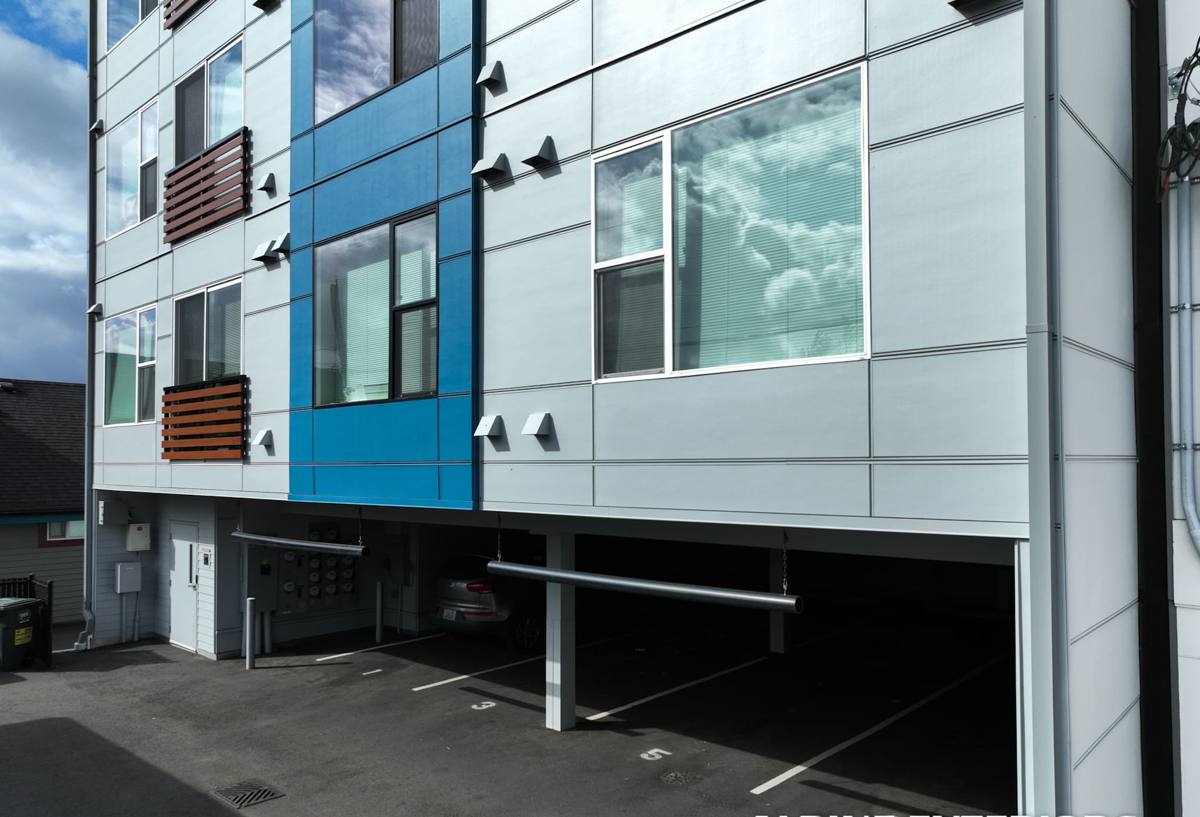
What Bellingham's Climate Actually Does to Siding
Salt Air
Homes closer to the bay deal with airborne salt that settles on exterior surfaces and accelerates corrosion of fasteners, trim, and any metal components in a siding system. Salt exposure also breaks down certain paints and coatings faster than inland weather does, which is why factory-applied, baked-on finishes matter more here than they do 30 miles east.
Driving Rain
Whatcom County gets plenty of rain, but the problem isn't just volume — it's direction. Wind-driven rain during winter fronts pushes water sideways into joints, seams, and butt ends that would stay dry in a calmer climate. Any siding product with weak seams, poor water management behind the cladding, or materials that swell when wet is going to show problems here faster than in a drier region.
Moss and Sustained Moisture
Shade, humidity, and mild temperatures make Bellingham good moss habitat — on roofs, on fences, and on siding, especially on north-facing walls and anywhere airflow is limited. Moss and algae hold moisture against the surface of the siding for extended periods. Materials that absorb water or swell when saturated are far more vulnerable to this than materials that don't.
Why Fiber Cement Fits This Climate
James Hardie fiber cement is made from cement, sand, and cellulose fibers, which means it doesn't absorb water and swell the way wood-based products can, and it doesn't corrode the way some metal-faced products do. It's also non-combustible, which is a separate benefit but one that matters increasingly in this region. For Bellingham specifically, the relevant properties are:
- Dimensionally stable when wet — it won't swell, cup, or delaminate from repeated rain exposure
- Resistant to moss and mildew growth on the material itself (though surface growth can still occur and needs periodic cleaning like any siding)
- Factory-applied ColorPlus finish holds color and resists fading from UV and salt exposure better than field-applied paint
- Rigid enough to hold tight seams and joints, which matters when wind is driving rain sideways into the wall assembly
James Hardie also engineers regional product lines — HZ5 and HZ10 — specifically for climates with more moisture exposure, which is directly relevant to a coastal Whatcom County property.
What a Correct Fiber Cement Installation Involves
Fiber cement siding is only as good as the install behind it. In a climate like Bellingham's, the water management details matter more than the visible finish work. A correct job includes:
- A properly lapped and sealed weather-resistant barrier behind the siding, with all penetrations flashed before the siding goes on
- Correct fastener spacing and type — stainless or coated fasteners rated for coastal exposure, not standard galvanized
- Proper clearances at grade, roof lines, and decks so water has somewhere to go and siding isn't sitting in standing moisture
- Butt joints and seams sealed or flashed per manufacturer spec, not just caulked and left
- Correct nailing pattern and blind-nailing where specified, so panels aren't over-driven or under-driven, which cracks the material or leaves it loose
- Rainscreen or drainage gap detailing where the wall assembly calls for it, giving bulk water a path to drain and dry
Skip any one of these and you can end up with a wall system that looks fine from the curb but traps moisture behind a material that was supposed to keep it out. This is the actual reason installation quality matters more than brand name — even the best siding fails if the water management behind it is wrong.
Our Process for Bellingham Homes
1. Assessment
We walk the exterior and look at more than just the visible siding condition — we check trim, flashing, window details, and any areas showing moss buildup or staining, since those often point to underlying water issues that need addressing before new siding goes on.
2. Removal and Sheathing Check
Old siding comes off and we inspect the sheathing underneath. In a climate this wet, it's common to find soft spots or rot around windows, at the base of walls, or behind areas that had prior moss growth. We address that before anything new goes up — covering it over doesn't fix it.
3. Water Management Layer
This is the step that determines how the wall performs for the next 30-plus years, and it's invisible once the job is done. Weather-resistant barrier, flashing at every penetration and transition, and a drainage plane appropriate to the wall assembly.
4. Installation to Manufacturer Spec
James Hardie panels, planks, and trim installed per their published installation guidelines — clearances, fastening, joint treatment, all of it. This is also what keeps the manufacturer's warranty valid; installations that deviate from spec can void warranty coverage.
5. Finish and Walkthrough
Caulking, touch-up, and a final walkthrough so you know what was done and what to expect going forward, including basic maintenance.
Comparing Siding Options for a Coastal Whatcom County Home
| Factor | James Hardie Fiber Cement | Vinyl | Wood / Engineered Wood |
|---|---|---|---|
| Moisture absorption | None — cement-based, dimensionally stable | None, but seams and panels can warp or buckle | Absorbs moisture; prone to swelling and rot in wet climates |
| Salt air exposure | Factory finish resists fading and degradation | Can become brittle and discolor over time | Finish breaks down faster; needs more frequent repainting |
| Moss/mildew resistance | Resists growth on the material itself | Resists growth but can trap moisture behind panels | More vulnerable, especially at seams and edges |
| Combustibility | Non-combustible | Combustible | Combustible |
| Typical lifespan when installed to spec | Decades, with strong transferable warranty | Shorter, especially in harsh coastal exposure | Shorter without diligent repainting and maintenance |
We install only James Hardie fiber cement — not vinyl, not engineered wood, not other fiber cement brands. That's a deliberate standard, not a lack of options. We've made the judgment that for this climate, Hardie's product engineering, factory finish, and installation specifications give homeowners the most durable, lowest-maintenance result, and we'd rather stand behind one system we install correctly every time than offer several we install to varying standards.
Maintenance Expectations
Fiber cement is low-maintenance, not no-maintenance. In Bellingham's climate, plan on:
- Periodic gentle washing to remove moss, algae, or grime buildup, especially on shaded north-facing walls
- Annual visual check of caulking at joints, trim, and penetrations — caulk is the first thing to fail, not the siding itself
- Keeping gutters clear and grading/drainage working so water isn't sitting against the base of the wall
- Trimming back vegetation that shades siding and holds moisture against it
None of this is unusual maintenance — it's the same care most siding needs, just worth taking seriously given how long the moss season runs here.
Why Hire a Crew That Already Works Bellingham
Installation quality is the single biggest variable in how siding performs over time, and that quality depends on a crew understanding the conditions they're building for. A contractor who works Bellingham regularly already knows which details of the water management layer need extra attention on shaded or bay-facing walls, what kind of moss buildup is normal versus a sign of a deeper drainage problem, and how local wind-driven rain patterns affect flashing and joint decisions. That local pattern recognition doesn't replace following manufacturer spec — it supplements it, catching the judgment calls that specs alone don't cover.
It also means a crew that's accountable locally: reachable for questions after the job, familiar with the area's permitting expectations, and not disappearing after the invoice clears.
What This Costs
Fiber cement siding costs more upfront than vinyl and is comparable to or less than quality wood siding once you account for the repainting wood requires over its life. Exact pricing depends on the size of the home, the amount of trim and detail work, how much of the existing wall assembly needs repair before new siding goes on, and site access. Rather than quote a number that won't reflect your specific home, we provide a detailed, itemized estimate after walking the property.
If you're weighing a siding replacement in Bellingham and want a straight answer on what your home actually needs, we offer free, no-pressure estimates — walk us through your concerns and we'll walk the exterior with you.