 Ferndale Exterior
 Deck Replacement in Birch Bay: What's Different Here
Birch Bay sits right on the water, and that changes what a deck goes through year to year compared to a deck a few miles inland. Salt-laden air moves in off the bay and settles on every horizontal surface, including deck boards, fastener heads, and railing hardware. Add Whatcom County's long stretch of driving rain each fall and winter, followed by a slow, damp spring where moss gets a foothold on anything shaded or north-facing, and you have a structure that's under near-constant moisture pressure for a good chunk of the year. A deck built without that in mind will show it early — usually in the fasteners and the framing before the decking itself gives any obvious sign.
We replace decks throughout Ferndale and out toward Birch Bay regularly enough to know which failure patterns show up first in this specific environment, and we build replacements to push back against those patterns rather than just matching what was there before.
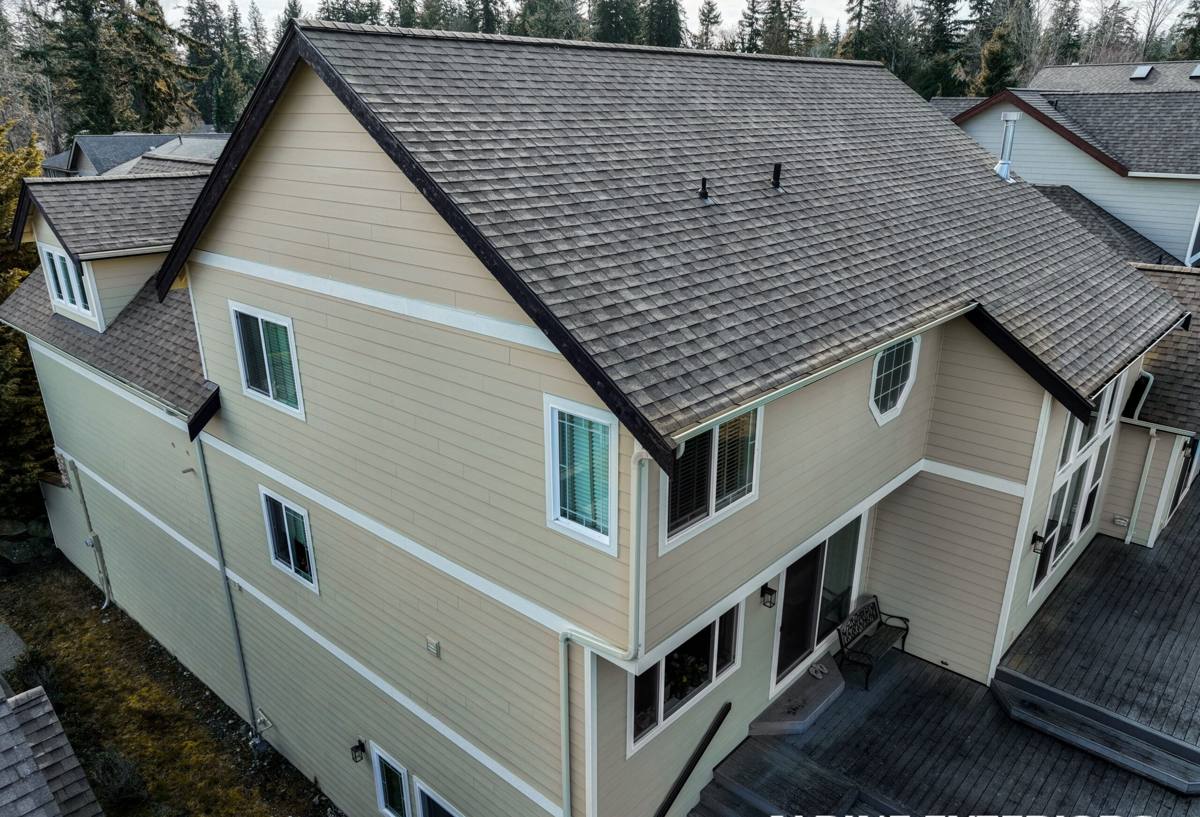
How Salt Air and Moisture Actually Damage a Deck
Fasteners and Fittings
Salt air accelerates corrosion on any metal that isn't rated for it. Standard coated deck screws, joist hangers, and bolts can start showing rust streaks and pitting well before the wood around them fails. Once a fastener corrodes, it loses holding strength, and a corroded screw head can shear off during a routine repair attempt, turning a small fix into a bigger one.
Framing and Ledger Connections
The ledger board — where the deck attaches to the house — and the framing underneath are the parts homeowners see least and worry about least, which is exactly why they're often the parts in the worst shape. Trapped moisture between a ledger and the house siding, or under decking boards that don't drain and dry properly, leads to rot that isn't visible from the surface until it's advanced.
Moss and Surface Buildup
Moss on a deck isn't just a slip hazard, though it is that. It holds moisture against the wood surface long after the rest of the deck has dried, which extends the amount of time boards spend wet in a given month. Decks with poor airflow underneath, tight board spacing, or heavy shade are the ones that develop moss fastest in this area.
Signs a Birch Bay Deck Needs Replacement, Not Repair
- Soft or spongy spots in the decking when you walk across them
- Visible rot or discoloration at the ledger board where the deck meets the house
- Rust stains bleeding out from screw heads or connector hardware
- Railing posts that wiggle at the base even after tightening hardware
- Persistent moss or algae that comes back within weeks of cleaning
- Gaps, cupping, or splitting in boards that have widened over a season or two
- A deck more than 15-20 years old built with untreated or standard-grade lumber
Any one of these on its own might be a repair. Two or more together, especially anything involving the ledger or framing, usually means the deck's structural life is closer to the end than the beginning, and patch repairs stop being cost-effective.
What a Correct Deck Replacement Involves
Full Removal, Not Board-Over
We remove the old decking and inspect the framing underneath rather than building a new surface over questionable structure. A deck is only as good as what's under it, and in a moisture-heavy environment like Birch Bay, the framing is exactly where problems hide.
Framing and Ledger Attention
Where framing is sound, we reuse it. Where it isn't, we replace it, and we pay particular attention to how the ledger is flashed and attached to the house, since a poorly flashed ledger is one of the most common sources of hidden rot on coastal homes.
Fastener and Hardware Selection
We use fasteners and structural hardware rated for coastal or high-moisture exposure rather than standard-grade coated screws. It costs a little more up front and saves the corrosion-driven callbacks that standard hardware tends to generate in this air.
Drainage and Airflow
Board spacing, ventilation underneath the deck, and grading around the footings all affect how quickly a deck dries out after rain. We build for drainage rather than just appearance, because a deck that dries fast resists both rot and moss.
Decking Material Options for a Salt Air, High-Rain Climate
There's no single "best" decking material for every homeowner — it depends on budget, maintenance appetite, and how the deck will be used. Here's how the common options actually perform in Birch Bay's conditions, in plain terms.
| Material | Maintenance | Moisture/Salt Behavior | Typical Cost Position |
|---|---|---|---|
| Pressure-treated wood | Regular cleaning and periodic sealing | Handles moisture reasonably well if sealed consistently; can gray and check if neglected | Lowest upfront cost |
| Cedar | Sealing/staining every 1-3 years | Naturally rot-resistant but still needs upkeep in constant damp/salt exposure | Mid-range |
| Composite decking | Occasional washing, no sealing/staining | Resists rot and doesn't absorb salt the way wood does; some boards handle moss/algae better than others | Higher upfront, lower ongoing labor |
| PVC/vinyl decking | Low — washing only | Fully moisture-resistant surface, though fastener and substructure care still matters | Highest upfront |
We don't push one material as universally "best." We'll walk through what each option actually asks of you in upkeep and what it costs to install correctly, and let you weigh that against how you use the space and how much maintenance you want to do.
Railings, Stairs, and Hardware — Often the First Thing to Fail
Railing posts and stair stringers take direct weather exposure and structural stress at the same time, which makes them common early failure points on coastal decks. A loose railing post is a safety issue, not a cosmetic one — it usually means the post-to-framing connection has already started to fail, whether from rot, corroded hardware, or both. When we replace a deck, we replace railing and stair hardware to match the same coastal-rated standard as the rest of the structure rather than reusing old brackets on new lumber.
Our Process for a Birch Bay Deck Replacement
- On-site assessment — we look at the existing deck, ledger, framing, and site drainage before quoting anything, since a deck's condition underneath drives most of the real cost.
- Honest scope and estimate — you get a clear breakdown of what's structural, what's cosmetic, and what materials fit your budget and maintenance preference.
- Permitting — most deck replacements in Whatcom County require a permit, especially where structural changes or elevated framing are involved; we handle that coordination.
- Removal and structural repair — old decking comes off, framing and ledger get inspected and repaired or replaced as needed.
- Build-out — decking, railings, and stairs go in with fasteners and hardware suited to salt air and consistent moisture.
- Final walkthrough — we go over the finished deck with you, including what maintenance (if any) the material you chose will need going forward.
Why Local Experience in Birch Bay Matters
A crew that only occasionally works near the water tends to build the way they'd build anywhere else — standard hardware, standard board spacing, standard assumptions about how fast things dry out. A crew that works Birch Bay and the surrounding Ferndale area regularly has already seen which shortcuts don't hold up here, because they've been called back to decks where they did. That experience shows up in small decisions — fastener grade, ledger flashing detail, how tight the board gaps are set — that don't show up on a quote but do show up in how long the deck lasts.
We're not a national franchise cycling through the region once. We're based in Ferndale, we work this stretch of Whatcom County consistently, and a Birch Bay deck replacement gets the same structural attention whether it's a small back deck or a large waterside build.
What Affects Your Deck Replacement Cost
Every deck is different, but the cost factors are consistent. Understanding them upfront makes the estimate make sense rather than feeling like a black box.
- Size and shape of the deck (multiple levels, angles, and cutouts add labor)
- Condition of the existing framing and ledger — hidden rot adds scope
- Decking material chosen (pressure-treated through PVC span a wide cost range)
- Railing style and code requirements for height and baluster spacing
- Stair complexity and any grade changes on the site
- Permit requirements and any inspection scheduling
- Site access — decks that are hard to reach with equipment or material take longer
We'll walk through which of these apply to your specific deck during the on-site visit, so the number you get reflects your actual project rather than a generic average.
Get a Straightforward Estimate
If your Birch Bay deck is showing rust, soft spots, stubborn moss, or just enough age that you're wondering whether it's still safe, a quick on-site look will tell you more than guessing from the surface ever will. Reach out for a free, no-pressure estimate — we'll give you a straight answer on repair versus replacement and what it would take to do it right for this climate. The form below is the fastest way to get started.