 Ferndale Exterior
 Building Decks in Blaine's Coastal Climate
Blaine sits right on the water in northern Whatcom County, and that location shapes everything about how a deck should be built here. Salt air off the bay accelerates corrosion on anything metal — fasteners, brackets, railing hardware. Driving rain, often pushed sideways by wind coming off the water, finds its way into joints and seams that would stay dry in a more sheltered yard. And the long stretch of grey, damp months every year gives moss and algae plenty of time to take hold on any deck surface that doesn't shed water well or get enough sun.
None of this means a deck in Blaine can't last for decades. It means the build has to account for these conditions from the framing up, not just at the surface. A deck that would be perfectly fine in a dry inland climate can fail early here if it's built the same way.
What Blaine Properties Typically Need From a Deck
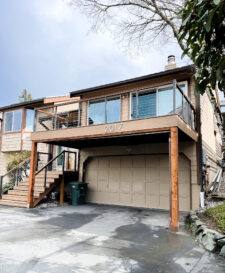
Homes in and around Blaine range from waterfront lots with direct wind and salt exposure to more sheltered properties a few blocks inland. That difference matters for material selection and hardware choices. A deck facing open water needs more corrosion-resistant fasteners and more attention to drainage than one tucked behind trees on a leeward side of a hill.
We also see a lot of decks built to take advantage of water views, which often means larger spans, taller railings for safety on elevated structures, and more exposed surface area catching wind-driven rain. Shade from evergreen trees, common throughout this part of Whatcom County, keeps some decks damp longer after a storm, which is a factor in both material choice and how often a surface needs cleaning.
Sun, Shade, and Airflow
Decks that sit in full shade under fir or cedar trees dry out slower after rain and are more prone to moss and algae growth. Decks with better sun exposure and airflow underneath tend to stay drier and need less frequent cleaning. When we walk a property, we look at where the deck sits relative to the house, tree cover, and prevailing wind — it affects both the build and the maintenance schedule we'll recommend.
Material Choices for Coastal Conditions
There's no single "best" decking material for every Blaine property — it depends on budget, how close the deck is to the water, and how much upkeep the homeowner wants to take on. Here's how the common options compare under Whatcom County's coastal conditions.
| Material | Upfront Cost | Coastal Durability | Maintenance | Typical Lifespan |
|---|---|---|---|---|
| Pressure-Treated Lumber | Lowest | Good if sealed and maintained | Annual cleaning and resealing | 15–20 years |
| Cedar | Moderate | Naturally rot-resistant, but greys and needs care near salt air | Cleaning and staining every 1–2 years | 15–25 years |
| Composite | Highest | Excellent — resists moisture and salt exposure well | Periodic washing, no staining or sealing | 25–30+ years |
We'll walk homeowners through this trade-off honestly. Composite costs more up front but removes the annual sealing and staining cycle, which matters a lot in a climate where a deck spends a good part of the year wet. Cedar has a warmer, natural look that some homeowners prefer, but it asks for more consistent maintenance to hold up near salt air. Pressure-treated framing lumber is standard for the structure underneath regardless of what decking surface goes on top.
Framing, Footings & Flashing — the Parts You Don't See
The decking boards get all the attention, but the parts of a deck that fail first in this climate are usually hidden underneath.
Footings
Footings need to be sized and set to local frost depth and soil conditions, and on some Blaine lots that means accounting for wetter, less stable soil near the water. Undersized or shallow footings are one of the more common problems we find when we're called out to fix or replace someone else's deck.
Ledger Board Flashing
Where a deck attaches to the house, proper flashing is what keeps water from working its way behind the siding and into the wall structure. This is one of the most common failure points on older decks in wet climates — a missing or poorly installed ledger flashing detail can lead to rot inside the wall long before it shows up as a visible problem on the deck itself.
Fasteners and Hardware
Standard galvanized fasteners can corrode faster than expected in salt air. For Blaine projects, we use stainless steel or coated fasteners rated for coastal and treated-lumber exposure, along with corrosion-resistant joist hangers and structural connectors. It costs a little more than using whatever hardware is on the shelf, but it's the difference between a railing post that's solid in fifteen years and one that's rusted and loose.
Moss, Algae & Drainage Management
Moss and algae aren't just a cosmetic issue — a slick, moss-covered deck surface is a real slip hazard, especially on stairs. In this climate, moss growth is driven by moisture that doesn't dry out between rain events, which comes down to two things: how the deck sheds water, and how much airflow and light reach the surface.
A well-built deck has proper board spacing and slope so water runs off rather than pooling, and gaps that allow air to circulate underneath. We also talk with homeowners about realistic expectations — even a well-built deck in a shaded, damp spot will need periodic cleaning during the long moss season here. That's a maintenance conversation, not a construction defect, and we're upfront about which properties will need more frequent attention based on their sun exposure and surroundings.
Permitting & Whatcom County Requirements
Deck construction in Whatcom County, including Blaine, is generally subject to building permit and inspection requirements once a deck exceeds a certain height or size, and elevated decks have specific railing and guard requirements for safety. Requirements can vary depending on the specifics of the project and the property, so we handle the permit process as part of the job rather than leaving homeowners to sort it out themselves. Skipping permitting on a job that requires it can create real problems later — at resale, at insurance time, or if something needs to be inspected after the fact.
Our Process for a Blaine Deck Project
1. On-Site Assessment
We walk the property, look at sun and wind exposure, existing drainage, soil conditions, and how the deck will tie into the house. If we're replacing an existing deck, we check the condition of the framing and any signs of rot or hardware corrosion.
2. Design and Material Selection
We go over decking material, railing style, and layout options based on the homeowner's budget and how much maintenance they want to take on long-term, using the trade-offs outlined above as a starting point.
3. Permitting
We handle the permit application and coordinate required inspections with Whatcom County so the homeowner doesn't have to manage that process.
4. Construction
Footings, framing, ledger flashing, decking, and railing are installed in sequence, with the corrosion-resistant hardware and flashing details this climate calls for built in from the start — not treated as upgrades.
5. Final Walkthrough
We go over the finished deck with the homeowner, including a realistic maintenance schedule suited to their property's sun exposure and how close they are to the water.
Maintenance Checklist for a Blaine Deck
Whatever material a deck is built from, a few habits go a long way toward getting the full lifespan out of it in this climate:
- Sweep off leaves, needles, and debris regularly, especially in fall and during the wetter months
- Clean moss and algae off the surface and stairs before they build up and become a slip hazard
- Check railing posts and hardware periodically for rust or looseness, especially on decks close to the water
- Reseal or restain wood decking on the schedule appropriate to the material — don't let it go past due
- Inspect the ledger board area and flashing where the deck meets the house for any signs of water intrusion
- Make sure gutters and downspouts near the deck are directing water away rather than onto the deck surface
Why a Local Crew That Already Works Blaine Matters
A crew that builds decks throughout Whatcom County, including Blaine, knows what actually happens to a deck here after a few winters — which fastener choices hold up, which spots on a property tend to stay damp longer, and what Whatcom County's permitting process actually requires in practice. That's different from general decking experience picked up somewhere with a milder or drier climate. It shows up in small decisions: where to add an extra footing on softer ground, how to detail flashing against a particular type of siding, or which decking material actually makes sense for a shaded, water-facing lot versus a sunny inland one.
We're based nearby in Ferndale and work throughout this part of Whatcom County, so we're not learning the local conditions on someone else's project — we already know them.
If you're planning a new deck or need to replace one that's showing its age, we're happy to come take a look and put together a straightforward, no-pressure estimate. Use the form below to get started.