 Ferndale Exterior
 Siding Built for Blaine's Coastal Exposure
Blaine sits right on the water, and that proximity to the Salish Sea shapes everything about how a home's exterior ages here. Salt-laden air corrodes fasteners and finishes faster than it does even a few miles inland. Wind-driven rain off the strait hits siding at angles that straight-down rain never does, working moisture into seams, corners, and butt joints that a fair-weather installation might never test. And the long, damp shoulder seasons common to Whatcom County keep exterior surfaces wet enough, long enough, for moss and algae to take hold on anything that can't shed water and dry out quickly. A siding job that works in a drier, inland climate can fail here within a handful of years — not because the crew was careless, but because the product or the details weren't matched to this specific exposure.
We install James Hardie fiber cement siding exclusively, and Blaine is exactly the kind of location where that decision matters most. This page walks through what local homes actually need from a siding installation, what correct work looks like, and how our process is built around this coastline.
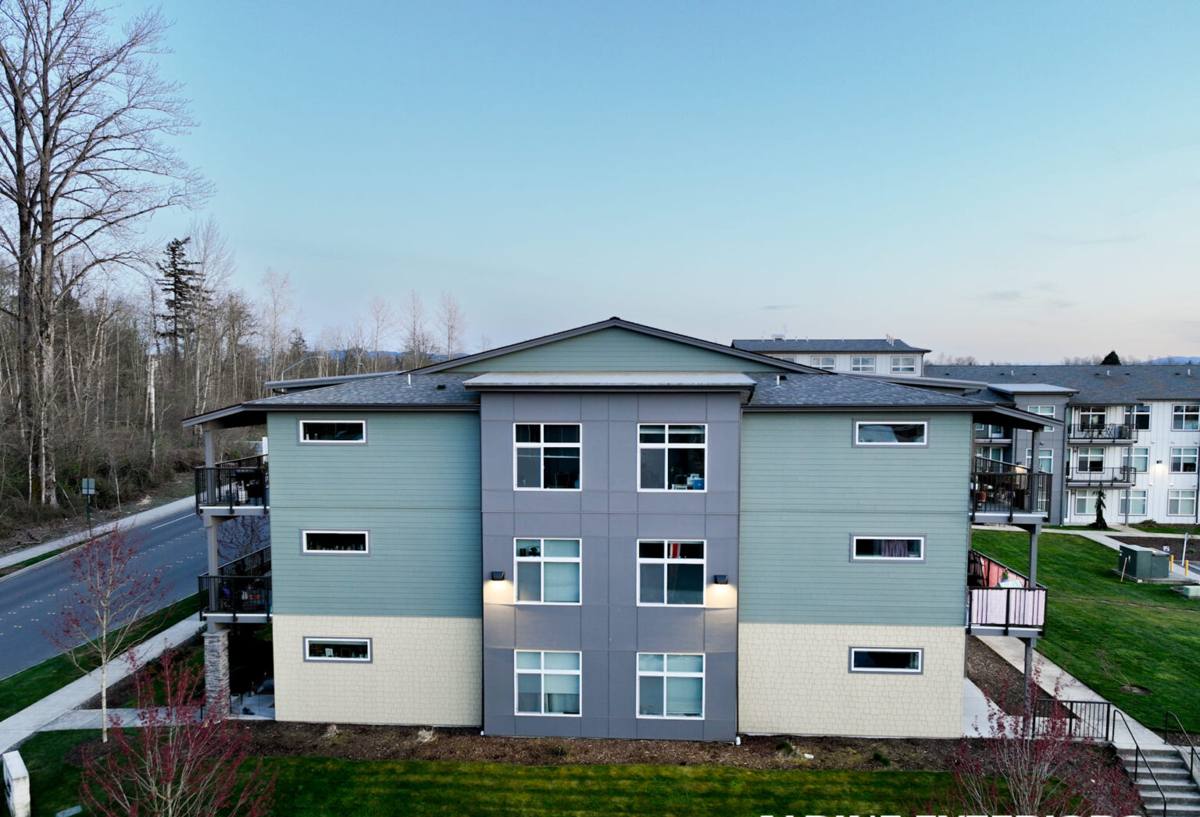
What Blaine's Climate Demands From Siding
Salt Air and Fastener Corrosion
Homes within a mile or two of the water take a steady dose of airborne salt. Over time this attacks unprotected or under-spec'd fasteners, trim connectors, and any exposed metal flashing. Rust streaks bleeding down a wall, or fasteners that back out and loosen boards, are almost always a sign that the wrong hardware was used for a marine-adjacent site. Corrosion-resistant fasteners and flashing aren't an upgrade here — they're the baseline.
Driving Rain and Water Management
Rain that comes in sideways off the water tests every horizontal seam, window head, and outside corner on a house. If house wrap isn't lapped correctly, if flashing isn't integrated in the right sequence, or if caulk is doing a job that proper overlap should be doing, water finds its way behind the siding. Once it's behind the cladding, the sheathing and framing pay the price — and that damage is invisible until it's expensive.
Moss, Algae, and the Long Wet Season
Whatcum County's siding rarely gets more than a few consecutive dry weeks at a stretch for much of the year. North-facing walls, shaded elevations, and anywhere airflow is blocked by landscaping stay damp longer, and that's where moss and algae establish first. Siding that can't dry between rain events — or that has a painted finish prone to holding moisture at the surface — will show green and black staining years before it should.
Why We Install James Hardie and Nothing Else
We don't install vinyl, LP SmartSide, cedar, primed spruce, or comparable fiber cement alternatives. That's a standard we hold across every job, not just Blaine's waterfront properties, and it comes down to how these products actually perform over decades of Pacific Northwest weather rather than how they perform in a showroom.
- Non-combustible material — fiber cement doesn't feed a fire the way wood-based products can, which matters for insurance conversations and long-term peace of mind.
- Engineered for moisture, not just painted against it — Hardie's HZ5 product line is formulated for climates like ours, where humidity and rain exposure are constant rather than occasional.
- ColorPlus factory finish — baked-on color resists fading and holds up to salt air far better than field-applied paint, and it doesn't require repainting on the same schedule wood siding does.
- Dimensional stability — it doesn't swell, warp, or split the way wood and wood-composite products can when they take on repeated moisture cycles.
- Backed by a real transferable warranty — one that's meaningful because the product's failure modes in this climate are well understood and rare when installed correctly.
None of this means other products are junk — vinyl is inexpensive and low-maintenance in the right setting, cedar has genuine appeal, LP SmartSide has its market. But for a house exposed to Blaine's combination of salt air, wind-driven rain, and sustained damp, we've made the professional call that fiber cement done right is what we're willing to put our name on.
Comparing Common Siding Options in a Coastal Whatcom County Climate
| Material | Moisture Behavior | Salt Air Durability | Maintenance |
|---|---|---|---|
| James Hardie Fiber Cement | Engineered HZ5 formulation resists moisture-driven swelling and rot | Strong with corrosion-resistant fasteners and correct installation | Occasional wash; factory finish holds color for years |
| Vinyl Siding | Doesn't absorb water but can warp or crack under wind and temperature swings | Fair; seams and J-channels can trap salt residue | Low, but color fades and can't be repainted easily |
| Cedar / Wood | Absorbs moisture; prone to rot, cupping, and splitting without diligent upkeep | Weak without frequent sealing and maintenance | High — refinishing on a recurring cycle |
| LP SmartSide | Engineered wood strand product; sensitive to cut-edge and seam moisture intrusion | Fair; depends heavily on installation detail and field-applied caulking | Moderate; edges and seams need ongoing inspection |
What a Correct Installation Actually Involves
The product is only part of the equation. A Hardie installation that fails to account for local exposure will still let water in, no matter how good the siding itself is. Correct work in Blaine means:
- Full moisture barrier inspection and repair — house wrap or building paper checked, lapped shingle-style, and repaired or replaced where the existing barrier is compromised.
- Proper flashing integration — window heads, sills, and any wall penetrations flashed so water is directed out and down, not caulked as an afterthought.
- Correct fastener spec — corrosion-resistant nails or screws driven to Hardie's specification, at the right depth and spacing, especially critical on exposures facing prevailing wind and salt drift.
- Rain screen or drainage gap where called for — giving water a path to drain and the wall assembly a chance to dry rather than trapping moisture against the sheathing.
- Correct joint and corner treatment — butt joints backed and sealed per manufacturer detail, outside corners built to shed water rather than collect it.
- Ground clearance and grade awareness — siding kept the proper distance from soil, decking, and hardscape so splash-back and standing water don't sit against the bottom course.
Our Process for a Blaine Job
Assessment
We start by evaluating the existing wall assembly — what's behind the current siding, where the house sits relative to wind and water exposure, and where prior water intrusion or moss growth is already visible. A house a block from the water gets a different level of scrutiny than one further inland.
Product and Detail Planning
We spec the right Hardie line and profile for the home's exposure and confirm flashing, fastener, and drainage details before any material goes up — not as a punch-list item after the fact.
Installation
Tear-off, barrier repair, flashing, and Hardie installation proceed in sequence, with each layer inspected before the next covers it. This is where the difference between a rushed job and a correct one actually shows up, and it's not visible once the siding is on.
Final Walkthrough
We walk the finished exterior with the homeowner, covering what maintenance (if any) is realistically needed and what to watch for over the first few seasons.
Signs Blaine Homeowners Should Watch For
- Green or black staining that returns quickly after cleaning, especially on north or shaded walls
- Soft spots, bubbling, or visible warping in existing siding boards
- Rust streaking below fasteners or trim connectors
- Paint or finish that's chalking, peeling, or fading unevenly
- Gaps opening at corners, butt joints, or around window trim
- Interior signs — musty smell, peeling interior paint near exterior walls, or visible staining on interior sheathing during other work
Maintenance After Installation
One of the practical advantages of a correctly installed Hardie system in a salt-air, high-rain environment is how little upkeep it demands compared to the alternatives. An occasional rinse to clear salt residue and organic buildup, a periodic visual check of caulking at penetrations, and prompt attention if any impact damage occurs is generally the extent of it. There's no repainting cycle to plan around and no annual sealing regimen — which matters in a climate where "get to it next dry spell" can mean waiting months.
Get an Estimate for Your Blaine Home
If you're dealing with moss staining, water intrusion, or aging siding on a Blaine or Ferndale property, we're happy to take a look and give you a straight assessment of what your home actually needs. Reach out for a free, no-pressure estimate — we'll walk the exterior with you and explain exactly what we see and what we'd recommend.