 Ferndale Exterior
 Cordata's Climate Is Hard on Decks
Homes in the Cordata area near Ferndale sit in a stretch of Whatcom County where marine air, frequent rain, and long stretches of gray, damp weather are simply part of life. That's good for the trees and the lawns, but it's tough on anything built outdoors — especially a deck. Salt-tinged air off the Sound corrodes cheap fasteners over time, driving rain finds every gap in flashing that wasn't done right, and the moss season here runs far longer than most homeowners expect, sometimes eight months or more depending on the year. A deck built for a drier climate, or built quickly without attention to drainage and airflow, will show it within a few seasons — soft spots, green film, fastener staining, boards that cup or hold water at the ends.
Composite decking exists specifically to handle this kind of exposure better than wood, but composite isn't a single product with one set of properties. The board itself, the way it's installed, and the substructure underneath all determine whether a Cordata deck holds up for fifteen years or starts causing problems in three. This page covers what actually matters for composite decking in this specific climate and area, not a generic overview, and it's written for homeowners deciding between a repair, a rebuild, or a first-time deck addition.
What a Correctly Built Composite Deck Needs Underneath
Framing and Joist Spacing
Composite boards flex differently than solid wood, and most manufacturers require tighter joist spacing than a traditional wood deck would use — commonly 16 inches on center, and often less for diagonal patterns or boards installed at an angle. Skipping this to save on lumber is one of the most common shortcuts we see on older or DIY-built decks, and it shows up as bounce, sag, and premature board wear. In a climate where the framing itself is also absorbing constant moisture, undersized or improperly spaced joists age faster and telegraph problems straight up through the decking.
Flashing Where the Deck Meets the House
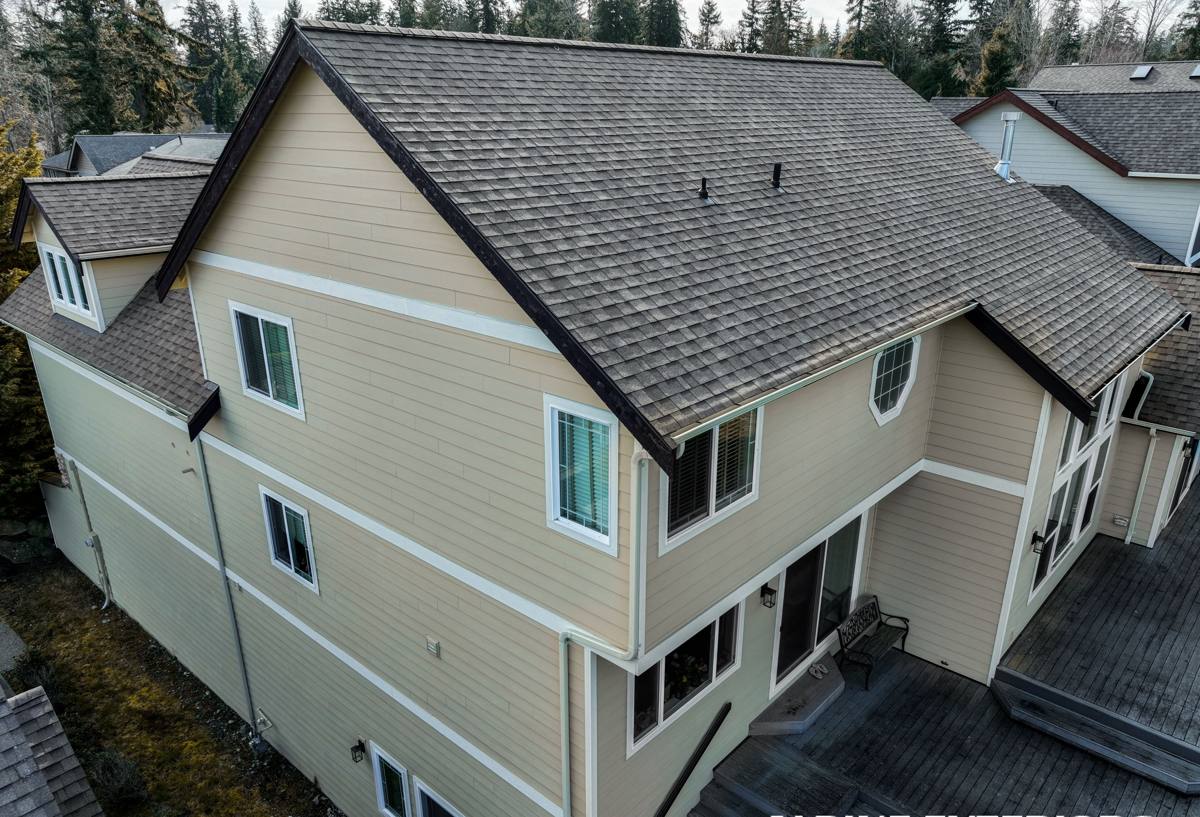
Ledger board flashing is where we see the most water damage on this style of home, composite decking or not. Driving rain off the Sound doesn't fall straight down — it comes in sideways, and a ledger connection without proper flashing and a water-resistant barrier will let moisture track behind the siding and into the rim joist over time. This is invisible from the top of the deck and can go unnoticed for years, which is exactly why it has to be done right the first time rather than patched later.
Drainage and Air Movement Under the Boards
Composite decking doesn't rot the way wood does, but the framing underneath it still can, and trapped moisture under a low deck with poor airflow is a common source of mold and mildew smell even when the boards themselves look fine. Proper grading under the deck, a gap between the bottom of the joists and the ground, and gapped board spacing that lets water actually drain through instead of pooling are all part of doing this correctly in a wet climate.
Choosing the Right Composite Board for This Climate
Not all composite decking is built the same, and the differences matter more here than they would in a drier region. Fully capped composite boards — where a polymer shell wraps the wood-plastic core on all sides — resist moisture absorption and staining far better than older-style or partially capped products, which can wick water at the cut ends and swell over time. In an area with this much annual rainfall, that difference compounds year after year.
Color and texture matter too. Very dark boards absorb more heat on the rare sunny days but, more relevantly for this area, lighter and mid-tone boards with a textured, wood-grain finish tend to show less algae and moss growth between cleanings than smooth, dark surfaces, which hold moisture film longer in shaded, low-airflow spots.
Railings, Fascia, and Trim
The decking boards themselves get most of the attention, but railings, fascia boards, and stair stringers see the same rain and salt exposure and are often finished in cheaper materials as a way to cut cost. Matching composite or aluminum railing systems to the decking, rather than mixing in untreated wood trim, keeps the whole structure aging at the same rate instead of having the trim fail years before the deck surface does.
Warranty Terms Are Part of the Product
Composite decking warranties are usually tied to correct installation — proper joist spacing, gapping, and fastening — and can be voided by shortcuts that aren't obvious to a homeowner looking at a finished deck. Working with an installer familiar with a specific manufacturer's requirements protects that warranty; it's one more reason the installation details matter as much as the board you choose.
| Decking Type | Moisture Behavior | Maintenance | Typical Cost Range* |
|---|---|---|---|
| Pressure-treated wood | Absorbs water, needs sealing to resist rot and moss | Annual cleaning and re-sealing | Lowest upfront |
| Basic / uncapped composite | Can wick moisture at cut edges over time | Periodic cleaning, some fading/staining possible | Mid-range |
| Fully capped composite | Strong resistance to moisture, staining, and mold growth | Occasional washing, minimal upkeep | Mid-to-upper range |
| PVC / cellular composite | Essentially non-absorbent, best moisture performance | Lowest maintenance of the group | Highest upfront |
*Actual pricing depends on board profile, railing choices, deck size, and site conditions — we quote after seeing the project, not off a price list.
Moss, Algae, and Mildew: What to Expect and How to Manage It
Even a well-built composite deck in the Cordata area will get some biological growth during the wet months, especially in shaded corners or under overhangs where direct sun rarely reaches. Composite doesn't feed mold and algae the way untreated wood does, but organic debris — leaves, pollen, seed pods — sitting on the surface through a long damp season gives it something to grow on regardless of the material. The good news is that a properly spaced, fully capped composite deck is dramatically easier to keep clean than a wood one, and doesn't need sealing or staining to stay protected.
- Sweep debris off the deck regularly through fall, when leaf litter is heaviest
- Rinse with a garden hose and a soft-bristle broom every few weeks during the wet season
- Use a cleaner made for composite decking, not a wood deck cleaner or straight bleach, which can dull the surface finish
- Avoid pressure washing at close range — it can etch or streak the cap layer on composite boards
- Keep planters and furniture legs off the boards directly in shaded areas; use pads or feet to allow airflow underneath
How We Approach a Composite Decking Project in Cordata
Assessment and Design
We start by looking at the site itself — sun exposure, drainage slope, how close the deck sits to grade, and how the house's roofline and gutters shed water near the build area. In this climate, water management planning happens before a single board is chosen, not after.
Structural Work First
Any existing framing gets inspected before we build on top of it or replace it. If ledger flashing, joist spacing, or footings don't meet current standards for composite decking loads, we address that first — building a good deck surface on a compromised structure just hides the problem for a while.
Installation and Finish Details
Hidden fastener systems, proper board gapping for drainage and thermal movement, and clean edge and stair details are handled to manufacturer specification, which also keeps the product warranty intact. We walk the finished deck with the homeowner before calling the job done.
Timing a Project Around Whatcom County Weather
Composite decking can technically be installed in almost any weather, but framing and flashing work go better, and cure and set up properly, during drier stretches of the year. We plan structural work around forecasted dry windows where possible, which also gives fresh flashing and sealants time to set before the next round of rain moves through.
Mistakes We Commonly Fix or Avoid
A lot of our composite decking calls in this area start as a repair or a "why does this look bad already" visit rather than a new build. The recurring issues are consistent:
- Joists spaced for wood decking rather than the tighter spacing composite manufacturers require
- Ledger boards attached without flashing or a proper water-resistant barrier against the house
- Boards butted tight with no expansion gap, causing buckling as temperature and moisture levels shift
- Low-quality or mismatched fastener hardware that stains or corrodes faster than the decking itself
- Decks built low to grade with no ventilation gap, trapping moisture underneath year-round
Every one of these is preventable with correct planning up front, and it's almost always cheaper to do it right the first time than to open up a deck and fix it later.
Permits and Local Considerations
Deck projects in Whatcom County and the Ferndale area typically require a permit once the structure exceeds a certain height above grade or is attached to the home, and setback rules apply depending on your lot and zoning. Requirements can vary based on your specific property, so we handle that conversation as part of planning the project rather than leaving it for the homeowner to sort out separately.
Why Local Experience in Cordata Matters
A crew that only builds decks in drier parts of the state can get away with shortcuts on flashing, spacing, and drainage that simply don't hold up here. Working regularly in and around Ferndale means we're accounting for this area's rain patterns, moss growth, and salt-air exposure as a baseline, not an afterthought — and we're a known, reachable crew if a question comes up years after the build, not a name from an out-of-area lead-generation site.
Ready to Talk About Your Deck?
If you're planning a new composite deck or replacing one that hasn't held up in Cordata's weather, we're happy to take a look and walk you through honest options for your home and budget. Fill out the form below for a free, no-pressure estimate — no obligation, just straight answers.