 Ferndale Exterior
 Why Custer's Climate Is Hard on a Deck
Custer sits in the part of Whatcom County where marine air off the Strait of Georgia and Drayton Harbor meets open farmland and long, wet winters. That combination is tough on any outdoor structure, and it's especially tough on wood decking. Salt-laden air corrodes fasteners and hardware faster than it does further inland, wind-driven rain finds its way into every joint and end-cut, and the region's long stretch of overcast, damp weather from fall through spring keeps surfaces wet longer than most decking products are designed to handle. Add in the moss and algae that thrive in that shade and moisture, and a deck built without this climate in mind starts showing problems within a few seasons — not decades.
Composite decking, installed correctly, handles this environment far better than untreated or even pressure-treated wood. But "composite" isn't one product — the board itself, the substructure underneath it, and the hardware holding it together all have to be chosen and installed with Custer's specific conditions in mind, not just installed to a generic manufacturer spec sheet.
What Composite Decking Actually Is
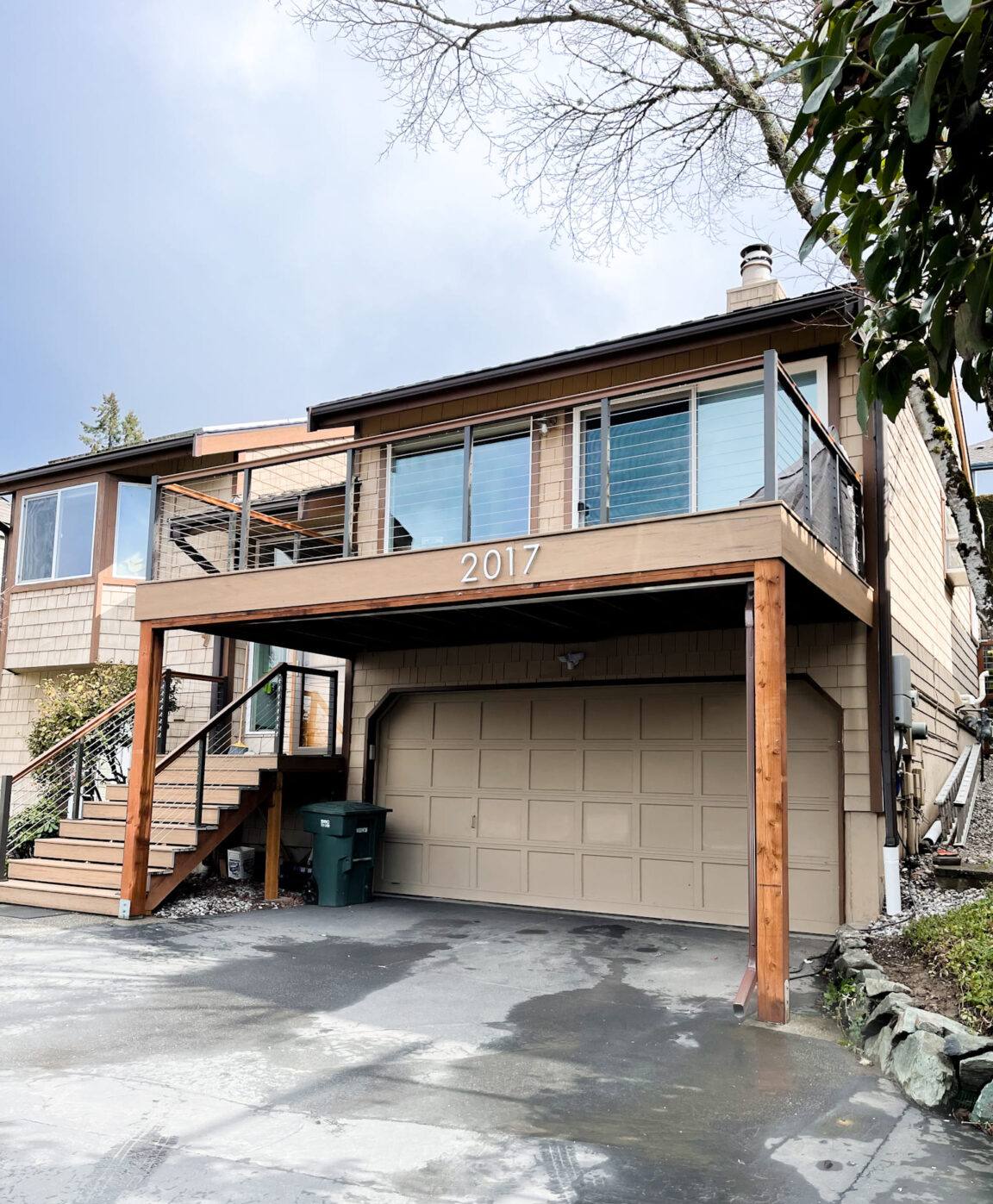
Composite decking boards are made from a blend of wood fiber and recycled plastic, formed under heat and pressure into a board that resists rot, doesn't splinter, and doesn't need staining or sealing the way wood does. Most modern boards on the market are "capped" — meaning the board has a solid polymer shell wrapped around the wood-plastic core, which is what actually gives it its water resistance and stain resistance. Older or budget "uncapped" boards leave the wood-fiber core exposed on some or all sides, which lets moisture into the board itself over time, especially in a climate as consistently wet as ours.
For a coastal-influenced property like a home in Custer, we default to fully capped composite boards — capped on all four sides, not just the top — because that's the detail that actually keeps moisture and salt spray out of the core over the long run. It costs a bit more up front than a partially capped or uncapped board, but it's the difference between a deck that still looks good in ten years and one that starts swelling, discoloring, or flaking at the cut ends within a few.
Composite vs. Other Decking Materials
| Material | Moisture/Salt Performance | Maintenance | Typical Lifespan Here |
|---|---|---|---|
| Capped composite | Strong — sealed core resists moisture and salt air | Periodic washing, no staining/sealing | 25-30+ years |
| Pressure-treated wood | Weak to moderate — absorbs moisture, prone to cupping and rot | Annual cleaning, restaining every 1-3 years | 10-15 years with upkeep |
| Cedar | Moderate — naturally rot-resistant but still absorbs water | Regular sealing/staining, moss removal | 15-20 years with upkeep |
| PVC decking | Very strong — fully synthetic, no wood fiber to absorb moisture | Low — occasional washing | 25-30+ years |
PVC and fully capped composite perform similarly well against this region's moisture and salt exposure. Where composite tends to win for Custer homeowners is a more natural wood-grain look and generally lower material cost than premium PVC lines — the trade-off is worth discussing based on your specific goals for the deck.
The Substructure Matters as Much as the Boards
A composite deck is only as good as what's underneath it, and this is where a lot of decks in wet climates actually fail — not at the visible surface, but in the framing. Standard kiln-dried lumber joists, even pressure-treated ones, can trap moisture underneath a composite deck surface where airflow is limited, leading to rot in the frame years before the boards themselves show any wear.
What we do differently for this climate
- Use joist tape or a butyl flashing membrane over every joist top to keep fasteners from creating a moisture entry point
- Flash and seal the ledger board connection to the house thoroughly — this is the single most common source of hidden water damage on attached decks
- Maintain proper spacing and slope for drainage so water doesn't pool under the deck or against the house
- Use corrosion-resistant, coastal-rated fasteners and hardware (stainless steel or heavy hot-dip galvanized) rather than standard exterior-grade hardware
- Leave adequate ventilation gaps between boards and around the perimeter so the structure can dry out between rain events
None of this is visible once the deck is finished, which is exactly why it's the part that gets skipped by crews trying to save time or material cost. It's also the part that determines whether a deck is still solid in fifteen years or needs structural repair in five.
Moss, Algae, and Salt Spray: What Custer Decks Actually Deal With
Composite decking doesn't rot the way wood does, but it isn't maintenance-free in this climate, and it's worth being honest about that. The same shade and moisture that make Whatcom County green also make it a good environment for moss and algae growth on any outdoor surface, composite included. Decks positioned under tree cover or on the shaded side of a house will need more frequent cleaning than decks in full sun.
Properties closer to the water or exposed to prevailing wind off the Strait also pick up salt spray over time. Salt itself doesn't damage a properly capped composite board, but it does accelerate corrosion on any exposed hardware, railings, or fasteners that aren't rated for coastal exposure — another reason hardware selection matters as much as the decking material itself.
Maintenance that actually keeps a composite deck looking right here
- Rinse or sweep debris regularly, especially fallen leaves and needles that trap moisture against the board
- Wash the deck surface with a soft-bristle brush and mild soap-and-water solution a couple times a year — pressure washing is generally unnecessary and can damage the board's cap if done incorrectly
- Treat visible moss or algae promptly with a composite-safe cleaner rather than letting it establish, since it's much easier to remove early
- Check railing posts, stair stringers, and any exposed metal hardware periodically for corrosion, particularly on decks closer to the coast
- Keep gutters and downspouts near the deck clear so runoff isn't draining directly onto or under the deck surface
Our Installation Process
We approach every composite deck project in the Ferndale and Custer area the same structured way, because skipping steps is exactly how decks end up with the moisture problems described above.
- Site and structure assessment — we evaluate existing framing (for replacement projects), soil drainage, grade, and how the deck will interact with the house's water management (gutters, siding, entry points)
- Design and layout — board direction, stair placement, railing style, and any picture-framing or accent details, planned around both function and the home's exposure to wind and rain
- Framing and flashing — footings, ledger attachment, joist layout, and full moisture protection detailing before a single composite board goes down
- Decking installation — hidden or face-fastened as appropriate to the product, with correct spacing for drainage and thermal movement
- Railings, stairs, and trim — installed with coastal-rated hardware throughout
- Final walkthrough — we go over care recommendations specific to your deck's sun exposure and location before we consider the job done
Cost Factors for a Custer Composite Deck
Every deck is priced around its own footprint, structure, and material selection, so we won't quote a number without seeing the site — but these are the variables that move the price most:
| Factor | Why It Matters |
|---|---|
| Deck size and shape | Square footage and complexity (curves, multiple levels) drive both material and labor |
| Board tier | Fully capped, premium composite lines cost more upfront than partially capped or entry-level boards |
| Substructure condition | New framing vs. reusing existing joists affects both cost and long-term moisture performance |
| Height and stairs | Elevated decks need more substructure, railings, and stair framing |
| Site access and exposure | Coastal-rated hardware and extra flashing detail for exposed sites add modest material cost but protect the investment |
| Railing style | Composite, metal cable, or glass railing systems vary significantly in price |
Broadly, homeowners in this area should expect composite deck projects to run from the mid-thousands for a smaller, simple deck into the higher five figures for larger, multi-level, or feature-heavy builds. We'll give you an actual number after seeing the site and understanding what you want out of the space.
Why Hire a Crew That Already Works This Area
Custer isn't a large town, and its decking challenges aren't the same as a dry inland climate or even a fully urban part of Whatcom County. A crew that regularly works Ferndale, Custer, and the surrounding coastal-influenced communities already knows which framing details actually hold up here, which fastener grades are worth the extra cost, and how much shade and moisture a given property typically deals with based on its position relative to the water and tree cover. That local knowledge shows up in fewer callbacks and a deck that's still solid well past the point where a generic installation would be showing rot at the ledger board or corrosion at the railing posts.
We're a Ferndale-based exteriors crew, and Custer is well within the area we work regularly — we're not driving in from out of region to bid a job and disappear if something needs attention later.
A Quick Checklist Before You Choose a Decking Contractor
- Ask specifically whether boards are capped on all four sides, not just the top
- Ask what fastener and hardware grade they use, and whether it's rated for coastal/salt exposure
- Ask what moisture protection goes over the joists and at the ledger board connection
- Ask about drainage slope and ventilation gap planning, not just board color and style
- Confirm they're familiar with local permitting requirements for deck size, height, and railings
If a contractor can't answer these clearly, that's worth noting before you sign anything.
If you're weighing a new composite deck or a replacement for an aging wood deck in Custer or elsewhere around Ferndale, we're happy to take a look and give you a straightforward, no-pressure estimate — just fill out the form below and we'll get in touch.