 Ferndale Exterior
 Why Windows Fail Faster Near Lummi Nation
Homes on the Lummi Peninsula and surrounding shoreline take a different kind of weathering than a house a few miles inland. The water is close on more than one side, which means near-constant salt-laden air, wind-driven rain that hits window assemblies at an angle instead of straight down, and long stretches of damp, low-light weather that keep wood and vinyl surfaces wet longer than they'd stay in a drier part of Whatcom County. Add in the moss and algae growth that thrives here for most of the year, and you've got an environment that's genuinely harder on window frames, seals, and trim than what a typical installer sees on a routine job.
None of that means windows in this area are doomed to fail early. It means the installation has to account for the exposure from the start — the flashing details, the sealant choice, the frame material, and the way the window ties into the wall's water management all matter more here than they would somewhere sheltered. That's the difference between a window that looks fine for two years and one that performs for two decades.
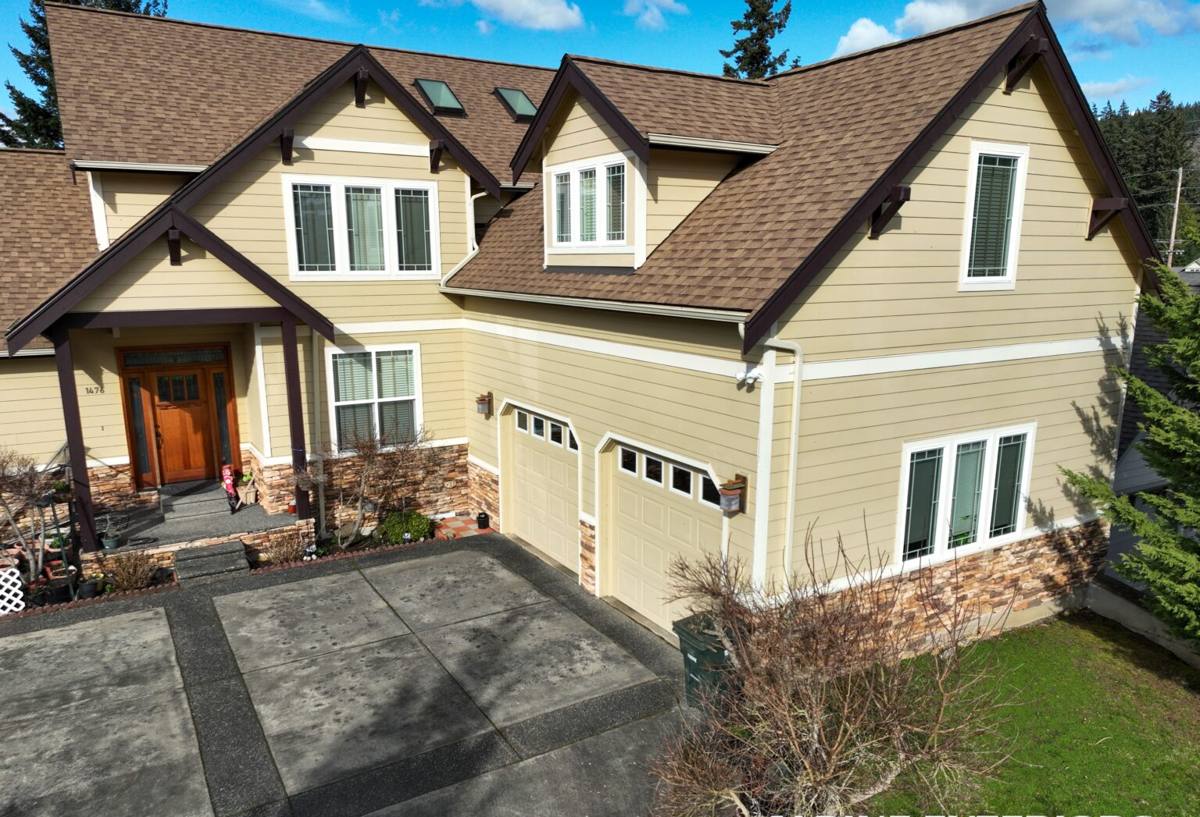
Signs Your Current Windows Are Losing the Fight
Before talking about new installation, it's worth knowing what coastal wear actually looks like, because homeowners often mistake early failure for normal aging.
- Black or green streaking below the window sill, especially on north- or west-facing walls that get less direct sun to dry out
- Soft or discolored wood trim around the frame — a sign moisture has been sitting against it, not just landing on it
- Fogging or a permanent haze between the panes of double-pane glass, meaning the seal has broken and the gas fill is gone
- Drafts you can feel with a hand near the frame on a windy day, even with the window latched
- Difficulty opening or closing — often a sign the frame has swelled, warped, or the balance hardware has corroded
- Visible gaps between the window frame and the siding or trim, which is a direct path for wind-driven rain
Any one of these on its own might just need a repair. Several together, especially on a home over 15-20 years old, usually means it's time to talk about full replacement rather than patching.
What a Correct Window Installation Actually Involves
A window installation is judged on what you can't see once it's done — the flashing and sealing behind the trim, not the window itself. Most window failures we get called out to fix in this area aren't a bad window; they're a window that was installed without proper water management around it.
Flashing and Water Management
Every opening needs a sill pan or sloped sill flashing so any water that does get past the window sheds outward instead of pooling. Side and head flashing need to be layered correctly — think shingles, where each piece overlaps the one below it — so water is always directed down and out, never trapped behind the siding. In a driving-rain environment like this, skipping or shortcutting this step is the single most common cause of hidden rot we find behind window trim.
Air and Water Sealing
The gap between the window frame and the rough opening needs to be sealed with the right combination of sealant and backer material — not just foamed shut, which can trap moisture rather than let it escape. Exterior sealant joints need to be compatible with the siding material and rated for continuous UV and moisture exposure, since this area doesn't get long dry stretches to let materials off-gas or cure the way they would in a drier climate.
Integration With the Wall Assembly
The window needs to tie properly into the house wrap or building paper already on the wall, with everything shingled correctly so water always moves toward the outside of the assembly. If the existing wall wrap is damaged or missing behind the old window — which we find often on older Whatcom County homes — that gets repaired as part of the job, not ignored.
Choosing the Right Window for a Marine Environment
Frame material matters more here than in most parts of the state. Salt air accelerates corrosion of metal hardware and can be harder on some finishes than fresh air alone. Here's how the common options actually compare for a coastal Whatcom County property:
| Frame Material | Salt Air / Moisture Behavior | Maintenance | Typical Lifespan |
|---|---|---|---|
| Vinyl | Won't rot or corrode; UV exposure can cause slow fading over many years | Low — occasional cleaning | 20-30+ years |
| Fiberglass | Excellent — very stable in moisture and temperature swings, resists warping | Low | 30-40+ years |
| Wood (unclad) | Poor unless meticulously maintained — prone to rot and moss growth in constant damp | High — regular painting/sealing | Varies widely with upkeep |
| Wood with aluminum/vinyl cladding | Good on the exterior face; interior wood still needs a dry environment | Moderate | 20-30 years with care |
We steer most homeowners in this area away from unclad wood exteriors on walls with direct weather exposure — not because wood windows are a bad product, but because keeping bare wood properly painted and sealed against near-constant coastal moisture is a maintenance commitment most people don't want to sign up for. Vinyl and fiberglass carry that burden far better and are what we install on the majority of jobs out here.
Our Installation Process
- On-site assessment — we check the existing openings, look for hidden rot or wrap damage, and measure for accurate ordering
- Product selection — we walk through frame material, glass package, and hardware options based on the wall's sun and wind exposure
- Removal — old windows come out carefully to protect interior finishes and expose the rough opening for inspection
- Repair as needed — any soft framing, damaged sheathing, or compromised house wrap gets fixed before anything new goes in
- Flashing and sill pan installation — the water management layer goes in first, correctly lapped and sealed
- Window setting and shimming — the unit is leveled, plumbed, and squared so it operates smoothly and seals evenly
- Insulation and air sealing — the gap around the frame is filled and sealed without trapping moisture
- Exterior trim and sealant finish — trim is reinstalled or replaced and final sealant joints are tooled and finished
- Walkthrough — we test every operable window and go over care before we leave
Cost Factors for Window Installation in This Area
Exact pricing depends on the specifics of your home, but the factors that move the number up or down are consistent. Broadly, most homeowners in this area are looking at a range from a few hundred dollars per window for a straightforward vinyl replacement up into the low thousands per window for larger units, higher-performance glass, or fiberglass frames — with total project cost depending heavily on how many openings are involved and what condition the framing is in underneath.
| Factor | Why It Affects Cost |
|---|---|
| Frame material | Vinyl is typically the most affordable; fiberglass costs more upfront but needs less long-term upkeep |
| Window size and quantity | Larger openings and whole-house projects have per-unit efficiencies but higher total cost |
| Hidden rot or framing damage | Discovered during removal, this adds labor and material before the new window can go in |
| Glass package | Upgraded low-E coatings or triple-pane glass raise material cost but improve comfort and efficiency |
| Access and site conditions | Second-story openings, tight lot access, or long driveways can add labor time |
Why a Crew That Already Works Lummi Nation Matters
This area isn't hard to work in, but it rewards familiarity. A crew that's already done jobs here knows how exposed a given wall orientation tends to be, how quickly moss builds back up on north-facing trim, and what kind of wear to expect from a house that's been sitting a few hundred yards from open water for decades. That's not something you can fully substitute with a generic estimate from a crew that mostly works subdivisions well inland.
It's also worth knowing that Lummi Nation is sovereign tribal land, and depending on where a property sits, permitting and code requirements can differ from what applies inside Ferndale city limits or unincorporated Whatcom County. We don't guess on that — if a project needs sign-off through a different process than a standard county permit, we find out up front rather than mid-job. Ferndale Exterior Co has worked this stretch of coastline long enough to know when to ask that question before pulling a single window.
Keeping New Windows Performing Long-Term
A correctly installed window still benefits from basic upkeep in this climate. A little attention a couple times a year goes a long way toward protecting the investment:
- Rinse salt residue and grime off frames and glass a few times a year, especially on walls facing open water
- Check and clear weep holes at the base of the frame so water can drain instead of pooling
- Inspect exterior sealant joints annually and have any cracked or shrunk caulk redone before it lets water in
- Remove moss and algae from surrounding trim and siding before it holds moisture against the wall
- Test locks and operating hardware seasonally — corrosion shows up first as stiffness, not visible rust
If you're seeing drafts, fogged glass, soft trim, or windows that just don't shut right anymore, it's worth having someone take a real look before winter's driving rain finds every weak spot. Ferndale Exterior Co offers free, no-pressure estimates for window installation in Lummi Nation and the surrounding area — fill out the form below and we'll come take a look at what your home actually needs.