 Ferndale Exterior
 Windows on Lummi Island Face a Tougher Job Than Most
A window on a inland Whatcom County home and a window on a Lummi Island home are not doing the same work, even if they came off the same production line. Island homes sit closer to salt water, catch more direct wind, and stay damp longer through the winter than homes a few miles inland around Ferndale. That combination wears down seals, finishes, and hardware faster, and it shows up first as drafts, fogged glass, and higher heating bills before anyone notices a problem with the frame itself.
We're not saying every window on the island is a lost cause — plenty of homes have solid, well-built windows that just need better sealing or a smarter glass package. But when we do recommend replacement, it's because the existing units are actively costing the homeowner money and comfort, not because we're trying to sell a full house of new windows on a sales pitch.
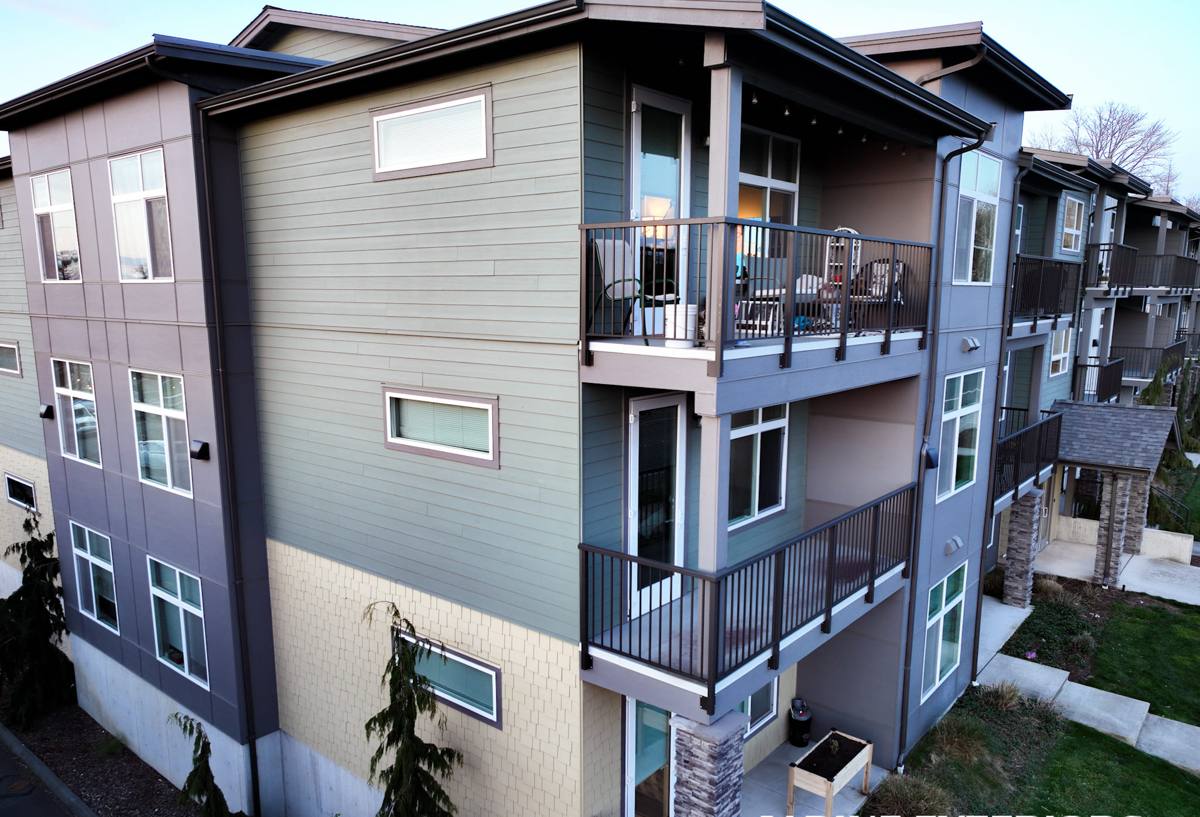
What Salt Air, Driving Rain, and Moss Season Actually Do to a Window
Salt Air and Metal Hardware
Salt-laden air corrodes exposed metal — hinges, cranks, locks, and screws — well before the glass or the frame material itself gives out. Once hardware starts to seize or pit, a window stops closing tightly, and a window that doesn't close tightly is not insulating anything, no matter how good the glass is. This is one of the most common early failures we see on waterfront and near-waterfront properties.
Wind-Driven Rain
Lummi Island catches wind off the water with less to slow it down than a sheltered inland lot would get. Wind-driven rain doesn't just fall on a window, it gets pushed sideways into every gap in the flashing, trim, and sealant. A window that would perform fine in a calm rain can still leak under wind-driven conditions if the installation details weren't built for that exposure — which is a flashing and installation issue as much as a window issue.
Moss and Sustained Dampness
The long moss season across this part of Whatcom County means wood trim, sills, and any organic-material components around a window stay damp for extended stretches of the year. Damp wood invites rot, and rot around a window frame undermines the seal even if the window unit itself is fine. Keeping moss and standing moisture off the trim is as much a part of window performance here as the glass package is.
What "Energy Efficient" Actually Means for This Climate
Energy-efficient windows get marketed heavily around U-factor and R-value, and those numbers matter, but for a Lummi Island home the bigger performance question is often air and water sealing, not just insulation value. A window with excellent glass but a poor seal will still leak air and let moisture behind the trim. We look at the whole package:
- Low-E glass coatings to reduce heat loss in winter and heat gain in summer
- Multi-point locking hardware that pulls the sash tight against the weatherstripping, which matters more here given the wind exposure
- Frame material that resists corrosion and doesn't require repainting every few years
- Properly detailed flashing and sill pans that shed wind-driven rain instead of trapping it
- Weep systems that stay clear so any moisture that does get in has somewhere to go
Frame Material Comparison for Coastal Exposure
| Frame Material | Salt Air / Moisture Behavior | Maintenance | Typical Trade-offs |
|---|---|---|---|
| Vinyl | Doesn't corrode or rot; handles moisture well | Low — occasional cleaning | Limited color options; can expand/contract with temperature swings |
| Fiberglass | Very stable in moisture and temperature; strong corrosion resistance | Low | Higher upfront cost than vinyl |
| Aluminum-clad wood | Exterior resists weather; interior wood needs protection from any water intrusion | Moderate — depends on seal integrity over time | Attractive interior wood look, but a compromised seal risks the wood core |
| Bare wood | Most vulnerable to sustained dampness and moss-season moisture | High — regular painting/sealing required | We generally steer island clients away from this unless it's a restoration where matching the original look matters more than long-term upkeep |
We don't push one brand or material on every home. The right call depends on the home's exposure, the look the owner wants, and how much upkeep they're willing to commit to. What we won't do is install a frame material that's a poor match for a home's actual wind and moisture exposure just because it's a lower upfront cost — that trade-off tends to show up as a bigger repair bill five or ten years later.
Signs Your Current Windows Are Costing You Money
Before recommending replacement, we look for these warning signs. If you're noticing more than one or two of these, it's worth having someone take a closer look:
- Visible condensation or fogging between panes of double-glazed glass (a failed seal, not a cleaning issue)
- A noticeable draft near the frame when it's windy outside
- Cranks, locks, or hinges that are stiff, corroded, or no longer latch fully
- Soft or discolored wood trim around the window opening
- Visible moss or persistent green staining on sills or exterior trim
- A heating bill that's climbed noticeably without a change in usage
- Paint or finish that's peeling or bubbling around the window perimeter
Our Process for Window Replacement
- On-site assessment. We check the window units themselves, but just as important, we check the flashing, sill, and trim condition, since a lot of performance problems trace back to the installation, not the glass.
- Honest recommendation. If a window can be resealed or the hardware serviced instead of replaced, we'll say so. We'd rather earn repeat work than sell a job that isn't needed.
- Product selection. We walk through frame material, glass package, and hardware options suited to the home's specific exposure — waterfront-facing sides often get a different spec than a sheltered side of the same house.
- Removal and prep. Old units come out carefully to check for hidden rot or water damage behind the trim before anything new goes in — a step that's easy to skip and easy to regret skipping.
- Installation with proper flashing. This is where a lot of window jobs succeed or fail long-term. We detail flashing and sealant specifically for wind-driven rain exposure, not a generic inland install.
- Final check and walkthrough. We test operation, confirm the seal, and go over basic maintenance specific to a coastal, moss-prone environment.
Choosing the Right Window for a Lummi Island Home
| Consideration | Why It Matters Here |
|---|---|
| Sun and wind exposure by elevation | Waterfront-facing windows generally need more corrosion-resistant hardware and a stronger wind-load rating than sides of the home sheltered by trees or terrain |
| Existing trim condition | If trim is already showing moss staining or softness, that needs to be addressed as part of the job, not left in place under new windows |
| Glass package | Low-E coatings help with both winter heat loss and summer glare off the water |
| Hardware finish | Marine-grade or corrosion-resistant hardware finishes hold up longer than standard finishes in salt air |
| Budget and timeline | Full-house replacement isn't always necessary in year one — phased replacement by exposure (worst-affected sides first) is often the more practical approach |
Why a Crew That Already Works Lummi Island Matters
Getting materials and crews to and from the island means working around ferry schedules, which affects how a job gets planned and staged — not something a contractor unfamiliar with the island factors in ahead of time. Beyond logistics, a crew that's already worked homes here knows which sides of a house typically take the worst weather, what moss and moisture damage tends to look like before it's obvious, and how to detail flashing for wind-driven rain rather than defaulting to a standard inland installation. That familiarity shows up in fewer surprises and a tighter, more weather-appropriate install.
After Installation: Keeping Windows Performing in This Climate
New windows aren't maintenance-free on the island, but they should need far less attention than what you're replacing. A few habits go a long way:
- Rinse salt residue off exterior frames and hardware periodically, especially after storms
- Keep gutters and nearby trim clear of moss buildup so trapped moisture doesn't sit against the window
- Operate cranks and locks through their full range a few times a year so hardware doesn't seize
- Have seals and flashing checked every few years, particularly on the sides of the house facing the water
If you're dealing with drafty, foggy, or hard-to-operate windows on Lummi Island, or you're just planning ahead for a home that's showing early wear from the salt air and rain, we're happy to take a look. Reach out through the form below for a free, no-pressure estimate — we'll give you a straight answer on what actually needs doing and what can wait.