 Ferndale Exterior
 Storm Damage Roofing in Cordata: A Different Kind of Wear
Cordata sits close enough to Bellingham Bay and the open flats of Whatcom County that roofs here take a specific combination of punishment: salt-laden air drifting in off the water, driving rain that comes in sideways during a real blow, and a moss season that runs longer than most homeowners expect. None of these alone is dramatic. Together, over years, they wear down fasteners, flashing, and shingle mat faster than the same roof would age in a drier, calmer part of the state. When a storm hits, it's rarely the whole roof that fails — it's the spot that was already weakened by salt corrosion or trapped moisture that finally gives.
Storm damage repair in this area isn't just about patching what obviously broke. It's about finding the damage a homeowner can't see from the ground, understanding why it happened here specifically, and fixing it in a way that holds up through the next round of wind and rain — not just until the next inspection.
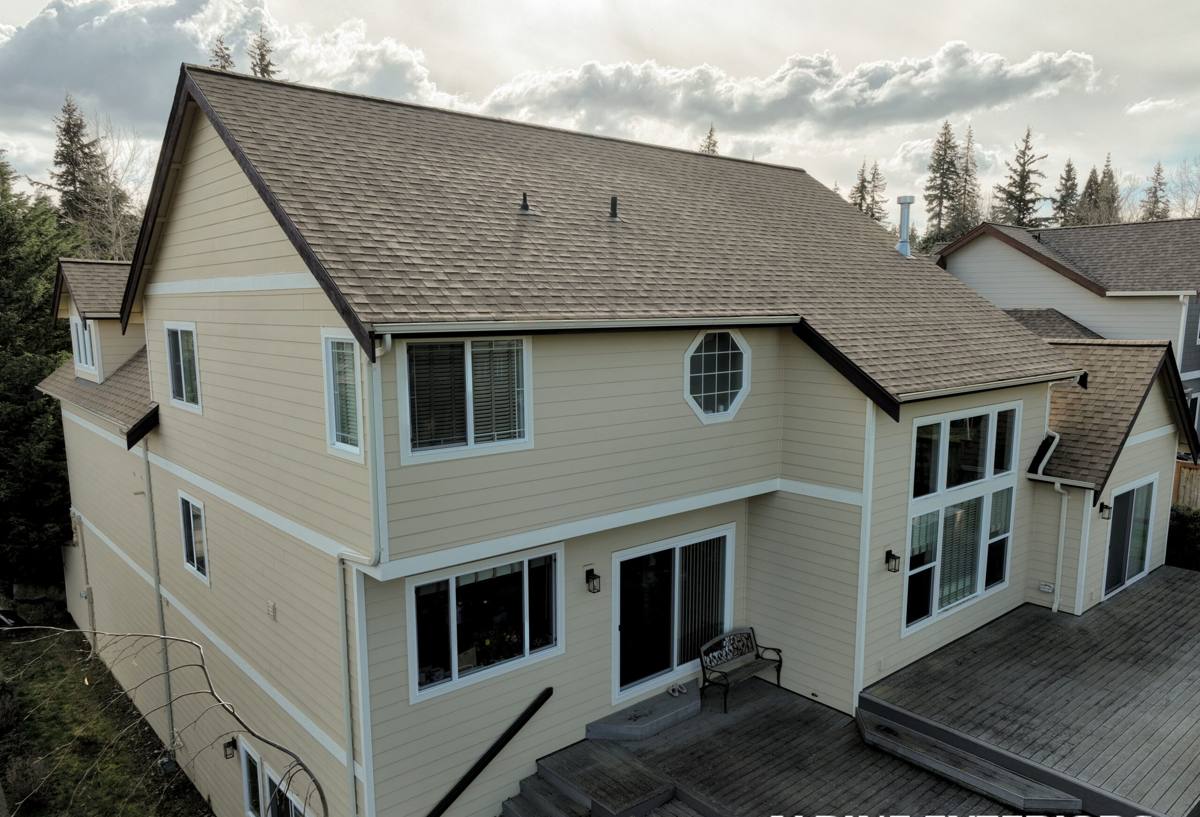
What Actually Counts as Storm Damage
Homeowners often think of storm damage as missing shingles or a visible hole. In practice, most of the damage we find after a Whatcom County windstorm or heavy rain event is less obvious than that.
Wind-Related Damage
Sustained wind and gusts lift shingle edges and break the adhesive seal between shingle courses, even when nothing physically blows off. Once that seal is broken, wind-driven rain can work underneath on the next storm, even though the roof still looks intact from the street. Ridge caps and hip lines take the worst of it because they're the most exposed edges on the roof.
Water Intrusion
Driving rain finds any gap in flashing around chimneys, skylights, vent pipes, and roof-to-wall transitions. In Cordata's climate, these gaps don't need to be large — a persistent, low-volume leak that runs for months during our wet season causes more structural damage than one dramatic storm event, because it has time to soak into decking and framing before anyone notices a stain on the ceiling.
Moss and Debris Damage
Moss isn't cosmetic. It holds moisture against the shingle surface, lifts shingle edges as it grows, and works its way under flashing over time. A storm that drops branches or heavy debris onto a moss-covered section of roof does more damage than the same impact on a clean roof, because the moss has already compromised the shingle's grip and the decking underneath may already be softened.
What a Correct Repair Involves
A storm damage repair that's done right starts with an honest inspection, not a quick patch. That means getting on the roof (or using a ladder and camera when access or safety doesn't allow it) and checking not just the obvious damage point but everything around it — because storm damage rarely stays contained to one spot.
Matching Materials
Shingle color and profile change over time due to sun and salt exposure, so a patch using brand-new shingles next to five-year-old ones will stand out. We aim for the closest reasonable match and are upfront when an exact match isn't possible, rather than surprising a homeowner with a patchwork roof.
Flashing and Underlayment
Most of the leaks we trace back start at flashing, not the shingle field. A correct repair replaces compromised flashing rather than caulking over it, and checks that underlayment beneath the repaired area is still doing its job — caulk is a short-term fix, not a repair.
Decking Condition
If water has been getting in for a while, the plywood or OSB decking underneath may be soft or delaminated. Repairing shingles over damaged decking doesn't fix the underlying problem — it just hides it until the next storm. We check decking condition any time there's evidence of a longer-term leak, not just fresh storm damage.
Our Process for Cordata Storm Repairs
- Inspection and documentation. We assess the full roof, not just the reported damage area, and document findings with photos for the homeowner's records and any insurance claim.
- Honest scope of work. We explain what's storm-caused, what's pre-existing wear, and what can wait versus what needs attention now.
- Temporary protection if needed. If a repair can't happen immediately and there's active water intrusion, we can tarp or otherwise weatherproof the area to prevent further damage.
- Repair. Flashing, decking, and shingle work completed to match the existing roof as closely as possible.
- Follow-up check. We confirm the repair is holding, particularly after the next significant rain event.
Repair or Replace? How We Help You Decide
Not every storm-damaged roof needs full replacement, and not every roof that "just needs a patch" should stop there. The right call depends on the roof's age, how widespread the damage is, and what we find once we're actually up there.
| Factor | Leans Toward Repair | Leans Toward Replacement |
|---|---|---|
| Roof age | Under 12-15 years, otherwise sound | Nearing or past expected service life |
| Damage extent | Isolated to one section or slope | Spread across multiple slopes or the ridge |
| Decking condition | Solid, no soft spots | Widespread soft or delaminated decking |
| Moss history | Minimal, well-maintained | Long-term moss growth across large areas |
| Prior repairs | First or second repair on this roof | Roof has a history of repeated patch jobs |
We'll give you a straight answer on which side of that line your roof falls on, including when a repair is the honest recommendation even if a replacement would be a bigger job for us.
What Drives the Cost of a Storm Repair
| Cost Factor | Why It Matters |
|---|---|
| Size of damaged area | Larger sections require more material and labor time |
| Roof pitch and access | Steep or hard-to-access roofs take longer and require more safety setup |
| Decking replacement | Rotted or soft decking adds material and labor beyond the shingle work |
| Flashing complexity | Chimneys, skylights, and multiple roof planes take more time to flash correctly |
| Material matching | Discontinued or unusual shingle profiles can affect material sourcing |
We don't quote storm repairs off a phone description. Costs vary enough between a simple ridge repair and a multi-flashing water intrusion fix that an honest number requires seeing the roof first.
After a Storm: What to Check From the Ground
You don't need to get on the roof yourself — and in wet, mossy conditions, we'd rather you didn't. But there's a lot you can check safely from the ground or an upstairs window after a storm passes through.
- Shingles or granules visible in gutters, downspouts, or on the ground around the house
- Visible gaps, curling, or missing sections along the roofline
- New or worsening ceiling stains, especially near chimneys, skylights, or exterior walls
- Damaged or bent flashing around any roof penetration you can see
- Fallen branches or debris resting on the roof
- Sagging or uneven roof lines compared to before the storm
If you see any of these, it's worth getting a professional look sooner rather than later. Water intrusion problems in this climate rarely get better on their own between storms.
Why Local Experience in Cordata Matters
A roofing crew that regularly works in and around Cordata and greater Ferndale has already seen how the local combination of salt exposure, wind direction, and moss growth plays out on roofs in this specific area. That matters for storm repair in a few practical ways: knowing which roof orientations tend to take the worst wind-driven rain locally, recognizing early-stage salt corrosion on metal flashing and fasteners before it becomes a leak, and understanding which shingle and underlayment choices actually hold up to this climate rather than just looking good on a spec sheet.
It also means a faster, more accurate assessment. A crew unfamiliar with Whatcom County's weather patterns may treat every roof problem as a generic wind event, when in reality the underlying cause is often moisture that's been building for a season or two. Getting that diagnosis right is the difference between a repair that lasts and one you're paying for again next winter.
Preventing the Next Storm Repair
Storm damage repair fixes what's already broken. Reducing how often you need it comes down to a few maintenance habits that matter more here than in drier climates:
Moss Management
Keeping moss growth in check, especially on north-facing and shaded slopes, prevents the moisture retention and shingle-lifting that makes storm damage worse when it happens.
Gutter and Drainage Maintenance
Clear gutters and properly draining downspouts keep water moving off the roof edge instead of backing up under shingles during heavy rain.
Periodic Flashing Checks
Flashing around chimneys, vents, and skylights is the most common failure point. A periodic visual check catches early corrosion or gaps before a storm turns them into an active leak.
If a recent storm has left you with visible damage, a new leak, or just some uncertainty about what shape your roof is really in, we're happy to take a look. A free, no-pressure estimate gives you an honest read on what's actually going on and what it would take to fix it right — use the form below to get started.