 Ferndale Exterior
 Storm Damage Repair Built for Custer's Weather, Not a Textbook
Custer sits in the open, wind-exposed part of Whatcom County between Ferndale and the Canadian border — flat farmland, scattered tree lines, and a straight shot for weather systems rolling in off the Strait of Georgia. When a windstorm or heavy rain event moves through, homes out here take a different kind of hit than a roof tucked into a sheltered subdivision closer to town. We've repaired enough storm-damaged roofs in this stretch of the county to know that a generic repair approach misses the details that actually matter here.
This page covers what storm damage repair looks like specifically for Custer homes — what to watch for, what a correct repair actually involves, and why it pays to hire a crew that already knows the area instead of someone driving in from out of the county after a big storm.
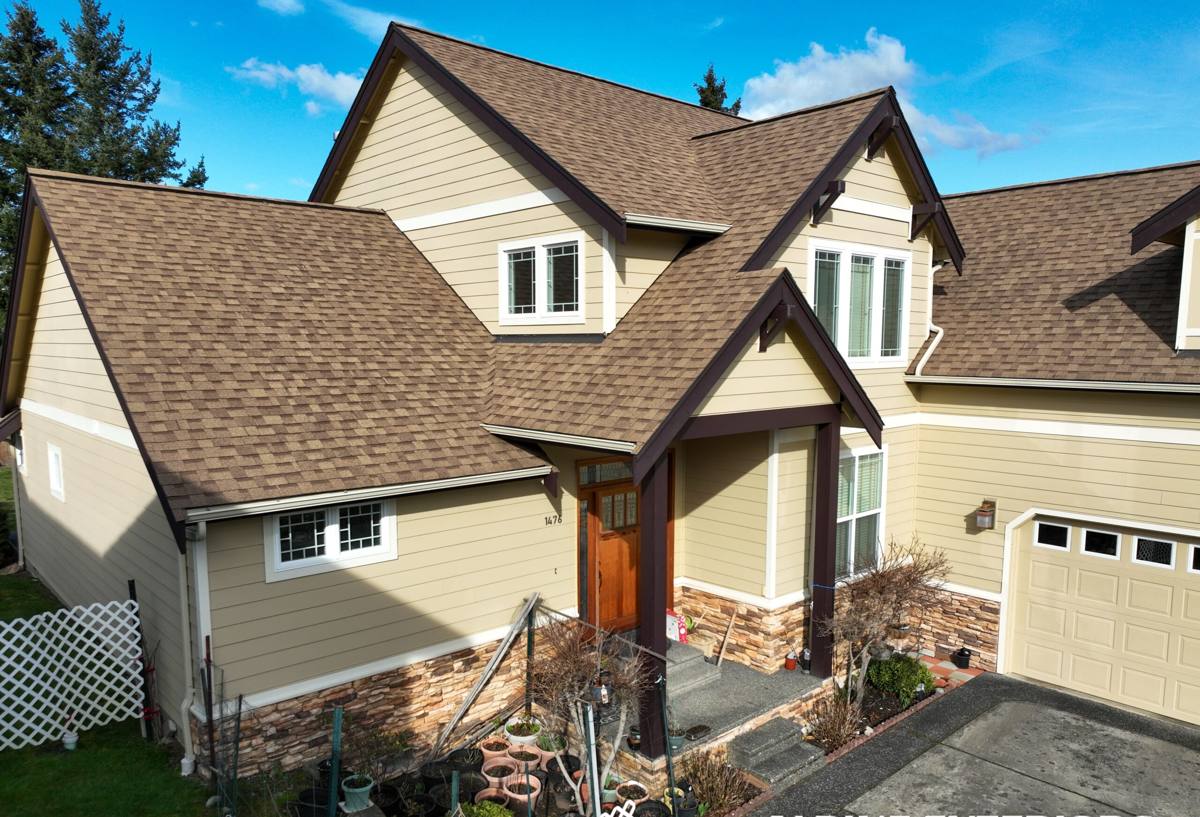
What Actually Counts as Storm Damage
Not every roof problem that shows up after a storm was caused by the storm. Insurance adjusters and honest contractors both draw a line between damage a storm caused and pre-existing wear that a storm simply exposed. Getting this right matters for your claim and for what repair actually fixes the problem.
Storm-caused damage typically looks like:
- Shingles or panels torn, lifted, or blown off in a defined pattern (usually the windward side or roof edges/ridges)
- Impact marks or punctures from falling branches or wind-borne debris
- Fresh creasing or cracking in shingles from wind uplift, even if the shingle is still in place
- Flashing pulled loose around chimneys, vents, or skylights after high wind
- Sudden, active leaking that started during or right after a specific storm event
Pre-existing wear that gets blamed on storms:
- Widespread moss growth and the granule loss that comes with it
- Brittle, curling shingles from age and UV exposure
- Slow leaks around old, worn flashing that had been degrading for years
We tell homeowners the truth about which is which. It affects your insurance claim, and it affects whether a targeted repair is the right call or whether the storm just accelerated a replacement you were going to need anyway.
Why Custer's Setting Creates Its Own Set of Risks
Open exposure means higher wind loads
Without the wind-breaking effect of dense neighborhoods or heavy tree cover, roofs on more open, rural-feeling lots around Custer see stronger sustained wind and harder gusts during storm events. That translates into more shingle uplift, more ridge and edge damage, and a higher chance of a full tab or panel tearing loose rather than just lifting and resettling.
Tree limb and debris impact
Where properties do have mature trees — a common feature on larger lots out this way — wind storms bring down limbs that can crack shingles, dent metal roofing, or punch straight through decking in a bad hit. Impact damage is often more serious than it looks from the ground, which is why we always get on the roof (or use a mast camera when access is unsafe) before writing an estimate.
Salt air and moisture load
Proximity to the coast means fasteners, flashing, and exposed metal corrode faster here than in drier inland areas. A storm that loosens flashing or exposes a fastener head starts a corrosion clock immediately — left alone through a wet Whatcom County winter, that small storm-caused opening turns into a much bigger moisture problem.
Moss season stacks the odds
Northwest Washington's long, damp moss season means most area roofs are already carrying some moss and organic growth by the time a storm hits. Moss holds water against the roof surface and works into shingle laps, so storm damage on a mossy roof tends to leak faster and worse than the same damage on a clean one.
What a Correct Storm Damage Repair Actually Involves
Step one: stop the water, not just patch the hole
Emergency mitigation — tarping, temporary flashing, sealing exposed fastener holes — comes first, always, regardless of what happens with an insurance claim afterward. A roof that's actively letting water into the attic or wall cavity doesn't wait for paperwork.
Step two: a full damage assessment, not a spot check
Storm damage is rarely confined to the obvious spot. Wind uplift can loosen shingles well beyond the visible tear, and a branch strike can crack decking that isn't visible until the shingles above it are pulled back. We check the whole roof plane, not just the area you can see from the yard.
Step three: matching materials correctly
Repairing a section of an existing roof means matching not just color but shingle profile, age-appropriate granule wear, and underlayment type. A mismatched patch is a cosmetic problem today and a maintenance headache later, since mismatched materials weather at different rates.
Step four: rebuilding the water path, not just the surface
Underlayment, flashing laps, and drip edge all have to go back in the correct shingle-style overlap so water sheds down and off the roof, not sideways into a seam. A repair that looks fine from the ground but was reassembled out of sequence will leak again the next time it storms — just more slowly.
Repair Approach Comparison
| Approach | What it addresses | Trade-off |
|---|---|---|
| Emergency tarp only | Stops active water intrusion same-day | Temporary — must be followed by permanent repair before next storm |
| Targeted section repair | Fixes storm-damaged area, matches surrounding roof | Best value when the rest of the roof is sound and not near end of life |
| Full slope replacement | Resets the entire wind-exposed side of the roof | Higher cost, but avoids repeated patching on an aging roof |
| Full roof replacement | Addresses storm damage plus underlying age/moss wear | Largest upfront investment; often the right call when damage overlaps existing wear |
Our Process, From the Call to the Closed-Up Roof
- Same-conversation triage — we ask what's actively leaking or exposed and prioritize accordingly.
- On-site inspection — a full roof walk (or safe-access alternative) documenting every area of damage, not just the reported spot.
- Plain-English findings — what's storm-caused, what's pre-existing wear, and what your realistic options are, in writing.
- Emergency mitigation if needed — tarping and temporary sealing to stop water intrusion immediately.
- Written estimate — repair or replacement scope, materials, and cost, with no pressure to decide on the spot.
- Insurance documentation — photos, notes, and a scope of work formatted the way adjusters expect to see it, if you're filing a claim.
- The repair itself — done to match the existing roof's materials and water-shedding sequence, not just patched over.
Filing an Insurance Claim for Storm Damage
Most storm damage claims come down to documentation. Insurers want clear evidence the damage happened during a specific, dated weather event — not a vague sense that "the roof's been leaking for a while." A contractor who inspects promptly after a storm and documents thoroughly gives your claim a much stronger footing than photos taken weeks later after more weather has muddied the picture.
We're not a public adjuster and we don't negotiate your claim for you, but we provide the kind of inspection report and photo documentation that holds up when an adjuster reviews it. If a claim gets denied or underpaid, having a clear, dated, professional assessment on file is often the difference in a follow-up appeal.
Why It Matters to Hire a Crew That Already Works Custer
After a significant storm rolls through Whatcom County, it's common to see out-of-area crews going door to door offering fast repairs. Some are legitimate; many won't be around in six months if there's a warranty issue or a callback needed. A local crew has a reputation in the area to protect and is still reachable when you need a follow-up.
Just as importantly, a crew that regularly works this specific area already understands the exposure conditions, the moss and moisture patterns, and how Custer's more open, rural-feeling lots behave differently than roofs closer into Ferndale or Bellingham. That local knowledge shapes real decisions — how a repair is sequenced, what flashing detail needs reinforcing, and where a "storm patch" needs to be a bit more robust than the textbook minimum because of what this specific stretch of county sees every winter.
After a Storm: What To Do (and Not Do)
- Do photograph visible damage from the ground before anyone gets on the roof
- Do address active leaks immediately — a bucket and a call, in that order
- Do keep receipts for any emergency tarping or temporary repairs for your insurance file
- Don't get on a wet, storm-damaged roof yourself — falls are far more common right after a storm than most homeowners expect
- Don't sign a contract with a door-to-door crew on the spot; get a second opinion, especially right after a major weather event
- Don't assume a small storm patch is fine long-term if the rest of the roof is already near the end of its service life
If a recent windstorm or heavy rain event has left your Custer-area roof with missing shingles, an active leak, or damage you're not sure how to categorize, we're glad to take a look. We'll give you a straight answer about what's storm damage, what isn't, and what it actually takes to fix it right — with a free, no-pressure estimate using the form below.