 Ferndale Exterior
 Metal Roofing on the Water: What Birch Bay Actually Needs
Birch Bay sits right against the water in northern Whatcom County, and that location puts a roof through more than most inland homes ever see. Salt-laden air moves off the bay year-round, wind-driven rain comes in sideways instead of straight down, and a mild, damp climate keeps moss and moisture active on shaded roof planes for most of the year. A roof out here isn't just older sooner if it's built to a generic standard — it starts showing corrosion, lifted flashing, and moss intrusion faster than the same roof would a few miles inland.
Metal roofing, done correctly, handles that combination of stresses better than most other roofing materials available today. This page covers why metal fits Birch Bay's climate, what a correct installation actually involves, what it costs to get right, and why local installation experience matters as much as the material itself.
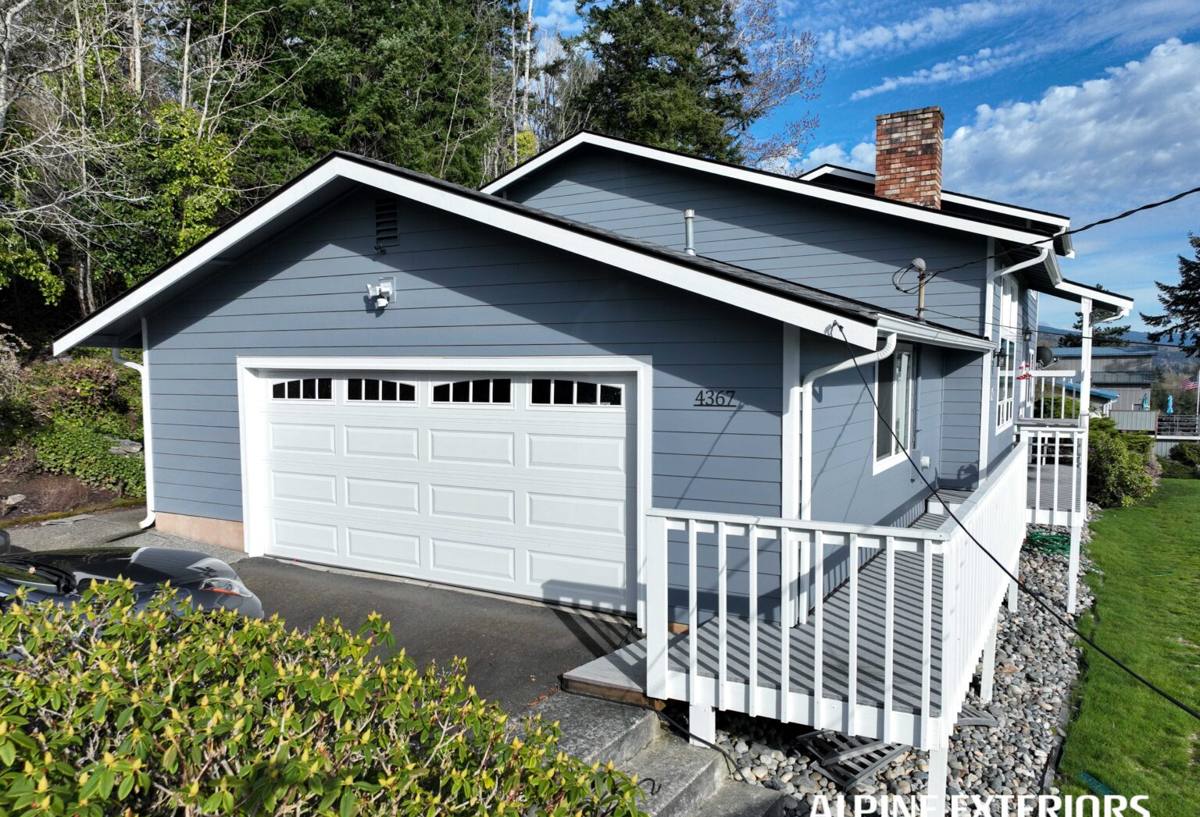
What This Climate Does to a Roof
Salt Air and Corrosion
Airborne salt off the bay accelerates corrosion on anything metal — fasteners, flashing, vent stacks, panel edges. A fastener or coating spec that's perfectly fine forty miles inland can start showing rust streaks within a few years right on the water. This is one of the most common shortcuts we see on roofs installed by crews unfamiliar with coastal exposure, and it's invisible until the staining or the leak shows up.
Wind-Driven Rain
Waterfront exposure means more wind, and wind-driven rain doesn't just land on a roof plane — it gets pushed up under laps, into seams, and against flashing details that would stay dry in a calmer inland rain event. A roof system built to a minimum standard for wind exposure is more likely to leak at valleys, ridge caps, and roof-to-wall transitions than one detailed specifically for this kind of sideways-driven moisture.
A Long Moss Season
Mild temperatures, shade, and near-constant moisture add up to moss and algae growth that can persist most of the year on north-facing or tree-shaded roof planes around Birch Bay. Moss isn't just cosmetic — it holds water against a roofing surface and, on porous materials, can work its way under laps and edges over time. This is one of the areas where metal roofing has a real, measurable advantage.
Why Metal Roofing Fits This Environment
We recommend metal roofing for a lot of Birch Bay homes specifically because of how it responds to the three stresses above, not because it's trendy or because it's the only thing we sell.
- Smooth, steep-shedding surface: Metal panels give moss and algae far less to grip than a textured shingle surface, which matters on the shaded, slow-drying roof planes common near the water.
- Continuous water shedding: A standing seam profile in particular moves water off the roof quickly along raised, interlocking seams rather than relying on overlapping laps alone to stay dry under wind pressure.
- Long service life with the right coating: A quality coastal-rated finish on steel or aluminum can outlast asphalt shingle systems by decades when it's specified and installed correctly.
- Better resistance to wind uplift: Properly fastened or clipped metal panels resist wind uplift better than lighter roofing materials, which matters on an exposed waterfront lot.
None of that means metal is automatically right for every roof or every budget — it's a bigger upfront investment than asphalt shingles, and it only delivers on that investment when it's installed correctly. We'll talk through honest trade-offs for a specific roof during an estimate rather than pushing one material for every home.
Where Metal Roofing Makes the Most Sense
Metal tends to be the strongest fit for homes closest to the water, roofs with heavy shade or moss history, low-slope sections where shingle performance gets marginal, and homeowners planning to stay in the home long enough for the lower lifetime maintenance to pay off the higher install cost.
Standing Seam vs. Exposed-Fastener Metal Panels
Not all metal roofing is built the same way, and the profile choice matters more on a waterfront roof than it does inland.
| Feature | Standing Seam | Exposed-Fastener |
|---|---|---|
| Fasteners | Concealed under the seam, not exposed to weather | Visible through the panel face, exposed to rain and salt air directly |
| Water shedding | Raised interlocking seams shed wind-driven rain well | Relies on overlap and gasketed fasteners staying sealed over time |
| Long-term maintenance | Low; no fastener re-tightening or gasket replacement needed | Fastener gaskets typically need inspection and occasional replacement |
| Thermal movement handling | Panels float on concealed clips, allowing expansion and contraction | Fixed fasteners can loosen or elongate the fastener hole over repeated cycles |
| Typical upfront cost | Higher | Lower |
For most Birch Bay homes, especially anything close to the water or on an exposed elevation, we lean toward standing seam because the concealed fastener system removes one of the most common long-term failure points in a salt air environment. Exposed-fastener panels still have a place on outbuildings, shops, or budget-driven projects set back from direct exposure, but we're honest about the added maintenance that comes with that choice.
Coatings and Fasteners: The Details That Actually Determine Performance
The base metal and the panel profile only tell part of the story. On a coastal roof, the coating system and the fastener grade determine how long that roof actually performs before corrosion or fading becomes a problem.
Coating Systems
Panels finished with a PVDF (Kynar 500-type) coating hold color and chalk resistance significantly longer than a standard SMP paint system, and that gap widens in a UV- and salt-exposed environment like this one. A lower-grade finish can look fine for the first several years and then fade or chalk noticeably faster once salt exposure starts breaking it down.
Metal and Fastener Grade
Galvalume steel and aluminum both perform well in coastal air when properly coated, but the fasteners, clips, and flashing tying the system together need to match that same corrosion resistance — a coastal-rated panel undermined by standard hardware is still a coastal-rated panel with a weak point built into it. We spec stainless or coated fasteners and compatible flashing metals throughout, not just at the visible panel surface.
What Correct Metal Roof Installation Involves
Metal roofing has a reputation for durability, but that reputation only holds when the installation details are right. A metal roof installed carelessly can leak, oil-can, or corrode prematurely just like any other roofing system installed poorly.
- Deck inspection and repair: Any soft, rotted, or previously water-damaged sheathing gets addressed before new roofing goes down — metal over a compromised deck just hides the problem.
- High-quality underlayment: Given the wind-driven rain exposure here, we use a synthetic underlayment rated for the panel system, with self-adhered membrane at eaves, valleys, and vulnerable transitions as a second line of defense.
- Proper panel fastening or clip spacing: Panels need to be fastened or clipped to manufacturer spec so they can expand and contract with temperature changes without stressing seams or fasteners.
- Correct flashing at every penetration: Chimneys, vent stacks, skylights, and roof-to-wall transitions are where most metal roof leaks actually originate, and they need corrosion-resistant flashing integrated with the underlayment, not sealant used as the primary defense.
- Ventilation: Proper intake and exhaust airflow keeps the roof deck dry and reduces the condensation risk that can otherwise form under a metal roofing surface in a humid climate.
Cost Factors for a Birch Bay Metal Roof
Metal roofing costs more upfront than asphalt shingles, and the final number depends on more than square footage. We don't quote a figure without seeing the roof, since pitch, access, and existing deck condition can move a bid significantly.
| Factor | Why It Matters Here |
|---|---|
| Panel profile | Standing seam costs more than exposed-fastener but removes a major long-term failure point in salt air |
| Coating system | PVDF/Kynar-type finishes cost more than standard SMP paint but hold up longer against UV and salt exposure |
| Roof complexity | More valleys, dormers, and penetrations mean more flashing detail and labor time |
| Deck condition | Rot or soft sheathing found during tear-off adds repair cost not visible before the old roof comes off |
| Pitch and access | Steep or hard-to-access roofs take longer and require more safety setup |
| Underlayment upgrade | Full self-adhered membrane coverage costs more than minimum coverage but reduces wind-driven rain risk |
Our Installation Process
- On-site assessment. We inspect the existing roof, deck condition, ventilation, and exposure, and take measurements for an accurate estimate.
- Material and profile selection. We go over standing seam versus exposed-fastener options, coating systems, and how each fits the home's exposure and budget, with honest trade-offs for each.
- Tear-off and deck repair. Old roofing comes off, the deck is inspected, and any damaged sheathing is replaced before anything new goes down.
- Underlayment and flashing installation. The moisture barrier and flashing go in first, since this layer determines whether the roof actually stays dry under wind-driven rain.
- Panel installation. Panels are fastened or clipped to manufacturer specification, with attention to seam alignment and thermal movement allowance.
- Ventilation check. Intake and exhaust ventilation are confirmed to be working correctly before close-out.
- Final walk-through. We review the completed roof with the homeowner and go over care and warranty details.
Why Hire a Crew That Already Works Birch Bay
A roofing crew that mostly works inland jobs isn't wrong about metal roofing in general — they're just working from a different set of defaults for fastener grade, coating selection, and flashing detail. Those defaults are often undersized for what a waterfront lot in Birch Bay puts a roof through year-round. A crew that already works this stretch of Whatcom County has seen which details actually fail out here, not just which ones fail in a manufacturer's general spec sheet.
A Simple Checklist Before Hiring for Metal Roofing in Birch Bay
- Ask whether they're recommending standing seam or exposed-fastener panels, and why, for your specific exposure
- Confirm the coating system being quoted — PVDF/Kynar-type finishes hold up longer in salt air than standard paint
- Ask what fastener and flashing metal they use, and whether it's rated for coastal exposure
- Confirm current Washington contractor licensing and active liability insurance
- Get a clear, written scope of work, including underlayment type and ventilation plans, before signing anything
If you're weighing a metal roof for a home in Birch Bay, we're glad to walk the roof with you and give an honest read on what it needs and what it will cost to do right. Reach out below for a free, no-pressure estimate.