 Ferndale Exterior
 Building a Deck That Actually Holds Up in Cordata
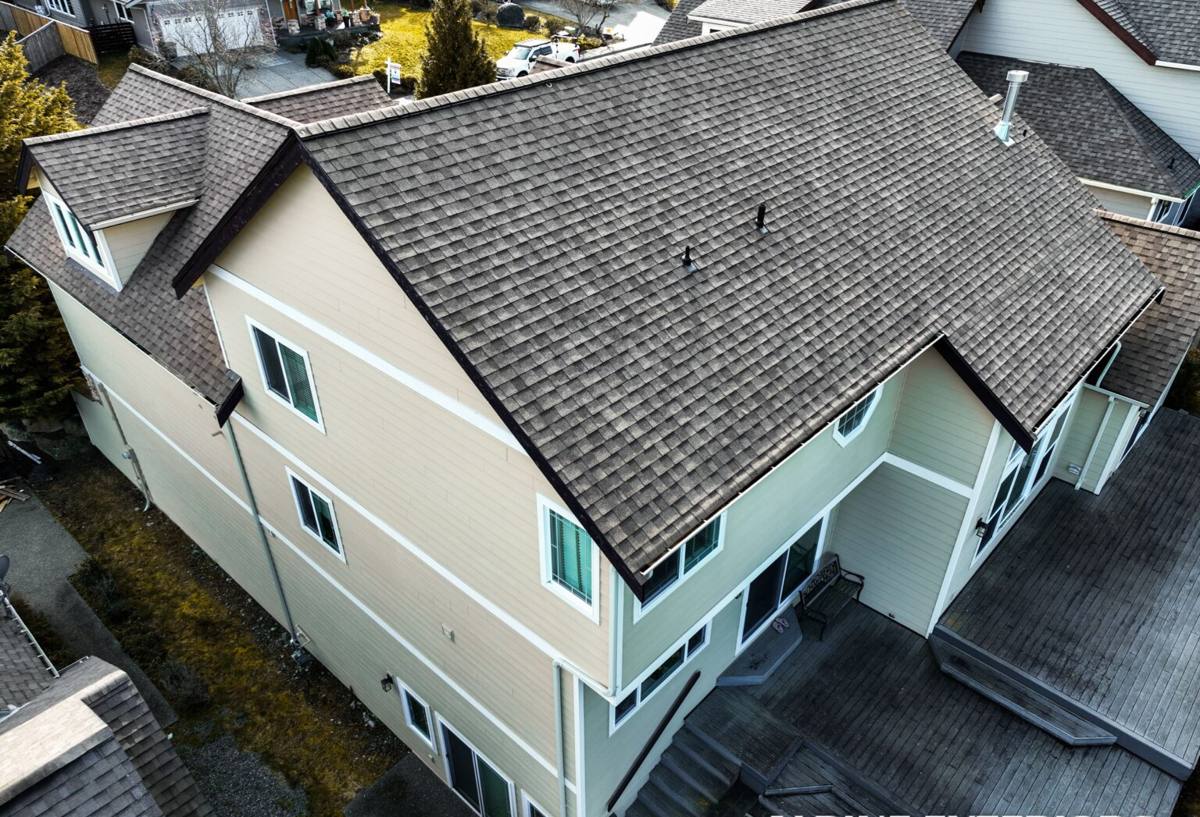
Cordata sits in the Ferndale-Bellingham corridor, close enough to Puget Sound and the Nooksack lowlands that homes here deal with the same weather pattern as the rest of Whatcom County: long stretches of steady rain, humid air that never fully dries out between storms, and a moss and algae season that can run from October clear into May. A deck built with generic, one-size-fits-all methods will survive a summer or two looking fine and then start showing problems right where you can't easily see them — under the boards, at the ledger connection, inside the footings. We build decks for this specific climate, not for a catalog photo taken in a dry state.
A custom deck project for a Cordata home isn't just about picking a railing style and a board color. It's about matching the structure underneath to what the Pacific Northwest actually does to wood, metal, and concrete over ten, twenty, thirty years.
What This Climate Does to an Ordinary Deck
Three things drive almost every deck failure or premature repair we see in this area:
- Driving rain — wind-blown rain hits the house at an angle, not straight down, and finds its way behind ledger boards and under poorly flashed connections.
- Extended dampness — even when it isn't actively raining, the air stays humid enough that wood surfaces rarely get a full dry-out period, which is exactly what moss, algae, and rot organisms need to establish themselves.
- Salt-influenced air — being close enough to the Sound and the Strait, homes in this part of Whatcom County get periodic salt-laden air on windy days, which accelerates corrosion on any fastener, bracket, or hardware that isn't rated for it.
None of these are exotic problems. They're just steady, year-round pressure that a deck either accounts for or doesn't. The difference shows up five to ten years in — as soft spots near the house, black staining that won't pressure-wash off, or hardware that's rusted enough to weaken a connection.
Site Factors We Look At Before Design
Cordata's mix of newer subdivisions and mature landscaping means every lot is a little different. Before we design anything, we look at:
- How much of the day the deck site actually gets direct sun versus shade from the house, fences, or trees — shaded, damp corners are where moss takes hold first
- Which direction storms typically hit the house from, so we know where flashing and ledger details need the most attention
- Drainage across the yard — whether water sheds away from the foundation or tends to pool near where footings will go
- Existing grade and soil type, since footing depth and bearing requirements change with what's actually underneath the lawn
Material Choices That Make Sense Here
There's no single "best" decking material — there's the right material for your budget, your maintenance appetite, and how much shade and moisture the deck will sit in. Here's how the common options actually perform in Whatcom County conditions, based on what we see in the field, not marketing copy.
| Material | Moisture Behavior | Moss/Algae Resistance | Maintenance |
|---|---|---|---|
| Pressure-treated pine | Absorbs and releases moisture readily; needs a fully sealed, dry install to avoid cupping | Low — needs regular cleaning and re-sealing to resist growth | Annual cleaning, re-stain/seal every 2-3 years |
| Cedar | Naturally more stable and rot-resistant than pine, but still a softwood exposed to weather | Moderate — cedar's natural oils help early on but fade over time | Cleaning plus periodic oil or sealant to maintain color and resistance |
| Capped composite | Doesn't absorb water like wood; dimensionally stable through wet-dry cycles | Higher — smoother capped surface sheds algae more easily and doesn't need sealing | Periodic washing; no staining or sealing required |
| Uncapped composite | Some older or budget composite products can absorb surface moisture and support growth in shaded areas | Variable — depends heavily on the specific product | Regular cleaning; check manufacturer guidance |
We don't push one product on every job. A sunny, open deck with good airflow can do perfectly well in cedar with a homeowner who's willing to maintain it. A shaded, north-facing deck tucked against the house is a much better candidate for capped composite, simply because it removes the sealing and moss-scrubbing cycle that shade makes worse. We'll walk you through the honest trade-offs — cost up front versus maintenance over time — for your specific site rather than defaulting to whatever's easiest for us to install.
The Structural Details That Actually Prevent Failures
The visible decking is the part everyone notices, but the parts that determine whether a deck lasts 15 years or 30 are mostly hidden once we're done.
Ledger Board Flashing
Where the deck attaches to the house is the single most common failure point in this climate. Driving rain pushes water sideways and upward behind poorly flashed ledgers, and once moisture gets into that connection, it can rot the rim joist or wall framing long before anyone notices from the outside. We flash this connection properly — house wrap integration, proper metal flashing, and correct fastener spacing — every time, regardless of what the original structure had.
Footings Sized for Local Soil
Footing depth and diameter need to account for frost depth and the bearing capacity of the soil on your specific lot, not a generic minimum. We size and place footings based on what's actually under the yard, not what was convenient on the last job.
Fasteners and Hardware
Given the periodic salt exposure and constant humidity here, we use corrosion-resistant fasteners and structural hardware rated for exterior, coastal-adjacent use — not standard interior-grade screws or brackets that will streak, weaken, or fail early.
Airflow Underneath
A deck built low to the ground with poor ventilation underneath traps moisture against the joists and the underside of the decking — exactly the damp, shaded conditions moss and rot both prefer. We design in proper clearance and drainage paths so air can actually move underneath.
Our Process, Start to Finish
- On-site assessment — we look at sun exposure, drainage, existing structure (if replacing a deck), and how the space will actually be used
- Design and material conversation — we talk through decking material, railing style, footprint, and any local permit requirements before anything is finalized
- Permitting — we handle the permit application and inspection scheduling with Ferndale/Whatcom County as required for the scope of work
- Footings and framing — built to the depth and spacing the site actually calls for, with flashing detail at every ledger and rim connection
- Decking, railing, and finish work — installed with fastener spacing and gapping that accounts for our wet-dry seasonal swing
- Final walkthrough — we go over the finished deck with you, including what maintenance it will need and roughly when
Permits and Local Codes
Most deck construction in and around Ferndale requires a building permit, particularly for decks attached to the house, elevated structures, or anything with railings above a certain height. Requirements can include guardrail height and baluster spacing, stair geometry, footing depth, and ledger attachment method. We handle the permit process as part of the job so you're not stuck figuring out Whatcom County or City of Ferndale requirements on your own, and so the finished deck passes inspection the first time.
Keeping a New Deck Looking Right Through Whatcom County Winters
Even a well-built deck needs some seasonal attention here — the climate simply doesn't allow a "install and forget" approach. A short, honest maintenance routine goes a long way:
- Sweep leaves and debris off the deck surface regularly in fall — trapped organic matter is what actually feeds moss and algae growth
- Rinse or gently wash the deck surface a couple of times a year to clear early moss and pollen buildup before it takes hold
- Check and clear any drainage paths or gaps between boards so water isn't pooling anywhere
- Inspect fasteners and hardware periodically for rust staining or looseness, especially near the ledger connection
- For wood decks, plan on re-sealing or re-staining on the schedule appropriate to the product — skipping a cycle in this climate shows up fast
- Trim back overhanging branches or shrubs that keep sections of the deck shaded and damp longer than the rest
Why Local Experience in Cordata Matters
A deck contractor who mostly works drier climates or builds off a standard template will get the visible parts right and miss the parts that matter here — the flashing detail, the fastener grade, the footing depth for local soil, the airflow underneath. We work in Cordata and the surrounding Ferndale area regularly, which means we already know how this climate treats a deck over time, not just how it looks on installation day. That experience shows up in fewer callbacks, fewer surprise repairs five years down the line, and a deck that's actually sized and detailed for where it sits — not a generic build dropped into a Whatcom County backyard.
If you're planning a new deck or replacing one that's showing its age, we're happy to come take a look, walk the site with you, and talk through what makes sense for your home. There's no pressure and no cost to get a straightforward estimate — just a chance to see what a deck built for this specific climate actually involves.