 Ferndale Exterior
 Windows Built for Blaine's Coastline, Not a Showroom in Phoenix
Blaine sits about as close to salt water and Canadian weather systems as a Whatcom County home can get. That combination — salt-laden air off the Strait of Georgia, wind-driven rain that comes in sideways more often than straight down, and a moss season that can stretch from October into May — is hard on windows in ways that don't show up in a manufacturer's brochure. A window that performs fine in a dry inland climate can start failing here within a few years if it wasn't chosen and installed with this specific environment in mind.
We're based in Ferndale and work Blaine regularly, so this isn't a page we wrote from a spec sheet. It's built around what actually happens to windows on this stretch of coastline: hardware that corrodes faster than expected, frames that trap moisture instead of shedding it, and caulk lines that get tested by real weather within the first winter.
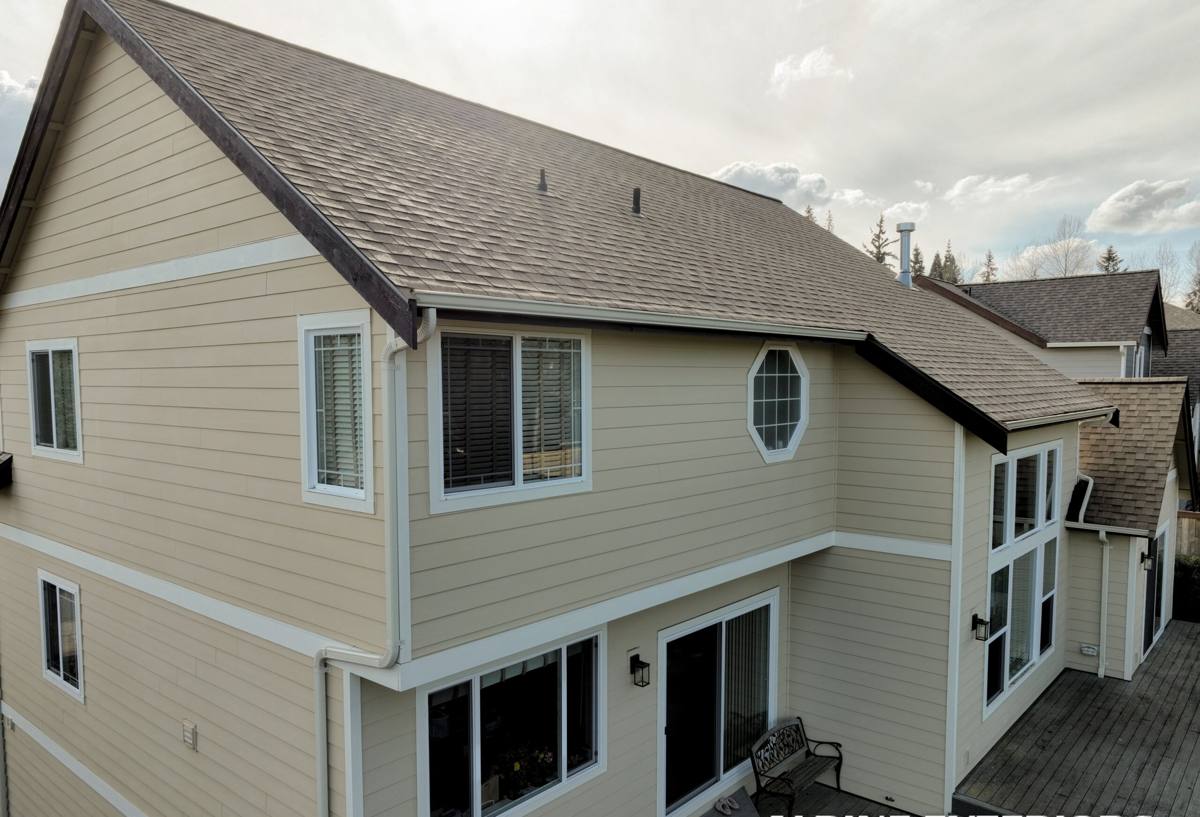
What Blaine's Climate Actually Does to a Window
Salt Air and Hardware
Homes closer to Semiahmoo Bay and the water get a steady dose of airborne salt. Over time, salt exposure accelerates corrosion on window hardware — hinges, cranks, locks, and especially lower-grade aluminum or unfinished steel components. It also degrades certain sealant formulations faster than inland installations experience. This doesn't mean coastal windows are a lost cause; it means hardware quality and finish matter more here than they do twenty miles inland.
Driving Rain and Water Management
Storms off the Strait tend to push rain horizontally, which puts real pressure on a window's water-management system — the flashing, sill pan, and drainage path behind the frame, not just the visible caulk bead. A window that's watertight in a light vertical rain can still leak under wind-driven conditions if the installation detail wasn't built for it. This is one of the most common causes of hidden rot we find in older Blaine-area homes.
Moss and Prolonged Damp
Whatcom County's long wet season keeps north-facing and shaded window surfaces damp for extended stretches. Moss and algae growth on sills, exterior trim, and frame corners isn't just cosmetic — trapped moisture under organic growth is what eventually breaks down wood trim and compromises paint or sealant. Windows with poor drainage paths or absorbent trim materials show this problem years before better-detailed installations do.
What "Custom" Actually Means for This Job
Custom windows aren't just about matching an unusual opening size, though that's part of it in older Blaine homes with non-standard framing. Custom, done right, means every window on the house is specified to match its actual exposure — not one product picked for the whole home regardless of which direction it faces.
- Frame material chosen based on that window's sun, wind, and moisture exposure — not the same spec on every elevation
- Corrosion-resistant hardware on water-facing and south/west walls exposed to weather
- Glass package (Low-E coating, gas fill, spacer type) matched to orientation and how the room is used
- Sill pan and flashing details built for wind-driven rain, not just gravity drainage
- Trim and cladding that won't wick or hold moisture against the frame
- Sizing and reveal that account for how the original opening has settled or shifted over time
On a lot of older Blaine and Ferndale-area homes, no two window openings are exactly square anymore. A generic replacement window forces a compromise; custom sizing lets us build the flashing and shim details correctly instead of packing gaps with sealant and hoping.
Frame Material: What Actually Holds Up Here
| Material | Behavior in Salt Air / Wet Climate | Where It Fits |
|---|---|---|
| Vinyl (quality-grade) | Won't corrode, low maintenance, but can show UV fatigue over decades on unshaded south/west exposures | Good all-around choice for most Blaine homes on a reasonable budget |
| Fiberglass | Excellent dimensional stability, resists moisture and salt corrosion, holds paint well | Strong option for high-exposure walls facing the water or prevailing wind |
| Wood-clad | Handsome, but the wood core is vulnerable if cladding or flashing details fail and moisture gets behind it | Best reserved for protected elevations, with disciplined maintenance |
| Bare aluminum | Conducts cold, and lower-grade finishes corrode faster in salt air without a marine-grade coating | We steer clients away from unclad aluminum on exposed coastal walls |
None of these materials is universally "best" — the right call depends on which wall of the house we're talking about, how much upkeep the owner wants to do, and budget. Part of a proper custom-window estimate is walking the house and making that call elevation by elevation instead of picking one product for everything.
How We Approach a Blaine Window Job
1. On-Site Assessment
We measure every opening individually and check for existing water damage, out-of-square framing, and rot in the surrounding trim or sheathing — issues that are common on older homes in this area and need to be addressed before a new window goes in, not discovered after.
2. Product Selection by Exposure
We walk each elevation of the house and talk through frame material, glass package, and hardware options based on which walls take the weather and which don't. This is where a custom approach earns its name — it's not a single product choice for the whole house.
3. Removal and Opening Prep
Old windows come out carefully so we can inspect the rough opening, sill, and header for hidden moisture damage. Any compromised wood gets repaired or replaced before the new window goes in — installing over rot just hides the problem for a future owner to find.
4. Flashing and Water Management
This is the step that separates a durable installation from one that leaks in three years. Sill pans, flashing tape, and drainage paths are built to handle wind-driven rain, sequenced correctly with the house wrap and siding so water sheds outward at every layer.
5. Install, Seal, and Finish
Windows are set square and level, shimmed and fastened per manufacturer spec, insulated around the frame, and sealed with materials rated for this climate. Exterior trim is finished so it sheds water rather than holding it against the frame.
6. Walkthrough
We check operation on every window, confirm weathertightness, and go over any maintenance specific to the materials installed — what to watch for with hardware in a coastal environment, and how to keep moss and algae from building up on sills and trim.
Signs Your Blaine Home's Windows Need Attention
- Hardware that's stiff, corroded, or won't lock cleanly anymore
- Condensation or fogging between the panes — a sign the seal has failed
- Soft or discolored trim and sill wood, especially on north or water-facing walls
- Visible moss or algae buildup that keeps returning after cleaning
- Drafts or noticeably higher heating costs in winter storms
- Windows that are difficult to open, close, or stay latched
Any one of these can be a minor fix. Several together, especially on an older home, usually point to a bigger installation or drainage problem worth having assessed before it gets more expensive.
Cost Factors for Blaine-Area Custom Window Projects
| Factor | Why It Moves the Price |
|---|---|
| Frame material | Vinyl, fiberglass, and wood-clad carry different material and labor costs |
| Number of windows and openings | Whole-house projects typically bring a lower per-window cost than one-off replacements |
| Existing damage | Rot repair or reframing adds labor beyond the window itself |
| Glass package | Higher-performance Low-E coatings and gas fills cost more but pay back in comfort and efficiency |
| Custom sizing | Non-standard openings cost more than stock sizes but avoid a poor-fitting compromise |
| Access and site conditions | Second-story or hard-to-reach windows take more labor time |
We don't quote a number without seeing the house — too much of the real cost depends on what's behind the old windows once they're out. What we can promise is a written estimate that breaks down materials and labor clearly, with no surprise line items added mid-project.
Why Local Experience on Blaine Homes Matters
A crew that mostly works inland doesn't see the same failure patterns we see routinely on Blaine's water-facing homes. We know which elevations typically take the worst of the wind-driven rain, which older neighborhoods tend to have non-square openings, and which hardware finishes actually hold up against salt air instead of just claiming to on paper. That local pattern recognition shortens the assessment phase and reduces the chance of a callback for a problem that should've been caught the first time.
We're a Ferndale-based crew that treats Whatcom County's coastal conditions as the baseline, not an edge case. Every recommendation on this page — material choice, flashing details, hardware grade — comes out of what actually holds up on homes like yours, not a generic install checklist.
If your Blaine-area home has windows showing their age, or you're planning a custom project for a home with non-standard openings, we're glad to take a look and give you a straightforward, no-pressure estimate. Use the form below to get started.