 Ferndale Exterior
 Deck Building Built for Kendall's Weather, Not Just for the Blueprint
A deck in Kendall lives outside every day of the year, and Whatcom County doesn't give it an easy year. Long stretches of driving rain, humid air moving in off the water, and short winter daylight all add up to more moisture exposure than most decking materials and fasteners were designed for on paper. A deck that looks fine on installation day can start showing soft spots, streaking, or loose railings within a couple of seasons if it wasn't built with this specific climate in mind.
We build decks for homes in and around Kendall regularly, so this isn't a generic write-up of "how to build a deck." It's what actually matters for a deck that has to survive this stretch of Whatcom County: how the framing is protected, how water is kept moving instead of pooling, which fasteners hold up, and which decking choices are worth the extra upfront cost versus which ones just cost you later in maintenance.
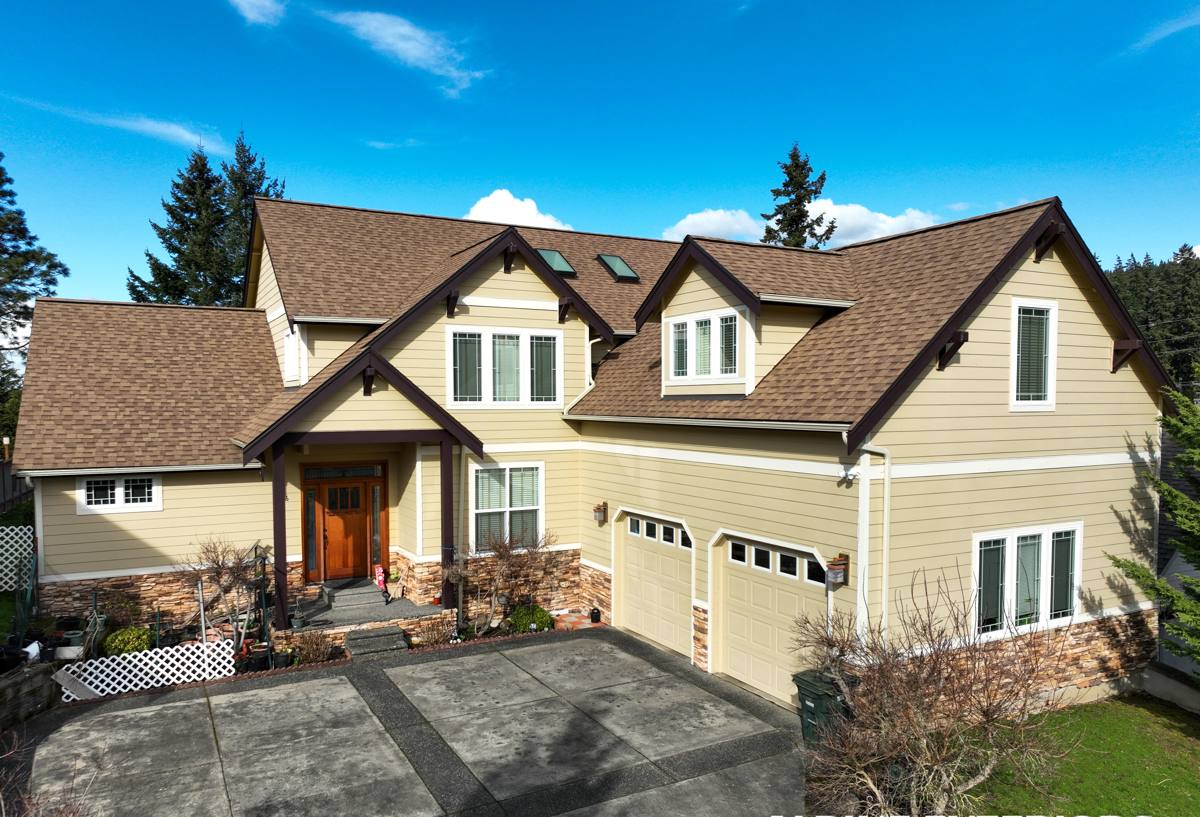
What This Climate Actually Does to a Deck
Every region has its own failure pattern for outdoor structures, and ours is driven by moisture that doesn't go away for months at a time.
- Moss and algae growth — shaded decks, north-facing decks, and anything under tree cover stay damp long after a storm passes, giving moss and algae the time they need to establish on wood surfaces and even on some composite boards.
- Fastener corrosion — humid, salt-tinged coastal air moving through this part of Whatcom County accelerates corrosion on lower-grade screws, nails, and joist hardware, which shows up as rust streaking down the boards.
- Wood rot at hidden connection points — the ledger board, joist ends, and post bases are where water collects and stays trapped against wood longest, which is also where we see the most structural rot when a deck wasn't built with proper flashing and gaps.
- Slick surfaces — sustained moss and film buildup make painted or bare wood decking genuinely slippery, which is a safety issue as much as a cosmetic one.
None of this means a deck can't hold up here for decades. It means the build details that get skipped on a rushed job are exactly the details that matter most in this climate.
Why Ferndale-Area Homes See This More Than Drier Regions
Homes in this part of Whatcom County get a longer wet season than most of the country, and many Kendall lots have mature tree cover or sit close enough to open water that salt-laden air is part of the daily exposure. A deck design that works fine in a dry inland climate can underperform here simply because it wasn't engineered for sustained dampness rather than occasional rain.
What a Correctly Built Deck Needs Here
A deck that's going to hold up under Ferndale-area conditions needs a handful of details done right, every time, not just on the parts that show.
| Build Element | What It Should Look Like | What Goes Wrong Without It |
|---|---|---|
| Ledger flashing | Proper flashing and a drainage gap between the ledger and the house wall | Water gets trapped against the house rim joist, leading to rot that's expensive to reach and repair |
| Fasteners & hardware | Stainless steel or high-grade coated fasteners rated for coastal/wet exposure | Rust streaks, weakened connections, and hardware that fails years before the wood does |
| Joist protection | Joist tape or a moisture barrier on the top of framing members | Standing water soaks into end grain and mid-span cuts, rotting joists from the inside out |
| Footings | Footings set to local frost depth and code, with proper drainage around posts | Shifting, heaving, or settling posts that throw the whole deck out of level |
| Board spacing & airflow | Correct gapping and skirting that still allows air movement underneath | Trapped moisture under the deck that feeds rot and mold long-term |
Any one of these done poorly can undercut an otherwise good-looking deck. This is why we treat the parts nobody sees on move-in day — flashing, fasteners, joist protection — as non-negotiable, even though they add a bit of time and cost that a rushed bid would skip.
Choosing Decking Material for a Kendall Property
There's no single "best" decking material — there's a best fit for your budget, your maintenance appetite, and how much sun or shade your deck actually gets.
Pressure-Treated Wood
The lowest upfront cost and a familiar, natural look. It needs regular cleaning and re-sealing to resist moss and moisture in this climate — skip that maintenance for a couple of years and you'll see graying, splintering, and moss creeping in on shaded boards.
Cedar
Naturally more rot- and insect-resistant than most softwoods, with a warmer appearance, but it's not maintenance-free here. It still needs periodic sealing to keep moisture out and slow the graying process, especially on decks with tree cover.
Composite Decking
Higher upfront cost, but far less annual upkeep — no staining or sealing required, and modern composites resist moisture absorption much better than wood. The trade-off is that lower-grade composites can still host surface algae or moss film in shaded, damp spots, so the board's surface treatment and quality tier matter more than the label "composite" alone.
PVC/Capped Decking
The most moisture-resistant option and the easiest to keep clean of moss and mildew, at the highest material cost. Installation is less forgiving of mistakes — gapping, fastening, and expansion allowances have to be done to the manufacturer's spec or the warranty and performance both suffer.
Our Deck Building Process
- On-site visit and design conversation — we look at sun exposure, tree cover, drainage patterns, and how the deck ties into your house before recommending a layout or material.
- Permitting — we handle the permit application and inspection scheduling required for Whatcom County and the applicable jurisdiction, so nothing gets built that has to be torn out later.
- Footings and framing — footings set to code depth, ledger properly flashed, joists protected and spaced for airflow underneath.
- Decking installation — boards installed per manufacturer spacing and fastening requirements, whichever material you've chosen.
- Railings and guards — built to current guardrail height and baluster spacing code, which matters both for safety and for passing final inspection.
- Finishing — sealing or staining where the material calls for it, and a full walkthrough with you before we consider the job done.
Permits, Setbacks, and Code in Whatcom County
Most new decks and many deck replacements in this area require a building permit, and inspections typically check footing depth, ledger attachment, and guardrail specifications before final sign-off. Property setbacks also come into play depending on how close the deck sits to a property line, and older Kendall homes sometimes have decks that were never permitted at all — which becomes a problem when you go to sell or refinance. Part of doing this job right is handling that paperwork correctly the first time, not leaving you to sort it out with the county after the fact.
Keeping a Deck Ahead of Moss and Moisture
Even a well-built deck needs some seasonal attention in this climate. A little regular upkeep is far cheaper than replacing rotted boards or hardware down the line.
- Sweep debris and leaves off the deck surface regularly, especially in shaded areas where moisture lingers longest
- Clean visible moss or algae film before it spreads, rather than waiting until it's established
- Check that gaps between boards and any under-deck skirting aren't blocked, so air can still move underneath
- Re-seal or re-stain wood decking on the schedule your material calls for, not just when it looks bad
- Inspect railings and stairs each year for looseness, which is often the first sign of fastener corrosion
- Look at the ledger connection and any spots where the deck meets the house for staining or soft wood
Why Local Experience in Kendall Matters
Deck building isn't the same job in every zip code. A crew that mostly builds in drier inland climates will make different — and often wrong — assumptions about fastener grade, sealing schedules, and drainage detail than a crew that works Whatcom County's wet season every year. We've built and repaired decks for homes across the Ferndale area long enough to know which corners cause callbacks two winters later, and we build past them the first time. That includes knowing which local inspectors check for what, and building to a standard that holds up whether your lot is shaded, exposed, or close enough to the water to catch salt-laden air.
If you're planning a new deck or need an honest look at whether an existing one is holding up the way it should, we're glad to come out, walk the site, and give you a straightforward, no-pressure estimate. Use the form below to get in touch.