 Ferndale Exterior
 Building a Deck That Actually Holds Up in Lynden
Lynden homeowners ask for a lot of things in a deck — more room for the grill, a place for the kids to play that isn't the lawn, somewhere to sit with coffee before the fog burns off. What they're really asking for, whether they say it or not, is a deck that doesn't rot, sag, or turn slick and green by the second winter. That's the part that separates a deck built for a catalog photo from a deck built for this part of Whatcom County.
Ferndale Exterior Co. builds and repairs decks throughout the Lynden area, and the work we do here looks a little different from what you'd spec in a drier climate. Wetter framing details, different fastener choices, more attention to airflow underneath the structure — none of it is exotic, but skipping any of it is exactly how a deck that looked fine at handoff starts failing in year three.
What This Climate Does to a Deck
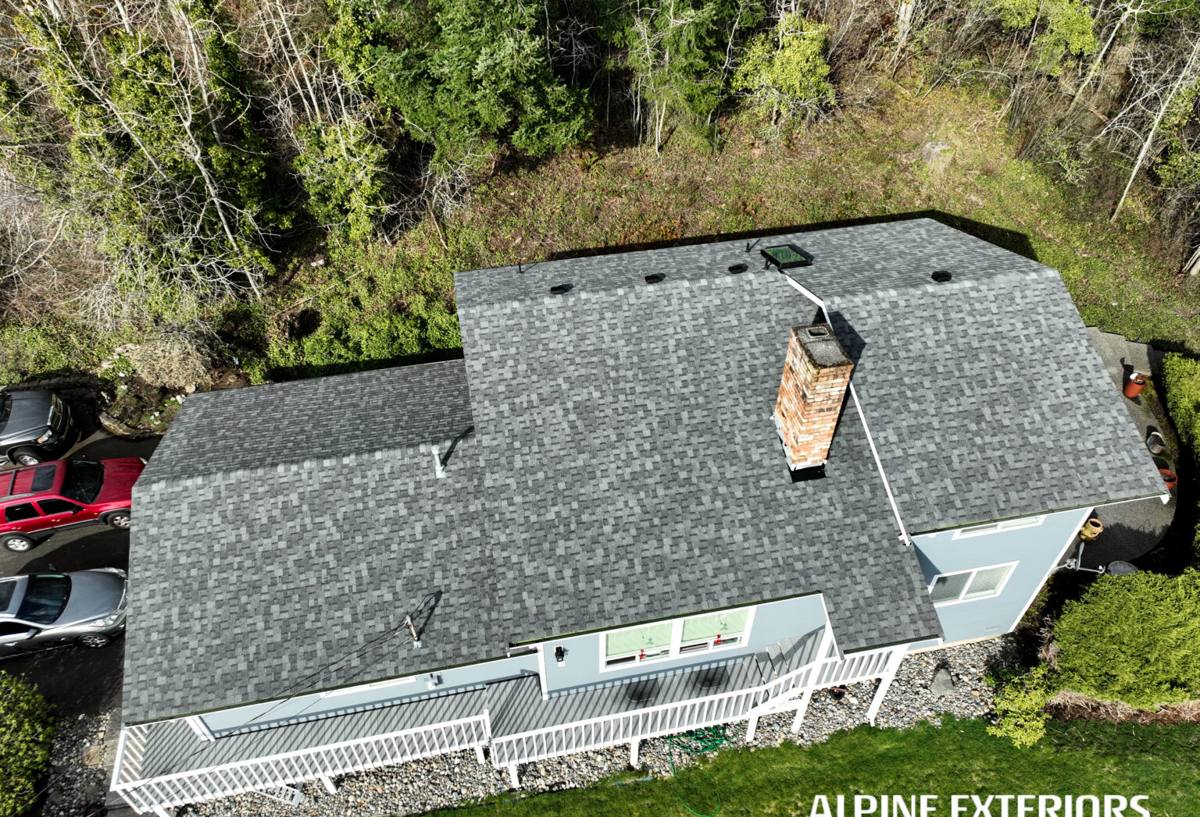
Whatcom County doesn't get the kind of violent weather that snaps roofs off, but it wears decks down steadily instead. Long stretches of driving rain, a marine-influenced climate that keeps humidity high even between storms, and a moss season that can run from late fall into spring all put chronic moisture pressure on any exterior structure — decks included.
Driving Rain and Wind-Blown Wet
Rain here rarely falls straight down for long. Wind pushes it sideways into ledger boards, under railings, and into any gap where flashing or caulking is doing less than it should. A deck built without real attention to water shedding will trap moisture in exactly the places you can't see it — at the house connection, in fastener holes, and between decking boards that sit too tight.
Moss, Algae, and Constant Damp
Shade, humidity, and mild temperatures are ideal conditions for moss and algae, and a deck surface holds moisture longer than a roof or siding because it's horizontal. Moss on a walking surface isn't just unsightly — it's slick, it holds water against the wood or composite cap, and it accelerates surface breakdown if it's never scrubbed off.
Freeze-Thaw Shoulder Seasons
Lynden gets real cold snaps in winter, and wet lumber that freezes and thaws repeatedly checks and splits faster than dry lumber ever would. Posts and footings that aren't set below frost depth, or that sit in standing water, move over a few seasons — which is where you start seeing decks that feel slightly springy or railings that have gone out of plumb.
Choosing the Right Decking Material for This Area
There's no single "best" decking material — there's a best material for your budget, your maintenance appetite, and how much sun or shade the deck actually gets. We walk every client through the real trade-offs instead of just pushing whatever has the best margin.
| Material | How It Handles This Climate | Maintenance | Typical Lifespan |
|---|---|---|---|
| Pressure-treated fir/hem-fir | Good moisture resistance when properly sealed; needs a real gap and airflow underneath to shed damp | Re-stain or re-seal every 1-3 years; annual moss/algae wash | 15-25 years with upkeep |
| Cedar | Naturally rot- and insect-resistant, ages gracefully in wet climates, but softer surface | Periodic oiling if you want to hold the color; otherwise weathers to gray | 15-20 years |
| Composite decking | Doesn't absorb water into the board itself; capped boards resist moss staining better than wood | Occasional wash; no staining or sealing | 25-30+ years, manufacturer-dependent |
| PVC decking | Fully synthetic, essentially immune to rot; can feel slick when mossy if never cleaned | Occasional wash | 25-30+ years |
We don't push composite or PVC as automatically "better" — a well-built cedar or treated-lumber deck that gets a modest amount of care will outlast a poorly framed composite deck every time. Framing quality matters more than surface material for how long a deck actually lasts here.
Framing and Structure — Where Most Deck Problems Actually Start
Almost every deck failure we get called out to fix traces back to the framing, not the decking boards on top. In a climate that stays damp this much of the year, a few details matter more than they would somewhere drier.
Ledger Attachment and Flashing
The ledger board — where the deck ties into the house — is the single most common failure point in wet-climate deck construction. It needs proper flashing that directs water away from the house framing, not caulk alone standing in for flashing. We treat this connection as the load-bearing, water-managing joint it actually is.
Joist Spacing and Span
Joist spacing has to match the decking material you're putting on top — composite and PVC boards generally need tighter joist spacing than solid wood to avoid flexing or "bounce," and that spec varies by manufacturer. Getting this wrong doesn't show up on day one; it shows up as a spongy feel a couple years in.
Post Footings Set Below Frost Depth
Footings that aren't dug deep enough, or that sit where water pools, are what causes posts to heave or settle unevenly over a few freeze-thaw cycles. We set footings to depth and grade the area so water moves away from the posts instead of sitting against them.
Fasteners and Hardware
In a climate this damp, hardware matters more than people expect. We use fasteners and structural connectors rated for the treated lumber and exposure conditions involved — mismatched metals corrode faster in persistent moisture, and that corrosion is invisible until a connection actually lets go.
Airflow Underneath
A deck with no ventilation underneath traps humidity against the framing year-round. Proper clearance between the ground (or a low deck's skirting) and the joists lets air move through and dry the structure out between rain events instead of staying perpetually damp.
Permits and Local Code
Most deck projects that are elevated, attached to the house, or above a certain size require a permit through the applicable local jurisdiction, and Whatcom County's building requirements account for our seismic zone and snow/wind loading. Railing height, guard spacing, and stair geometry are all code items, not style choices — an inspector will check them regardless of how the deck looks. We handle the permit and inspection process as part of the job so you're not the one chasing down paperwork or explaining a red-tag to a buyer's inspector down the road.
Our Deck Building Process
- On-site walkthrough: we look at grade, drainage, sun/shade exposure, and how the deck ties into the house before recommending anything.
- Material and layout discussion: honest trade-offs on decking material, railing style, and footprint based on your budget and maintenance preference.
- Design and permit prep: plans drawn to meet local code, permit submitted and tracked.
- Demo of the old structure (if applicable), with attention to what the removal reveals about the ledger and framing underneath.
- Footings and framing: footings set to depth, ledger flashed properly, joists spaced for your chosen decking.
- Decking, railings, and stairs installed to spec, with fastening appropriate to the material.
- Final walkthrough and inspection sign-off before we call the job done.
Maintenance Checklist for Lynden Homeowners
A well-built deck still needs seasonal attention in this climate. This is the short list we give clients after every install:
- Sweep debris and standing leaves off the surface regularly, especially in fall — trapped organic matter feeds moss and holds moisture against the boards.
- Scrub moss and algae off with a stiff brush and a deck-safe cleaner at least once a year, more often in shaded areas.
- Check the ledger flashing and any caulked joints annually for cracking or gaps.
- Re-seal or re-stain wood decking on the schedule your product calls for — don't wait until it looks gray and dry.
- Confirm gaps between boards haven't closed up from swelling, which traps water instead of shedding it.
- Look underneath once a year for standing water, blocked airflow, or hardware showing rust.
- Clear gutters and downspouts near the deck so roof runoff isn't dumping directly onto or under it.
Repair, Replace, or Rebuild?
Not every aging deck needs to be torn out. If the framing is sound and the problems are cosmetic — worn decking, a loose rail, surface moss staining — a repair or resurfacing can extend the deck's life for a fraction of a full rebuild. But if the ledger flashing has failed, footings have moved, or joists are soft from years of trapped moisture, patching the surface just hides a structural problem instead of fixing it. We'll tell you plainly which situation you're in before we ever quote work.
Why Hire a Crew That Already Works in Lynden
Deck-building fundamentals don't change town to town, but local conditions do — how much shade a given lot gets, how the grade drains, how much moss pressure a north-facing structure sees compared to one in full sun. A crew that regularly works this part of Whatcom County has already seen which framing shortcuts fail here and which material choices hold up, instead of learning that on your project. We're also on hand for warranty work and seasonal questions afterward, since we're not driving in from out of the area to do it.
If you're planning a new deck or trying to figure out whether an existing one needs repair or replacement, we're happy to take a look and give you a straightforward, no-pressure estimate using the form below.